In this Formative, will look at the system in the simulation below (linked here if you want to open it in a new tab to make it larger).
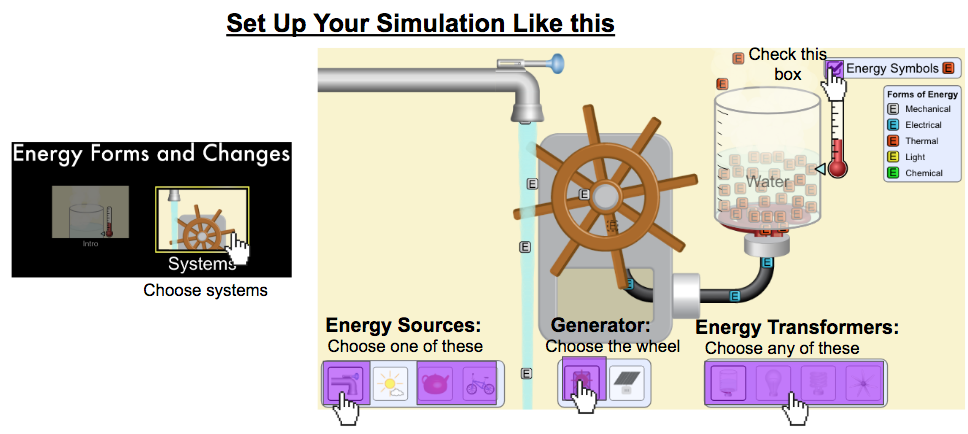
Nearly every type of power production (except solar energy) follows the same pattern as you see in the simulation above. Re-order the following statements in the order they happen over time.
Key definitions:
Energy Transferred = Energy moves from one object to another
Energy Transformed = Energy changing forms from one to another
Energy is transferred to the generator in the form of kinetic energy (mechanical energy of movement).
The electrical energy is then transformed into some form of useful energy, for example light, heat, mechanical, etc.
The generator, now spinning, transforms kinetic energy into electrical energy.
Energy exists in some form. This is the energy source (examples: chemical, kinetic, etc.)
Set up your simulation to match the image below and drag the slider to start pedaling.
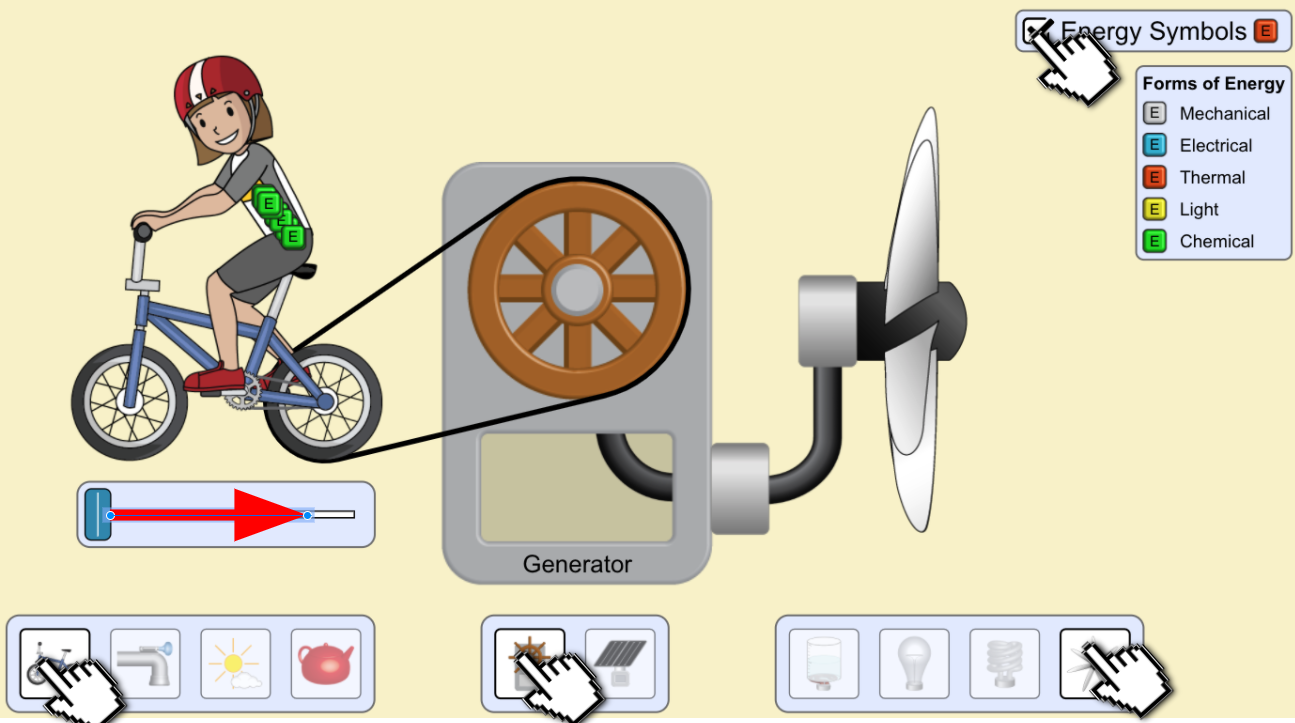
Follow the energy as it flows through the system. Identify one energy type for each category. You can use an energy type more than once.
Kinetic (mechanical) energy
Electrical energy
Thermal energy
Light Energy
Chemical Energy
Energy Source
Energy transferred into the generator
Energy transformed out of the generator
The useful energy that comes out of the device at the end
With the same set-up as the previous question, notice what happens after 21 blocks of energy have moved through the system.
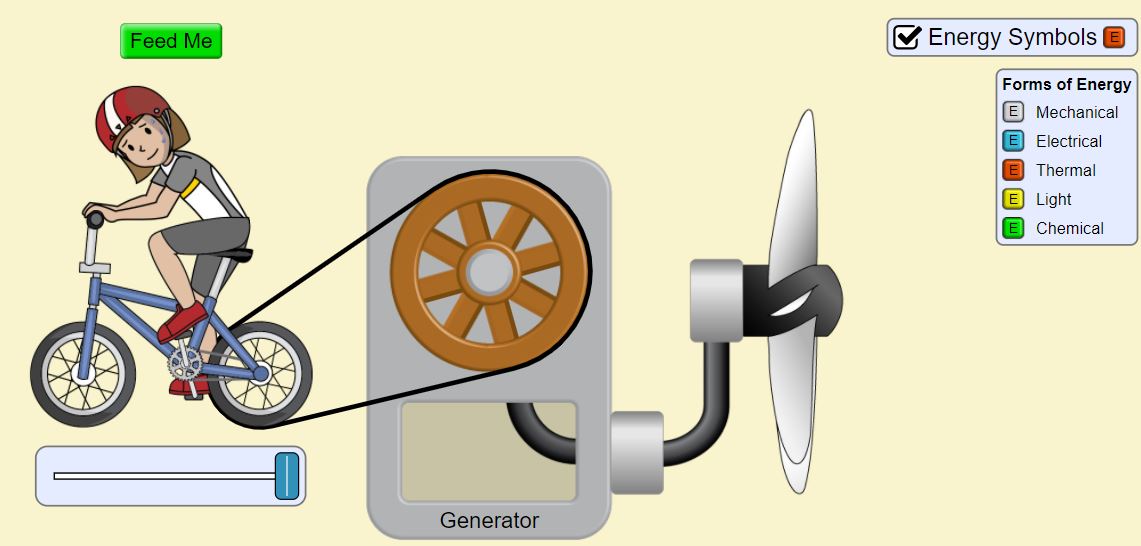
Pick all the true statements below:
Reminder: Energy cannot be created nor destroyed, so the total energy must stay the same throughout! That means all the different types of energy added up will always equal the same total number - for this simulation, there are 21 blocks of energy available each time you feed the biker.
The table below represents the number of blocks of energy at different times with the slider on max.
Click on the blue circles below to answer how many blocks of that energy type must be in the system at that time:
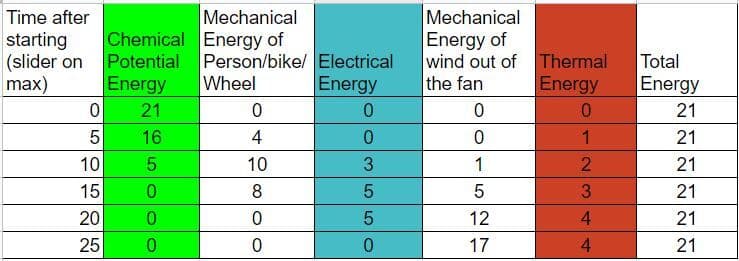
How many blocks of Chemical Potential Energy must be left in the person at this point?
How many blocks of Electrical Energy must be present in the system at this time?
How many blocks of energy have been transformed into Thermal Energy after 20 seconds in the system?
Set up your simulation to match the image below and follow the energy as it flows through the system. Identify one energy type for each category. You can use an energy type more than once.
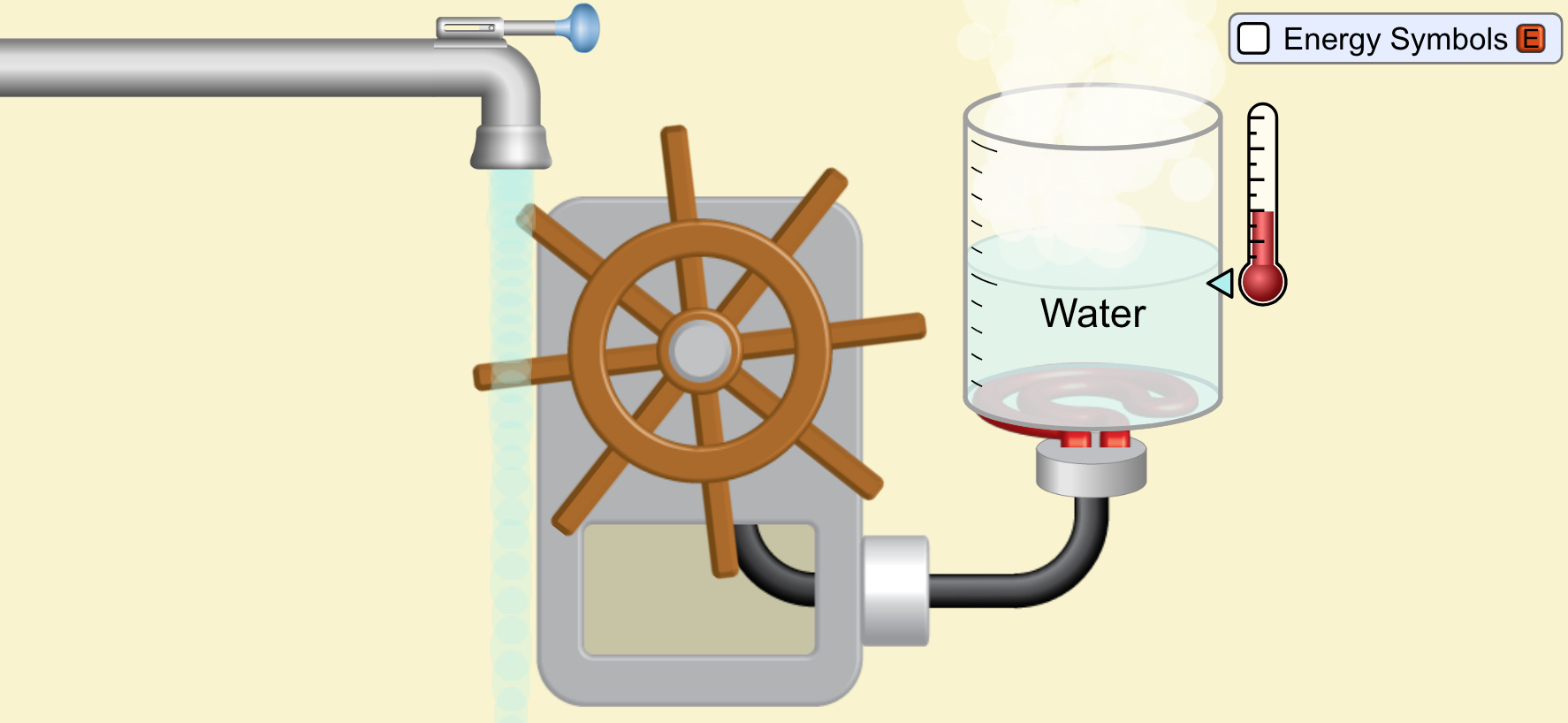
Kinetic (mechanical) energy
Electrical energy
Thermal energy
Light Energy
Chemical Energy
Energy Source
Energy transferred into to the generator
Energy transformed out of the generator
The useful energy that comes out of the device at the end
Set up your simulation to match the image below and follow the energy as it flows through the system. Identify one energy type for each category. You can use an energy type more than once.
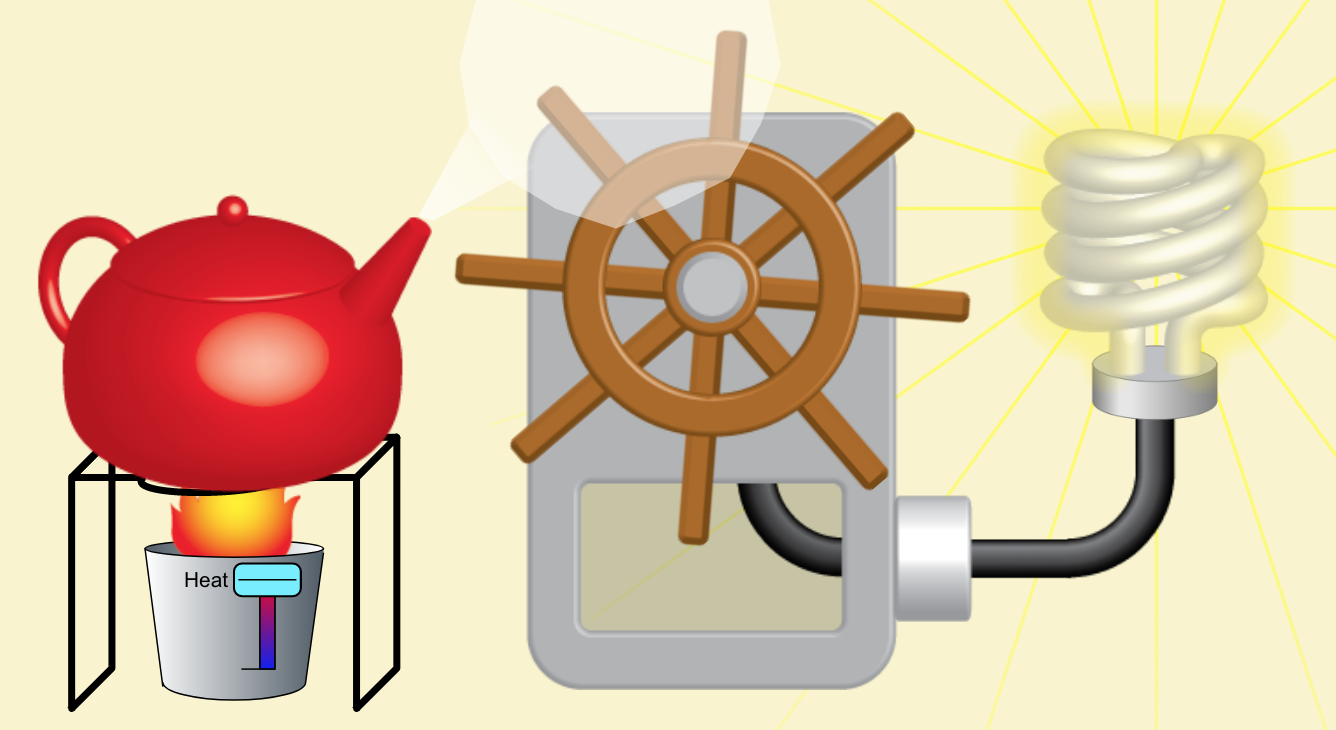
Kinetic (mechanical) energy
Electrical energy
Thermal energy
Light Energy
Chemical Energy
Energy Source
Energy transferred into to the generator
Energy transformed out of the generator
The useful energy that comes out of the device at the end - two energy types this time!
Summarize: Describe the energy changes that occur when a hydroelectric dam is used to generate electricity to charge your Chromebook. Include the following words in the written description below: energy transfer, chemical energy, kinetic energy, electrical energy, and conservation of energy.
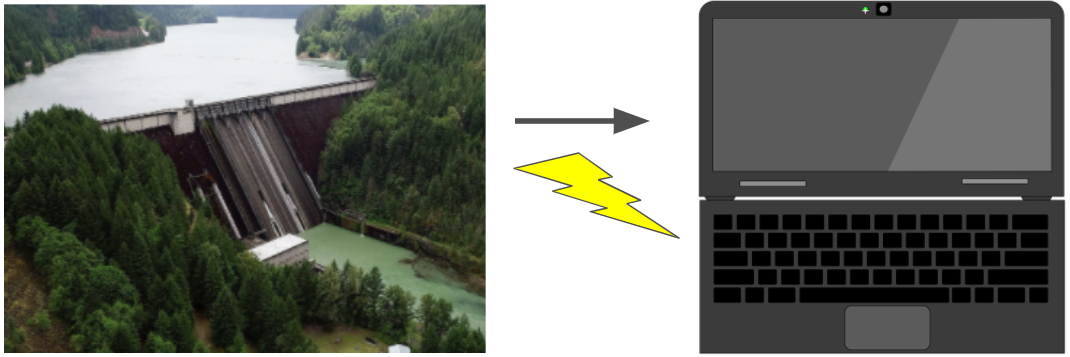
Photo: Willamette Valley Dam