Twa kɔ nsɛm atitiriw so
Log in
Sign up for FREE
arrow_back
Laabri

3.05 Unit 3 Assessment MODIFIED

star
star
star
star
star
Last updated about 1 month ago
18 Nsɛmmisa
Ɛhia
4
Ɛhia
2
HS-LS3-2
Ɛhia
2
HS-LS3-2
Ɛhia
4
Ɛhia
16
Ɛhia
2
HS-LS3-1
Ɛhia
2
HS-LS3-1
Ɛhia
2
HS-LS3-1
Ɛhia
6
HS-LS3-1
Ɛhia
6
HS-LS3-1
4

Sickle Cell Anemia Case Study:

Hemoglobin is a protein found in red blood cells (RBCs) that transports oxygen throughout the body. Sickle cell disease (also called sickle cell anemia) is caused by a genetic mutation in the DNA sequence that codes for the hemoglobin protein. The mutation causes an amino acid substitution. Due to this change in amino acid sequence, the hemoglobin tends to precipitate (or clump together) within the RBC after releasing its oxygen. This clumping causes the RBC to assume an abnormal “sickled” shape.

Individuals who are homozygous for the normal hemoglobin allele (HBA) receive a normal hemoglobin allele from each parent and are designated AA genotype. People who are homozygous for normal hemoglobin do not have any sickled RBCs.

Individuals who receive one normal hemoglobin allele from one parent and one mutant hemoglobin, or sickle cell allele (HBS), from the other parent are heterozygous and are said to have sickle cell trait. Their genotype is AS. Heterozygous individuals produce both normal and mutant hemoglobin proteins. These individuals do not have sickle cell disease, and most of their RBCs are normal. However, due to having one copy of the sickle cell allele, these individuals do manifest some sickling of their RBCs in low-oxygen environments.

People with sickle cell disease are homozygous for the sickle cell allele (SS genotype); they have received one copy of the mutant hemoglobin allele from each parent. The resulting abnormal, sickle-shaped RBCs in these people block blood flow in blood vessels, causing pain, serious infections, and organ damage.

Genotype Key:

Normal = AA (Homozygous dominant)

Mostly Normal (Sickle Cell Trait) = AS (Heterozygous)

Sickle Cell Disease = SS (Homozygous recessive)

Asemmisa {{asɛmmisaAhyɛnsode}}
1.

Two individuals who carry the sickle cell trait, but do not have sickle cell anemia are pregnant with a child. What is the probability that the resulting child will inherit the sickle cell anemia disease?

Calculate the probability. Use the Punnett square provided to show your work.

% will inherit the sickle cell trait

Asemmisa {{asɛmmisaAhyɛnsode}}
2.

Using the Punnett square that you created in question number 1, what is the probability that the resulting child would be a carrier (heterozygous) for the sickle cell anemia trait, but not have sickle cell anemia disease?

Asemmisa {{asɛmmisaAhyɛnsode}}
3.

Using the Punnett square that you created in question number 1, what is the probability that the resulting child would have a normal phenotype (no sickle cell anemia)?

Asemmisa {{asɛmmisaAhyɛnsode}}
4.

There are four main blood types: A, B, AB, and O. These types are based on the presence or absence of two antigens: antigen A and antigen B. Blood type A individuals have antigen A, blood type B individuals have antigen B, those with blood type AB have both antigens A and B, and individuals with blood type O have neither antigen.

The genotypes for blood type are determined by the combination of two alleles inherited from our parents. The three possible alleles are A, B, and O. A and B are co-dominant while O is recessive.

This chart describe the possible genotypes for each phenotype:
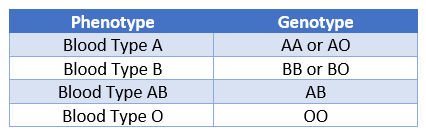
Is it possible for a child to have type O blood if their mother has type A blood and a father has type B blood?

Use the Punnett square to support your answer.
Ɛhia
4
Asemmisa {{asɛmmisaAhyɛnsode}}
5.

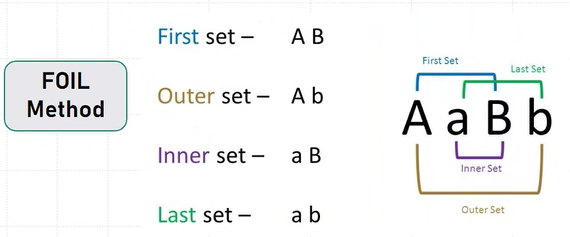
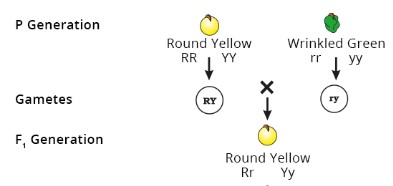
Use the FOIL method to determine the possible gametes for the F1 generation of Round Yellow peas.

What gametes are possible when the F1's cells go through meiosis?

First:

Inner:

HS-LS3-2

Autosomal Recessive Pedigree Directions:

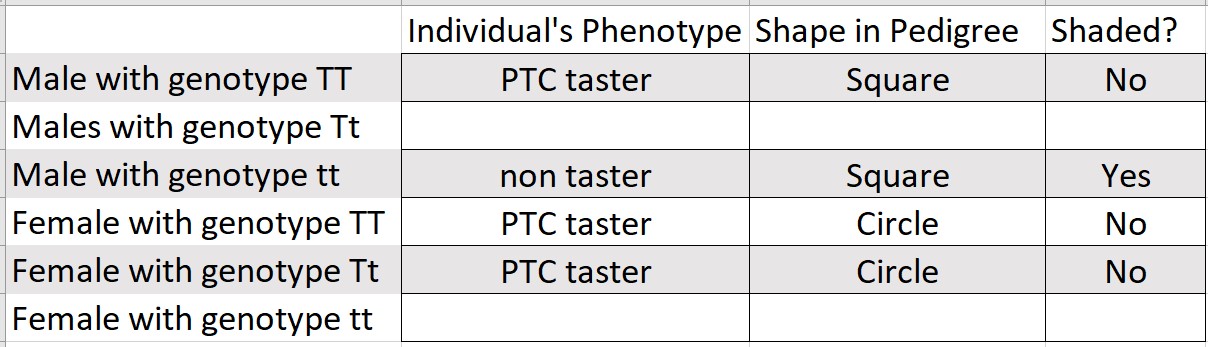
Consider a pedigree that is tracking an autosomal recessive trait, where two recessive alleles (tt) result in the inability to taste a chemical known as PTC. The ability to taste PTC is determined by the presence of a dominant allele (T).

Complete the missing boxes in the chart below.

Ɛhia
1
Ɛhia
1
Ɛhia
1
Ɛhia
1
Ɛhia
1
Ɛhia
1
Asemmisa {{asɛmmisaAhyɛnsode}}
12.

Draw a pedigree:

A couple with the ability to taste PTC have two grown sons and one grown daughter.

The sons have the ability to taste PTC. Their daughter is a PTC non-taster. She married a PTC non-taster man, and they have two sons.

Draw a pedigree in the box on the right that fully represents the above scenario and tracks the inability to taste PTC (non-taster), which is caused by two recessive “t” alleles.

In your illustrated pedigree, please make sure that:

(A) generations are listed as Roman numerals and the individuals are numbered.

(B) the correct shapes for males and females are used.

(C) the shapes that require shading are shaded.

(D) the genotypes are listed next to each pedigree shape.

*Hint: 1. Start by drawing the shapes and relationships in your pedigree, 2. then go back and list the genotype(s) next to each individual and finally, 3. shade where needed.

The first generation has been done for you.

Asemmisa {{asɛmmisaAhyɛnsode}}
13.

Consider a population of mice with two phenotypes: black fur and white fur. The gene for fur color has two alleles: dominant black (F) and recessive white (f).

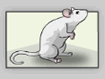
Which of the following is true about the genotype of the mouse shown below?

Asemmisa {{asɛmmisaAhyɛnsode}}
14.

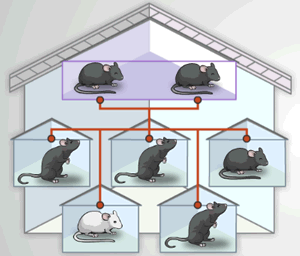
Two black-fur mice are bred, and have the litter shown below. What is the most likely explanation for the presence of the white-fur offspring?

Asemmisa {{asɛmmisaAhyɛnsode}}
15.

Two mice with white fur are bred. What will be true of the offspring?

Asemmisa {{asɛmmisaAhyɛnsode}}
16.

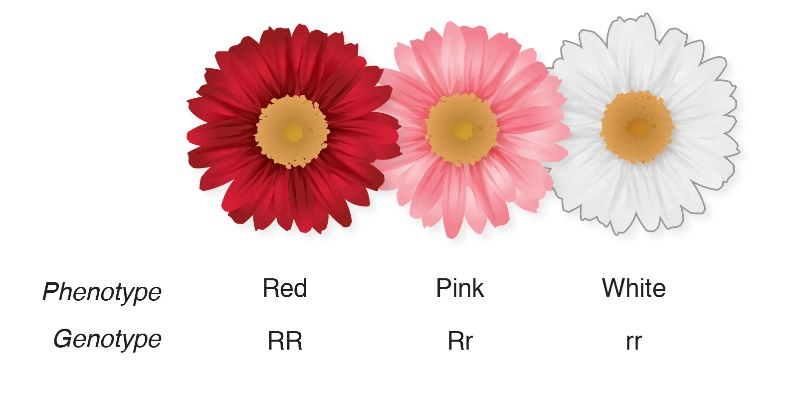
Consider a species of flower that follows incomplete dominance for color:

Complete a Punnett square for a cross between two pink flowers by clicking "Show Your Work."

Resulting genotypes:

Rr

red

white

Asemmisa {{asɛmmisaAhyɛnsode}}
17.

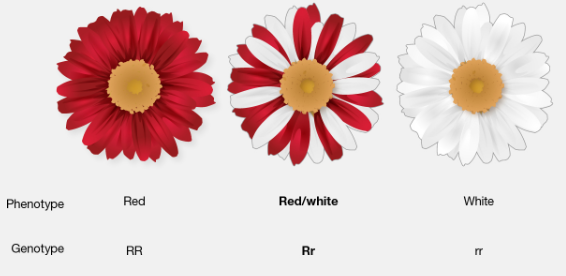
A different species of flower follows codominance for color:

Complete a Punnett square for a cross between a red/white flower and a red flower by clicking "Show Your Work."

Resulting genotypes:

Rr

red

white

Asemmisa {{asɛmmisaAhyɛnsode}}
18.

What topics in this unit did you enjoy?

Which concepts did you find challenging?

Asemmisa {{asɛmmisaAhyɛnsode}}
6.

Which choice would correctly complete this area on the chart? (Individual's Phenotype)

Asemmisa {{asɛmmisaAhyɛnsode}}
7.

Which choice would correctly complete this area on the chart? (Shape in Pedigree)

Asemmisa {{asɛmmisaAhyɛnsode}}
8.

Which choice would correctly complete this area on the chart? (Shaded?)

Asemmisa {{asɛmmisaAhyɛnsode}}
9.

Which choice would correctly complete this area on the chart? (Individual's Phenotype)

Asemmisa {{asɛmmisaAhyɛnsode}}
10.

Which choice would correctly complete this area on the chart? (Shape in Pedigree)

Asemmisa {{asɛmmisaAhyɛnsode}}
11.

Which choice would correctly complete this area on the chart? (Shaded?)