Drag the word and drop to the suitable picture.
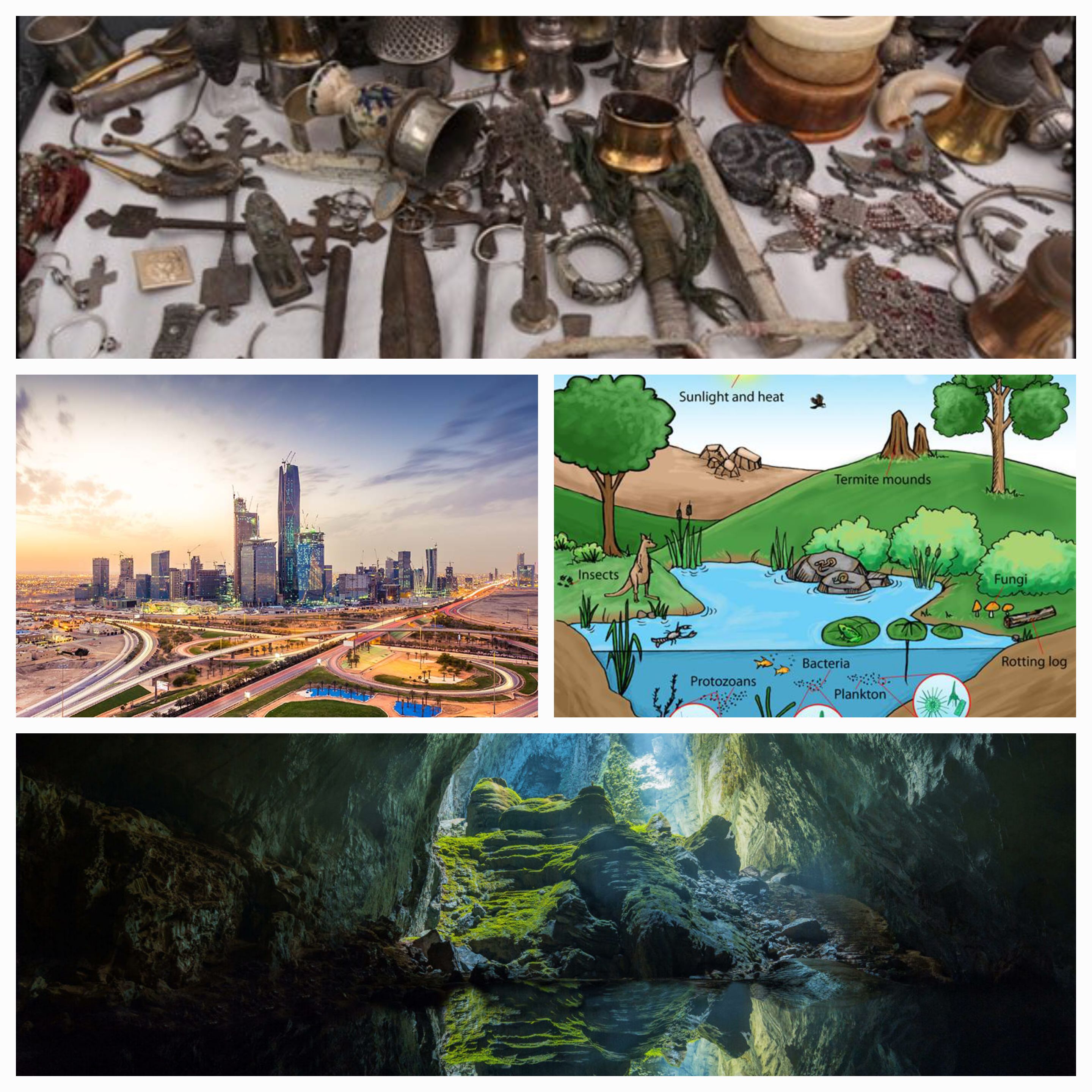
Mmuae Afoforo a Wobɛpaw:
Ecosystem
Infrastructure
Cave
Relics
Put a mark in the position of the main stress in each word.
(Choose Edit background -> Draw -> Line -> put the line at the stressed syllable)
Complete the sentences by moving the right part of the sentence to the right position to match with the left part of the sentence.
| Draggable item | arrow_right_alt | Corresponding Item |
|---|---|---|
Having made all necessary preparations, | arrow_right_alt | leading to the main door of the temple. |
At the end of this corridor there is a gate | arrow_right_alt | illegally removed from the protected area of this heritage site. |
Mary has been staying at a homestay for three weeks | arrow_right_alt | we put our plan into action. |
That man was selling unusual relics | arrow_right_alt | during her undergraduate programme. |
Drag the word and drop to the suitable picture.
Choose word or phrase that is closest in meaning to the underlined part in the following questions. (2pt)
Global warming leads to climate change, allowing for some contagious diseases to spread quickly.
Type the word or phrase that needs correction in the sentence below:
Global warming may lead to extremely weather conditions such as droughts, floods, and hurricanes.
Read the following article carefully, then choose the best answer to each question
Imagine a world without numbers if you can. Think about the things that would be missing from your life without them. No clocks or calendars; we would have no money, no mobile phones or computer programs. Without numbers we couldn’t do calculations, so we wouldn’t have engineering. There would be no high-rise buildings, no good roads, long bridges or modern transport. Basically, our whole world is held together by numbers.
So, where did numbers come from? The answer is right in front of you: from your hands. In ancient times fingers gave people a handy way of counting, which is why we usually count in ‘base ten’ today. Eventually, systems for writing numbers were invented. The Babylonians, in the area which is now Iraq, first came up with written numbers. The Mayans, Egyptians and Romans also invented their own systems, which gave people the power to plan, calculate and to build. In the end, the Indian system became popular and has been used since 200 BC.
We think of numbers as written systems, but did you know that number patterns are found in the natural world, too? In 1202 an Italian mathematician, Leonardo Fibonacci, came up with a puzzle: you are given a pair of rabbits (a doe and a buck) and they have two babies (a doe and a buck). If each pair of rabbits has two babies every month, how many pairs will there be by the end of the year?
If you work out the answer for each month, you get a series which starts: 1, 1, 2, 3, 5, 8. This series was not actually invented by Fibonacci, but his ‘rabbit problem’ helped people to understand it. The ‘Fibonacci Series’ was born. To work out each number in this series, you add together the last two numbers. So, one plus one equals two, one plus two equals three, two plus three equals five and so on. Therefore, at the end of twelve months, Fibonacci calculated there would be 144 pairs of rabbits.
Fibonacci also observed that these special numbers are often seen in nature. The number of petals on a flower is often a Fibonacci number. The seeds in a sunflower, or in a pine cone, are all arranged in spiral patterns. What happens when you count the number of spirals? It’s usually a Fibonacci number. Incredibly, these numbers occur all around us. They can be found in the spiral of a shell or the skin of a pineapple. They are used in music, art and architecture, too. Some people have been inspired to call the ‘magic numbers’, but the best name seems to be ‘nature’s numbers’.
Write an paragraph of about 100-120 words about the ideal city of your dream. You have to include:
- Environmental conditions;
- Means of transport;
- Technological advances.
You will hear two friends talking about their school project. Why is the girl interested in space travel?
You will hear two friends talking during a game of chess. What do they agree about it?
You will hear two friends in a fastfood restaurant. What does the woman say about her burger?
You will hear two friends talking about their history homework. What does the girl think about it?
You will hear a girl talking to a friend about becoming a member of a swimming team. The girl feels ______.
According to the article, which statement best describe the importance of numbers?
What does the word “handy” means as used in paragraph 2?
The Indian system of numbers has been used for .
As used in paragraph 3, “a doe and a buck” would most probably mean _______.
According to the article, which statement best describe the Fibonacci series?