Lesson 8 Testing Predictions

Last updated over 1 year ago
5 questions
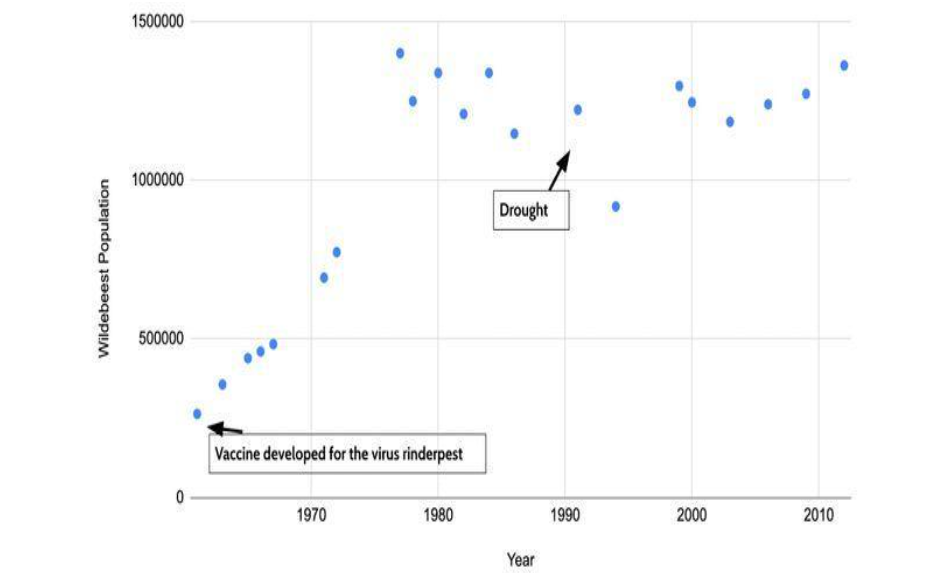
We also investigated disturbances during Lesson 5 when we figured out carrying capacity in the wildebeest population (Figure 1). Use data from your model and what you know about how disturbances affect populations to make a prediction to answer the following:
1

Do you think the population of wildebeest will return to their pre-disturbance sizes after the drought ended?

1

Use evidence from your model to explain your answer to number 1.
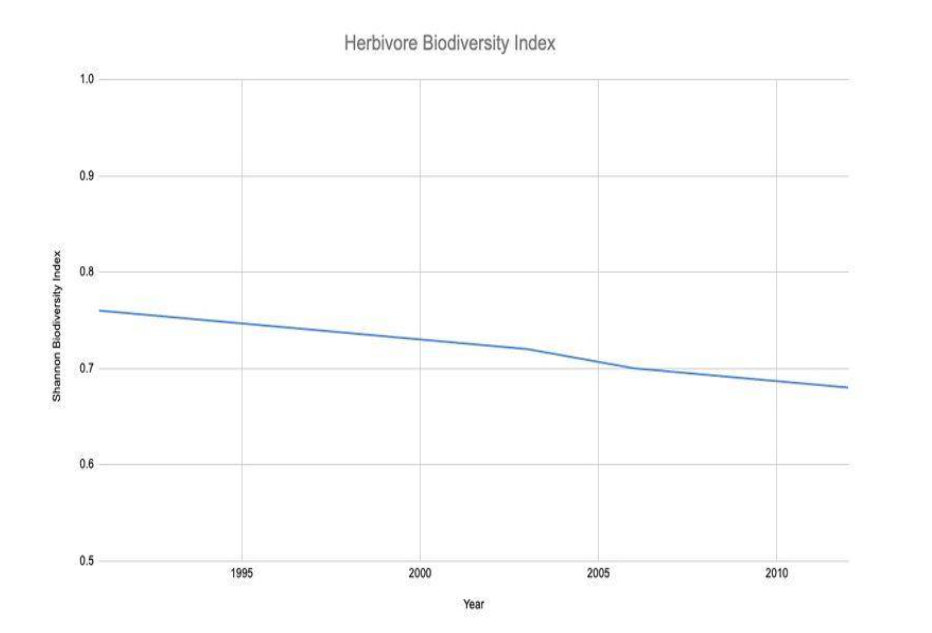
The Serengeti is a biodiversity ecosystem, home to over 70 large mammals and 500 bird species. There are 314 plant species and hundreds of insects and other small organisms. Our models include a very small sample of the organisms that are part of the system. It would be impossible for scientists to count every single organism in the Serengeti system. They use a measure called a diversity index that helps them understand the relationship between the number of species and their estimated population size.  One group of scientists estimated the diversity index for herbivores in the southern part of the Serengeti in the short-grass plains for more than 20 years. Their findings are shown in Figure 2.
1

What does this data show has happened to the biodiversity of the herbivore population over time?

1

What kind of disturbances do you think could be responsible for the change seen in the data?

4

How do you think this change in the number of herbivores will affect other components (animals/plants) in the savannah. Mention at least 2 components and explain how the components are affected.