Identify the trophic level for the grass?

Identify the trophic level for the grass?
Match the definition with the vocabulary word
| Draggable item | arrow_right_alt | Corresponding Item |
|---|---|---|
Eats or breaks down dead things | arrow_right_alt | Heterotroph |
Eats only plants | arrow_right_alt | Omnivores |
Eats both plants and animals | arrow_right_alt | Carnivores |
Gets energy by eating other organisms. Another name for consumer | arrow_right_alt | Autotroph |
Collects energy to produce their own food | arrow_right_alt | Primary Consumer |
Eats only animals | arrow_right_alt | Decomposers |
Identify the trophic level for the grass?
Identify the trophic level for the grasshopper?
Identify the trophic level for the raccoon?
Identify the trophic level for the coyote?
What organism is at the bottom of the pyramid. Letter A.
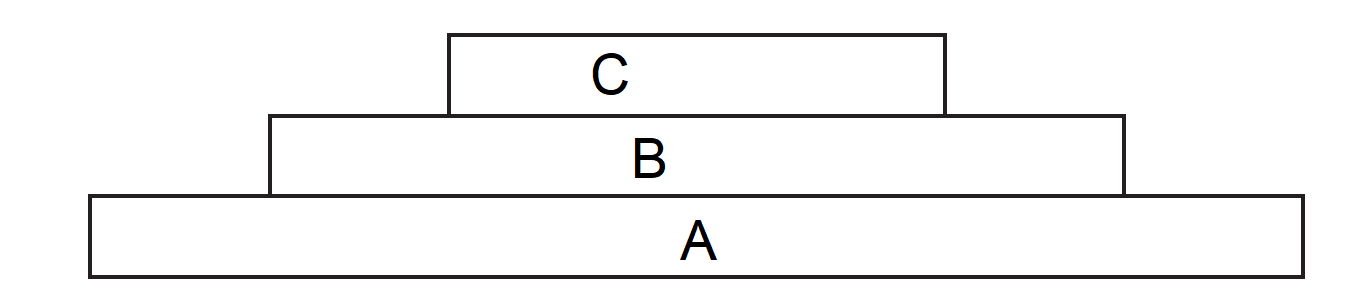
What organism is at the middle of the pyramid. Letter B.
What organism is at the top of the pyramid. Letter C.
Why is an ecological pyramid smaller at the top than at the bottom?
Why are decomposers an important part of the ecosystem?
Grass has 10,000 calories. How many calories would the grasshopper receive?
Grass has 10,000 calories. How many calories would the RACCOON receive?
Grass has 10,000 calories. How many calories would the COYOTE receive?
The organisms in an ecosystem interact in many ways to survive. For example, a rosebush, aphids, beetles, spiders, and orioles all interact in a rosebush ecosystem. The diagram below shows how these organisms interact in a partial food web.
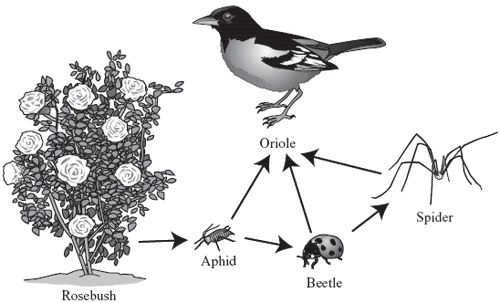
If the beetle population suddenly disappeared what would happen to the aphid? Explain your reasoning.
If the beetle population suddenly disappeared what would happen to the spider? Explain your reasoning.
If the beetle population suddenly disappeared what would happen to the oriole (bird)? Explain your reasoning.