5. American Prairie
star
star
star
star
star
Last updated over 2 years ago
23 Nsɛmmisa
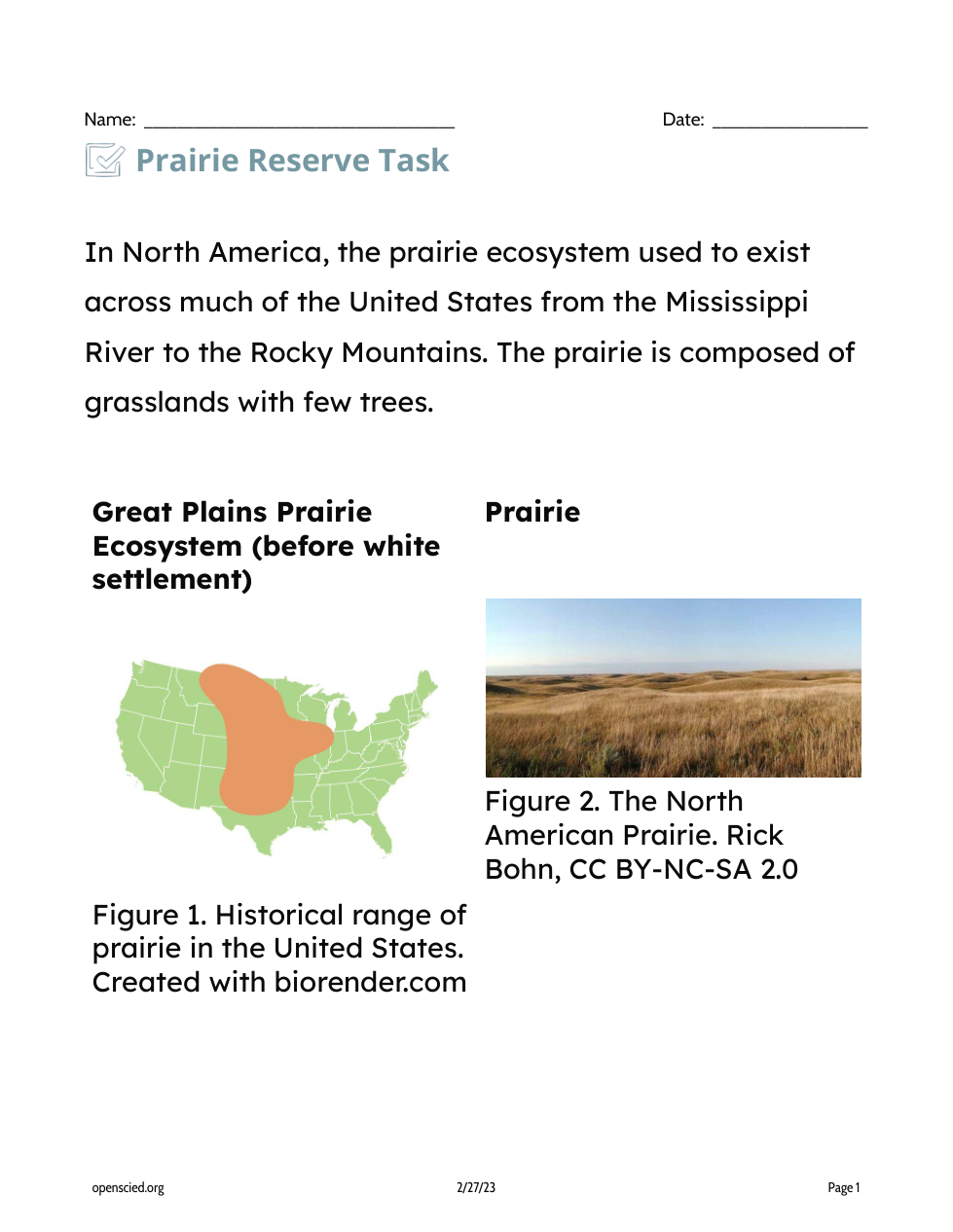
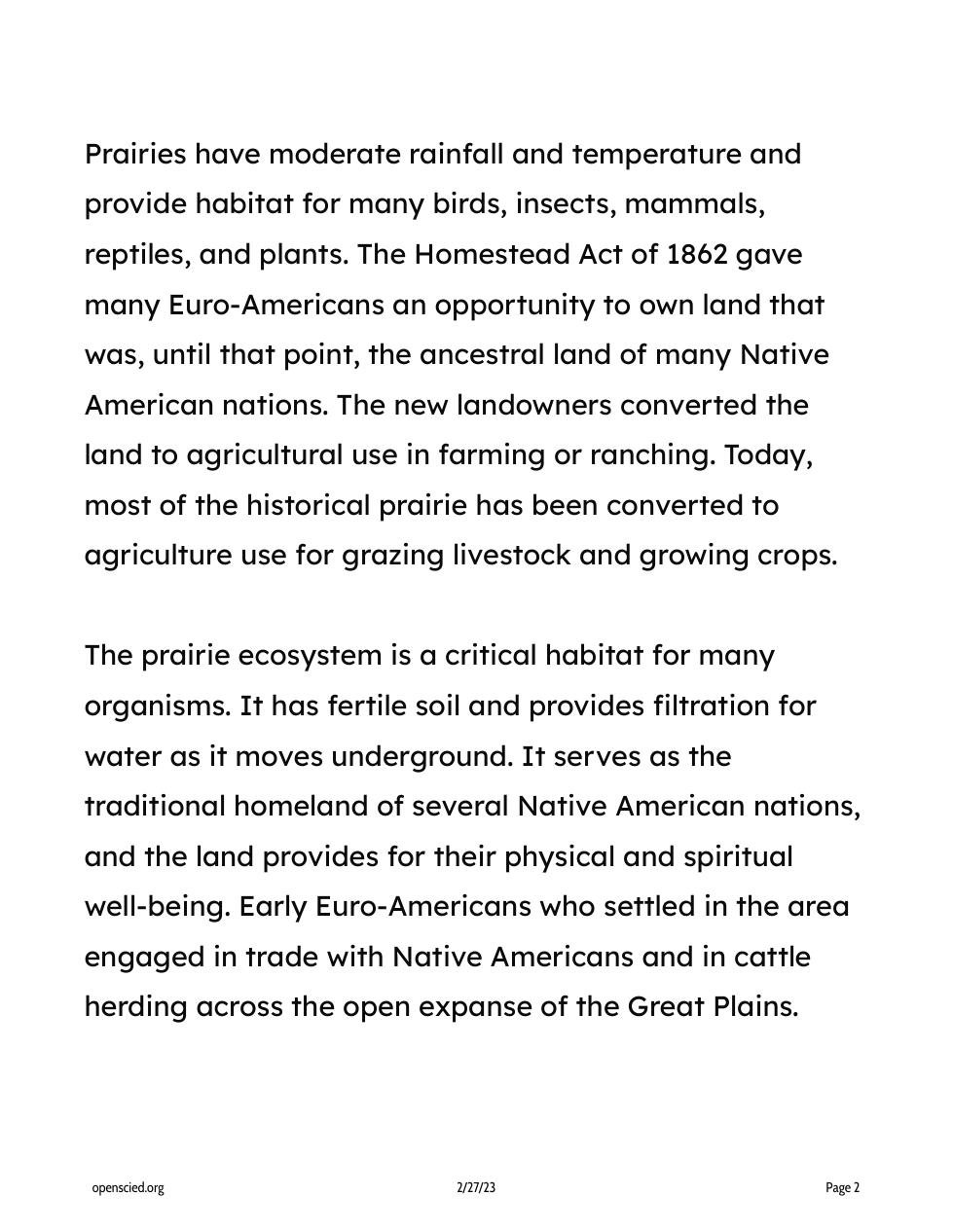
The prairie serves as the traditional homeland of Native American nations and the land provides for their physical and spiritual well-being.
What economic activity provides many jobs in the prairie ecosystem?
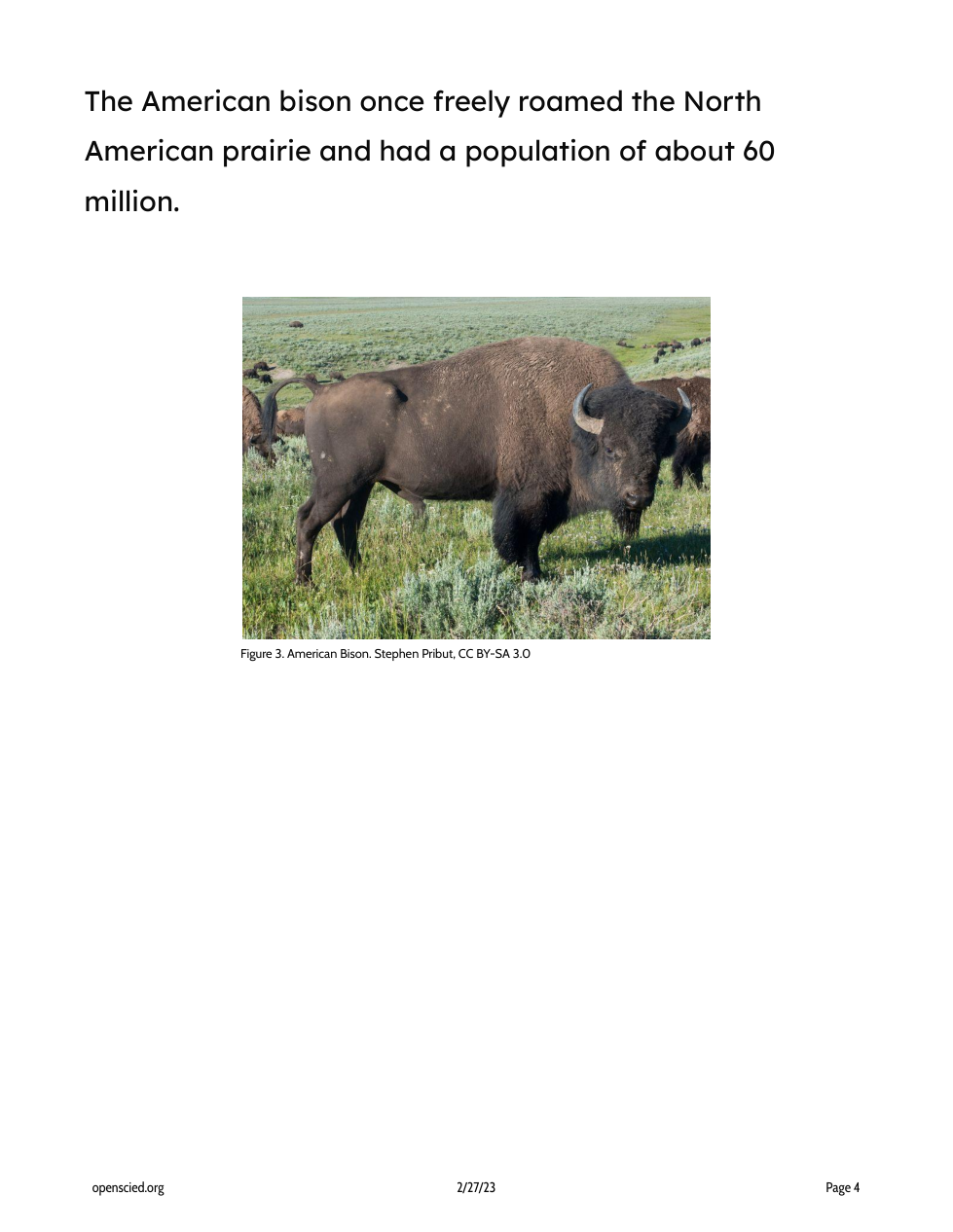
What animal once roamed freely in the North American prairie?
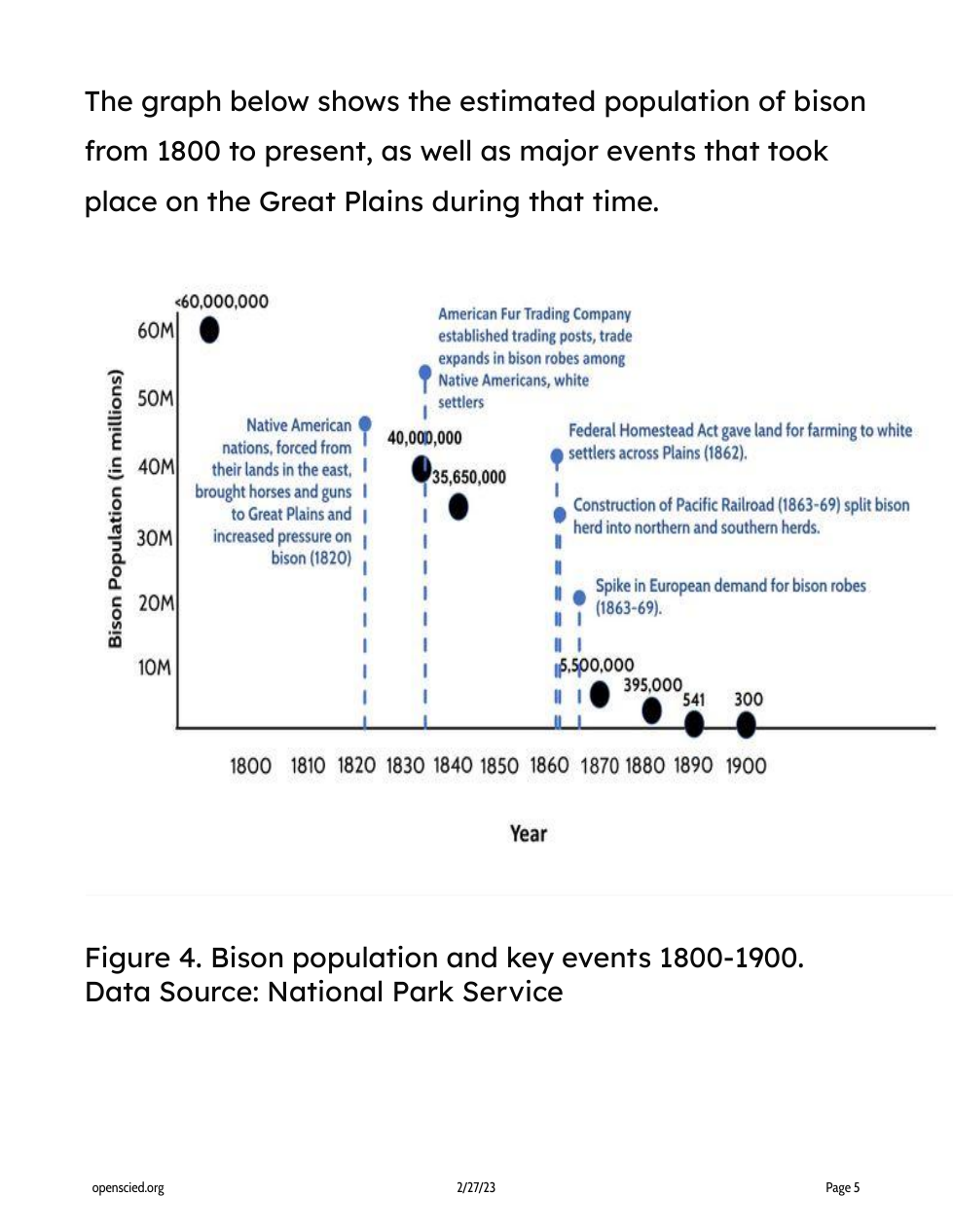
Use your understanding of ecosystems and the graph to answer the following questions.
How did the bison population change between 1800 and 1900?
Based on the information presented in the graph, what are three ways that human activities may have impacted the bison population? LOOK AT THE GRAPH.
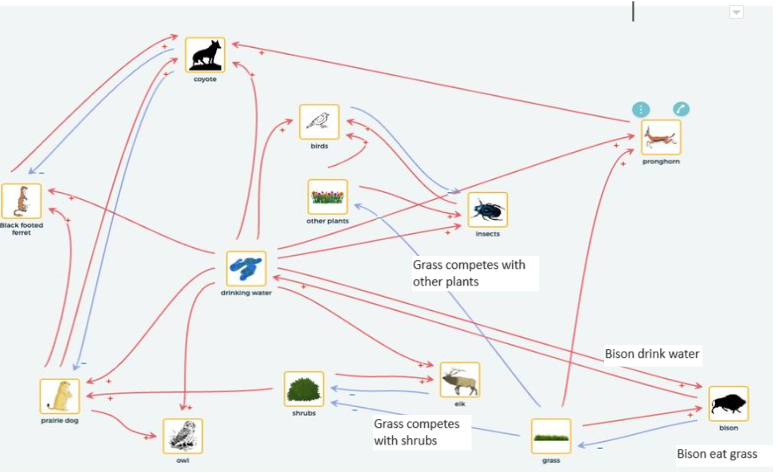
Predict and explain one direct impact on the ecosystem when the bison were removed?
Choose two interactions in the model and explain how you think the components changed without the bison. YOU CANNOT USE THE SAME INTERACTION as number 6.
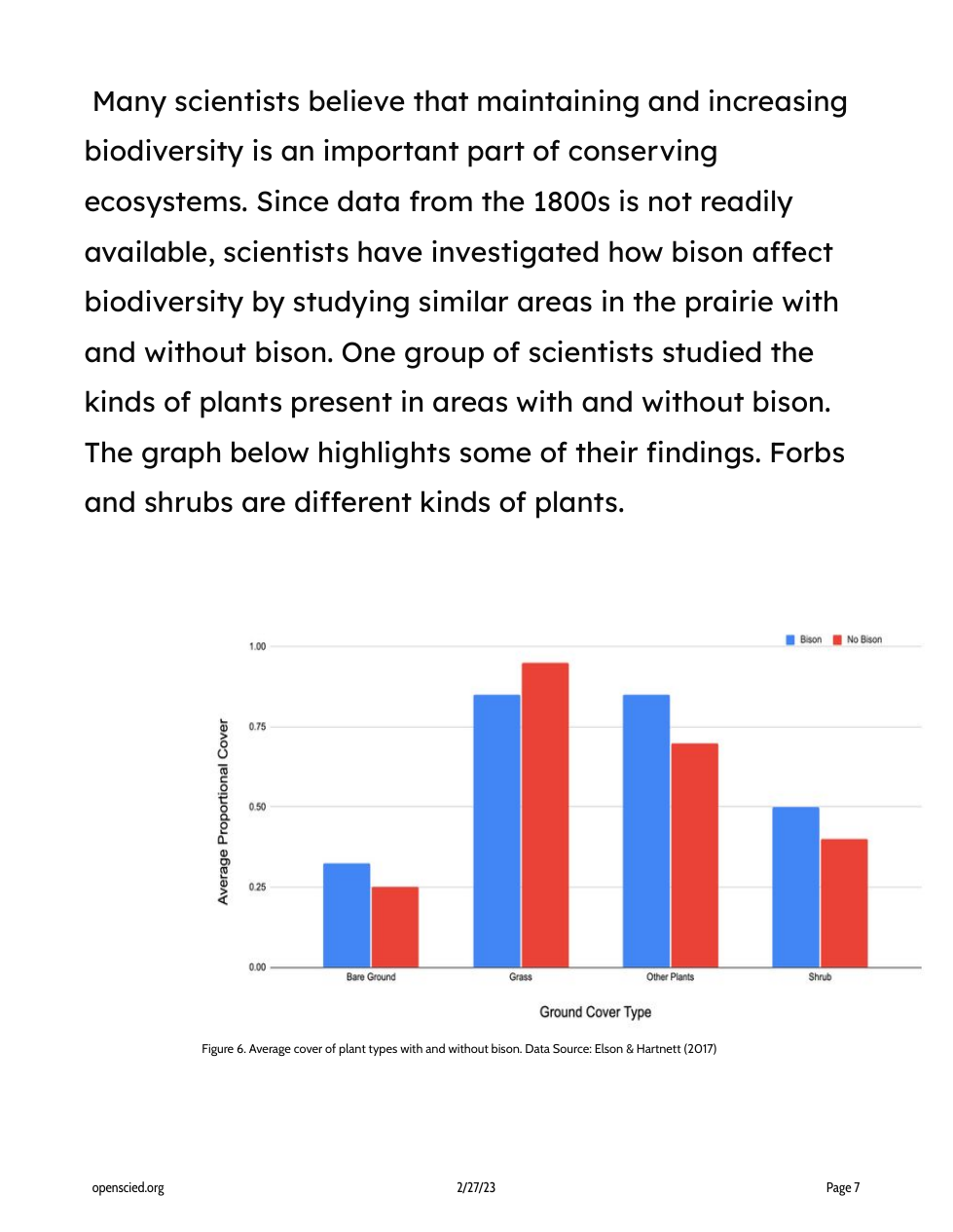
In the graph:
Blue is with Bison.
Red is No Bison.
What do you notice about grass in areas with in and without bison?
Based on the data, scientists predict that the biodiversity of herbivores (animals that eat plants) will be higher when bison are present. What reasoning would explain this prediction? Use data from the model and the graph to support your answer.
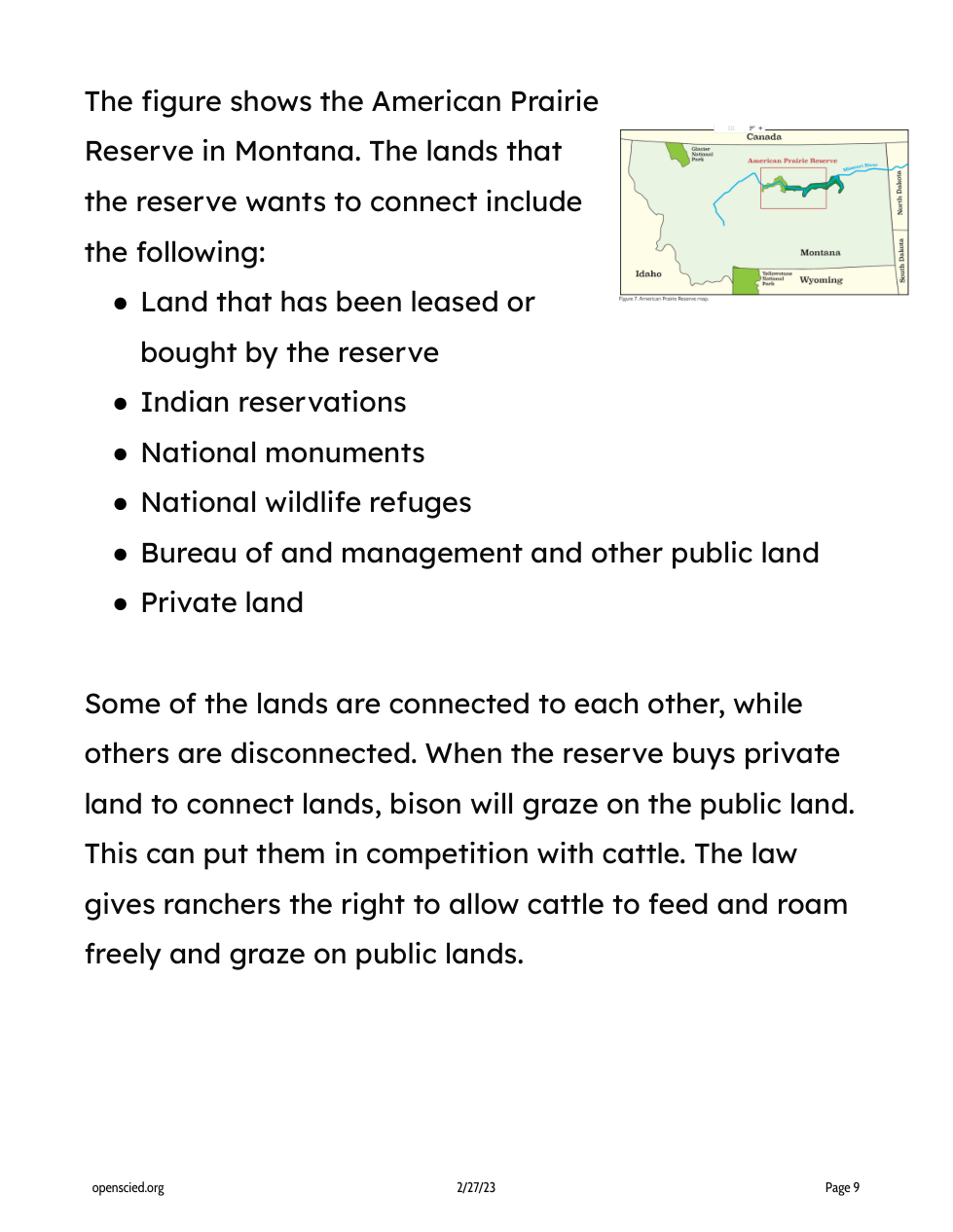
Bison compete with cattle for food.
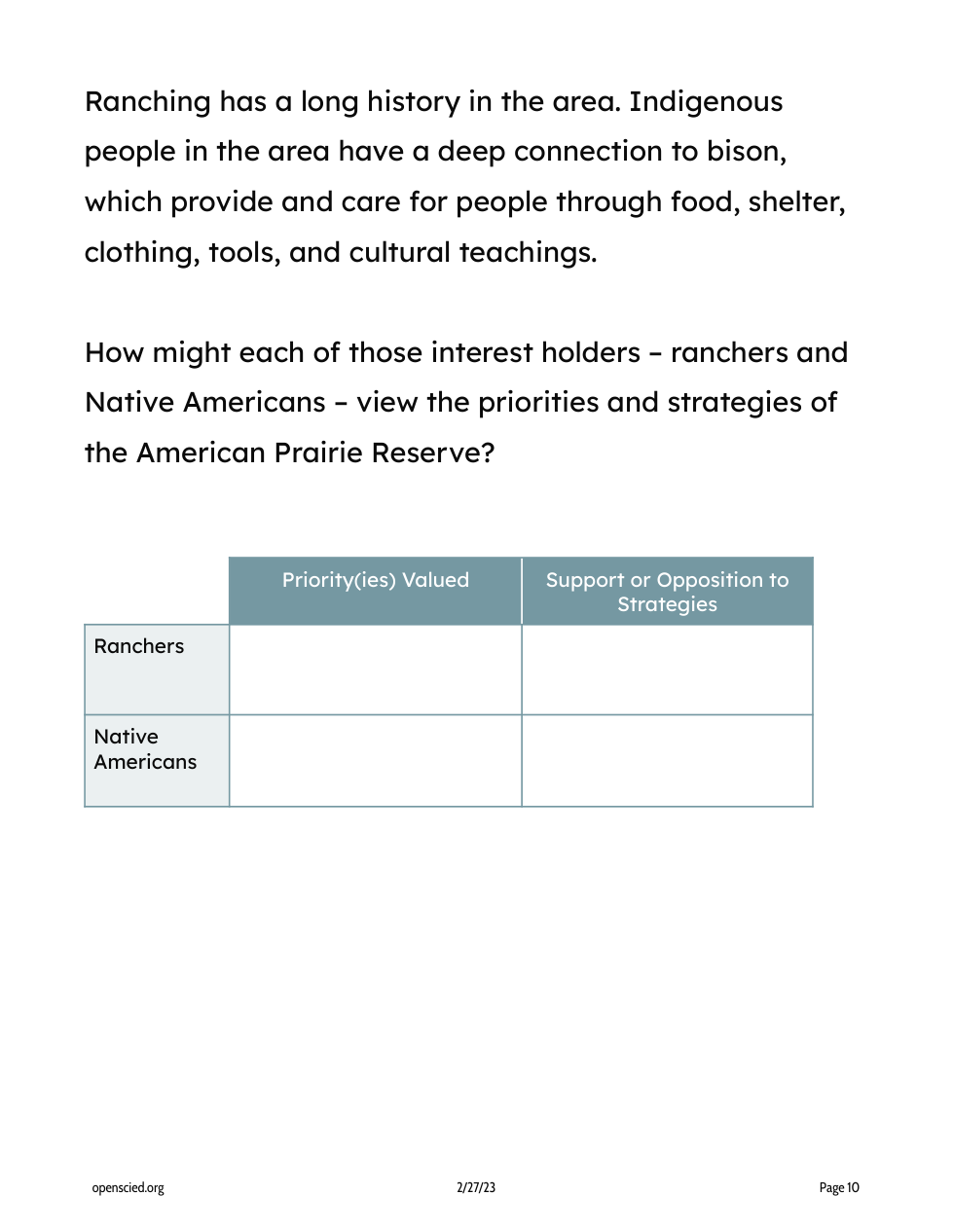
What is a priority valued by ranchers (ranchers are people who raise and sell cattle).
Give an example of an abiotic component from the prairie ecosystem.
Give an example of a biotic component from the prairie ecosystem.
Give an example of competition in the prairie ecosystem.
Give an example of a predator/prey relationship in the prairie ecosystem.
What could account for the difference in the amount of grass with and without bison?
In the graph:
Blue is with Bison.
Red is No Bison.
What do you notice about other kinds of plants in areas with and without bison?
In the graph:
Blue is with Bison.
Red is No Bison.
What could account for the difference in the amount of other plants with and without bison?
The 30 by 30 law restricts the amount of private land cattle ranchers can have. This limits the number of cattle ranchers can raise. Do you think ranchers support of oppose this part of the plan?
Native Americans have a deep connection to bison. They depend on bison for food, shelter, clothing, tools, and cultural teachings. What is a priority valued by Native Americans?
A part of the 30 by 30 plan will remove fences between private and public land. This will allow more space for bison. Do you think Native Americans support or oppose this part of the plan
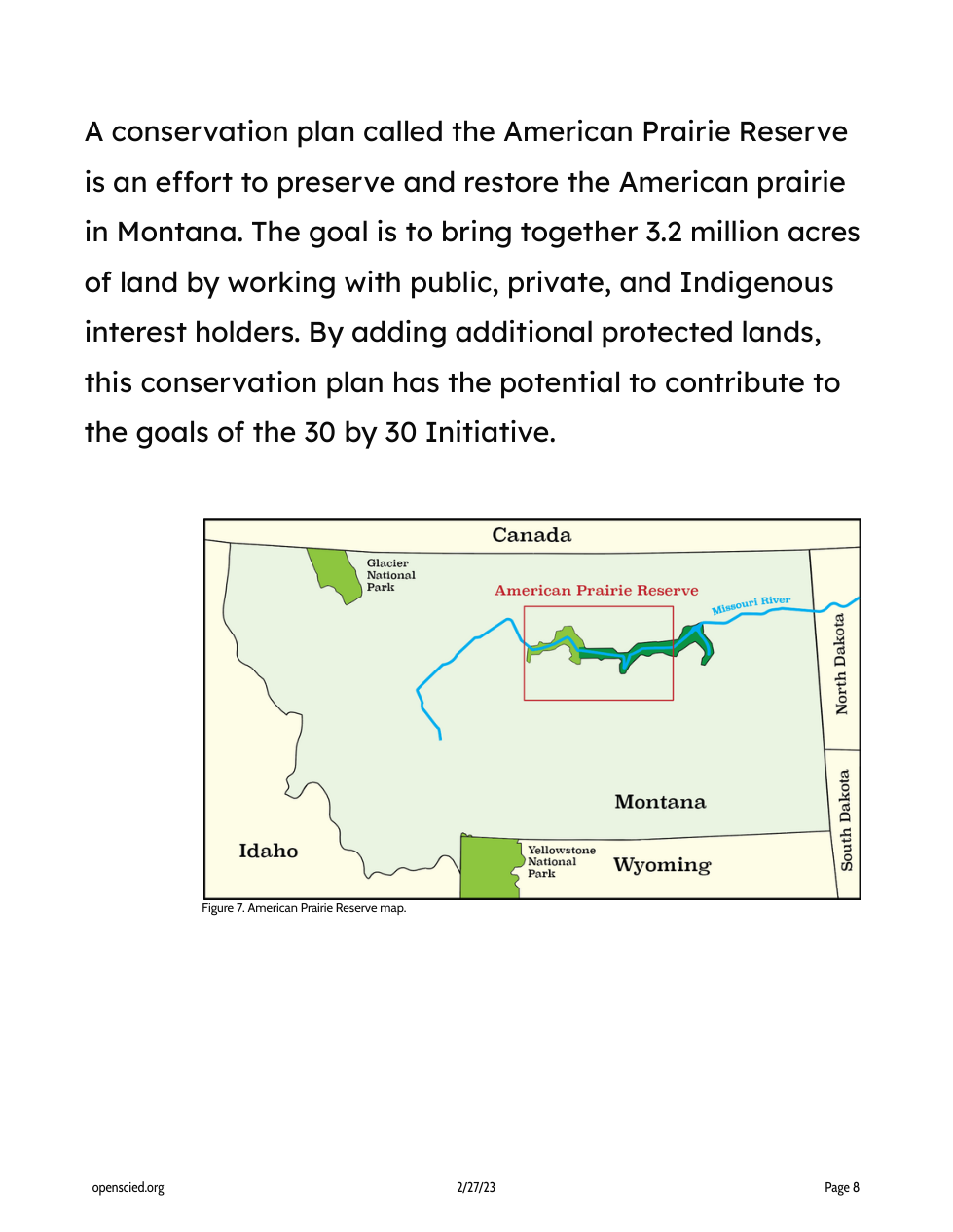
The conservation plan--to buy private land and connect to private and public land--address the priorities of the different interest holder groups. What compromise (trade-offs) will ranchers have to make if the plan moves forward?
What compromise (trade-offs) will Native Americans have to make if the plan moves forward?