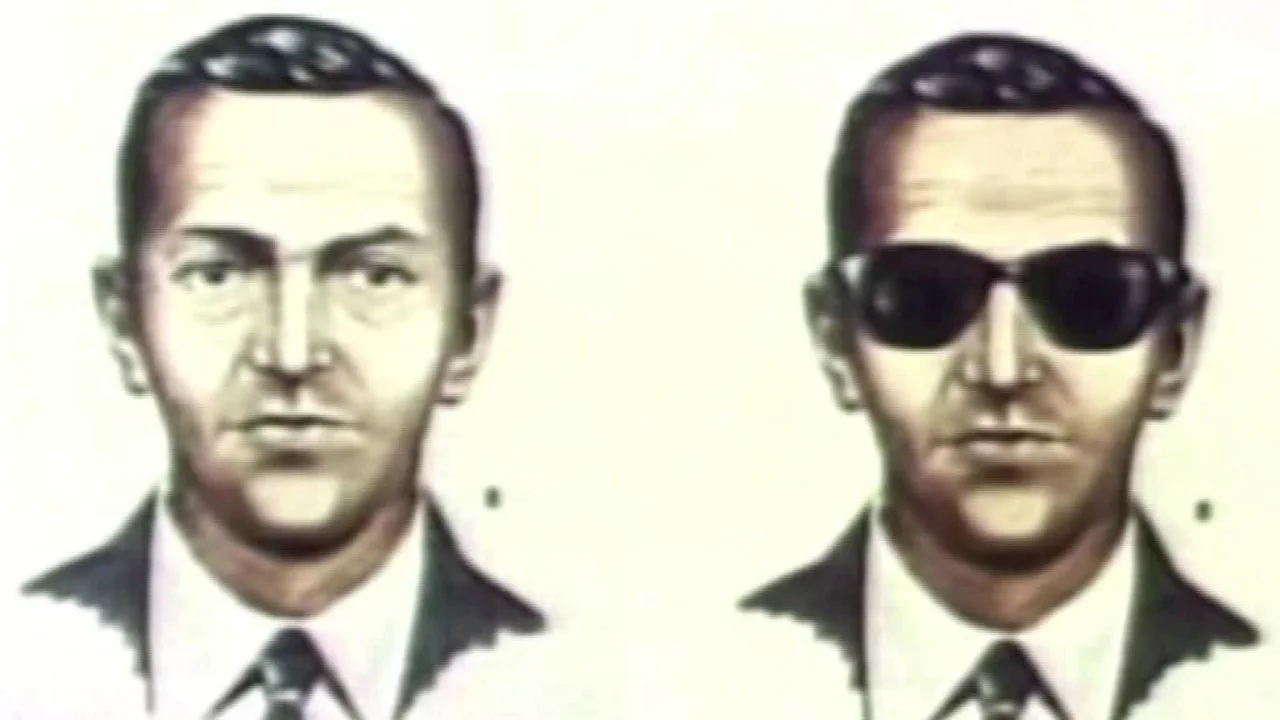
In 1971, a mysterious hijacker parachuted out of a plane with $200,000 and vanished. This man is suing the FBI to get potential new clues
By Faith Karimi, CNN
Published 8:35 AM EDT, Wed September 27, 2023
Source: CNN Article
Eric Ulis was only 5 when a dapper man in a suit and sunglasses boarded a commercial flight in Portland, Oregon, ordered a bourbon and soda from his seat in 18E and then handed a flight attendant a handwritten note saying he had a bomb.
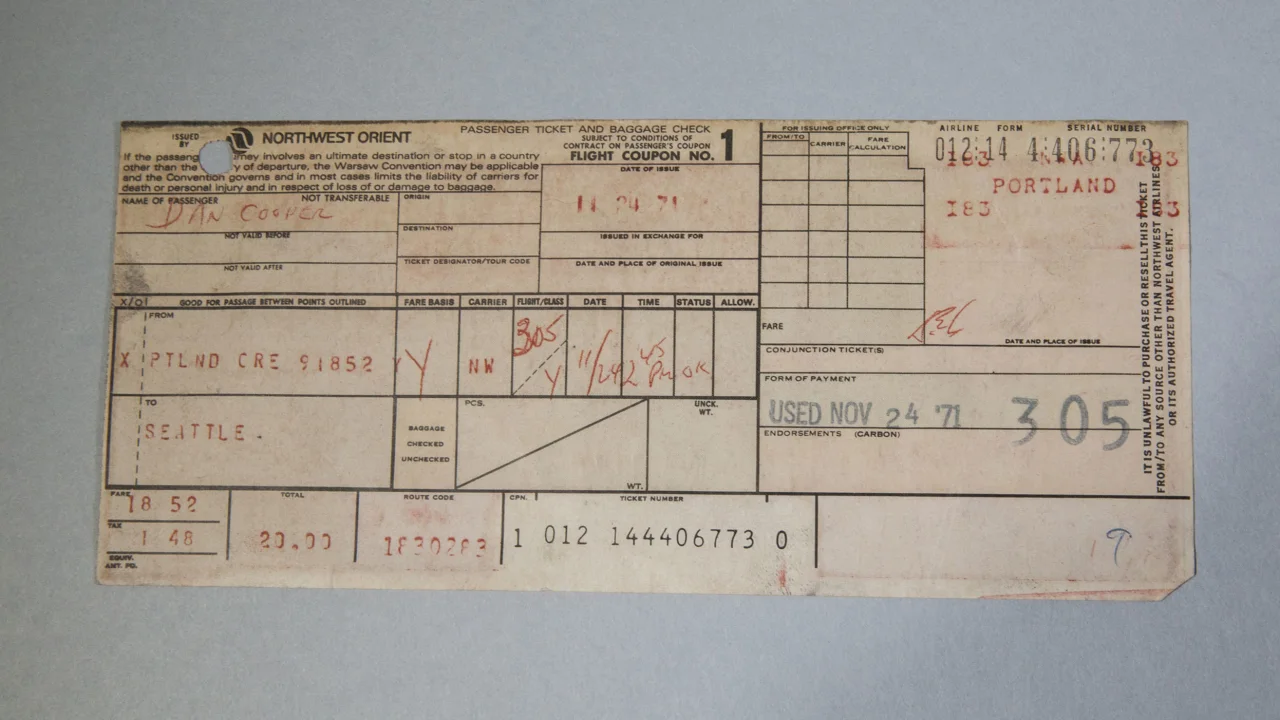
It was November 24, 1971, and the unidentified man, who later became known as D.B. Cooper, had a one-way ticket on the flight to Seattle.
Cooper opened his carry-on bag to reveal a jumble of wires and red sticks and demanded four parachutes and $200,000 in cash. After the plane landed in Seattle he swapped three dozen passengers for the cash and parachutes, then ordered the pilot to fly to a new destination: Mexico City.
But soon after takeoff, Cooper did something incredible: With the money strapped to his waist, he parachuted out of the rear of the plane and into the night, vanishing over the vast wilderness of the Pacific Northwest.
Cooper has not been seen or heard from since. His audacious stunt made him a folk hero, triggered an FBI investigation, led to tightened security at airports and inspired dozens of books and TV documentaries. It remains the only unsolved hijacking in US aviation history.
Check off all of the following that are TRUE.
When decades passed without any solid new leads, the FBI officially closed the case in 2016.
But Ulis is still searching for clues. Now in his 50s, he says he’s spent countless hours scouring tens of thousands of FBI documents on Cooper for any details federal agents may have missed.
Cooper’s story resonates with a lot of people because it has a “James Bond-esque element to it,” Ulis says.
“It’s real. He was real. This is not a … Bigfoot legend,” he says. “No one was physically harmed. Of course, the crew endured some stress, but even they admit he was quite polite, all things considered. He exhibited grace under pressure.”
Ulis keeps a notebook next to his bed in his Phoenix, Arizona, home, just in case a new thought about the case strikes him in the middle of the night.
In the meantime, he’s pursuing a lead – related to Cooper’s clip-on necktie, which was left behind on the plane – he believes could possibly help amateur sleuths like himself figure out who Cooper was.
And to gain access to the necktie, he’s suing the FBI.
Check off all of the following that are TRUE.
For decades, law enforcement and amateur investigators alike have wondered: Who was the mysterious hijacker? Did he survive the plunge? Was his name really Dan Cooper, as his boarding pass indicated, or was that an alias inspired by a French Canadian comic book hero – as the FBI later speculated?
Even Cooper’s name added to the intrigue. A journalist at the time mistyped it as D.B. instead of Dan, and the name stuck.
“For 52 years, everybody’s continued to call him D.B. Cooper. D.B. is just a more badass name than Dan,” Ulis says. “Back then, you didn’t have to go through a metal detector at the airport. You didn’t have to be checked. You didn’t have to provide a driver’s license to get an airplane to get a ticket. You could give a fake name.”
Ulis describes himself as a crime historian and aviation geek. For the past decade, he has devoted much of his time to seeking answers to the many questions surrounding D.B. Cooper.
He took part in a 2022 Netflix series titled, “D.B. Cooper, Where Are You?” and has hosted a History Channel show on the hunt for evidence about Cooper. He’s also written an e-book, “Silver Bullet: The Undoing of D.B. Cooper,” one of nearly 40 books on the elusive hijacker.
Check off all of the following that are TRUE.
Since 2018, Ulis also has held an annual CooperCon, at which fans of the hijacker gather to discuss elements of the case in granular detail.
And next month he’ll lead a team of volunteer searchers to explore an area near Tena Bar, a stretch of beach along the Columbia River in Washington state where $5,800 of Cooper’s ransom money was found in 1980.
Ulis says he has spent a lot of time in the area, trying to figure out how close the ransom money was to where Cooper may have landed. He’s viewed old news footage, studied FBI photos and familiarized himself with landmarks so he can guide searchers to specific areas.
He hopes to find important clues, including the parachute Cooper used that night.
“I firmly believe that D.B. Cooper’s parachute is lying in that area somewhere. It’s stashed away somewhere under some blackberry bushes or a thicket of trees or something of that nature,” he says. “It’s been sitting there for 52 years.”
Check off all of the following that are TRUE.
Before he became a D.B. Cooper expert, Ulis says he was a professional blackjack player, a skill he says helps him focus on facts and avoid conspiracy theories.
“That’s the world I came from. And it actually played a big part of shaping how I think,” he says. “Because that’s a world where you’re really just focused strictly on the math. You try to remove emotion as much as possible.”
Some friends consider his fascination an “eccentric hobby,” he says, but he tries not to bombard them with minutia on the case. He saves that for when he’s around like-minded people at CooperCon and other events.
Ulis says Cooper’s cigarette butts were initially recovered but later disappeared – a crucial piece of lost evidence that may have been useful given today’s advancements in DNA technology, he says.
But he has recently zeroed in on another piece of evidence: A clip-on necktie from JCPenney that Cooper left behind before he jumped off the plane nearly 10,000 feet over southern Washington.
Check off all of the following that are TRUE.
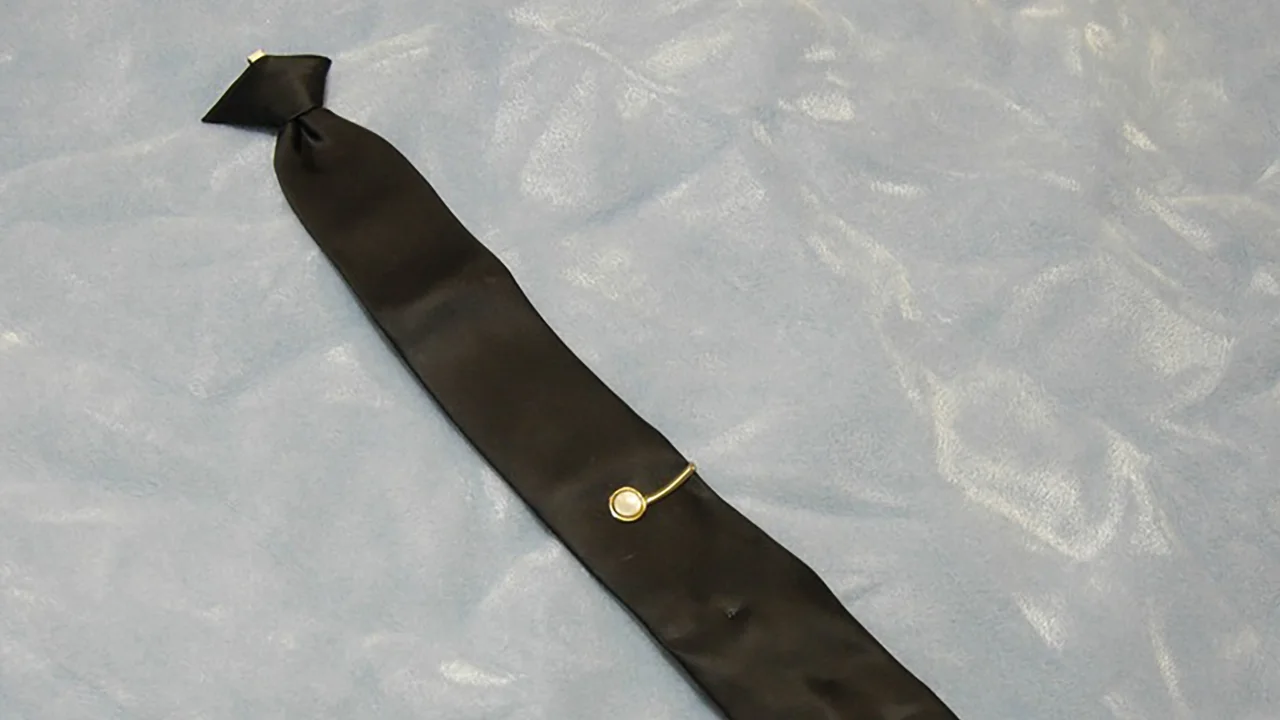
The tie and the found ransom money are the key pieces of physical evidence in the case, Ulis says. While the FBI has already tested the tie for traces of DNA, Ulis believes the tie knot has a metal spindle that may still have undiscovered DNA on it.
In March of this year, Ulis filed suit against the FBI for access to the tie, which he says is being stored at FBI headquarters in Washington, DC. In his suit, Ulis asks that he and a DNA expert be allowed to collect swabs from the spindle.
Ulis says he would enter any DNA found into genealogy databases in the hopes of finding a match that would help unravel Cooper’s identity.
“That’s all I’m trying to get – access to that spindle to open it up. Have the DNA expert kind of swab it, and let’s just see what we come up with,” he says.
The FBI has not responded to CNN’s repeated requests for comment on Ulis’ request.
Larry Carr, a former FBI agent who worked on Cooper’s case, tells CNN he doesn’t believe the FBI took the spindle apart to process it. But whatever DNA found on the tie may be compromised, he says.
“The tie was never collected and handled by today’s standards. It was collected and handled by standards in 1971. And so who knows whose DNA is actually on the tie,” says Carr, a speaker at this year’s CooperCon event in Seattle in November. “That’s still another hurdle we have to jump because we don’t know if that, in fact, is Cooper’s DNA.”
However, he adds, “anything’s possible.”
Check off all of the following that are TRUE.
Cooper’s story has spawned a community of armchair criminologists who have spent five decades trading theories and speculating about his identity.
The FBI’s public bewilderment about the mystery has only fueled interest.
The bureau considered hundreds of potential suspects. Was it Richard McCoy, a man who hijacked a plane a year later and parachuted over Provo, Utah, with $500,000 in ransom money? No, he was home with his family around the time of Cooper’s hijacking, the FBI later found out. Was it Duane Weber, who claimed on his deathbed to be Cooper? Federal authorities used DNA evidence to rule him out.
Carr, the former FBI agent, lists several reasons why he believes Cooper didn’t survive the jump. He didn’t appear to be an experienced skydiver and didn’t know where he was when he jumped because he never asked the pilots for a location update or gave them a flight path. It also was dark, stormy and cold – poor conditions for skydiving.
Carr said the Cooper case is one of the most popular cases he worked on and he still thinks about it today.
“It’s a great story. And the story remains untold. And so everybody wants to know what the final chapter is,” he says. “We’ve all read the book to the final chapter, and it’s blank. And that’s what drives people nuts. Drives me nuts. I want to know what the final chapter is, just like everybody else.”
This lack of a resolution continues to drive Ulis and other amateur investigators. Since the FBI ended its investigation, its files about the case are now available to the public online, and Ulis says he’s reviewed about 35,000 pages of FBI documents.
He says he’s determined to find out who Cooper was within the next few years. And he suspects the truth is within reach.
“I try to keep it as fact-based and as simple as possible,” he says. “I apply Occam’s razor to the situation – the simplest explanation is usually the closest to the truth.”
Check off all of the following that are TRUE.
List some of the evidence that investigators (either professional like the FBI or amateur like Eric Ulis) have used to try to discover the identity of DB Cooper.
The FBI is being sued in an effort to provide access to DB Cooper's necktie. What TYPE of evidence is Eric Ulis trying to get from this necktie?
“It’s a great story. And the story remains untold. And so everybody wants to know what the final chapter is,” he says. “We’ve all read the book to the final chapter, and it’s blank. And that’s what drives people nuts. Drives me nuts. I want to know what the final chapter is, just like everybody else.” This lack of a resolution continues to drive Ulis and other amateur investigators.
What does this excerpt help to demonstrate about the human brain and some of the reasons why we try to develop explanations for events?
We first learned about Occam's Razor in the case of Maura Murray. How does Occam's Razor relate to the DB Cooper case? Using the principle of Occam's Razor, what do you think is the most likely explanation of this case? What evidence would you use to support that conclusion?