3-1 (Intro): Dighton Rock
Last updated almost 2 years ago
1 question
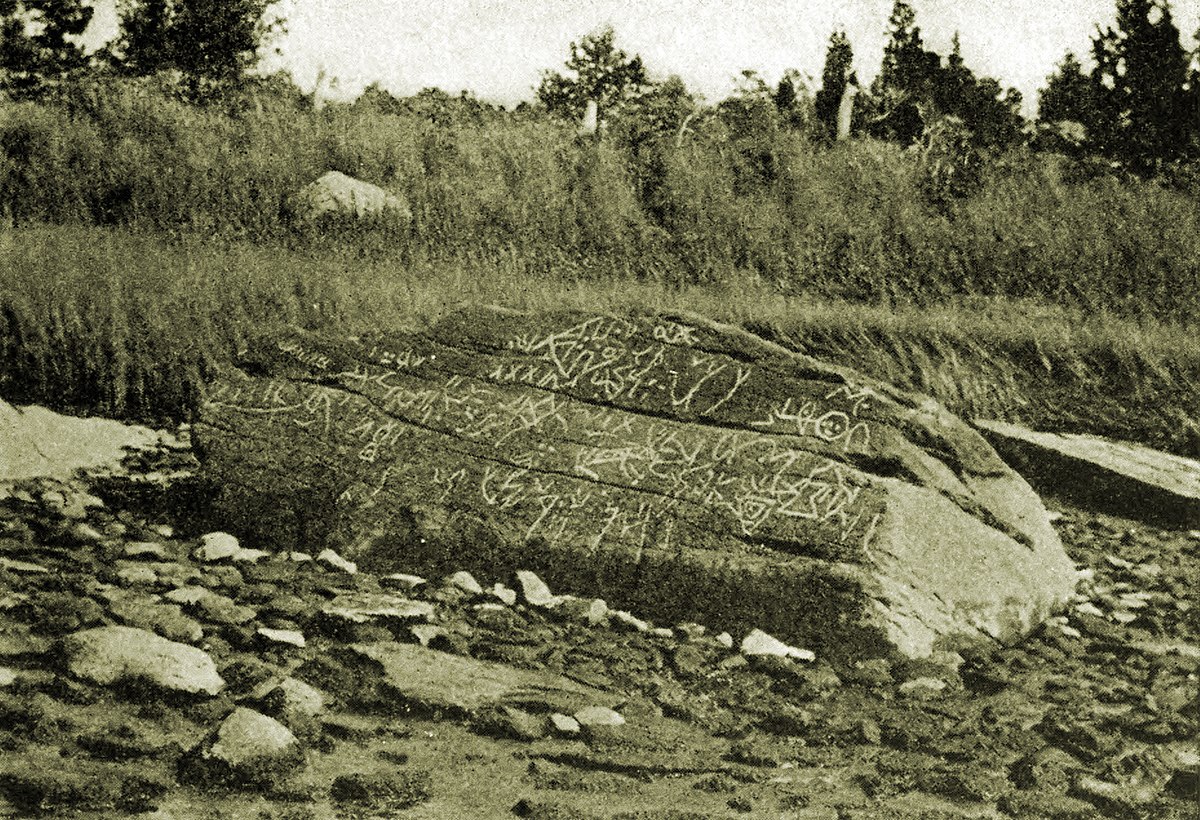
DIGHTON ROCK HAS BEEN THE subject of curiosity and wonder for longer than the U.S. has been a country. In 1690 Rev. Cotton Mather wrote

“Among the other Curiosities of New-England, one is that of a mighty Rock, on a perpendicular side whereof by a River, which at High Tide covers part of it, there are very deeply Engraved, no man alive knows How or When about half a score Lines, near Ten Foot Long, and a foot and half broad, filled with strange Characters: which would suggest as odd Thoughts about them that were here before us, as there are odd Shapes in that Elaborate Monument..”

As far back as 1783, people were making wild accusations about the origins of the rock. Congregationalist minister and academic Ezra Stiles was convinced the rock was made by Ancient Phoenicians. This gave way to speculations that the Norse did it, then that early Portuguese explorers carved it (possible), and most recently (and most unlikely) that the Chinese did it, proposed in the 2002 book “1421: The Year China Discovered America” which proposes the Chinese got here 70 years before Columbus.

Despite a few hundred years of speculation, the extensive petroglyphs on the rock have still not been explained conclusively. The most likely hypotheses attribute them to Native Americans or to the Portuguese explorer Miguel Corte-real. Proponents of pre-Columbian exploration of the Americas by Vikings, Phoenicians, and so forth, continue to claim these inscriptions as evidence.

Dighton Rock has been moved from its original location at the waterline of the nearby Taunton River, to a tiny museum in Dighton Rock State Park.
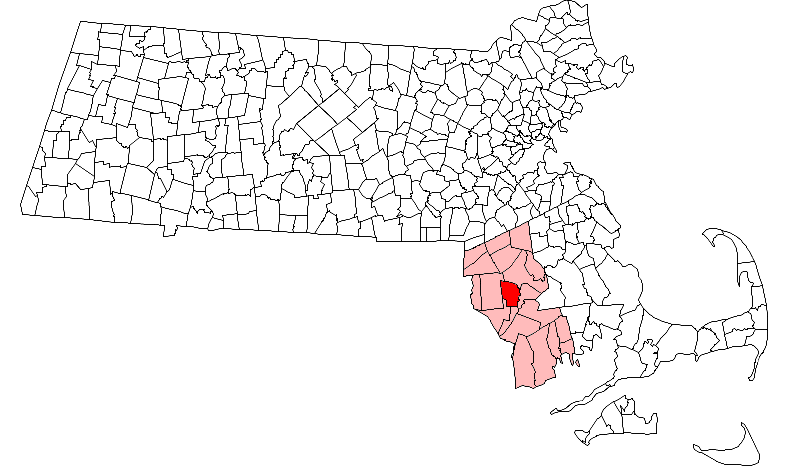


Source: Atlas Obscura
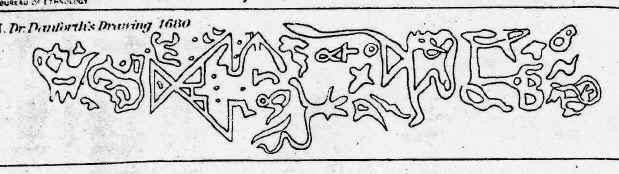
We know that Dighton Rock can't be a modern forgery because Reverend John Danforth made a sketch of it in 1680 (and that sketch is still preserved in a British museum).

What we don't know is who carved the design into Dighton Rock, when they carved it, and for what purpose. The main theories include:

1. Indigenous peoples (like the Wampanoag)
2. Ancient Phoenicians
3. Vikings
4. Portuguese
5. Chinese
So what can interpretations of Dighton Rock tell us about the human mind?

Dighton Rock, Delabarre [Brown University professor] concluded, was in all probability just one more example of the essentially meaningless markings often scratched into rocks by Indians. And as a psychologist he was able to explain why so many scholars had been deluded through the centuries. The rock, he declared, has an almost hypnotic effect on those who study it intently. In this respect it resembles a device known as the Rorschach test used by psychologists to dredge up unconscious levels of the mind. The Rorschach test presents lor interpretation colored ink blots printed on white cards. One man sees in these essentially meaningless blots a series of catastrophes—ships sinking, churches burning, volcanoes erupting. Another sees scenes of personal conflict—mothers scolding their children, brother fighting against brother. Dighton Rock, Professor Delabarre concluded alter long and intensive study, had since Cotton Mather’s day been serving as an ink blot for researchers, enabling them to see on it not what is really there but rather representations of the thoughts they have brought with them to the rock.
...
Professor Delabarre could readily explain such aberrations of the human mind.

“Everyone knows,” he wrote, “how easy it is to see pictures that at least almost seem real things in clouds, in flames and embers, in wall-paper patterns, in the graining of wood and the veining of marble, in frostcovered window-panes.… Whenever we can, we tend to find something definite in the faint and orderly in the confused and to trust what we find.… There is a pleasure in seeing uncertainties and irregularities resolve themselves into definite form, and the forms take on connected and acceptable meaning. If the critical attitude be not aroused or find no support, if no conflicting appearances or beliefs occur to mind, if rival possibilities arouse no liking, the apperceptively constructed object must be believed to be external.”

Dighton Rock, Delabarre continued, is an ideal stimulus for such subjective apperceptions; it presents “an abundance of lines that are faint and doubtful, and a vast confusion of other marks that are clearly observable and may or may not be artificial. There are numberless little pittings and protrusions, irregularities of texture, almost eroded remnants of undecipherable characters, minute cracks, light-reflections varying from dark to bright forming dots and blotches, small differences of color. Such materials can be woven together apperceptively into a thousand varying forms.” Indeed, at the end of a long day spent poring over his collection of Dighton Rock drawings and photographs, Delabarre jotted this conclusion in his notebook: “After prolonged and close searching, I got so that I could find any given figure almost anywhere.”


Source: The Enigma of Dighton Rock
Required
1

List at least three lessons we can learn about the human mind from our experiences with Dighton Rock.

You can start your response with statements like:
"Dighton Rock teaches us that the human mind tends to..."
"Dighton Rock teaches us that the human mind likes..."
"Dighton Rock teaches us that the human mind will often..."