Record five key facts you remember from the video.
Timothy McVeigh developed his suspicion of government authority at a young age—but two pivotal events pushed him over the edge.
BY: SARAH PRUITT
UPDATED: APRIL 19, 2023 | ORIGINAL: MAY 22, 2018
Source: The History Channel
During his adolescence in upstate New York, Timothy McVeigh developed an enthusiasm for guns and a suspicion of governmental authority. He drew inspiration from the 1978 novel The Turner Diaries, written by the white nationalist William Luther Pierce, which depicts a right-wing insurrection against a tyrannical federal government seeking to deprive citizens of their right to bear arms. But this was only the beginning of McVeigh’s anti-government stance.
As a soldier in the U.S. Army, McVeigh won a medal for bravery in the Persian Gulf War, but after his discharge in 1991 he began frequenting gun shows and developed even stronger suspicions of the U.S. government.
List three ideas that the author of the book The Turner Diaries was trying to spread.
Timothy McVeigh first started to become suspicious of the federal government after being discharged from the Army following the Persian Gulf War.
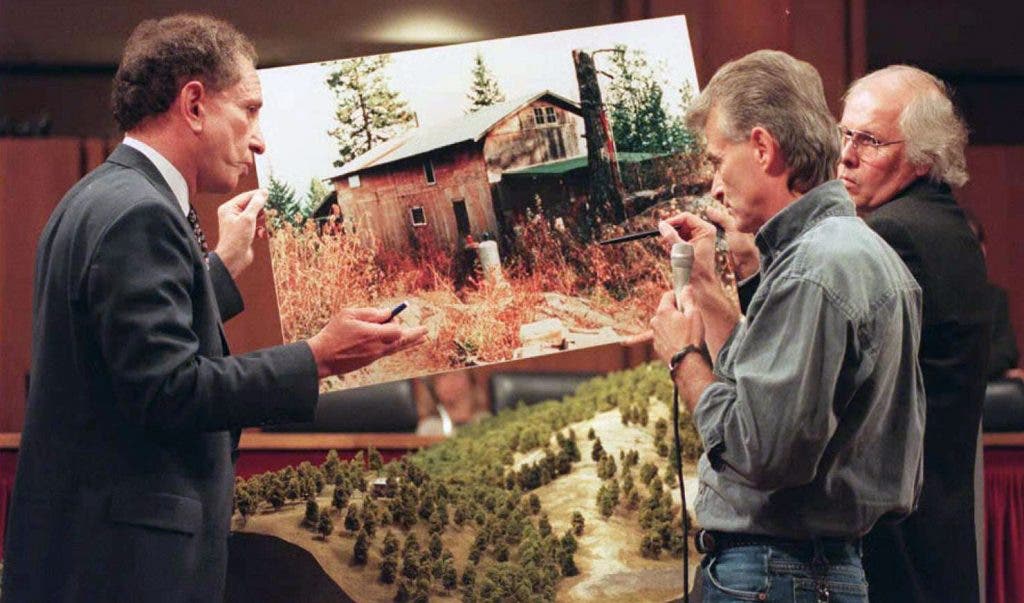
Then came the notorious Ruby Ridge standoff of August 1992, when U.S. marshals attempted to apprehend a man named Randy Weaver at his family’s remote hillside cabin in northern Idaho. Weaver, who had resisted efforts by the Bureau of Alcohol, Tobacco and Firearms (ATF) to force him to inform on the white supremacist group Aryan Nations, hadn’t shown up for his trial on weapons charges.
An initial exchange of fire left Weaver’s 14-year-old son and a U.S. marshal dead. Federal authorities then laid siege to Weaver’s cabin for 11 days, during which an FBI sniper wounded Weaver and family friend Kevin Harris and killed Weaver’s wife, Vicki.
McVeigh viewed Ruby Ridge as clear evidence that the U.S. government aimed to disarm the public and take away people’s Second Amendment rights.
The U.S. Marshals were the federal agency responsible for apprehending Randy Weaver at his remote cabin.
Ruby Ridge is in the state of Idaho.
Randy Weaver volunteered to become an informant for the ATF and give them information on local Aryan Nations groups.
Randy Weaver was on trial for weapons charges.
Despite federal agents laying siege to the Weaver cabin for 11 days, no one died at Ruby Ridge.
How did the incident at Ruby Ridge impact Timothy McVeigh's views on government?
McVeigh reacted even more strongly to federal authorities’ handling of a 51-day standoff with members of the Branch Davidian religious sect near Waco, Texas. Like Ruby Ridge, the Waco siege began with an ATF raid; it ended in a fire that killed around 75 members of the millennial sect in April 1993.
McVeigh was far from alone in his outrage: Ruby Ridge and the events at Waco fueled anger within the fledgling American militia movement and other far-right groups at what they saw as an oppressive government determined to attack and suppress anyone who (like Weaver or the Davidians) refused to conform to its will.
Why did Timothy McVeigh see the events at Waco and the events at Ruby Ridge as being connected? What did they have in common? How did he react to both of them?
The events at Ruby Ridge and Waco led to growth in the American militia movement.
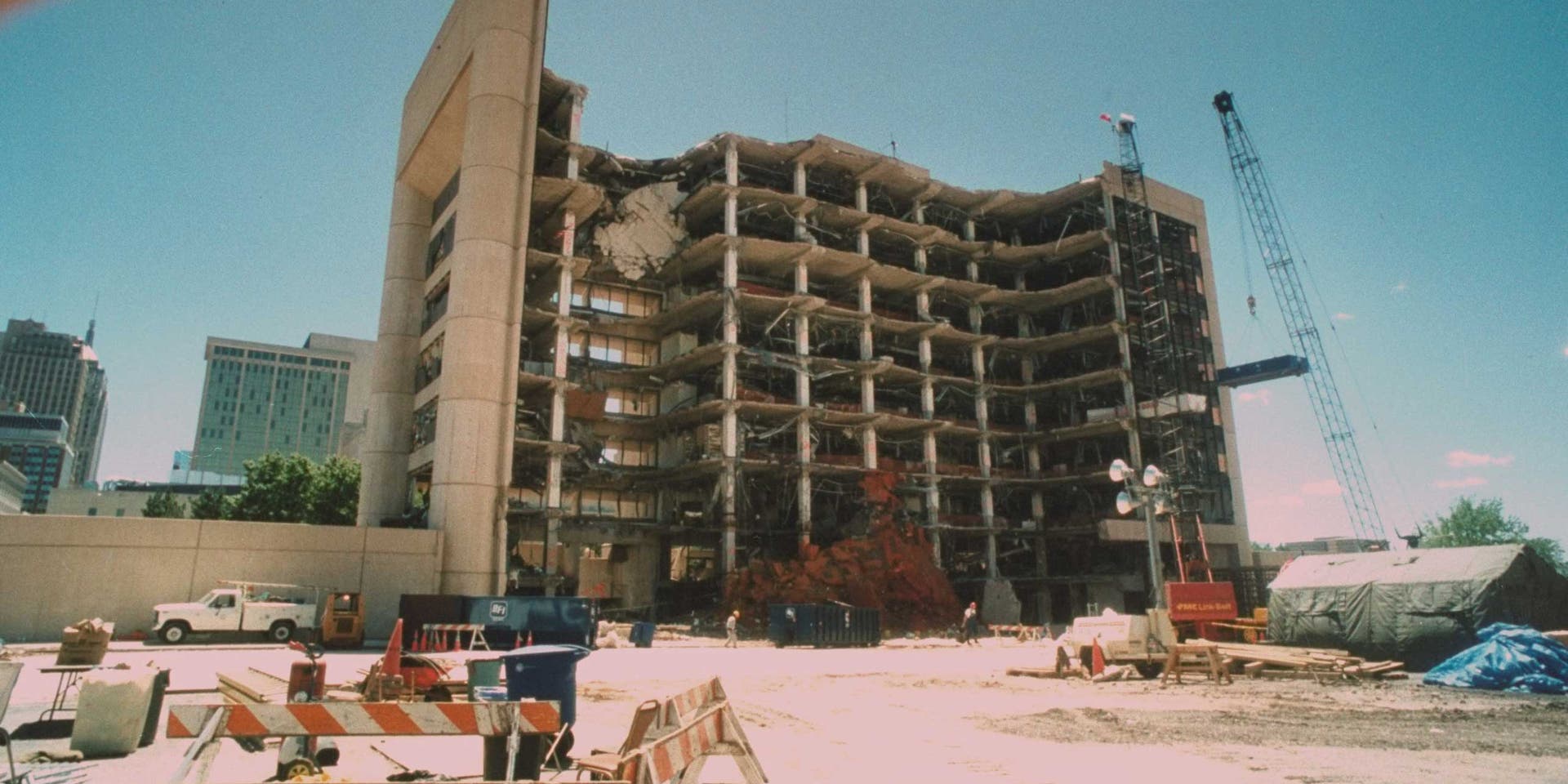
On April 19, 1995—exactly two years after the fiery conclusion of the botched Waco siege—McVeigh detonated explosives planted in a truck outside the Alfred P. Murrah Federal Building in Oklahoma City. He plotted the attack with two fellow Army veterans who shared his anti-government views, Terry Nichols and Michael Fortier.
The building housed offices for the Social Security Administration, the Drug Enforcement Administration (DEA), the Secret Service and the ATF, among other organizations. It also housed a veterans’ counseling center, a military recruitment office and a daycare center.
The Oklahoma City Bombing killed 168 people, including 19 children, and wounded hundreds more, in the worst terrorist attack in U.S. history to that date.
Before he was executed in 2001, McVeigh made it clear that he intended the bombing as retribution for the deaths at Waco and Ruby Ridge, and had deliberately planned the bombing to take place on the second anniversary of the Waco disaster.
The Oklahoma City Bombing took place exactly two years after Waco.
Timothy McVeigh acted alone when planning the attack on the federal building in Oklahoma City.
Timothy McVeigh was executed for carrying out what was the worst terror attack in America at that time.
For what two reasons did these people feel like they were being suppressed?
Why was this location called Mt. Carmel?
What types of bumper stickers was Timothy McVeigh selling when he went down to Waco?
Timothy McVeigh saw the siege at Waco as clear evidence that the government would __________________.