1.2 - Can an organism have more than one cell?
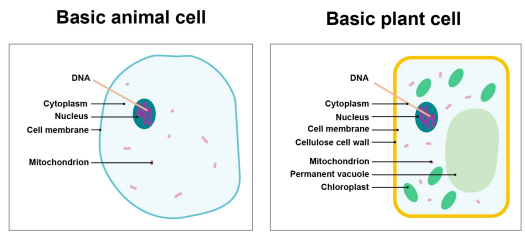
A cell. A single unit of life. Cellular = . All organisms are made of cells. However, some organisms are multicellular & others are unicellular. The meanings of these words can be determined by understanding the prefixes.
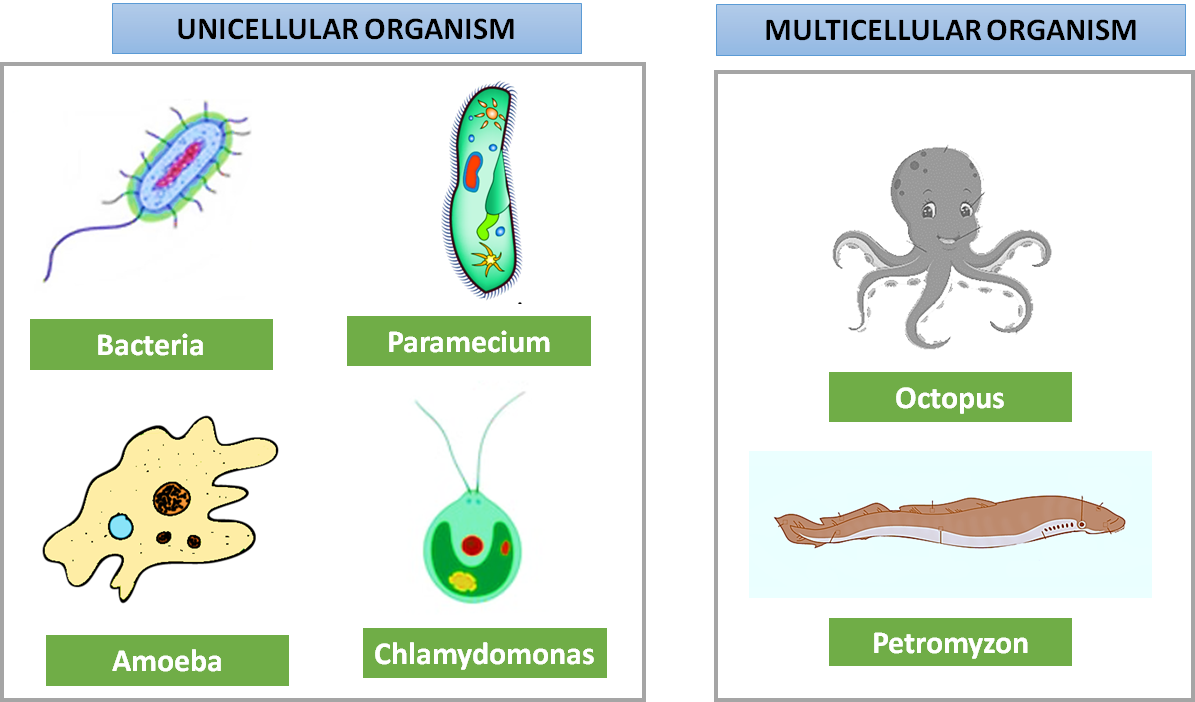
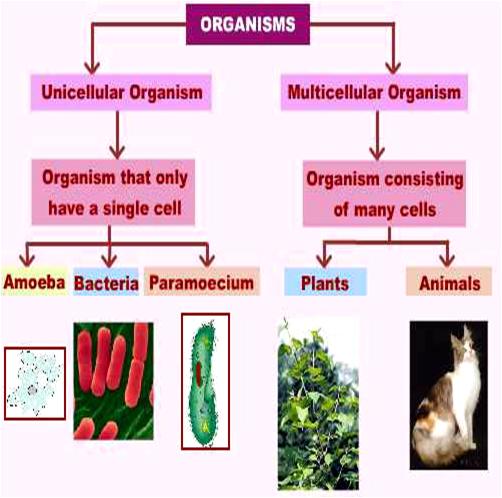
A unicycle is a bicycle with one tire. A guy with one eyebrow has a unibrow. In both cases the prefix was used as the word one. A unicellular organism is . Some pond water organisms like are unicellular. These organisms than one cell. However when they do multiply through which is a form of asexual reproduction. Unlike amoebas humans & other animals are multicellular.
The word multicellular can be better understood by looking at the prefix. Multimillionaire is a person with many . The word multicolored describes something having many different . In both cases, the word multi was used as the word . A multicellular organism is a living thing made of many cells. Land plants, animals & specific fungi are multicellular. Although you are made of a large number of cells today, humans arose from a cell & developed through the process of cellular division to become the complex organism you are today. Unicellular & multicellular.