Log in
Sign up for FREE
arrow_back
Library

#6 Inequalities and Interval Notation Due 8/26/20

star
star
star
star
star
Last updated 2 months ago
49 questions
Required
5
Required
2
Required
2
Required
5
10
10
Required
2
Required
2
Required
2
Required
2
Required
2
Required
2
Required
2
Required
10
Required
8
Required
5
Required
5
Required
10
Required
5
Required
5
Required
5
Required
10
Required
5
Required
2
Required
2
Required
5
Required
5
Required
5
Required
40
Required
10
Required
5
Required
5
Required
5
Required
5
Required
5
Required
5
Required
5
Required
5
Required
5
Required
5
Required
5
Required
2
Required
2
Required
2
Required
2
Required
2
Required
2
Required
2
Required
2

Essential Question: How can the domain and range be written in interval notation?


Students will be able to convert the domain and range of functions and into interval notation.


Show you work for full credit.

Question 1
1.

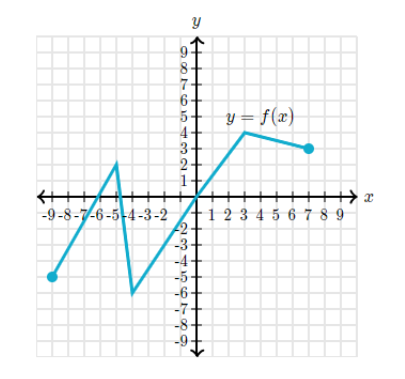
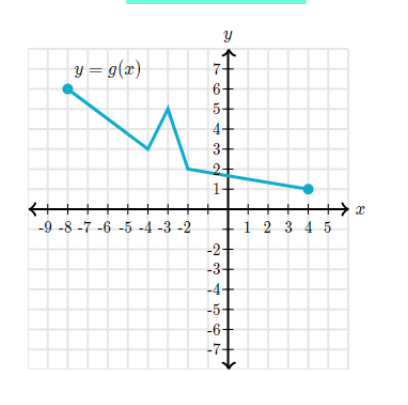
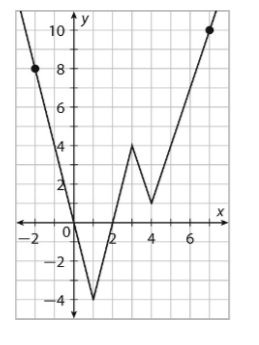
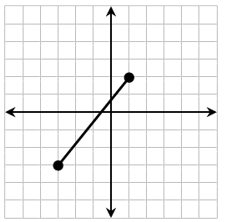
Look at the graph of f(x) and describe what the function is doing between x=-4 and x=3.

Question 2
2.

Question 3
3.

Question 4
4.

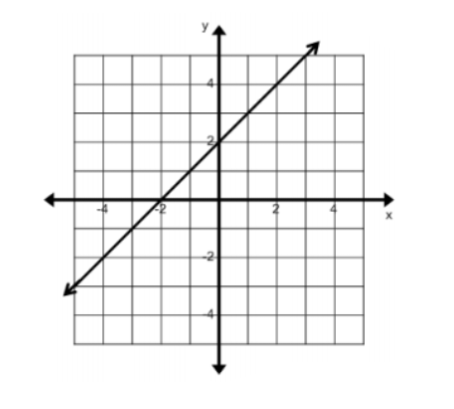
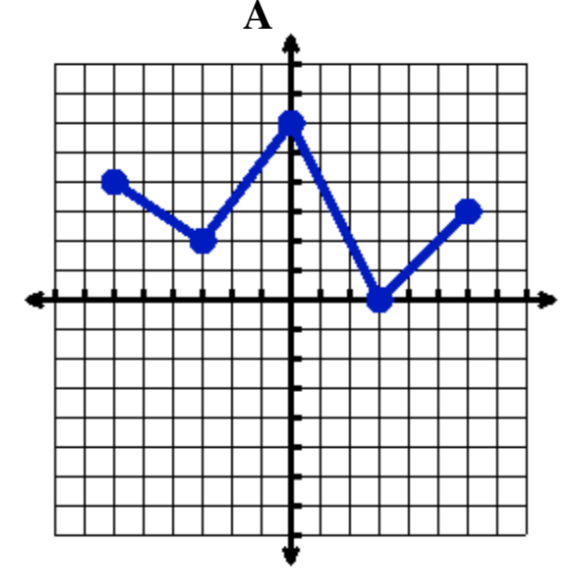
How would you find the domain of this function?

Question 5
5.

Use interval notation to describe the domain of this function.

Question 6
6.

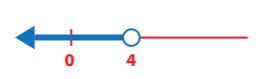
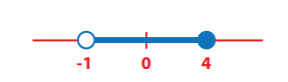
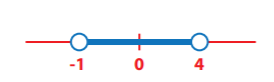
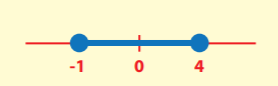
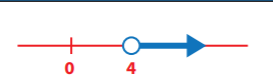
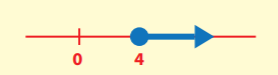
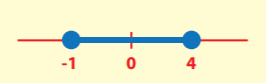
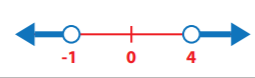
Use the graph on each number line to write the subset of numbers it represents.

Question 7
7.

Question 8
8.

Question 9
9.

Question 10
10.

Question 11
11.

Question 12
12.

Question 13
13.

Question 14
14.

Question 15
15.

Question 16
16.

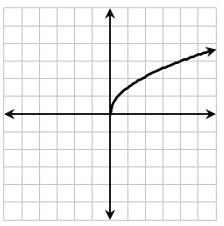
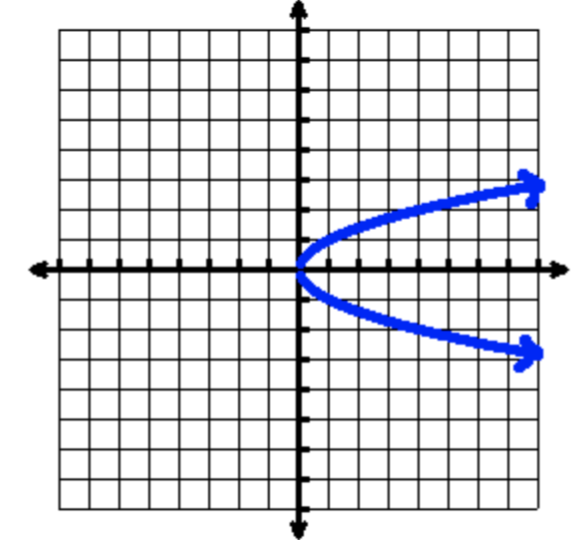
Use interval notation to describe the domain of this function.

Question 17
17.

Use interval notation to describe the domain of this function.

Question 18
18.

How would you find the range of this function?


Question 19
19.

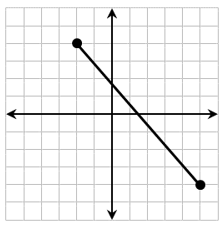
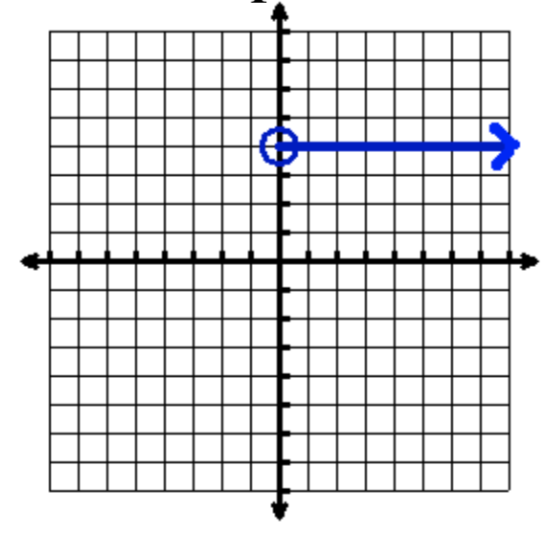
Use interval notation to describe the range of this function.

Question 20
20.

Use interval notation to describe the range of this function.

Question 21
21.

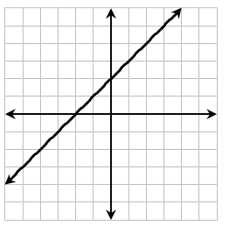
Use interval notation to describe the range of this function.

Question 22
22.
What intervals of x is the function f(x) increasing?

_______
_______

Question 23
23.

For what interval of x is the function f(x) decreasing?

Question 24
24.

Question 25
25.

Question 26
26.

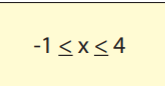
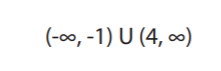
Write the following in interval notation. Use the little side keyboard to find infinity if you need it and type your answer.

Question 27
27.

Write the following in interval notation.

Question 28
28.

Write the following in interval notatin.

Question 29
29.

Draggable itemarrow_right_altCorresponding Item
arrow_right_alt
arrow_right_alt
arrow_right_alt
arrow_right_alt
arrow_right_alt
arrow_right_alt
arrow_right_alt
arrow_right_alt
Question 30
30.

Create a mapping diagram, table, and graph for the relation given by the following coordinates:
(-2, 4), (1, 0), (3, -1), (-4, 4)

Question 31
31.

What is the domain? Use interval notation. No spaces.

Question 32
32.

What is the range? Use interval notation. No spaces.

Question 33
33.

What is the domain? Use interval notation. No spaces.

Question 34
34.

What is the domain? Use interval notation. No spaces.

Question 35
35.

What is the range? Use interval notation. No spaces.

Question 36
36.

What is the domain? Use interval notation. No spaces. Open the keyboard for the infinity symbol if necessary.

Question 37
37.

What is the range? Use interval notation. No spaces. Open the keyboard for the infinity symbol if necessary.

Question 38
38.

What is the domain? Use interval notation. No spaces. Open the keyboard for the infinity symbol if necessary.

Question 39
39.

What is the domain? Use interval notation. No spaces. Open the keyboard for the infinity symbol if necessary.

Question 40
40.

What is the domain? Use interval notation. No spaces. Open the keyboard for the infinity symbol if necessary.

Question 41
41.

What is the range? Use interval notation. No spaces. Open the keyboard for the infinity symbol if necessary.

Question 42
42.

Question 43
43.

Question 44
44.

Question 45
45.

Question 46
46.

Question 47
47.

Question 48
48.

Question 49
49.

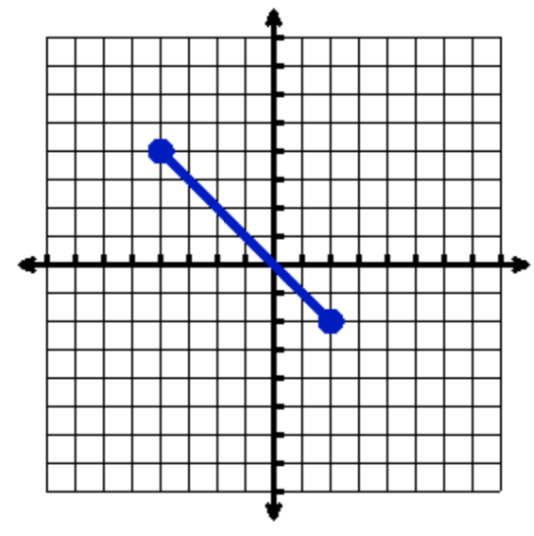
All the values of y on the graph are between -6 and 4.
True
False
All the values of x on the graph are between -8 and 7.
True
False
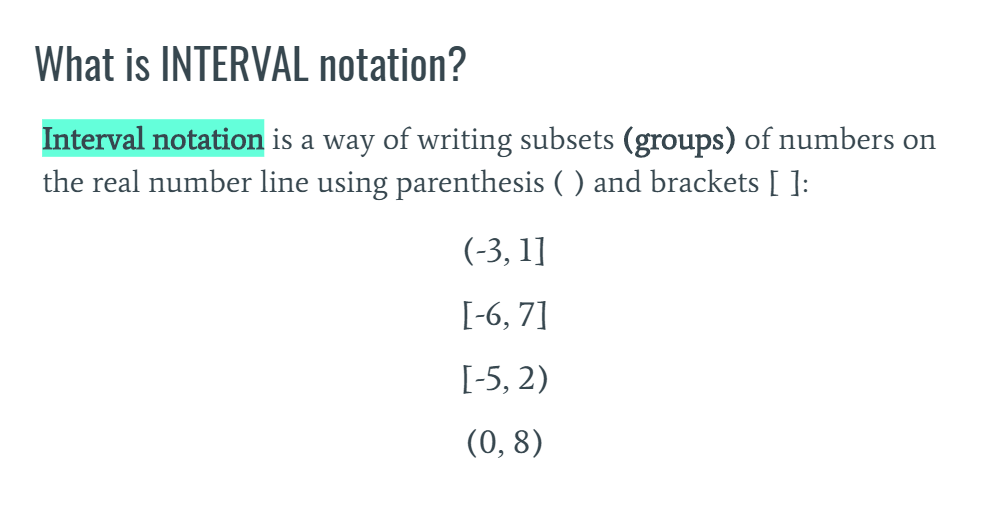
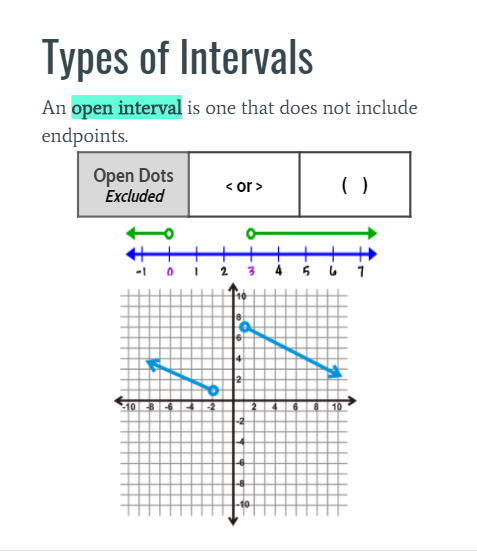
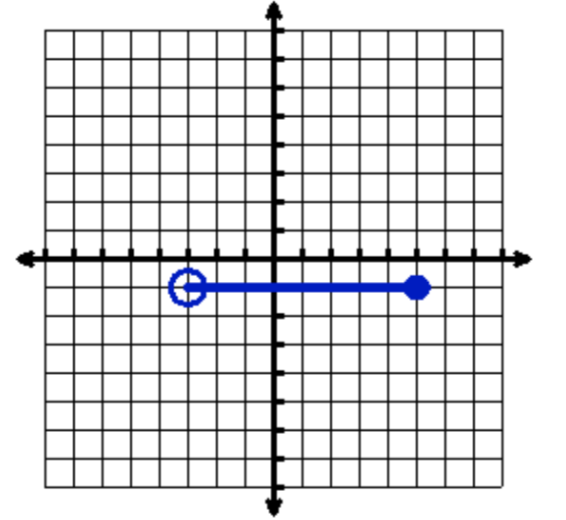
Is this an open or closed interval?

Open (not equal to; not included)
Both
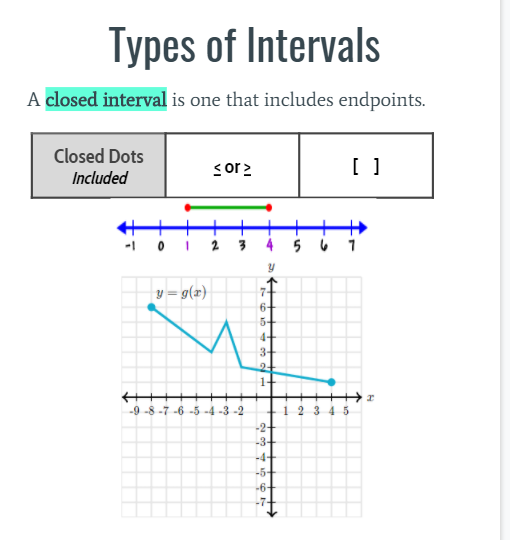
Closed (equal to; including)
Is this an open or closed interval?

Open (not equal to; not included)
Both
Closed (equal to; including)
Is this an open or closed interval?

Both
Open (not equal to; not included)
Closed (equal to; including)
Is this an open or closed interval?
Both
Closed (equal to; including)
Open (not equal to; not included)
Is this an open or closed interval?

Closed (equal to; including)
Both
Open (not equal to; not included)
Is this an open or closed interval?

Both
Closed (equal to; including)
Open (not equal to; not included)
Is this an open or closed interval?

Closed (equal to; including)
Open (not equal to; not included)
Both
Put the interval notations and graphs in the right category.
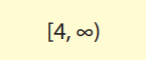
[5,∞)
(3,5]
[3,5)
(3,5)
(-∞,-9)
[3.5]
Open Interval
Closed Interval
Both
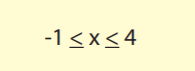
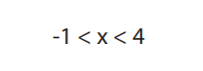
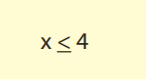
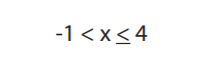
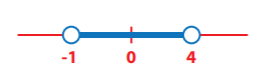
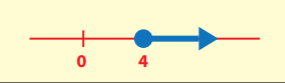
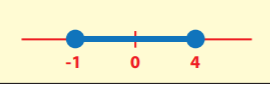
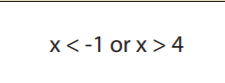
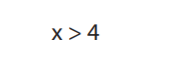
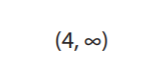
Match the inequailty and graph with the correct interval notation.
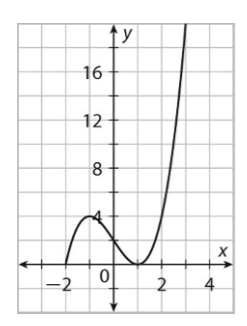
For what interval of x is the function f(x) negative?
[3,4]
[-1,2]
[0,2]
[-3,0]
For what interval of x is the function f(x) positive?
[0,1]
[0,2]
[1,7]
[-2,-1]
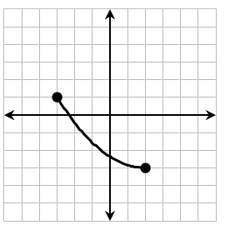
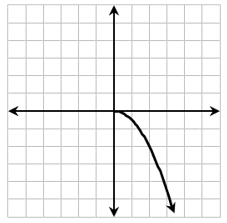
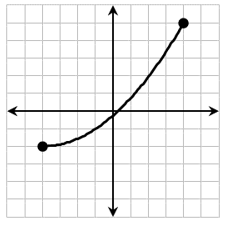
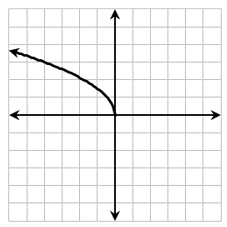
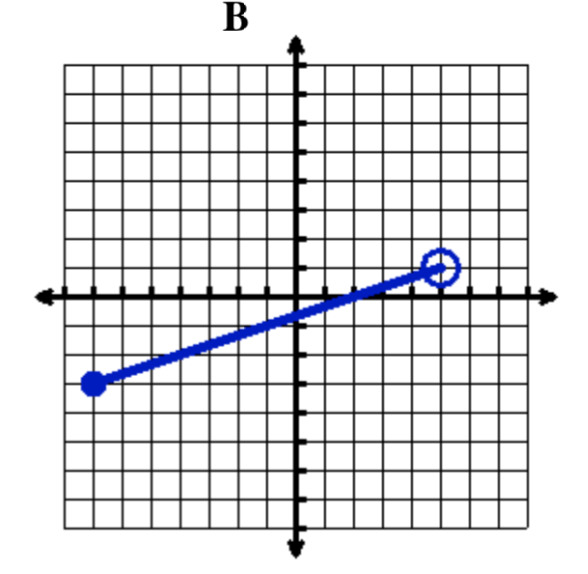
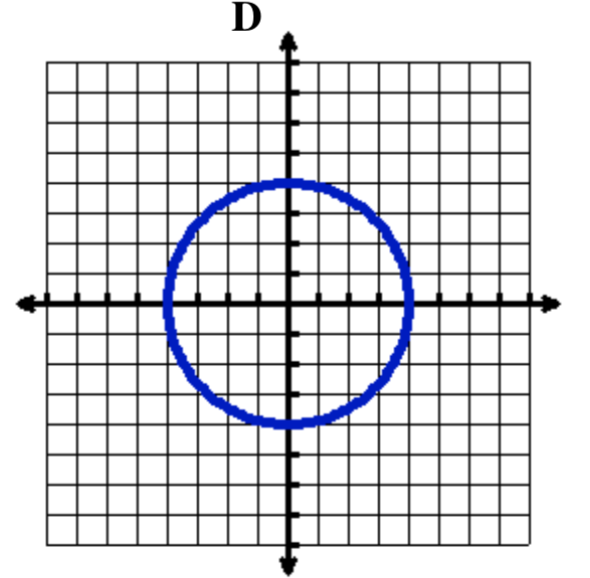
Match each graph to its domain and range.
Click HERE to watch the following tutorial on how to match. (Ignore the end of the video)


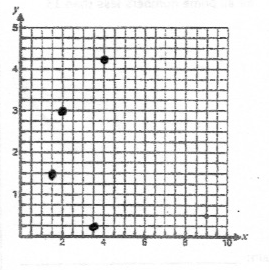
What is the domain of the function?
{0.5, 1.5, 3, 4.5}
1.5 < x < 4
{1.5, 2, 3.5, 4}
What is the range of the function?
1.5 < y < 4
{0.5, 1.5, 3, 4.5}
{1.5, 2, 3.5, 4}
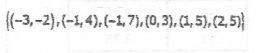
What is the range of the function?
{-3, -1, 0, 1, 2}
{-2, 4, 7, 3, 5,}
-2 < y < 5
-3 < y < 2
What is the domain of the function?
-2 < x < 5
{-3, -1, 0, 1, 2}
-3 < x < 2
{-2, 4, 7, 3, 5,}
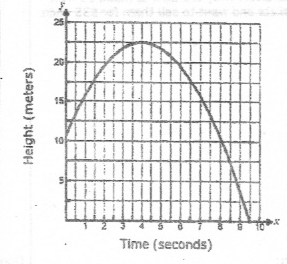
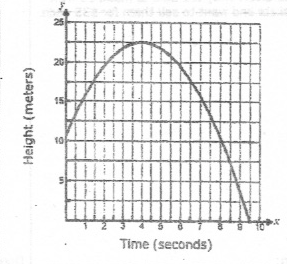
What is the domain of the function?
What is the range of the function?
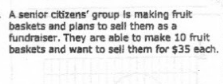
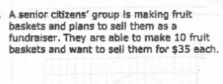
What is the domain of the function?
{ 0, 1, 2, 3, 4, 5, 6, 7, 8, 9, 10}
What is the range of the function?
{ 35, 70, 105, 140, 175, 210, 245, 280, 315, 350}