Translate this expression.
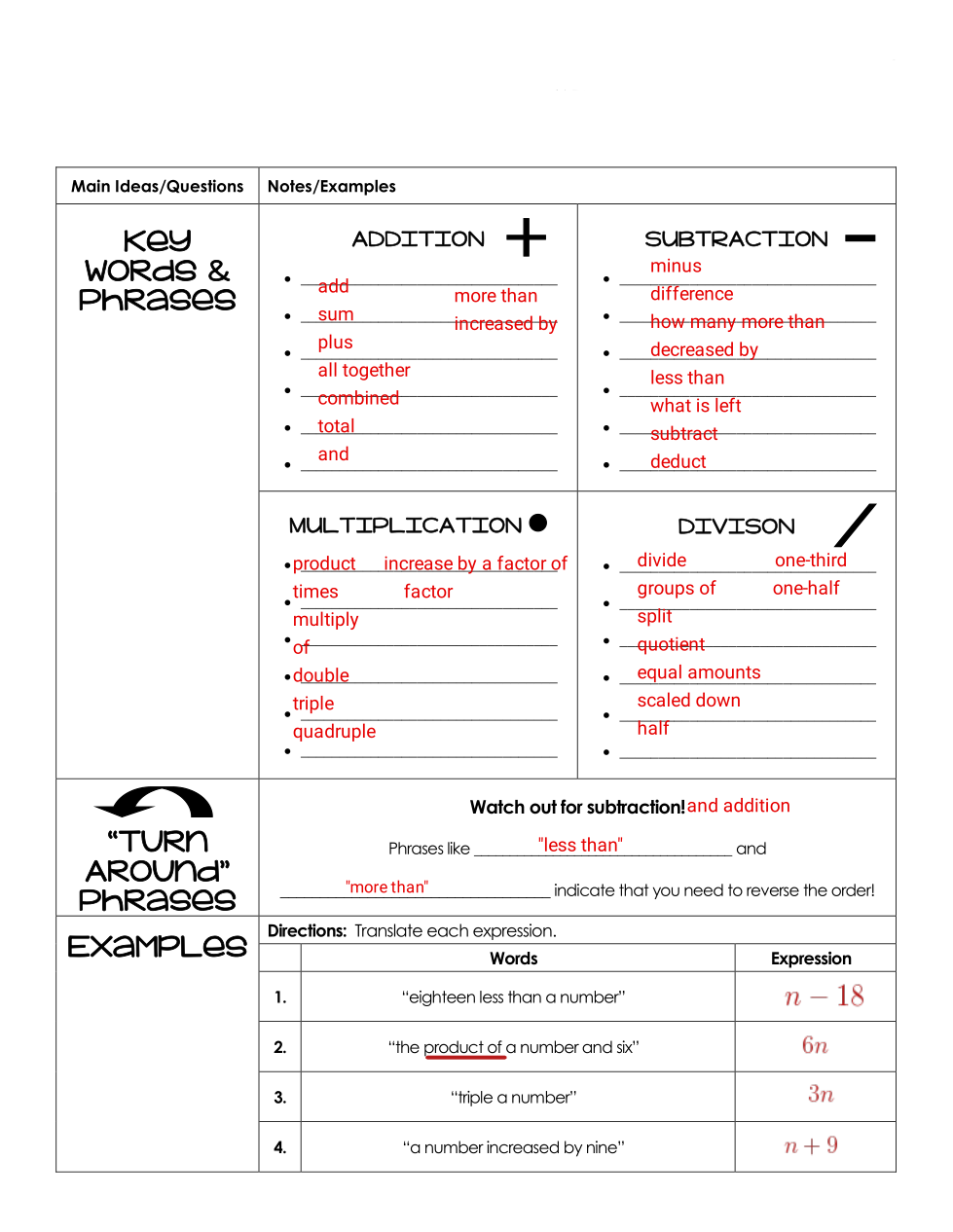
“eighteen less than a number”
Translate this expression.
“the product of a number and six”
Translate this expression.
“triple a number”
Translate this expression.
“a number increased by nine”
Translate this expression.
“the quotient of a twenty and a number”
Write each expression in words
-12+n
Write each expression in words
-2/n
Write each expression in words
9x
Write each expression in words
k-14
Directions: Simplify each expression.
Directions: Give the perimeter of each figure as a simplified expression.
1. How many terms does the expression have?
2. What are the variables?
3. What are the coefficients?
4. What is the constant?
1. How many terms does the expression have?
2. What are the variables?
3. What are the coefficients?
4. What is the constant?
Evaluate each expression using the variable replacements.
The cost of either a can of gourmet chili is $2.25 and a can of hearty soup is $1.75. Ton Nam bought cans of chili and soup. He wrote an expression to describe the purchase where c represents the number of cans of chili and s represents the number of cans of soup. Write an expression to present how much he might spend based on the number of cans of each that he bought.
Simplify each expression by distributing.
Simplify each expression by distributing.
Simplify each expression by distributing and combining like terms.
Simplify each expression by distributing and combining like terms.
Match the operation with its inverse.
| Draggable item | arrow_right_alt | Corresponding Item |
|---|---|---|
inverse of division | arrow_right_alt | subtraction |
inverse of addition | arrow_right_alt | addition |
inverse of subtraction | arrow_right_alt | division |
inverse of multiplication | arrow_right_alt | multiplication |
Put these operations in the order by which you perform them to simplify an expression. (first to last)
parentheses ( )
subtraction
exponents
division
addition
multiplication
To solve an equation we need to undo operations to isolate a variable. So, we need to undo PEMDAS. This means we need to work in a different order.
Put these operations in the order by which you perform them to solve an equation. (first to last)
parentheses ( )
addition and subtraction (outside parentheses)
multiplication and division
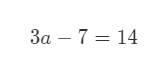
Put the steps to solving this equation in the right order.
the result is x=7
Before we start solving, we identify the variable a, so we can solve for it the variable
divide both sides of the equation by 3
add 7 to both sides of the equation
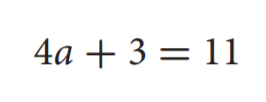
Solve this equation.
What is the first step to solving this equation?
What is the second step to solving this equation?
Solve this equation.
17 + 3k = 26
Solve this equation.
15h - 9 = - 54
Solve this equation.
Put the steps in the correct order to solve this multistep equation.
Use distribution to multiply (7a+5) by -4 to get -28a - 20
undo subtract 20 by adding 20 to both sides of the equations to get -28a = -140
undo multiplying by -28 by dividing by both sides of the equation by -28 to get a = 5
The solution is a = 5
Check the solution by evaluating the original expression -4(7a+5) to verify that it equals -160
Solve this multi-step equation. Show your work (SYW)
Put the steps in the correct order to solve this multistep equation.
undo multiplying by -7 by dividing by both sides of the equation by -7 to get x = -4
Check the solution by evaluating the original expression -4x -7 - 3x +4 to verify that it equals 25
The solution is x = -4
undo subtract 3 by adding 3 to both sides of the equations to get -7x = 28
Simplify like terms to get the equation -7x - 3 = 25
Solve this multi-step equation. Show your work (SYW)
Solve this multi-step equation. Show your work (SYW)
Solve this equation
Solve this equation
Cross multiply and fill in each box with the right product.
a.
b.
Solve each proportion. Show your work! Or suffer the consequences...
Solve each proportion. Show your work! Or suffer the consequences...
Cross multiply and fill in each box with the right product.
a.
b.
Solve each proportion. Show your work! Or suffer the consequences...
Solve each proportion. Show your work! Or suffer the consequences...
Jasmine bought 1000 robux for $8 with her parents' money. At the same exchange rate, how many robux can Lisa buy if she stole $24 from her parents?
Directions: Solve this equation for the specific letter. SHOW ALL STEPS!
Directions: Solve this equation for the specific letter. SHOW ALL STEPS!
Solve and graph the inequality for the given variable.
Solve and graph the inequality for the given variable.
Use the set of ordered pairs to complete the relation table, relation mapping, and coordinate graph.
Determine whether the given relation is a function. (Function or Not a Function)
Determine whether the given relation is a function. (Function or Not a Function)
Determine whether the given relation is a function. (Function or Not a Function)
Determine whether the given relation is a function. (Function or Not a Function)
Determine whether the given relation is a function. (Function or Not a Function)
Determine whether the given relation is a function. (Function or Not a Function)
Determine whether the given relation is a function. (Function or Not a Function)
Directions: Complete each function table, then graph the function.
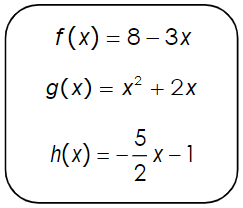
Evaluate each function for the given value.
Evaluate each function for the given value.
Evaluate each function for the given value.
Find the next three terms of each sequence.
3, 7, 11, 15,
Find the next three terms of each sequence.
10, 6, 2,
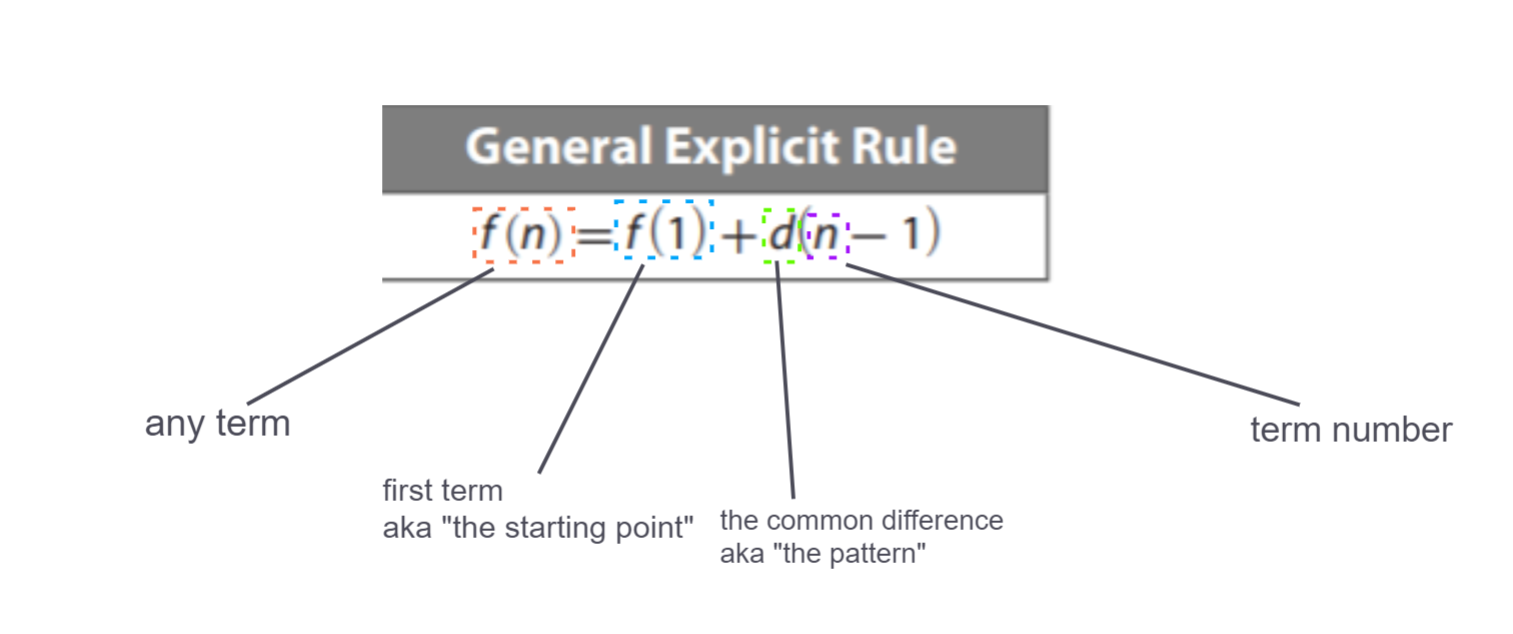
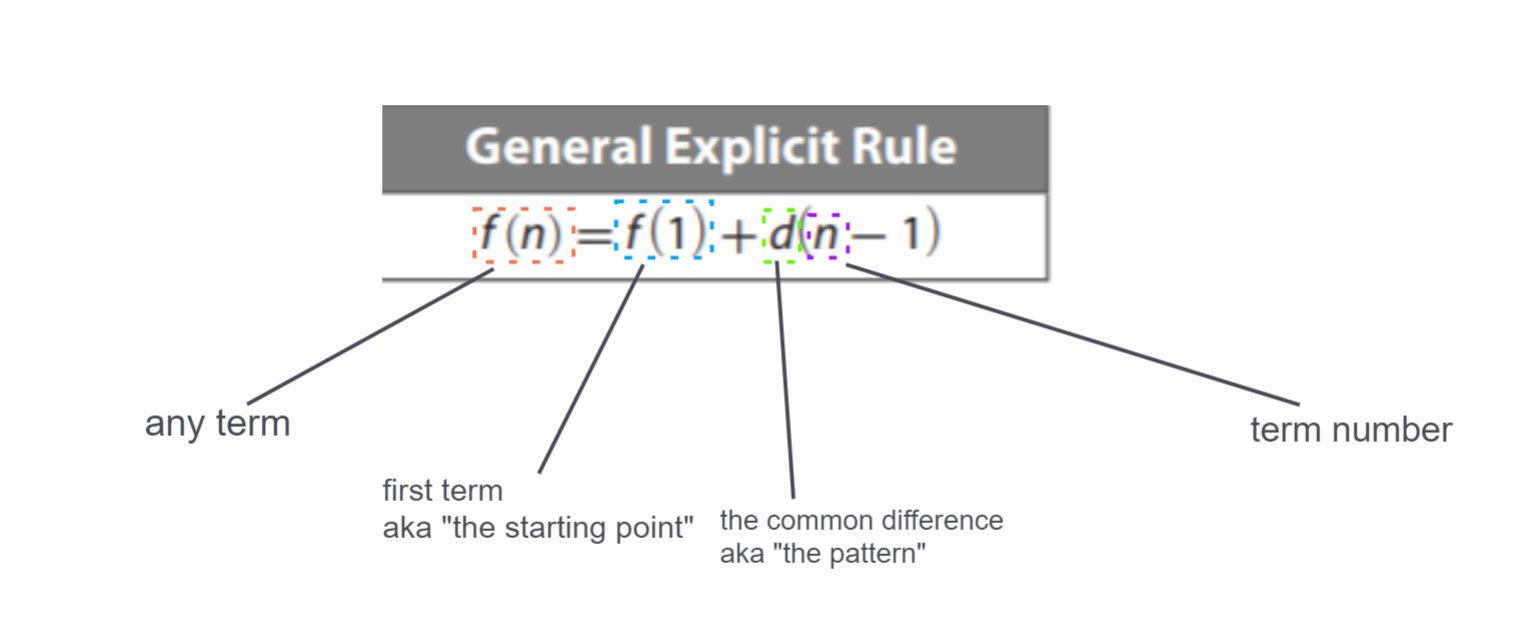
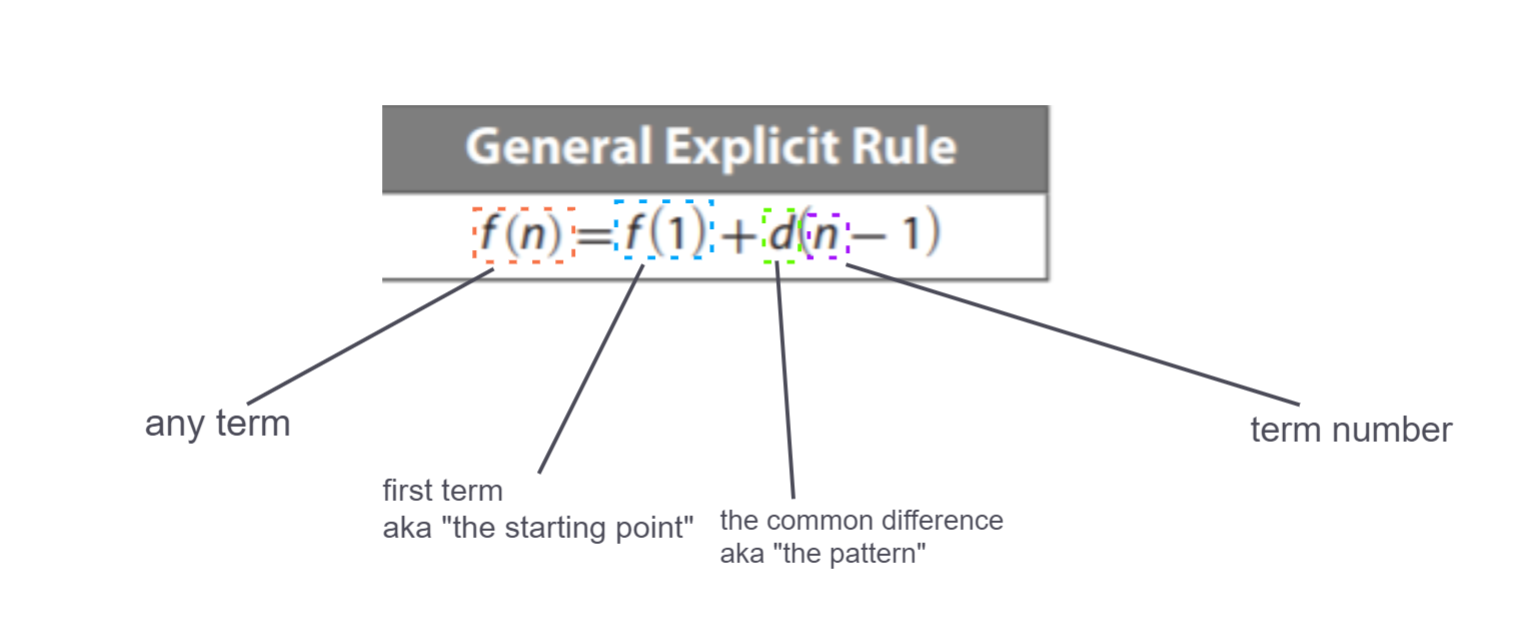
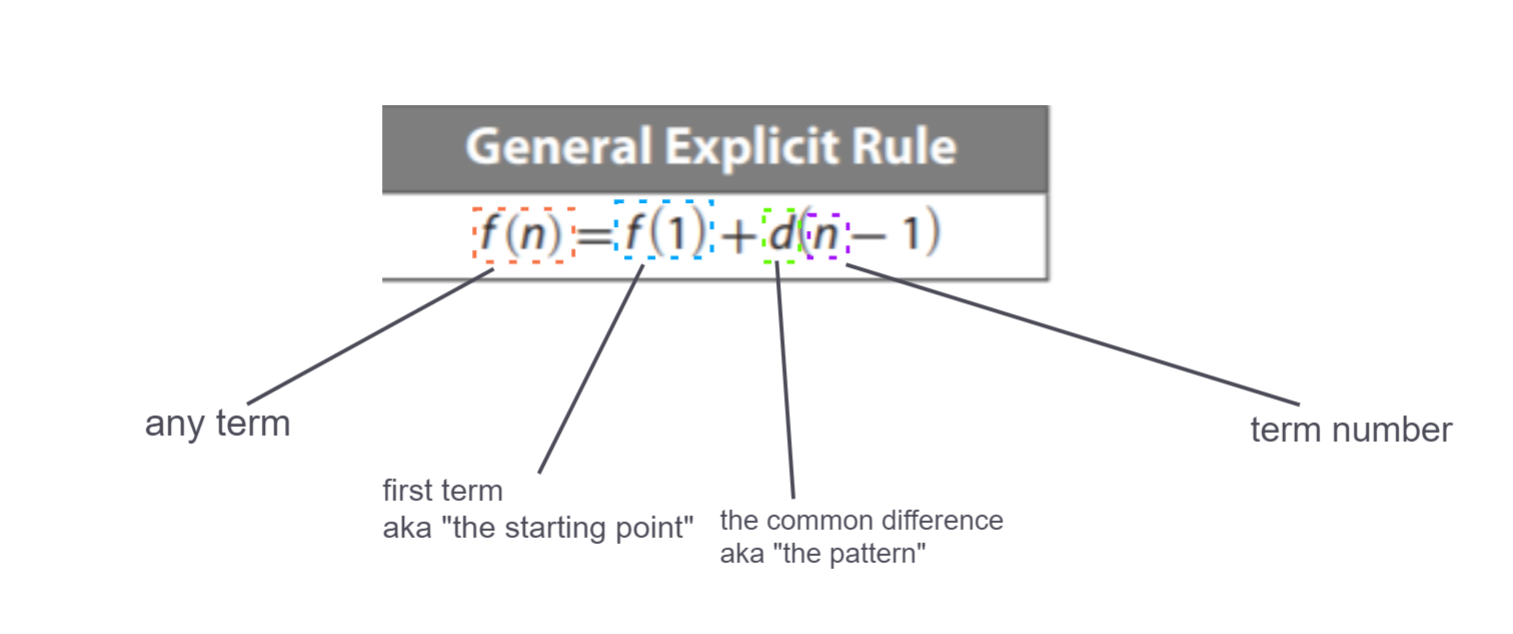
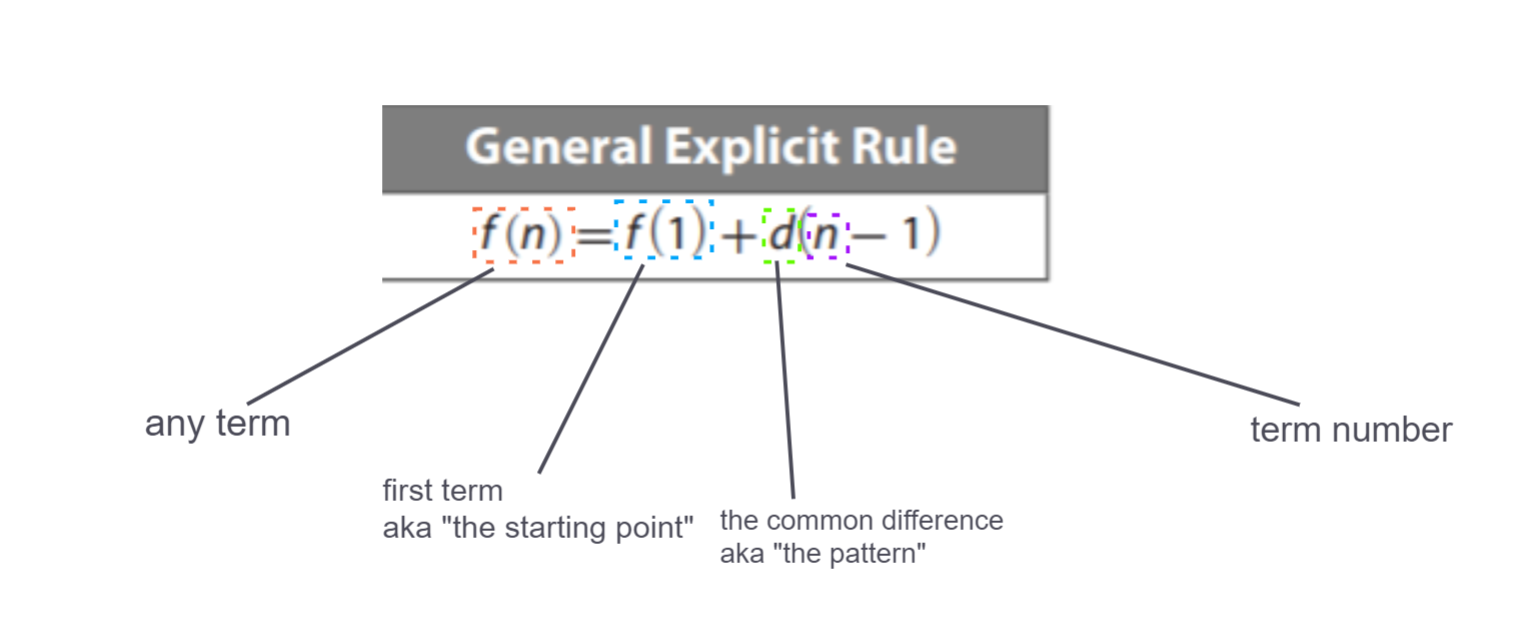
What does f(1) mean?
What does f(n) mean?
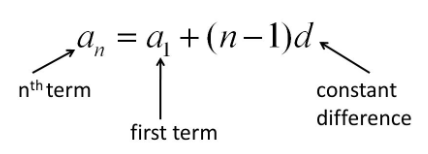
What does d mean?
What does n mean?
What is the explicit rule of this arithmetic sequence?
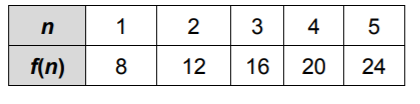
What is the explicit rule of this arithmetic sequence?
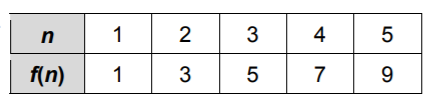

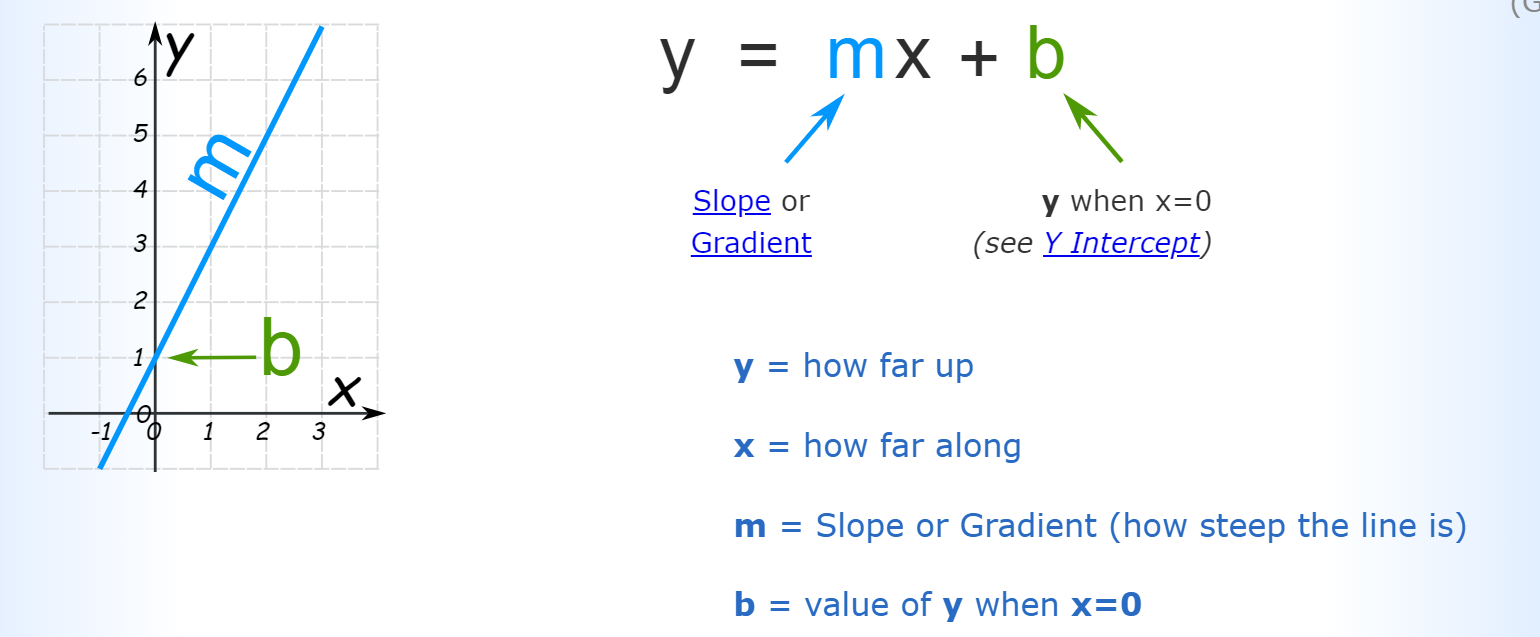
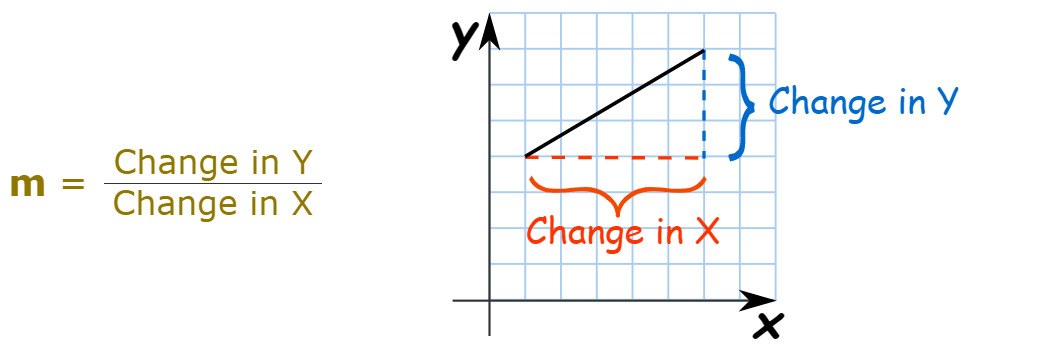
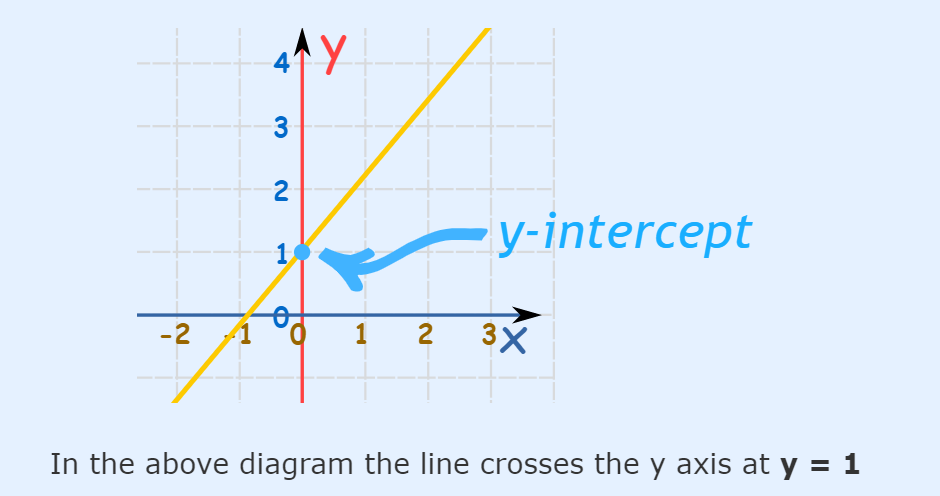
Write the equation in slope intercept form with the given information:
Write the equation in slope intercept form with the given information:
Write the equation of this line in slope-intercept form. (10pts)
Write the equation of this line in slope-intercept form. (10pts)
Given the slope and y-intercept of the line, write the equation
in slope-intercept form:
slope = 3; y-intercept = -4
Given the slope and y-intercept of the line, write the equation
in slope-intercept form:
slope = -3/2; y-intercept = 7
Directions: Find the slope between each pair of points:
(-5, 8) and (-7, 5)
Directions: Find the slope between each pair of points:
(1, 3) and (3, 9)
Use the slope and the y-intercept of each equation to graph the equation.
slope:
y-intercept:
Use the slope and the y-intercept of each equation to graph the equation.
slope:
y-intercept:
What are the x and y-intercepts of this function?
x-intercept
y-intercept
What are the x and y-intercepts of this equation:
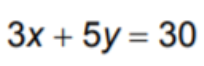
x-int
y-int
Use x and y-intercepts of this equation to graph it.
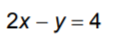
Use x and y-intercepts of this equation to graph it.
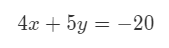
Find the first term and common difference in this sequence:
1, 3, 5, 7, ...
a₁=
d=
Write the explicit formula to find the nᵗʰ term of this sequence (you can use either notation):
1, 3, 5, 7, ...
Use the explicit formula you created from the last problem to find the 24ᵗʰ term of this sequence:
1, 3, 5, 7, ...
Find the first term and common difference in this sequence:
-1, -4, -7, -10, ...
a₁=
d=
Write an equation to find the nᵗʰ term of this sequence (you can use either notation):
-1, -4, -7, -10, ...
Use the explicit formula you created from the last problem to find the 24ᵗʰ term of this sequence:
-1, -4, -7, -10, ...
Charlie deposited $115 in a savings account. Each week thereafter, he deposits $35 into the account.
Write a formula to represent this sequence.
Charlie deposited $115 in a savings account. Each week thereafter, he deposits $35 into the account.
How much total money has Charlie
deposited after 30 weeks?