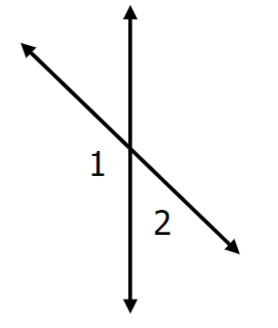
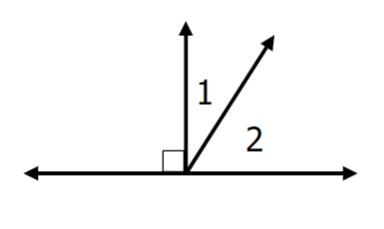
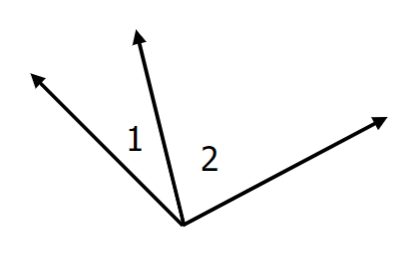
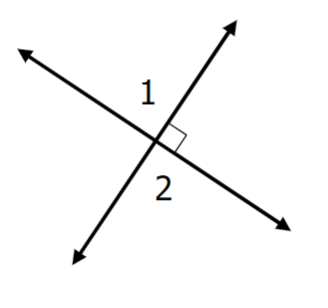
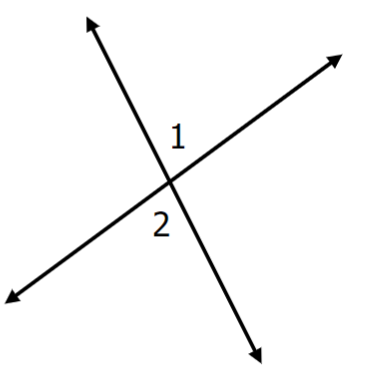
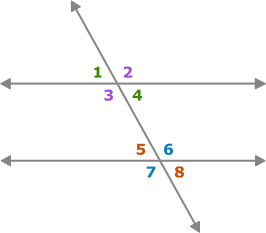
Select all the adjacent angles to ∠1
Select all the adjacent angles to ∠1
Essential Question: How can you find the measures of angles formed by intersecting lines? Learning Target: Students will be able to classify angles formed by intersecting lines and apply that knowledge to calculate the angle measurements.
Complete the entire document and show all work for full credit.
Essential Question: How can you find the measures of angles formed by intersecting lines? Learning Target: Students will be able to classify angles formed by intersecting lines and apply that knowledge to calculate the angle measurements.
Complete the entire document and show all work for full credit.
Match the definition of the angle relationship with the angle relationships it describes...
| Draggable item | arrow_right_alt | Corresponding Item |
|---|---|---|
Two angles that are adjacent and supplementary. They form astraight line! | arrow_right_alt | Vertical angles |
Any two angles whose sum is 90° | arrow_right_alt | Supplementary angles |
Two angles that share a vertex and a common side. They are next to each other | arrow_right_alt | Complementary angles |
Any two angles whose sum is 180° | arrow_right_alt | Linear pairs |
Two angles across from each other on intersecting lines. They share a vertex and they are always congruent! | arrow_right_alt | Adjacent Angles |
Draw an example of vertical angles.
Draw an example of adjacent angles.
Draw an example of supplementary angles.
Draw an example of complementary angles.
Select all the adjacent angles to ∠1
Select all the vertical angles to ∠6
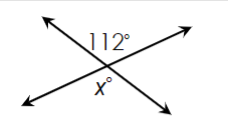
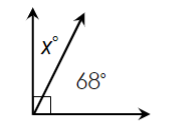
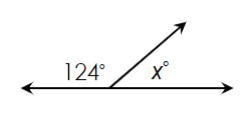
Match the image with the angle relationship it describes...
| Draggable item | arrow_right_alt | Corresponding Item |
|---|---|---|
| arrow_right_alt | Vertical angles | |
| arrow_right_alt | Supplementary angles | |
| arrow_right_alt | Complementary angles | |
| arrow_right_alt | Linear pairs | |
| arrow_right_alt | Adjacent Angles |
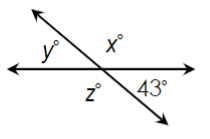
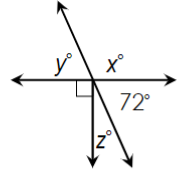
What is the value of x?
What is the value of x?
What is the value of x?
What is the value of y?
What is the value of x?
What is the value of z?
What is the value of z?
What is the value of y?
What is the value of x?
∠1 and ∠2 are vertical angles. If the measure of ∠2 is 105°, find the measure of ∠1.
∠A and ∠B are complementary angles. If the measure of ∠A is 42°, find the measure of ∠B.
∠P and ∠Q are supplementary angles. If the measure of ∠Q is 64°, find the measure of ∠P.
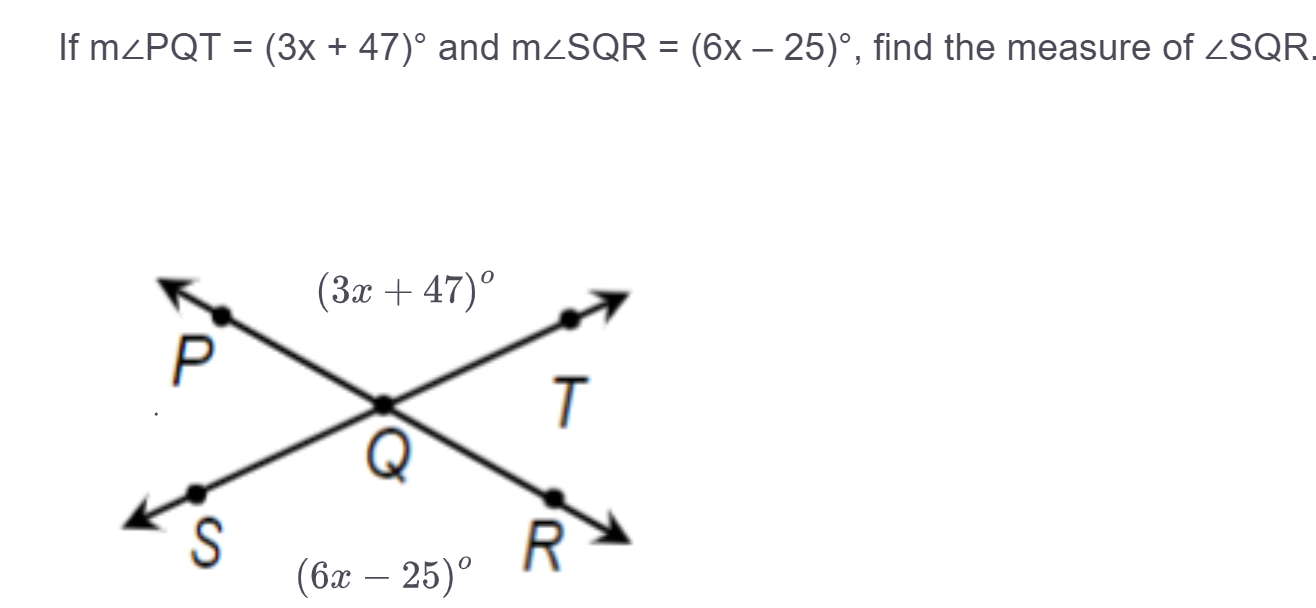
What is the correct order of steps to solve this problem?
Add 25 to both sides of the equation
Substitute 24 for x into 6x-25 to find out what the m∠SQR equals
Make 3x+47 equal to 6x-25; because vertical angles are equal
Divide both sides of the equation by 3
6(24)-25=119; therefore the m∠SQR=119°
x=24
Subtract 3x from both sides of the equation
If m∠PQT =109° and m∠SQR = (4x – 15)°, find the value of x.
If m∠PQT =109° what is the measure of m∠TQR?.
If m∠DEG = (5x – 4)°, m∠GEF = (7x – 8)°, m∠DEH = (9y + 5)°, find the value of x.
What is the measure of∠GEF?
If m∠DEG = (5x – 4)°, m∠GEF = (7x – 8)°, m∠DEH = (9y + 5)°, find the value of y.