Everybody tends to think that they are an average person. But have you ever stopped to think about what would happen if that were really true? What would happen if everyone on Earth lived the same way that you do?
Your “ecological footprint” is the amount of the Earth’s total surface area that is required to generate the resources that you personally use. Where it is food, water or electricity, every resource requires some amount of space to generate it. Unfortunately there is a limited amount of space on Earth. Do you think that you are using your fair share?
Steps
1. Go to www.footprintcalculator.org
2. Enter your school email address and continue as a guest. Take the quiz to determine what your ecological footprint is.
3. Please use the “add details” section at the bottom of each quiz box whenever possible.
1 point
1
Question 1
1.
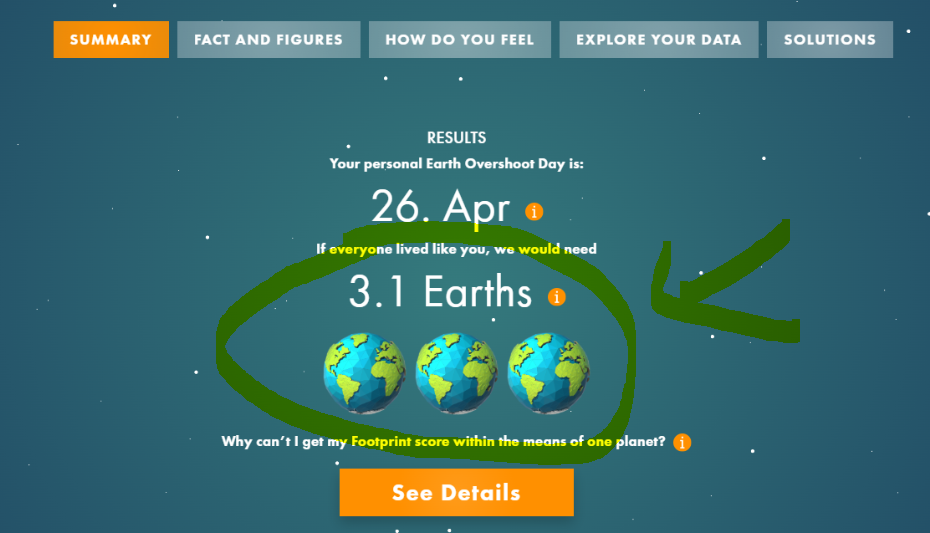
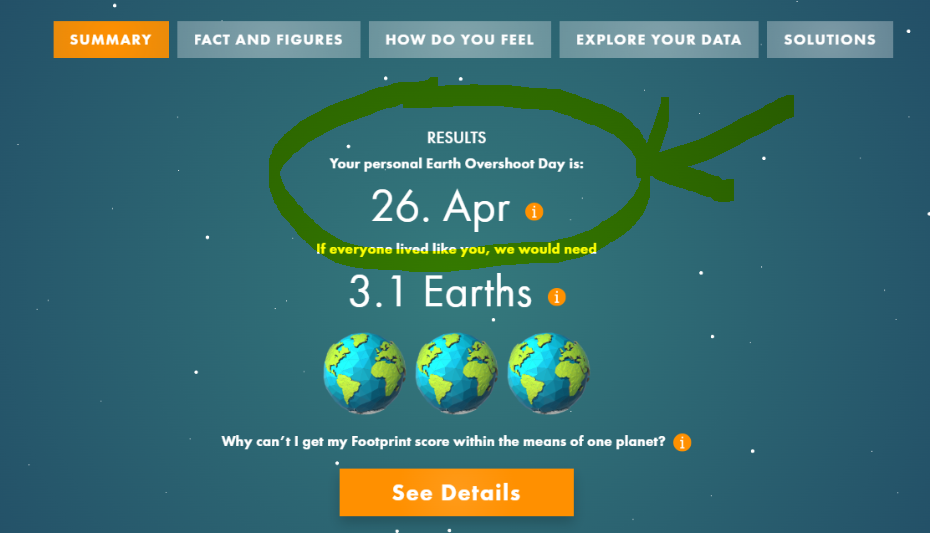
Your personal Earth Overshoot Day is...
(Your personal “Overshoot Day” is the calculated calendar date on which your resource consumption for the year exceeds Earth’s capacity to regenerate those resources that year.)
1 point
1
Question 2
2.
If everyone lived like you, we would need
1 point
1
Question 3
3.
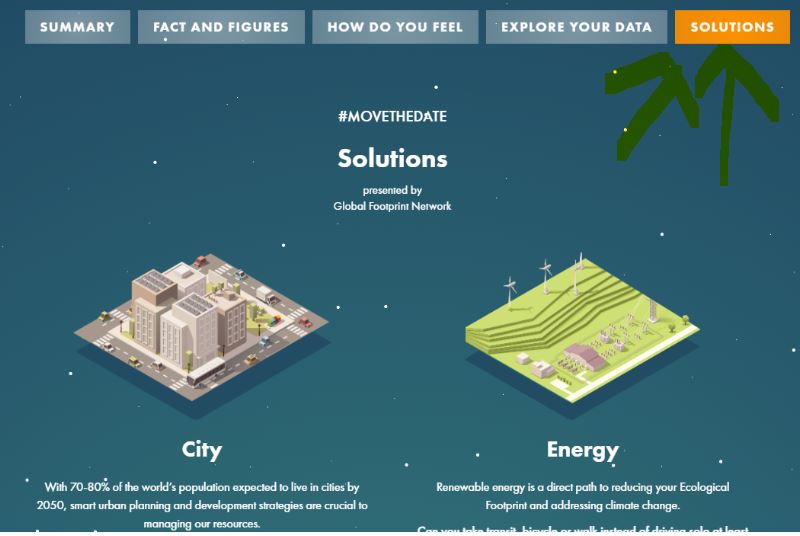
Click on “Fact and Figures”
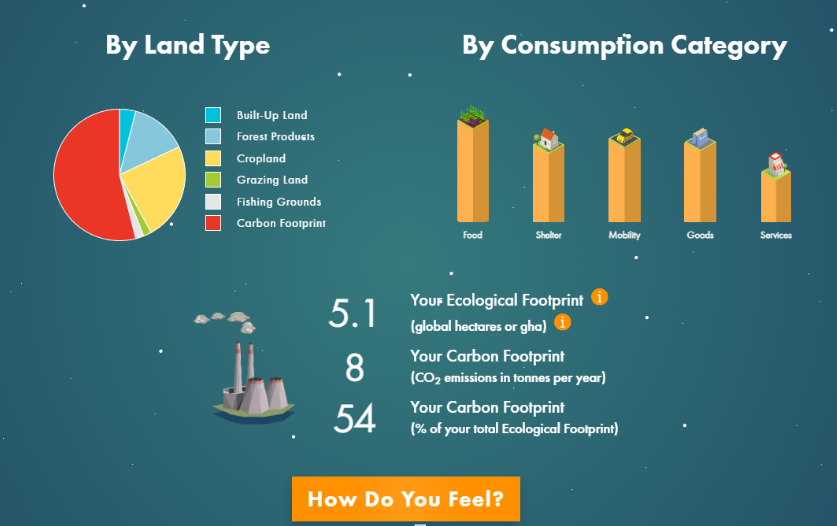
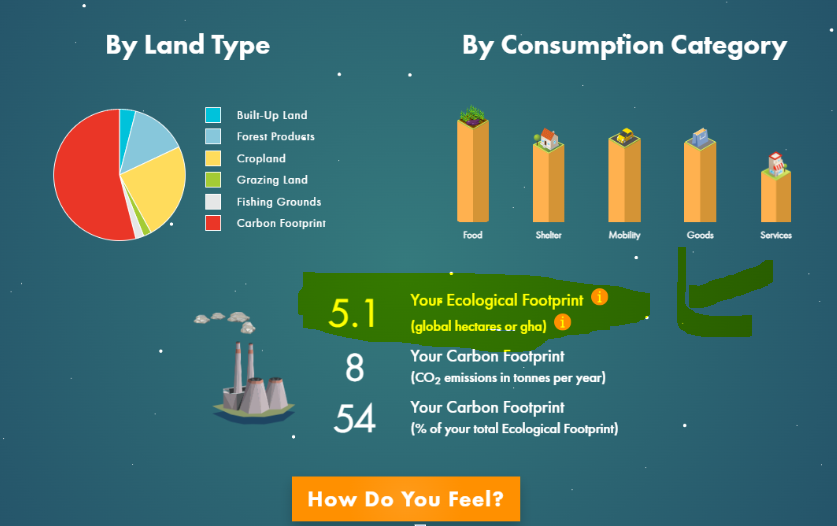
Draw the pie chart and label how your footprint breaks down (you will need to hover over the pie chart)
1 point
1
Question 4
4.
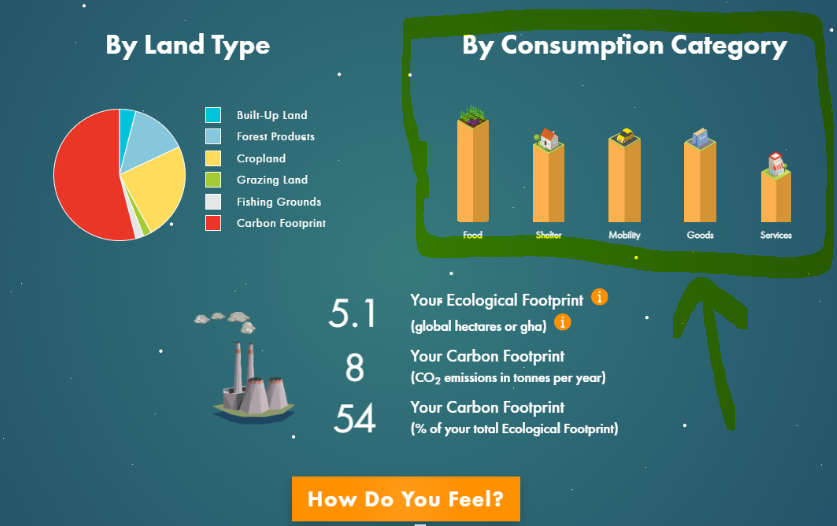
Draw the bar graph and label how your ecological footprint breaks down (you will need to hover over the bar graph). Don't forget to label your Y-axis!
1 point
1
Question 5
5.
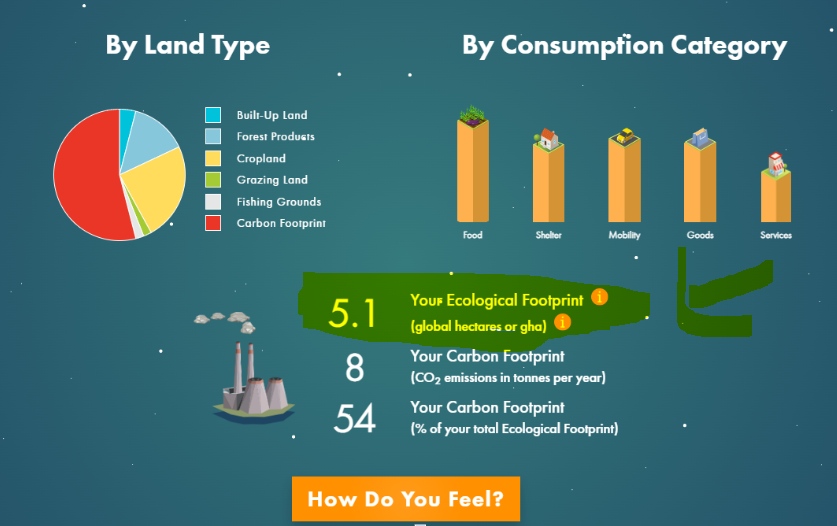
What is your Ecological Footprint?
1 point
1
Question 6
6.
Hover your mouse over the "i". What is the definition of an Ecological Footprint?
1 point
1
Question 7
7.
Hover your mouse over the "i". What is the definition of a global hectare or gha?
1 point
1
Question 8
8.
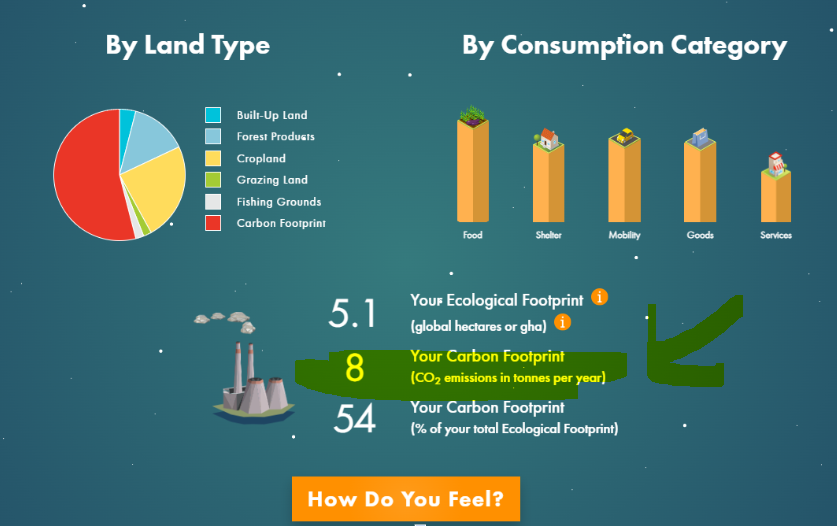
What is your Carbon Footprint? (In CO2 emissions in tonnes per year)
1 point
1
Question 9
9.
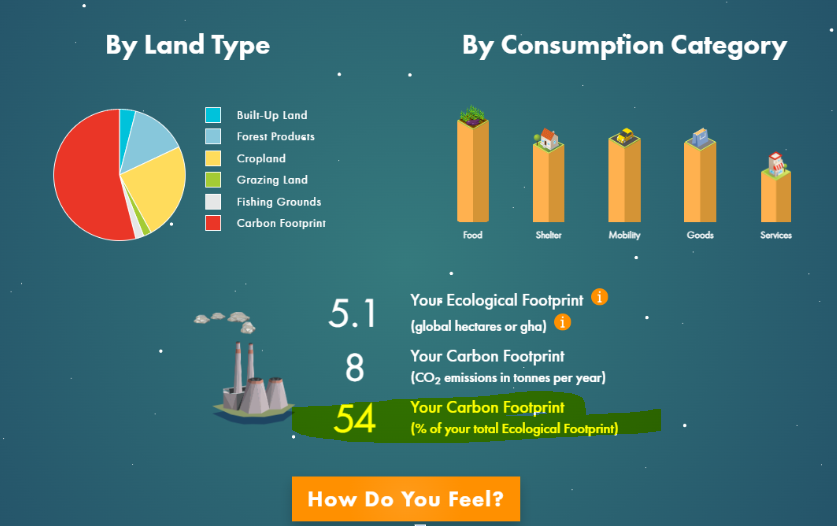
What is your Carbon Footprint? (% of your total Ecological Footprint)
1 point
1
Question 10
10.
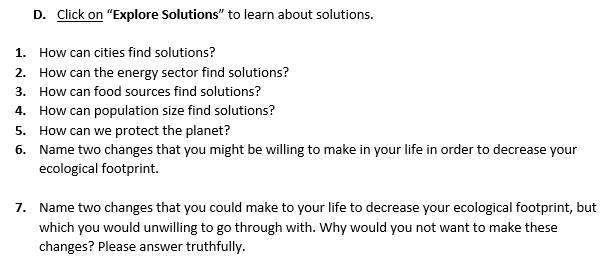
Describe how can cities find solutions?
1 point
1
Question 11
11.
Describe how can the energy sector find solutions?
1 point
1
Question 12
12.
Describehow can food sources find solutions?
1 point
1
Question 13
13.
Describehow can population size find solutions?
1 point
1
Question 14
14.
Describe how we can protect the planet?
1 point
1
Question 15
15.
Identify two changes that you might be willing to make in your life in order to decrease your ecological footprint.
1 point
1
Question 16
16.
Identify two changes that you could make to your life to decrease your ecological footprint, but which you would unwilling to go through with. Why would you not want to make these changes? Please answer truthfully.