Lesson 8.3 Compound Interest

Last updated over 1 year ago
10 questions
Note from the author:
I can model the value of an investment that earns compound interest.
Account Balances
2

Find the balance of the account after 6 years.

$250 is deposited into an account that pays 1.5% annual interest compounded yearly

2

Find the balance of the account after 6 years.

$4000 is deposited into an account that pays 3% annual interest compounded quarterly

2

Find the balance of the account after 6 years.

$800 is deposited into an account that pays 4.9% annual interest compounded continuously

92 Years
1

For the 92-year period 1926–2017, the average annual growth rates for several types of investment assets are shown below.
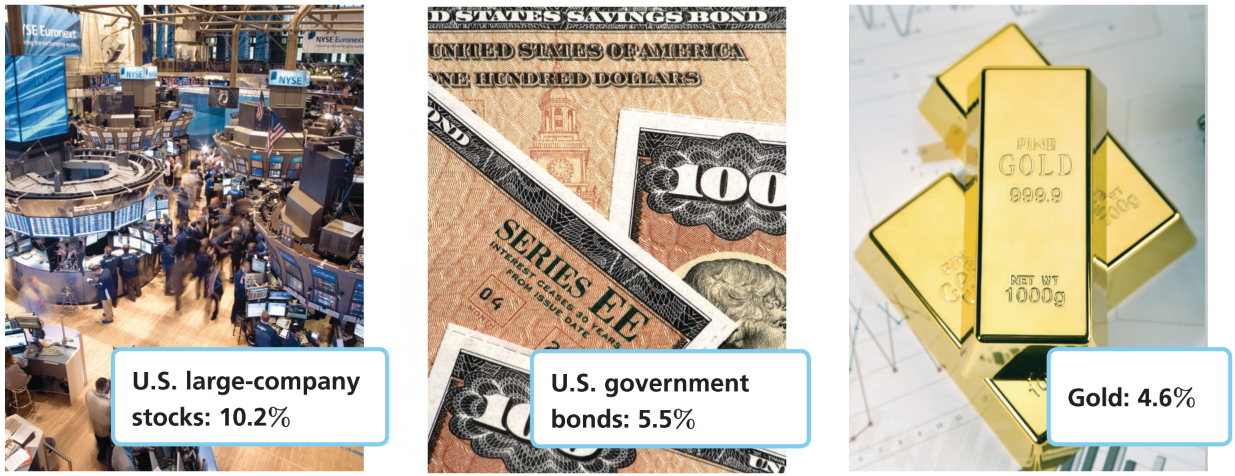
Suppose a person invested $1000 in each asset type at the beginning of 1926. How much would each investment be worth at the end of 2017?

How Long?
3

Use a graphing calculator to find the number of years it takes for the investment to grow to $3000. Take a screen shot of your Desmos work and paste it into the Show Your Work window. Round the number of years to the nearest tenth.

an $1800 investment that earns 8% annual interest compounded yearly

3

Use a graphing calculator to find the number of years it takes for the investment to grow to $3000. Round to the nearest tenth of a year.

a $2000 investment that earns 7.2% annual interest compounded monthly

Retirement
3

Wanda deposits the $2000 that she saved from her summer job into a retirement account that earns 6.2% annual interest compounded quarterly. If she never deposits another cent in the account and the interest rate remains unchanged, how much money will be in the account after 50 years, when she expects to retire?

Review
1

Which equation’s graph is the graph of
shifted left 2 units and down 6 units?

1

Mia buys a tablet for $500. She plans to sell it in 2 years. The tablet’s value is projected to decrease by 40% per year. For how much can Mia expect to sell her tablet?

1

Match each function on the left with its inverse on the right.

Draggable itemCorresponding Item
for
for