Log in
Sign up for FREE
arrow_back
Library

Water Activity

star
star
star
star
star
Last updated about 2 hours ago
20 questions
#1 Water and Dye
1
1
1
1
1
1
1
1
1
1
Hot and Cold Water (Your Turn)
1
#2 Measuring Temperature: Letting Hot Water and Cold Water sit out in a room.
1
1
1
1
1
#3 Making heat flow
1
1
1
1
Complete the assignment.
Question 1
1.

Predict:
What will happen if we drop the dye into the ice water, cold water, and hot water?

ICE-
COLD-
HOT-

Question 2
2.


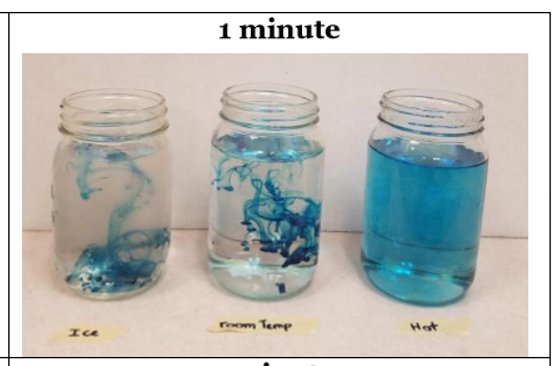
In a complete sentence, record your observations for the dye in ice water, cold water, and hot water after the one-minute mark.

ICE-
COLD-
HOT-
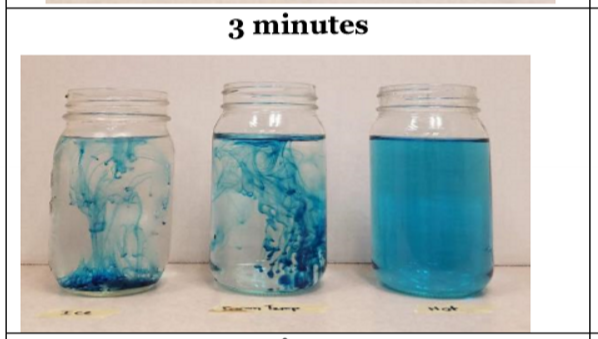
Question 3
3.


In a complete sentence, record your observations for the dye in ice water, cold water, and hot water after the 3-minute mark.

ICE-
COLD-
HOT-

Question 4
4.


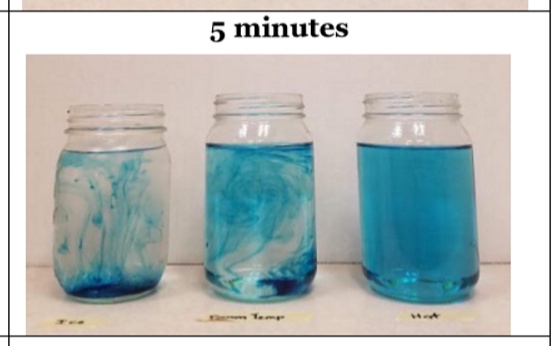
In a complete sentence, record your observations for the dye in ice water, cold water, and hot water after the 5-minute mark.
ICE-
COLD-
HOT-

Question 5
5.

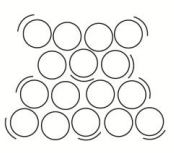
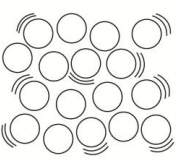
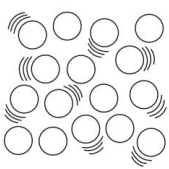
Match the molecular motion (speed) of the water molecules.

Drag the vocabulary (with six dots) up and down to the correct image!

Draggable itemarrow_right_altCorresponding Item
hot water particles
arrow_right_alt
ice water particles
arrow_right_alt
cold water particles
arrow_right_alt
Question 6
6.
What can you include about the speed of the particle movement and temperature?

Sentence Starters:
Higher temperatures have ____________________ particle movement.
Lower temperatures have ____________________ particle movement.
Question 7
7.

Which do you think has the most energy?

Question 8
8.

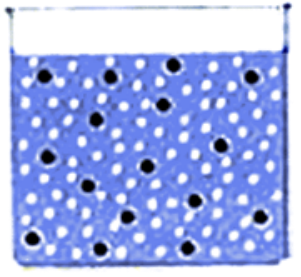
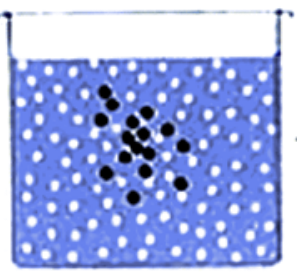
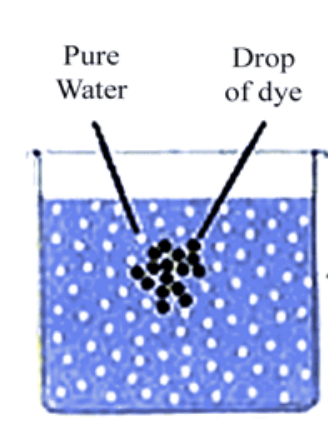
Match the correct descriptions to the images of the dye (black dots) and the water molecules (white dots) at the 1 minute mark!

Draggable itemarrow_right_altCorresponding Item
Cold Water Molecules + Dye
arrow_right_alt
Ice Water Molecules + Dye
arrow_right_alt
Hot Water Molecules + Dye
arrow_right_alt
Question 9
9.

Which particles move the dye the slowest? Explain your answer.

Question 10
10.

Provide an explanation for what temperature measures. Support your explanation with evidence.

Question 11
11.

Predict:
What happens when we mix hot water and cold water?

Question 12
12.

Part 1: Measuring Temperature
1). Set up the LabQuest with the temperature probe.
2). Fill up a foam cup about half full of ice-cold water, but be sure that there is no solid ice in the cup.
3). Fill a second foam cup half full of hot water
4). Measure the temperature in the cup. Record these values in Table 1 along with the time of day to the minute.
5). While you are waiting, do questions, 13-15.

Question 13
13.

Consider that the temperature describes a type of energy.
Do you think hot or cold water has more of this kind of energy? Explain in one sentence why you think so.

Question 14
14.

How do you expect the temperature of the water in each of the two cups to change over time?

Question 15
15.

Describe the flow of energy that would cause the changes you predicted in question 14.

Question 16
16.

Measure the temperatures in each cup and see whether the actual temperatures change as you expected.

Question 17
17.

Part 3: Making heat flow
1). Prepare a small foam cup with 50 g of hot water
2). Prepare a second small foam cup with 50 g of cold water
3). measure the temperatures in each cup just before you mix them in Step 4
4). Mix the hot and cold water into the larger (empty) foam cup
5). Stir the mixture with the temperature probe quickly and record the temperature of the mixture when the temperature stops changing

Question 18
18.

Which cup of water had more energy: the one with hot water or the one with cold water? Why?

Question 19
19.

What did you think the temperature of the mixture would be? Why?

Question 20
20.

If the system includes both cold and hot water, compare the energy of the system before mixing to the energy after mixing. You may ignore the energy going into the air or lost from friction.