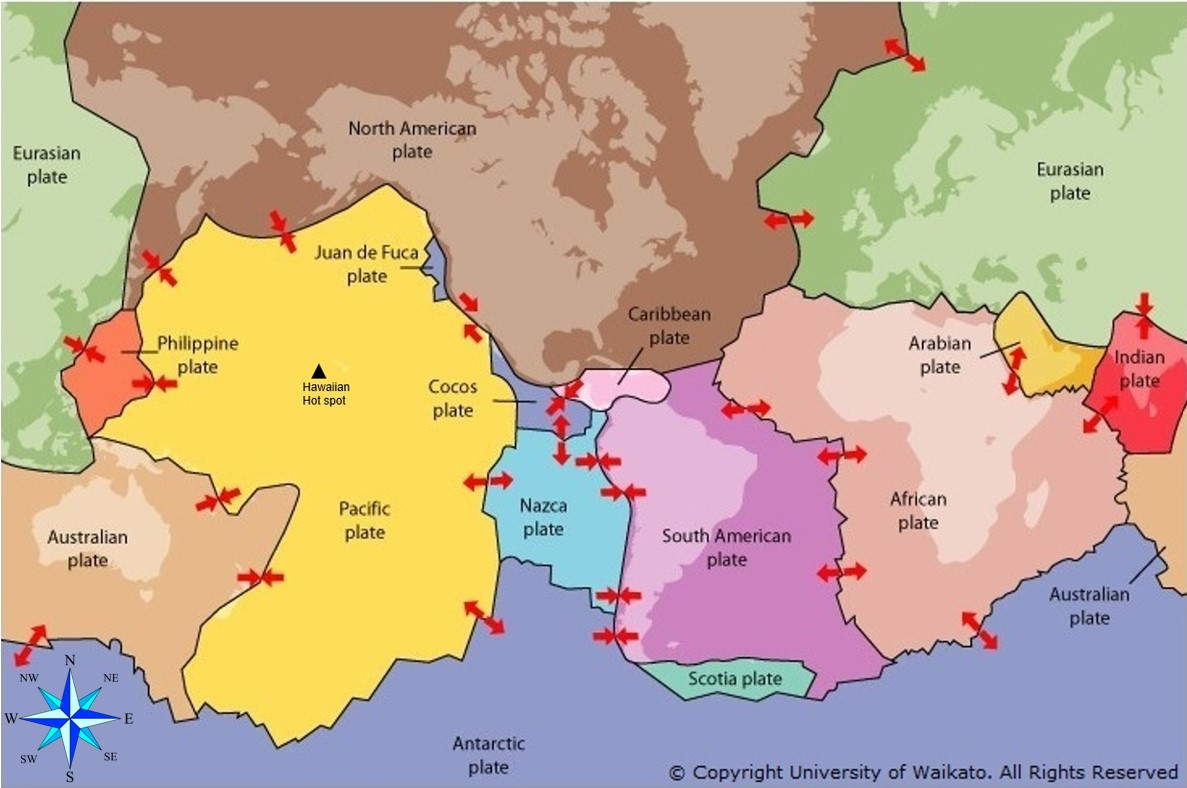
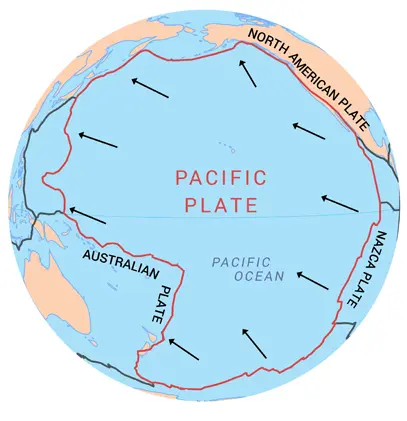
Take a minute to look at the images below and use them to help you answer question #1. Note the arrows representing plate movement.
Take a minute to look at the images below and use them to help you answer question #1. Note the arrows representing plate movement.
Use the white board tools to draw an arrow and indicate the direction the Pacific plate is moving. Hawaii is found on the middle of the plate.
Recall that hot spots remain in a relatively fixed location and allow magma to escape from beneath the crust. Based on what you've learned about the location of the hot spot, where would you expect the next volcanoes to form as the plate moves?
(Use the white board tools to sketch where new islands will form, you may also use the text tool to type your answer on the whiteboard)
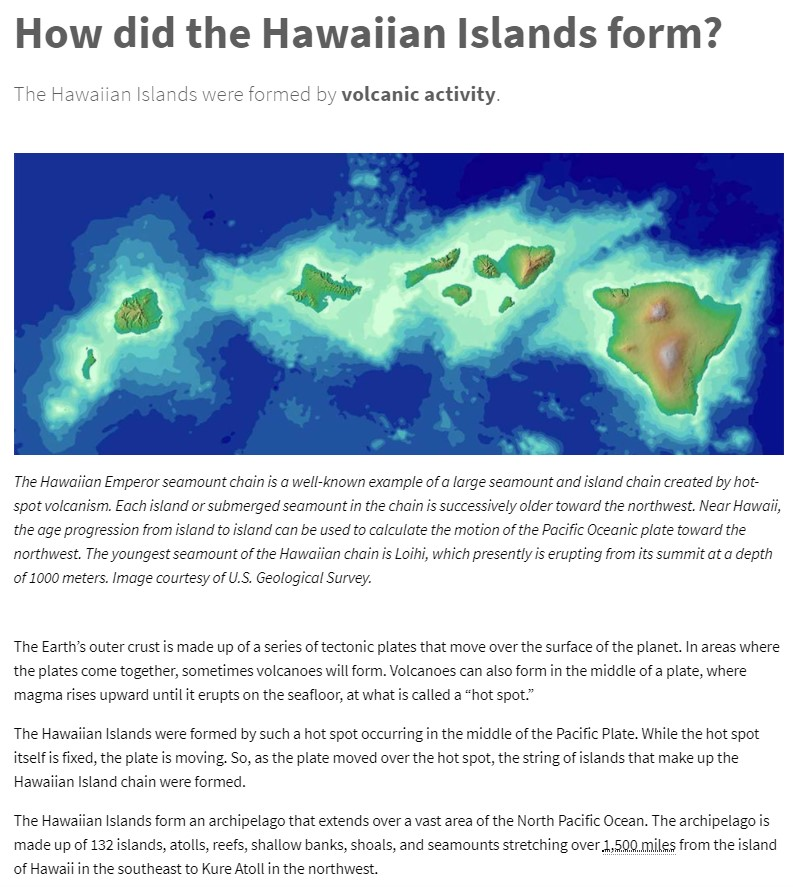
Read the following article about how the Hawaiian Islands formed and use it to help you answer question #2.
What is a volcanic hot spot?
If the Pacific plate is moving and the Hawaiian islands are forming one after another, the rocks that make up the islands should be different ages.
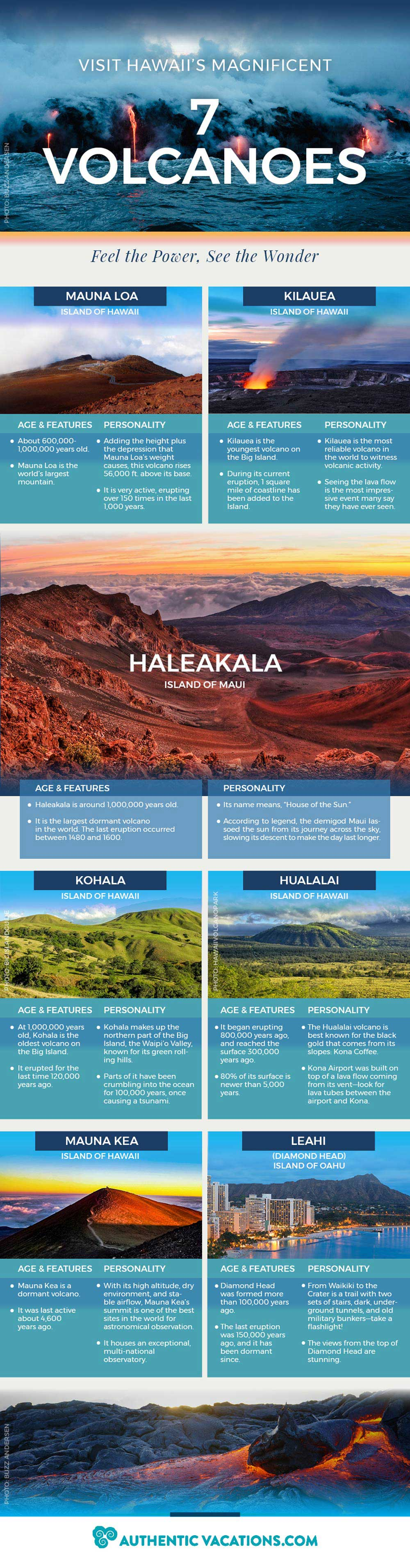
What kind of data could a geologist collect that would tell you about the age of each of the Hawaiian islands? (Be specific)