Log in
Sign up for FREE
arrow_back
Library

3.03 Rock Cycle Gizmo Lab

star
star
star
star
star
Last updated about 3 hours ago
15 questions
Note from the author:
Required
1
HS-ESS2-1
Required
1
HS-ESS2-1
Required
1
HS-ESS2-1
Required
1
HS-ESS2-1
Required
2
HS-ESS2-1
Required
1
HS-ESS2-1
Required
1
HS-ESS2-1
Required
1
HS-ESS2-1
Required
1
HS-ESS2-1
HS-ESS2-5
Required
1
HS-ESS2-1
HS-ESS2-5
Required
1
HS-ESS2-1
HS-ESS2-5
Required
1
HS-ESS2-1
Required
1
HS-ESS2-1
Required
2
HS-ESS2-1
Required
4
HS-ESS2-1
HS-ESS2-5
Gizmo Instructions
If you have not yet signed up for Gizmos, follow these instructions:
  1. Go to http://go-el.com/join
  2. Use code ELPFXXTR
  3. Click next
  4. If you've used Gizmos before and remember your login information, log into your account. Otherwise, create a new account
  5. Write down your username and password and put this information in a safe place

Click here to open the Rock Cycle Gizmo

If you need help with this assignment, click here to watch the class recording

Gizmo Instructions
If you have not yet signed up for Gizmos, follow these instructions:
  1. Go to http://go-el.com/join
  2. Use code ELPFXXTR
  3. Click next
  4. If you've used Gizmos before and remember your login information, log into your account. Otherwise, create a new account
  5. Write down your username and password and put this information in a safe place

Click here to open the Rock Cycle Gizmo

If you need help with this assignment, click here to watch the class recording

Question 1
1.

What happens to hot lava after it erupts from a volcano?

Question 2
2.

How does rock turn into soil?

Question 3
3.

The Mississippi River carries tons of tiny rock fragments called sediments into the Gulf of Mexico. What do you think will happen to these sediments after a few million years?

Gizmo Warm-up
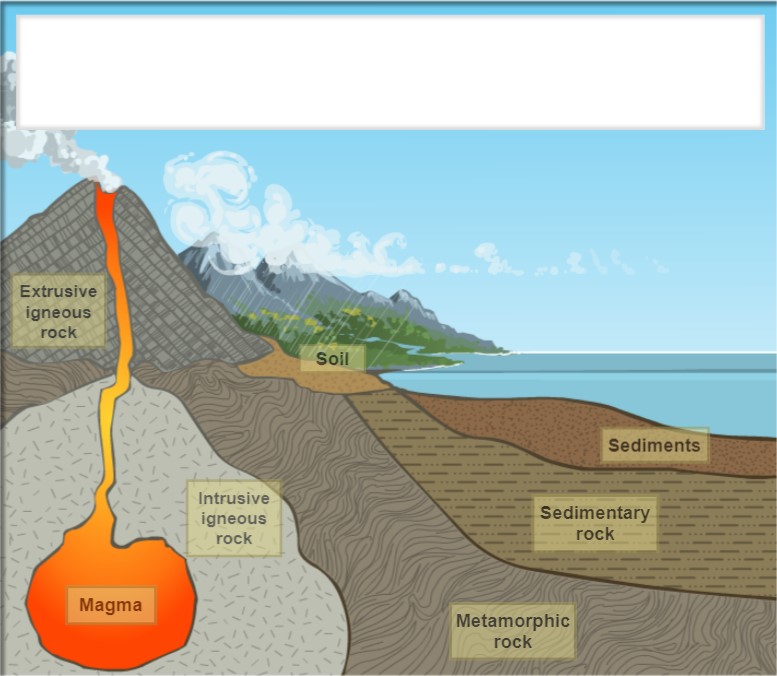
Over millions of years, rocks are broken down and transformed into other rocks. The Rock Cycle Gizmo illustrates the different transformations that make up the rock cycle. Before exploring the Gizmo, take a look at the image.
Question 4
4.

Question 5
5.

Magma is molten (liquid) rock under Earth’s surface. Based on the image, how do you think magma turns into extrusive igneous rock?

Question 6
6.

Question: What is the rock cycle?
Observe: A cycle is a path with the same start and end. Create a rock cycle with the Gizmo.
Question 7
7.

Click Magma. How hot is magma?

Question 8
8.

Question 9
9.

Click Exposure and weathering. What forms when rocks break down?

Question 10
10.

Click Erosion and deposition. In what ways are sediments transported?

Question 11
11.

Question 12
12.

Question 13
13.

Click Melt. What is formed when rocks melt deep underground?

Question 14
14.

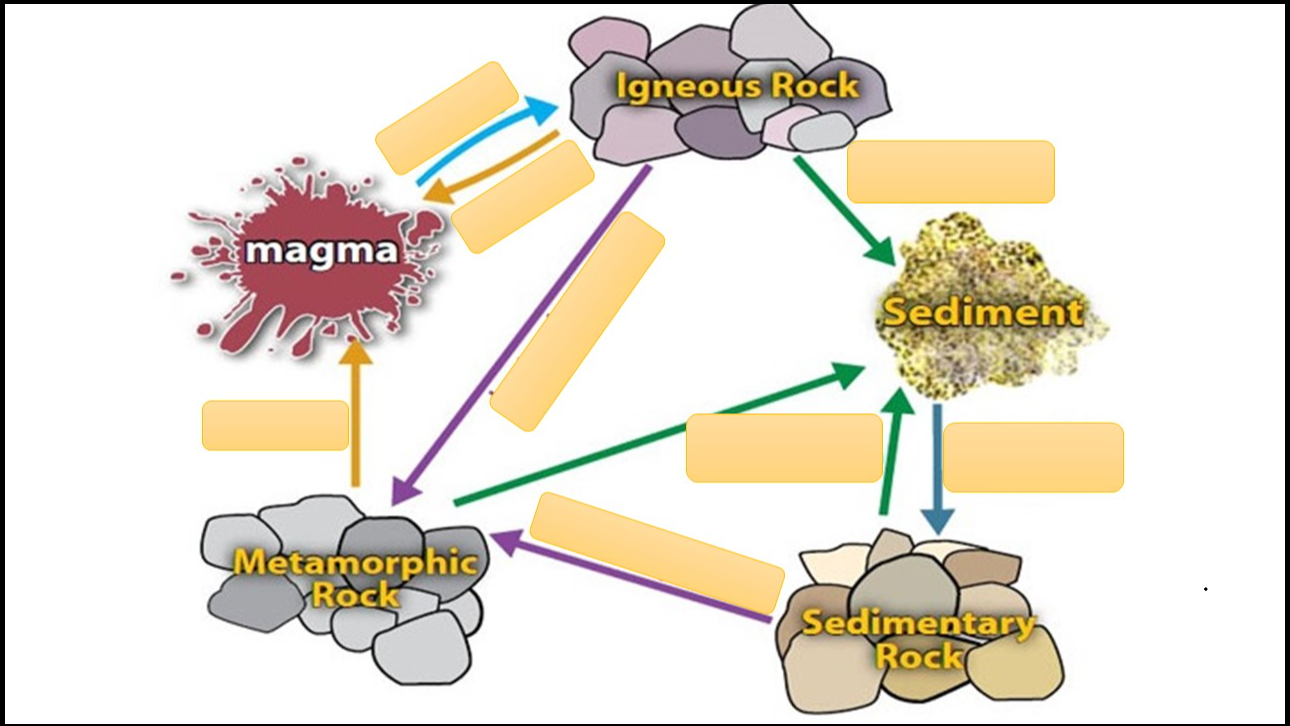
Describe: Select the PATH tab. What are the steps in this rock cycle shown in the Gizmo?

List each step or paste a screen shot from the Gizmo showing the completed steps.

Question 15
15.
Other Answer Choices:
Weathering and Erosion
Lithification and Compaction
Heat and Pressure
Melting
Cooling
Melting
Heat and Pressure
What types of solid rocks are show in the diagram? (Select 3 responses)
Igneous
Metamorphic
Sedimentary
Magma
Soil
Click Extrusive igneous rock button to the right of the image. Were you correct?
No
Yes
Click Crystallization (below ground). What kind of rock is formed when magma cools below the surface?
Metamorphic
Igneous
Sedimentary
Click Lithification and compaction. (Lithification is hardening into rock.) What kind of rock is formed from sediments?
Metamorphic
Igneous
Sedimentary
Click Increase temp. and pressure. What kind of rock is formed?
Metamorphic
Igneous
Sedimentary
Drag and drop the labels below the image to complete the diagram below and fill in the empty boxes with the names of the processes that change rocks from one type to another.