
BACKGROUND Hurricanes that originate in the northwest Pacific Ocean are called typhoons. They can stretch up to 500 miles in diameter and produce high winds, heavy rains, enormous waves, and severe flooding. On average, Japan is hit by three severe typhoons each year due to its location and climatic conditions.
“A huge wave nearly swept me away,” said the seventh man, almost whispering. “It happened one September afternoon when I was ten years old.”
The man was the last one to tell his story that night. The hands of the clock had moved past ten. The small group that huddled in a circle could hear the wind tearing through the darkness outside, heading west. It shook the trees, set the windows to rattling, and moved past the house with one final whistle.
“It was the biggest wave I had ever seen in my life,” he said. “A strange wave. An absolute giant.”
He paused.
“It just barely missed me, but in my place, it swallowed everything that mattered most to me and swept it off to another world. I took years to find it again and to recover from the experience—precious years that can never be replaced.”
The seventh man appeared to be in his mid-fifties. He was a thin man, tall, with a mustache, and next to his right eye he had a short but deep-looking scar that could have been made by the stab of a small blade. Stiff, bristly patches of white marked his short hair. His face had the look you see on people when they can’t quite find the words they need. In his case, though, the expression seemed to have been there from long before, as though it were part of him. The man wore a simple blue shirt under a gray tweed coat, and every now and then he would bring his hand to his collar. None of those assembled there knew his name or what he did for a living.
He cleared his throat, and for a moment or two his words were lost in silence. The others waited for him to go on.
“In my case, it was a wave,” he said. “There’s no way for me to tell, of course, what it will be for each of you. But in my case, it just happened to take the form of a gigantic wave. It presented itself to me all of a sudden one day, without warning. And it was devastating.”
Who is telling the story? What is the significance of the group of people around him?
Part A When the seventh man begins to tell his story, he introduces it in this way:
“In my case, it was a wave,” he said. “There is no way for me to tell, of course, what it will be for each of you. But in my case it just happened to take the form of a gigantic wave. It presented itself to me all of a sudden one day without warning. And it was devastating.”
What does this excerpt most clearly imply? To help you choose your answer, consider the events of the story.
Part B Which part of the excerpt most clearly supports the answer to Part A?
I grew up in a seaside town in the Province of S. It was such a small town, I doubt that any of you would recognize the name if I were to mention it. My father was the local doctor, and so I led a rather comfortable childhood. Ever since I could remember, my best friend was a boy I’ll call K. His house was close to ours, and he was a grade behind me in school. We were like brothers, walking to and from school together, and always playing together when we got home. We never once fought during our long friendship. I did have a brother, six years older, but what with the age difference and differences in our personalities, we were never very close. My real brotherly affection went to my friend K.
K. was a frail, skinny little thing, with a pale complexion and a face almost pretty enough to be a girl’s. He had some kind of speech impediment,1 though, which might have made him seem retarded to anyone who didn’t know him. And because he was so frail, I always played his protector, whether at school or at home. I was kind of big and athletic, and the other kids all looked up to me. But the main reason I enjoyed spending time with K. was that he was such a sweet, pure-hearted boy. He was not the least bit retarded, but because of his impediment, he didn’t do too well at school. In most subjects, he could barely keep up. In art class, though, he was great. Just give him a pencil or paints and he would make pictures that were so full of life that even the teacher was amazed. He won prizes in one contest after another, and I’m sure he would have become a famous painter if he had continued with his art into adulthood. He liked to do seascapes. He’d go out to the shore for hours, painting. I would often sit beside him, watching the swift, precise movements of his brush, wondering how, in a few seconds, he could possibly create such lively shapes and colors where, until then, there had been only blank white paper. I realize now that it was a matter of pure talent.
One year, in September, a huge typhoon hit our area. The radio said it was going to be the worst in ten years. The schools were closed, and all the shops in town lowered their shutters in preparation for the storm. Starting early in the morning, my father and brother went around the house nailing shut all the storm-doors, while my mother spent the day in the kitchen cooking emergency provisions. We filled bottles and canteens with water, and packed our most important possessions in rucksacks2 for possible evacuation. To the adults, typhoons were an annoyance and a threat they had to face almost annually, but to the kids, removed as we were from such practical concerns, it was just a great big circus, a wonderful source of excitement.
1. speech impediment (ihm PEHD uh muhnt) obstacle to speaking clearly, such as a lisp or stammer.
2. rucksacks n. knapsacks.
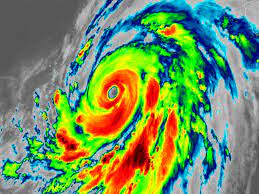
Just after noon the color of the sky began to change all of a sudden. There was something strange and unreal about it. I stayed outside on the porch, watching the sky, until the wind began to howl and the rain began to beat against the house with a weird dry sound, like handfuls of sand. Then we closed the last storm-door and gathered together in one room of the darkened house, listening to the radio. This particular storm did not have a great deal of rain, it said, but the winds were doing a lot of damage, blowing roofs off houses and capsizing ships. Many people had been killed or injured by flying debris. Over and over again, they warned people against leaving their homes. Every once in a while, the house would creak and shudder as if a huge hand were shaking it, and sometimes there would be a great crash of some heavy-sounding object against a storm-door. My father guessed that these were tiles blowing off the neighbors’ houses. For lunch we ate the rice and omelets my mother had cooked, waiting for the typhoon to blow past. But the typhoon gave no sign of blowing past.
The radio said it had lost momentum3 almost as soon as it came ashore at S. Province, and now it was moving north-east at the pace of a slow runner. The wind kept up its savage howling as it tried to uproot everything that stood on land.
Perhaps an hour had gone by with the wind at its worst like this when a hush fell over everything. All of a sudden it was so quiet, we could hear a bird crying in the distance. My father opened the stormdoor a crack and looked outside. The wind had stopped, and the rain had ceased to fall. Thick, gray clouds edged across the sky, and patches of blue showed here and there. The trees in the yard were still dripping their heavy burden of rainwater.
“We’re in the eye of the storm,” my father told me. “It’ll stay quiet like this for a while, maybe fifteen, twenty minutes, kind of like an intermission. Then the wind’ll come back the way it was before.” I asked him if I could go outside. He said I could walk around a little if I didn’t go far. “But I want you to come right back here at the first sign of wind.”
I went out and started to explore. It was hard to believe that a wild storm had been blowing there until a few minutes before. I looked up at the sky. The storm’s great “eye” seemed to be up there, fixing its cold stare on all of us below. No such “eye” existed, of course: we were just in that momentary quiet spot at the center of the pool of whirling air.
3. momentum n. force or speed of movement.
Why does the seventh man’s father allow him to go outside during the storm?
While the grown-ups checked for damage to the house, I went down to the beach. The road was littered with broken tree branches, some of them thick pine boughs that would have been too heavy for an adult to lift alone. There were shattered roof tiles everywhere, cars with cracked windshields, and even a doghouse that had tumbled into the middle of the street. A big hand might have swung down from the sky and flattened everything in its path.
K. saw me walking down the road and came outside. “Where are you going?” he asked.
“Just down to look at the beach,” I said.
Without a word, he came along with me. He had a little white dog that followed after us.
“The minute we get any wind, though, we’re going straight back home,” I said, and K. gave me a silent nod.
The shore was a 200-yard walk from my house. It was lined with a concrete breakwater—a big dyke4 that stood as high as I was tall in those days. We had to climb a short flight of steps to reach the water’s edge. This was where we came to play almost every day, so there was no part of it we didn’t know well. In the eye of the typhoon, though, it all looked different: the color of the sky and of the sea, the sound of the waves, the smell of the tide, the whole expanse of the shore. We sat atop the breakwater for a time, taking in the view without a word to each other. We were supposedly in the middle of a great typhoon, and yet the waves were strangely hushed. And the point where they washed against the beach was much farther away than usual, even at low tide. The white sand stretched out before us as far as we could see. The whole, huge space felt like a room without furniture, except for the band of flotsam5 that lined the beach.
We stepped down to the other side of the breakwater and walked along the broad beach, examining the things that had come to rest there. Plastic toys, sandals, chunks of wood that had probably once been parts of furniture, pieces of clothing, unusual bottles, broken crates with foreign writing on them, and other, less recognizable items: it was like a big candy store. The storm must have carried these things from very far away. Whenever something unusual caught our attention, we would pick it up and look at it every which way, and when we were done, K.’s dog would come over and give it a good sniff.
We couldn’t have been doing this more than five minutes when I realized that the waves had come up right next to me. Without any sound or other warning, the sea had suddenly stretched its long, smooth tongue out to where I stood on the beach. I had never seen anything like it before. Child though I was, I had grown up on the shore and knew how frightening the ocean could be—the savagery with which it could strike unannounced.
4. dyke (dyk) n. barrier built along the edge of a body of water to prevent flooding.
5. flotsam (FLOT suhm) n. refuse or debris from a ship.
And so I had taken care to keep well back from the waterline. In spite of that, the waves had slid up to within inches of where I stood. And then, just as soundlessly, the water drew back—and stayed back. The waves that had approached me were as unthreatening as waves can be—a gentle washing of the sandy beach. But something ominous about them—something like the touch of a reptile’s skin—had sent a chill down my spine. My fear was totally groundless—and totally real. I knew instinctively that they were alive. The waves were alive. They knew I was here and they were planning to grab me. I felt as if some huge, man-eating beast were lying somewhere on a grassy plain, dreaming of the moment it would pounce and tear me to pieces with its sharp teeth. I had to run away.
“I’m getting out of here!” I yelled to K. He was maybe ten yards down the beach, squatting with his back to me, and looking at something. I was sure I had yelled loud enough, but my voice did not seem to have reached him. He might have been so absorbed in whatever it was he had found that my call made no impression on him. K. was like that. He would get involved with things to the point of forgetting everything else. Or possibly I had not yelled as loudly as I had thought. I do recall that my voice sounded strange to me, as though it belonged to someone else.
Then I heard a deep rumbling sound. It seemed to shake the earth. Actually, before I heard the rumble I heard another sound, a weird gurgling as though a lot of water was surging up through a hole in the ground. It continued for a while, then stopped, after which I heard the strange rumbling. Even that was not enough to make K. look up. He was still squatting, looking down at something at his feet, in deep concentration. He probably did not hear the rumbling. How he could have missed such an earth-shaking sound, I don’t know. This may seem odd, but it might have been a sound that only I could hear—some special kind of sound. Not even K.’s dog seemed to notice it, and you know how sensitive dogs are to sound.
I told myself to run over to K., grab hold of him, and get out of there. It was the only thing to do. I knew that the wave was coming, and K. didn’t know. As clearly as I knew what I ought to be doing, I found myself running the other way—running full speed towards the dyke, alone. What made me do this, I’m sure, was fear, a fear so overpowering it took my voice away and set my legs to running on their own. I ran stumbling along the soft sand beach to the breakwater, where I turned and shouted to K.
“Hurry, K.! Get out of there! The wave is coming!” This time my voice worked fine. The rumbling had stopped, I realized, and now, finally, K. heard my shouting and looked up. But it was too late. A wave like a huge snake with its head held high, poised to strike, was racing towards the shore. I had never seen anything like it in my life. It had to be as tall as a three-story building. Soundlessly (in my memory, at least, the image is soundless), it rose up behind K. to block out the sky. K. looked at me for a few seconds, uncomprehending. Then, as if sensing something, he turned towards the wave. He tried to run, but now there was no time to run. In the next instant, the wave had swallowed him.
At the beach, why doesn’t K. respond when his friend call out to him?

The wave crashed on to the beach, shattering into a million leaping waves that flew through the air and plunged over the dyke where I stood. I was able to dodge its impact by ducking behind the breakwater. The spray wet my clothes, nothing more. I scrambled back up on to the wall and scanned the shore. By then the wave had turned and, with a wild cry, it was rushing back out to sea. It looked like part of a gigantic rug that had been yanked by someone at the other end of the earth. Nowhere on the shore could I find any trace of K., or of his dog. There was only the empty beach. The receding wave had now pulled so much water out from the shore that it seemed to expose the entire ocean bottom. I stood alone on the breakwater, frozen in place.
The silence came over everything again—a desperate silence, as though sound itself had been ripped from the earth. The wave had swallowed K. and disappeared into the far distance. I stood there, wondering what to do. Should I go down to the beach? K. might be down there somewhere, buried in the sand . . . But I decided not to leave the dyke. I knew from experience that big waves often came in twos and threes.
I’m not sure how much time went by–maybe ten or twenty seconds of eerie emptiness–when, just as I had guessed, the next wave came. Another gigantic roar shook the beach, and again, after the sound had faded, another huge wave raised its head to strike. It towered before me, blocking out the sky, like a deadly cliff. This time, though, I didn’t run. I stood rooted to the sea wall, entranced, waiting for it to attack. What good would it do to run, I thought, now that K. had been taken? Or perhaps I simply froze, overcome with fear. I can’t be sure what it was that kept me standing there.
The second wave was just as big as the first—maybe even bigger. From far above my head it began to fall, losing its shape, like a brick wall slowly crumbling. It was so huge that it no longer looked like a real wave. It was like something from another, far-off world, that just happened to assume the shape of a wave. I readied myself for the moment the darkness would take me. I didn’t even close my eyes. I remember hearing my heart pound with incredible clarity.
The moment the wave came before me, however, it stopped. All at once it seemed to run out of energy, to lose its forward motion and simply hover there, in space, crumbling in stillness. And in its crest,6 inside its cruel, transparent tongue, what I saw was K.
Some of you may find this impossible to believe, and if so, I don’t blame you. I myself have trouble accepting it even now. I can’t explain what I saw any better than you can, but I know it was no illusion, no hallucination. I am telling you as honestly as I can what happened at that moment—what really happened. In the tip of the wave, as if enclosed in some kind of transparent capsule, floated K.’s body, reclining on its side. But that is not all. K. was looking straight at me, smiling. There, right in front of me, so close that I could have reached out and touched him, was my friend, my friend K. who, only moments before, had been swallowed by the wave. And he was smiling at me. Not with an ordinary smile—it was a big, wide-open grin that literally stretched from ear to ear. His cold, frozen eyes were locked on mine. He was no longer the K. I knew. And his right arm was stretched out in my direction, as if he were trying to grab my hand and pull me into that other world where he was now. A little closer, and his hand would have caught mine. But, having missed, K. then smiled at me one more time, his grin wider than ever.
6. crest n. top of a wave.
What does the seventh man see inside the second wave?
I seem to have lost consciousness at that point. The next thing I knew, I was in bed in my father’s clinic. As soon as I awoke the nurse went to call my father, who came running. He took my pulse, studied my pupils, and put his hand on my forehead. I tried to move my arm, but I couldn’t lift it. I was burning with fever, and my mind was clouded. I had been wrestling with a high fever for some time, apparently. “You’ve been asleep for three days,” my father said to me. A neighbor who had seen the whole thing had picked me up and carried me home. They had not been able to find K. I wanted to say something to my father. I had to say something to him. But my numb and swollen tongue could not form words. I felt as if some kind of creature had taken up residence in my mouth. My father asked me to tell him my name, but before I could remember what it was, I lost consciousness again, sinking into darkness.
Altogether, I stayed in bed for a week on a liquid diet. I vomited several times, and had bouts of delirium. My father told me afterwards that I was so bad that he had been afraid I might suffer permanent neurological7 damage from the shock and high fever. One way or another, though, I managed to recover—physically, at least. But my life would never be the same again.
They never found K.’s body. They never found his dog, either. Usually when someone drowned in that area, the body would wash up a few days later on the shore of a small inlet to the east. K.’s body never did. The big waves probably carried it far out to sea—too far for it to reach the shore. It must have sunk to the ocean bottom to be eaten by the fish. The search went on for a very long time, thanks to the cooperation of the local fishermen, but eventually it petered out.8 Without a body, there was never any funeral. Half crazed, K.’s parents would wander up and down the beach every day, or they would shut themselves up at home, chanting sutras.9
As great a blow as this had been for them, though, K.’s parents never chided me for having taken their son down to the shore in the midst of a typhoon. They knew how I had always loved and protected K. as if he had been my own little brother. My parents, too, made a point of never mentioning the incident in my presence. But I knew the truth. I knew that I could have saved K. if I had tried. I probably could have run over and dragged him out of the reach of the wave. It would have been close, but as I went over the timing of the events in memory, it always seemed to me that I could have made it. As I said before, though, overcome with fear, I abandoned him there and saved only myself. It pained me all the more that K.’s parents failed to blame me and that everyone else was so careful never to say anything to me about what had happened. It took me a long time to recover from the emotional shock. I stayed away from school for weeks. I hardly ate a thing, and spent each day in bed, staring at the ceiling.
K. was always there, lying in the wave tip, grinning at me, his hand outstretched, beckoning. I couldn’t get that picture out of my mind. And when I managed to sleep, it was there in my dreams— except that, in my dreams, K. would hop out of his capsule in the wave and grab my wrist to drag me back inside with him. And then there was another dream I had. I’m swimming in the ocean. It’s a beautiful summer afternoon, and I’m doing an easy breaststroke far from shore. The sun is beating down on my back, and the water feels good. Then, all of a sudden, someone grabs my right leg. I feel an ice-cold grip on my ankle. It’s strong, too strong to shake off. I’m being dragged down under the surface. I see K.’s face there.
7. neurological (nur uh LOJ uh kuhl) adj. relating to the nervous system.
8. petered out came to an end.
9. sutras (SOO truhz) n. short religious texts meant to be chanted.
Which statement best summarizes what happens to the seventh man in the weeks following K.’s death?
Which best describes the seventh man’s reaction to K.’s death?
He has the same huge grin, split from ear to ear, his eyes locked on mine. I try to scream, but my voice will not come. I swallow water, and my lungs start to fill.
I wake up in the darkness, screaming, breathless, drenched in sweat.
At the end of the year I pleaded with my parents to let me move to another town. I couldn’t go on living in sight of the beach where K. had been swept away, and my nightmares wouldn’t stop. If I didn’t get out of there, I’d go crazy. My parents understood and made arrangements for me to live elsewhere. I moved to Nagano Province in January to live with my father’s family in a mountain village near Komoro.10 I finished elementary school in Nagano and stayed on through junior and senior high school there. I never went home, even for holidays. My parents came to visit me now and then.
I live in Nagano to this day. I graduated from a college of engineering in the City of Nagano and went to work for a precision toolmaker in the area. I still work for them. I live like anybody else. As you can see, there’s nothing unusual about me. I’m not very sociable, but I have a few friends I go mountain climbing with. Once I got away from my home town, I stopped having nightmares all the time. They remained a part of my life, though. They would come to me now and then, like debt collectors at the door. It happened whenever I was on the verge of forgetting. And it was always the same dream, down to the smallest detail. I would wake up screaming, my sheets soaked with sweat.
That is probably why I never married. I didn’t want to wake someone sleeping next to me with my screams in the middle of the night. I’ve been in love with several women over the years, but I never spent a night with any of them. The terror was in my bones. It was something I could never share with another person.
I stayed away from my home town for over forty years. I never went near that seashore—or any other. I was afraid that if I did, my dream might happen in reality. I had always enjoyed swimming, but after that day I never even went to swim in a pool. I wouldn’t go near deep rivers or lakes. I avoided boats and wouldn’t take a plane to go abroad. Despite all these precautions, I couldn’t get rid of the image of myself drowning. Like K.’s cold hand, this dark premonition caught hold of my mind and refused to let go.
Then, last spring, I finally revisited the beach where K. had been taken by the wave.
10. Nagano Province . . . village near Komoro northwestern area of Japan and a town in that area.

My father had died of cancer the year before, and my brother had sold the old house. In going through the storage shed, he had found a cardboard carton crammed with childhood things of mine, which he sent to me in Nagano. Most of it was useless junk, but there was one bundle of pictures that K. had painted and given to me. My parents had probably put them away for me as a keepsake of K., but the pictures did nothing but reawaken the old terror. They made me feel as if K.’s spirit would spring back to life from them, and so I quickly returned them to their paper wrapping, intending to throw them away. I couldn’t make myself do it, though. After several days of indecision, I opened the bundle again and forced myself to take a long, hard look at K.’s watercolors.
Most of them were landscapes, pictures of the familiar stretch of ocean and sand beach and pine woods and the town, and all done with that special clarity and coloration I knew so well from K.’s hand. They were still amazingly vivid despite the years, and had been executed with even greater skill than I recalled. As I leafed through the bundle, I found myself steeped in warm memories. The deep feelings of the boy K. were there in his pictures—the way his eyes were opened on the world. The things we did together, the places we went together began to come back to me with great intensity. And I realized that his eyes were my eyes, that I myself had looked upon the world back then with the same lively, unclouded vision as the boy who had walked by my side.
I made a habit after that of studying one of K.’s pictures at my desk each day when I got home from work. I could sit there for hours with one painting. In each I found another of those soft landscapes of childhood that I had shut out of my memory for so long. I had a sense, whenever I looked at one of K.’s works, that something was permeating my very flesh.
Perhaps a week had gone by like this when the thought suddenly struck me one evening: I might have been making a terrible mistake all those years. As he lay there in the tip of the wave, surely K. had not been looking at me with hatred or resentment; he had not been trying to take me away with him. And that terrible grin he had fixed me with: that, too, could have been an accident of angle or light and shadow, not a conscious act on K.’s part. He had probably already lost consciousness, or perhaps he had been giving me a gentle smile of eternal parting. The intense look of hatred I thought I saw on his face had been nothing but a reflection of the profound terror that had taken control of me for the moment.
The more I studied K.’s watercolor that evening, the greater the conviction with which I began to believe these new thoughts of mine. For no matter how long I continued to look at the picture, I could find nothing in it but a boy’s gentle, innocent spirit.
The more I studied K.’s watercolor that evening, the greater the conviction with which I began to believe these new thoughts of mine. For no matter how long I continued to look at the picture, I could find nothing in it but a boy’s gentle, innocent spirit.
It was then I knew I must go back.

Why does the seventh man’s view of the past begin to change?
I threw a few things in a bag, called the company to say I would not be in, and boarded a train for my old home town.
I did not find the same quiet, little seaside town that I remembered. An industrial city had sprung up nearby during the rapid development of the Sixties, bringing great changes to the landscape. The one little gift shop by the station had grown into a mall, and the town’s only movie theatre had been turned into a supermarket. My house was no longer there. It had been demolished some months before, leaving only a scrape on the earth. The trees in the yard had all been cut down, and patches of weeds dotted the black stretch of ground. K.’s old house had disappeared as well, having been replaced by a concrete parking lot full of commuters’ cars and vans. Not that I was overcome by sentiment. The town had ceased to be mine long before.
I walked down to the shore and climbed the steps of the breakwater. On the other side, as always, the ocean stretched off into the distance, unobstructed, huge, the horizon a single straight line. The shoreline, too, looked the same as it had before: the long beach, the lapping waves, people strolling at the water’s edge. The time was after four o’clock, and the soft sun of late afternoon embraced everything below as it began its long, almost meditative, descent to the west. I lowered my bag to the sand and sat down next to it in silent appreciation of the gentle seascape. Looking at this scene, it was impossible to imagine that a great typhoon had once raged here, that a massive wave had swallowed my best friend in all the world. There was almost no one left now, surely, who remembered those terrible events. It began to seem as if the whole thing were an illusion that I had dreamed up in vivid detail.
And then I realized that the deep darkness inside me had vanished. Suddenly. As suddenly as it had come. I raised myself from the sand and, without bothering to take off my shoes or roll up my cuffs, walked into the surf to let the waves lap at my ankles.
Almost in reconciliation, it seemed, the same waves that had washed up on the beach when I was a boy were now fondly washing my feet, soaking black my shoes and pant cuffs. There would be one slow-moving wave, then a long pause, and then another wave would come and go. The people passing by gave me odd looks, but I didn’t care.
I looked up at the sky. A few gray cotton chunks of cloud hung there, motionless. They seemed to be there for me, though I’m not sure why I felt that way. I remembered having looked up at the sky like this in search of the “eye” of the typhoon. And then, inside me, the axis of time gave one great heave. Forty long years collapsed like a dilapidated house, mixing old time and new time together in a single swirling mass. All sounds faded, and the light around me shuddered. I lost my balance and fell into the waves. My heart throbbed at the back of my throat, and my arms and legs lost all sensation. I lay that way for a long time, face in the water, unable to stand. But I was not afraid. No, not at all. There was no longer anything for me to fear. Those days were gone.
I stopped having my terrible nightmares. I no longer wake up screaming in the middle of the night. And I am trying now to start life over again. No, I know it’s probably too late to start again. I may not have much time left to live. But even if it comes too late, I am grateful that, in the end, I was able to attain a kind of salvation, to effect some sort of recovery. Yes, grateful: I could have come to the end of my life unsaved, still screaming in the dark, afraid.
The seventh man fell silent and turned his gaze upon each of the others. No one spoke or moved or even seemed to breathe. All were waiting for the rest of his story. Outside, the wind had fallen, and nothing stirred. The seventh man brought his hand to his collar once again, as if in search of words.
“They tell us that the only thing we have to fear is fear itself; but I don’t believe that,” he said. Then, a moment later, he added: “Oh, the fear is there, all right. It comes to us in many different forms, at different times, and overwhelms us. But the most frightening thing we can do at such times is to turn our backs on it, to close our eyes. For then we take the most precious thing inside us and surrender it to something else. In my case, that something was the wave.”
What is the most important discovery that the seventh man makes when he returns to his hometown?
Part A What does the giant wave most clearly represent to the seventh man?
Part B Which passage from the text most clearly supports the answer to Part A?
Part A At the end of the story, the narrator says that if we “turn our backs on” fear, “we take the most precious thing inside us and surrender it to something else.” What does he most likely mean by these statements?
Part B In what way does “The Seventh Man” illustrate the statement in Part A?
Read the following passage from “The Seventh Man.”
Almost in reconciliation, it seemed, the same waves that had washed up on
the beach when I was a boy were now fondly washing my feet, soaking black
my shoes and pant cuffs. There would be one slow-moving wave, then a long
pause, and then another wave would come and go.
Which word helps to create a comforting mood in this passage?