1
What materials are commonly used to insulate thermal energy?
What materials are commonly used to insulate thermal energy?
5.5.A
1
Why do we need thermal insulators?
Why do we need thermal insulators?
5.5.A
Click the link to watch the 8-minute video to learn about snow shelters and how they can keep you warm in extreme temperatures.
Even though snow is extremely cold, why does it work as a thermal insulator?
How does the inside temperature of the quinzhee compare to the outside the next morning?
What materials are commonly used to insulate thermal energy?
Why do we need thermal insulators?
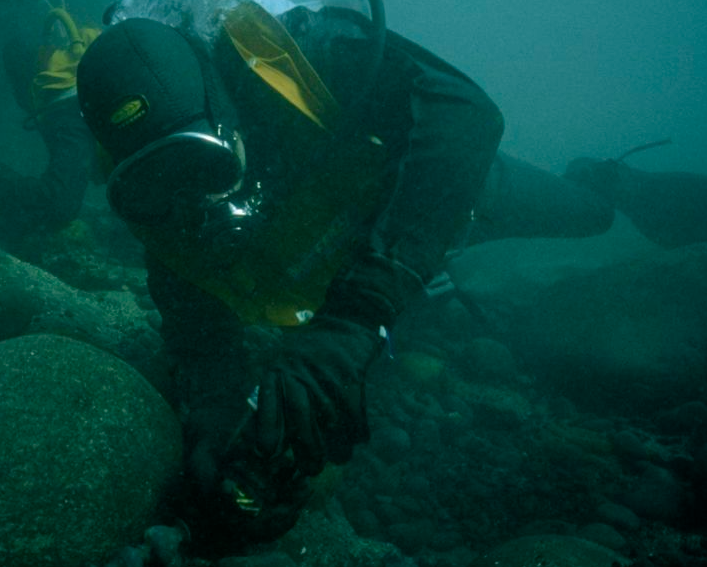
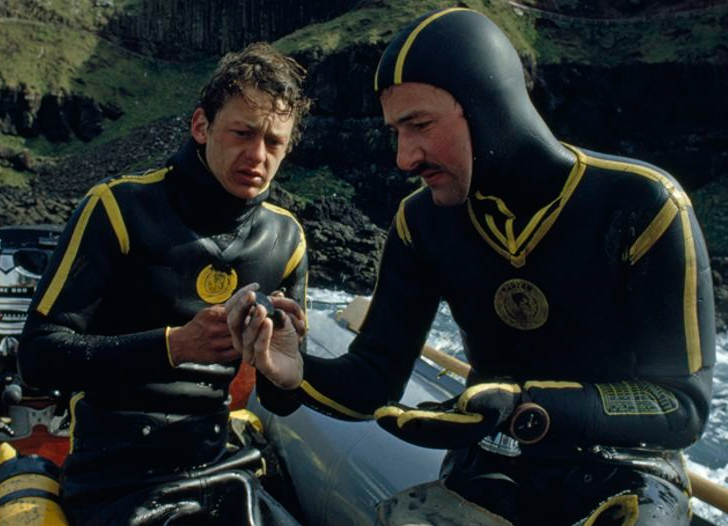
A wetsuit is a special suit worn by people who want to spend a lot of time in the water. Wetsuits are usually worn by swimmers, divers, or surfers who swim in cold water. Wetsuits insulate the swimmers, or help them retain body heat. This, in turn, helps the swimmers avoid hypothermia, a dangerously low body temperature.
Wetsuits are made of a kind of rubber called neoprene. The suit traps a thin layer of water between the neoprene and the wearer’s skin. So, the wearer is always wet—that’s why it’s called a wetsuit. Body heat warms the layer of trapped water and helps keep the wearer warm. The wetsuit must be tight, or else the layer of water between it and the wearer’s body will be too wide to keep warm.
The suit can cover the whole body, or just a swimmer’s legs or torso. Hoods, jackets, and vests can be added for extra protection.
There are different thicknesses and styles of wetsuits to fit different water conditions and the wearer's needs. Usually, the thicker the wetsuit, the warmer it keeps the wearer. However, the thicker the wetsuit, the more difficult it is to move in it. Most wetsuits are between 3 and 5 millimeters thick.
Swimmers and divers who spend time in icy waters, however, don’t wear wetsuits. They wear drysuits, which do not allow any water to penetrate them. All divers in the Arctic and Antarctic wear drysuits.
Because wetsuits offer protection against jellyfish stings and rocky reefs, many swimmers choose to wear them in warm water. The "shorty" wetsuit, covering the wearer’s torso with short sleeves and short leggings, is a common sight on warm surf beaches from Australia to Southern California.
As with many inventions, there is a dispute over who made the first wetsuit. Dr. Hugh Bradner, an American physicist who loved to dive, may have made the first wetsuit out of neoprene in 1952. He wanted to find a way for divers to avoid hypothermia and still be able to move freely in the water.
Other inventors sought the same goals. Jack O’Neill was a surfer who in the 1950s was also looking for a way to stay in the water longer. He experimented with different combinations of rubber suits, finally hitting on neoprene. It was flexible and a good insulator. O’Neill began to make neoprene wetsuits for himself and other California surfers. He set up a shop on the beach and grew his business into what is today a multi-billion-dollar industry.
How do wetsuits and drysuits help swimmers and divers in icy waters?
What type of material are wetsuits made from and why?
Click the link below to see how different materials insulate thermal energy.
What materials did the girls use to investigate?
What property of the bubble wrap made it the most effective insulator?
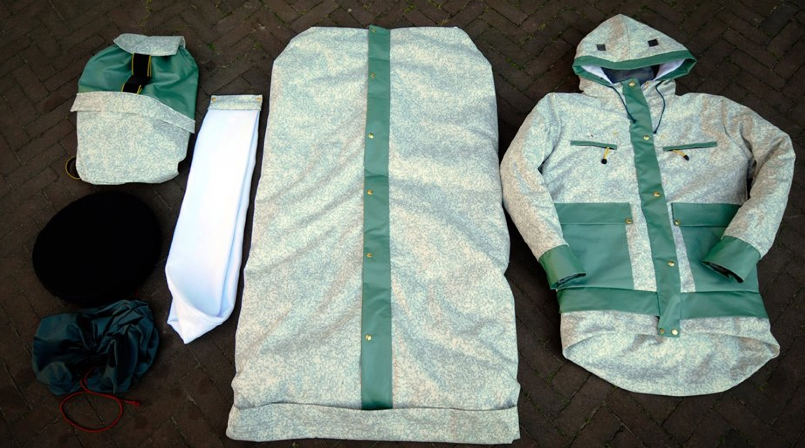
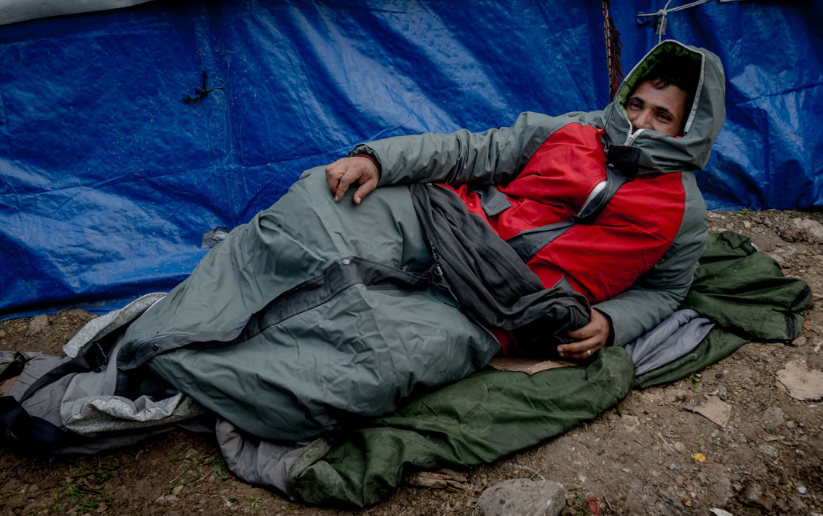
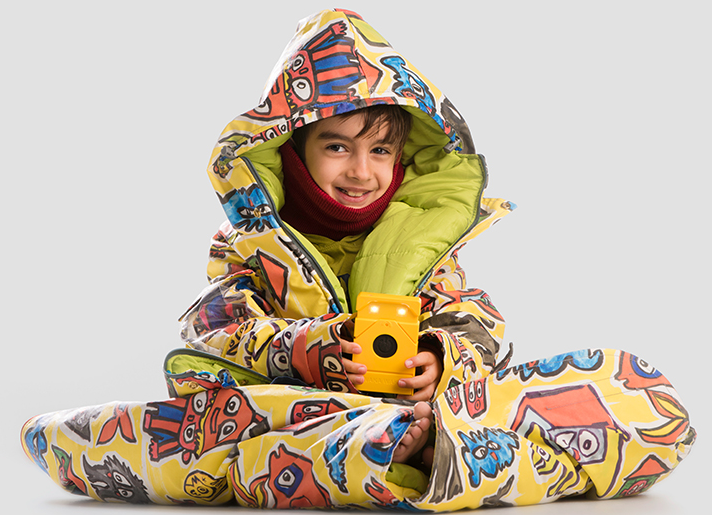
Shortly after graduating in 2012, Dutch fashion designer Bas Timmer heard some distressing news. While he had been busy sketching designs for warm weather clothing for his new brand, a friend's father, who was homeless, had died of hypothermia just meters away from his studio. The young innovator set aside his personal ambitions and instead used his design skills to create Sheltersuit — a waterproof, insulated jacket that doubles as a sleeping bag to protect the world's homeless and refugees, living in makeshift camps, against extreme weather.
Made from discarded sleeping bags, tents, and scrap fabric, the clothing is both functional and environmentally-friendly. To transform the coat into a sleeping bag, the wearer simply zips on a second piece to the bottom. The suit's large hood helps shield against bright street lights at night, while a built-in scarf adds warmth and protection. When not in use, the "portable shelter" can be tucked away in the accompanying backpack.
The designer had initially intended to create a limited number of Sheltersuits and then go back to nurturing his fledgling clothing brand. “I thought, okay, I’m going to make 100,” he says. However, demand for the ingenious product, which was an instant hit, has been incessant. Over the past four years, Timmer and his team, which includes both volunteers and paid refugee employees, have distributed 6,000 Sheltersuits to the homeless in the Netherlands and across Europe, and to asylum seekers in Sarajevo and Greece.
To help pay for the manufacturing cost, Timmer and his partner, Alexander De Groot, have set up the Sheltersuit Foundation, which accepts donations from both corporations and individuals. Since March 2019, the team has also been using its factory to create clothing, bags, and other items for paying clients.
Earlier this year, after observing a large number of homeless in Austin, Texas, the young designer embarked on designing the Shelterbag — a lightweight, ventilated jacket and sleeping bag that is more suited to the city's warmer temperature. The thinner material allows the Shelterbag to be rolled like a yoga mat, eliminating the need for a backpack. Though only 100 will be made initially, Timmer hopes to expand production for both suits once he can garner more funding. “I want to help hundreds of thousands of people, eventually, not 6,000 a year,” he says.
Though Timmer's efforts are laudable, the waterproof clothing is not the solution to this serious social issue, which is largely the result of income loss and the skyrocketing real estate prices in US cities like San Francisco and New York. Hopefully, governments, corporations, and individuals will come together to find a way to help the people that are down on their luck.
What resources are homeless and refugee populations in need of?
What risks come with not having an adequate thermal insulator during inclement weather?
Thermal are materials that slow or stop the flow of thermal energy (heat). These materials can be used to keep thermal energy from entering or escaping.
There are several common materials that we use every day that help insulate thermal energy. Examples of thermal insulators include cotton (fabric), wood, newspaper, Styrofoam, and even air.
In extremely cold temperatures, people need thermal insulators to protect their bodies and stay warm. Snow shelters trap to keep the inside warmer than the outside. This would be helpful in snowstorms or camping in a snowy area overnight without a tent. Wetsuits are used by swimmers and to protect their bodies from the cold temperatures of the water in swimming pools and oceans. Wetsuits are made from a type of called Neoprene.
We need a way to control temperatures in our homes from getting too hot or too cold. We use insulating materials, like in the walls and attics of our homes to help keep the inside cool in the summer and warm in the winter. These materials help us energy.
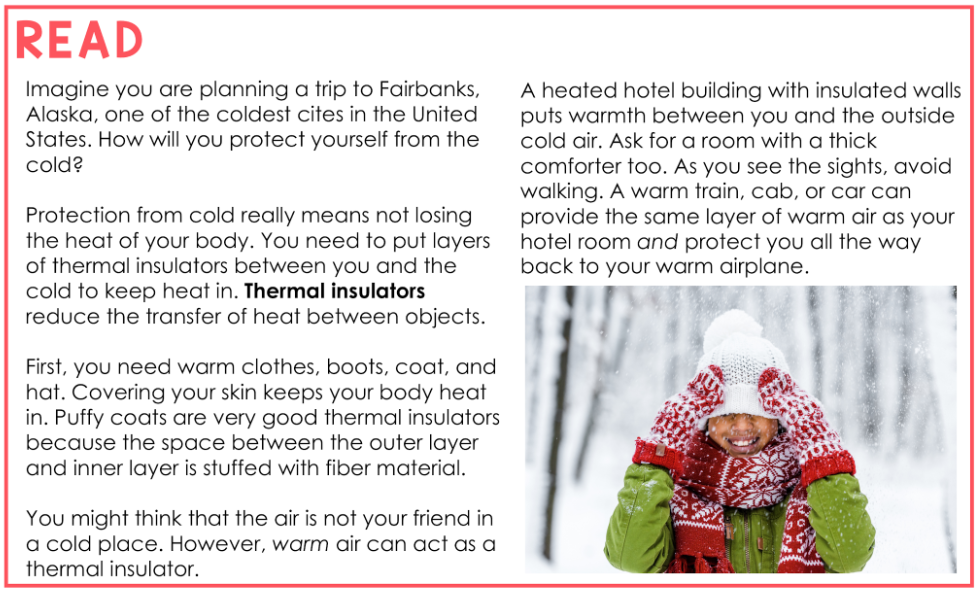
The most common uses of thermal insulators are our winter coats, jackets, gloves, and hats. Even though we use these all the time, not everyone has access to clothing that can protect them from cold temperatures and inclement weather. Companies use their knowledge of thermal insulators to make for homeless and refugee populations. They can stay warm, dry, and comfortable as they wait for adequate shelter.