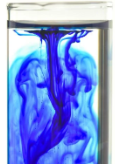
LT 1.1 Water Chemistry Quiz

Last updated over 1 year ago
10 questions
Required
1

Which of the following is responsible for many of water’s unique qualities? (LT 1.1a)

Amanda and Pol were learning about properties of water in science lab. They were given a sample of water, a graduated cylinder, a beaker, a toothpick and a piece of wax paper to make observations with. Answer the following 3 questions based on your understanding of the properties of water and their observations.
Required
1

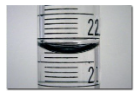
When Amanda poured some of the liquid in a test tube, she noticed that the edges of the water curved upward. The water curving up on the sides was an example of: (LT 1.1a)
Required
1

Pol was asked to drop water droplets on a piece of wax paper. He then used the toothpick to drag one droplet to the next droplet. His observation was that the water droplets increased in size and volume. (LT 1.1a)

Required
1

When Amanda added food coloring to the first test tube and shook it, she noted that the food coloring dispersed through the tube. Why did this happen? (LT 1.1a)

Required
1

Water molecules are polar, with the ____.  (LT 1.1a)

Required
1

Water makes up approximately 60% of the human body and plays a vital role in regulating body temperature. Which property of water makes it good at regulating temperature? (LT 1.1b)

Required
1

Many fish and aquatic plants can survive a cold winter because the layer of ice that forms at the top of the lake insulates the water below and prevents the lake from freezing solid. What unique property of water contributes to this effect? (LT 1.1b)

Required
1

Water is important to life because it _____. (LT 1.1b)

Required
1

After you eat lunch, the foods are broken down in your stomach. The nutrients are then carried through your bloodstream to all the cells in your body. The ability to dissolve and transport the nutrients in your blood is due to which property of water: (LT 1.1b)

Required
1

Capillary action is the combination of the adhesion attracting water to the sides of thin charged tubes and cohesion of the water in the middle to the water on the sides. This allows water to move without any energy input. Which of the following is an example of this property performing an essential function in living organisms? (LT 1.1b)