Log in
Sign up for FREE
arrow_back
Library

Formation of the Earth and our Solar System

star
star
star
star
star
Last updated over 2 years ago
9 questions
7
1
3
1
1
1
1
1
4
Question 1
1.

Question 2
2.

Question 3
3.

What are the two types of comets? How are they different?

Question 4
4.

Question 5
5.

Question 6
6.

Question 7
7.

Question 8
8.

Question 9
9.

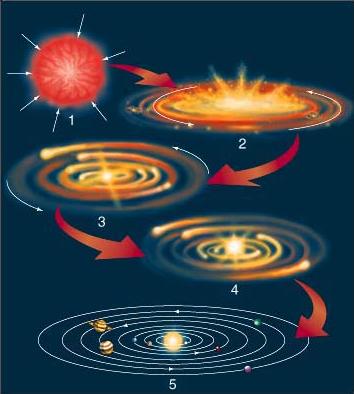
In your own words, summarize how the solar system formed.

𝘋𝘪𝘳𝘦𝘤𝘵𝘪𝘰𝘯𝘴: 𝘗𝘶𝘵 𝘵𝘩𝘦 𝘦𝘷𝘦𝘯𝘵𝘴 𝘪𝘯 𝘰𝘳𝘥𝘦𝘳 𝘣𝘺 𝘥𝘳𝘢𝘨𝘨𝘪𝘯𝘨 𝘵𝘩𝘦𝘮 𝘵𝘰 𝘵𝘩𝘦𝘪𝘳 𝘯𝘶𝘮𝘣𝘦𝘳 (1-7)
Gravity caused the cloud of gas and dust to spin.


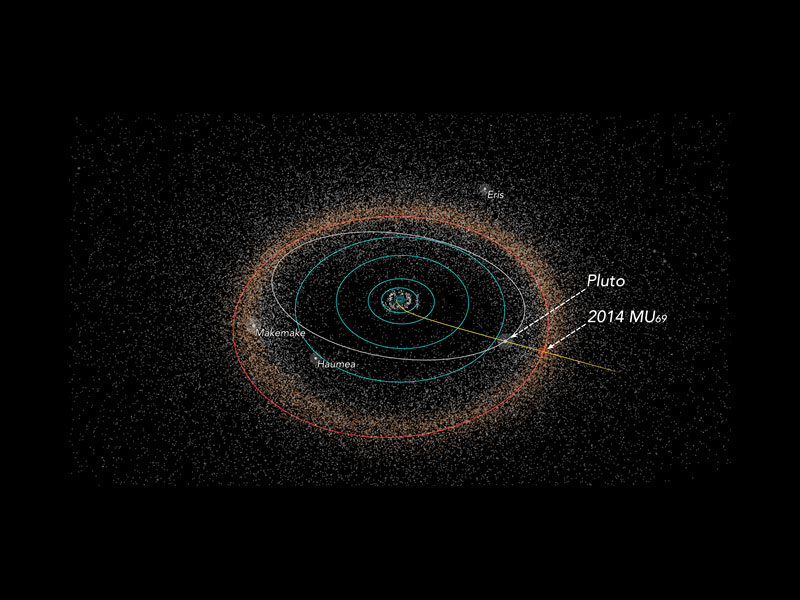
Leftover debris formed asteroids, comets, and outer planets, like Pluto.

In the outer regions of the cloud, icy matter and gas formed the giant planets.
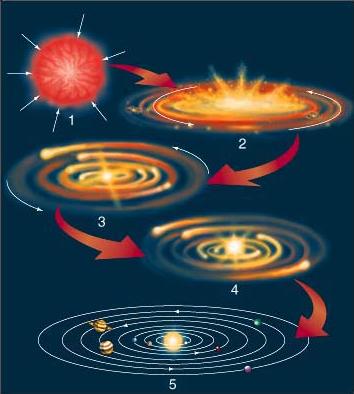

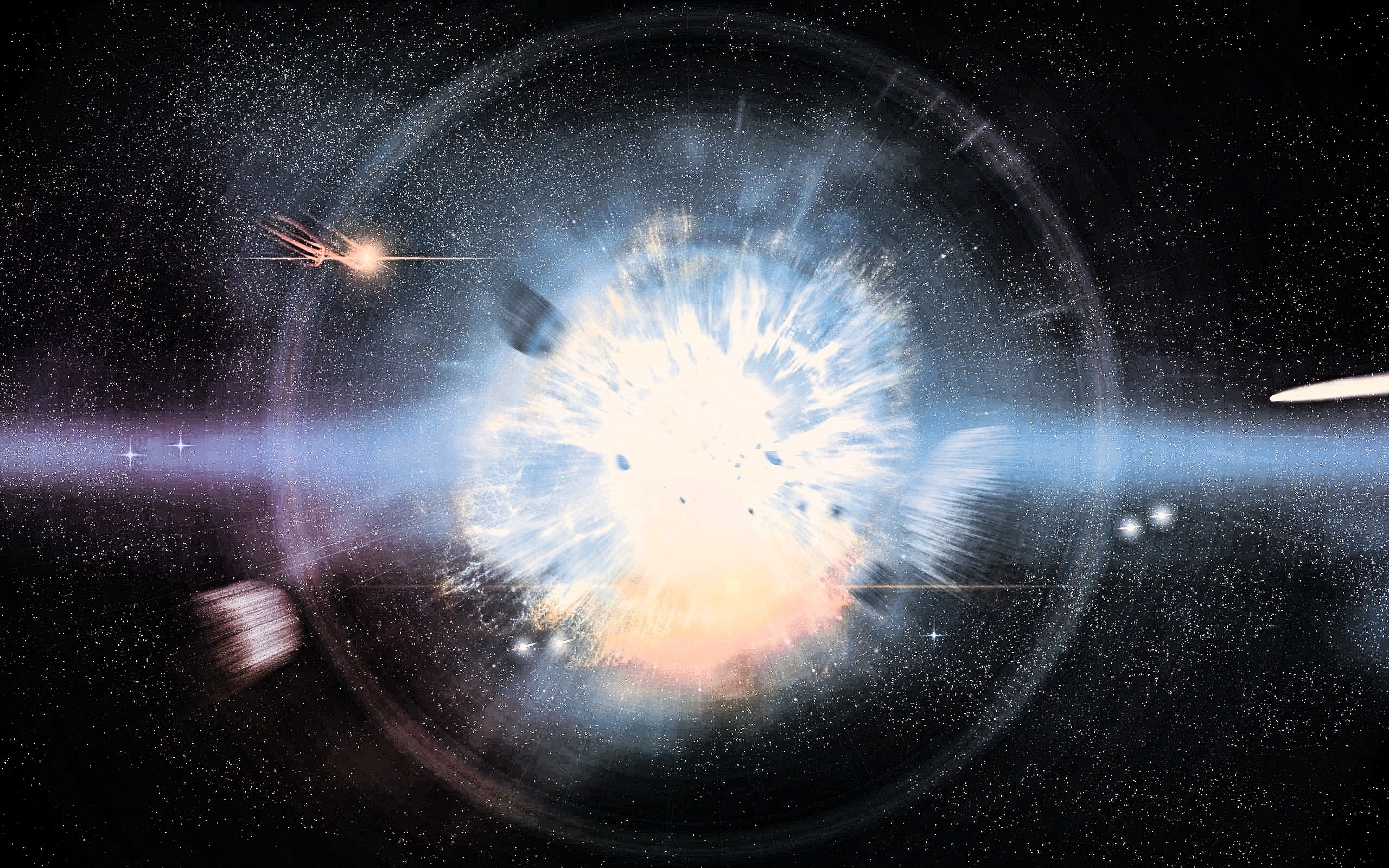
An explosion of a supernova led to a gravitational collapse of a dense cloud of gas and dust.

Near the center of the cloud, clumps formed rocky planets.


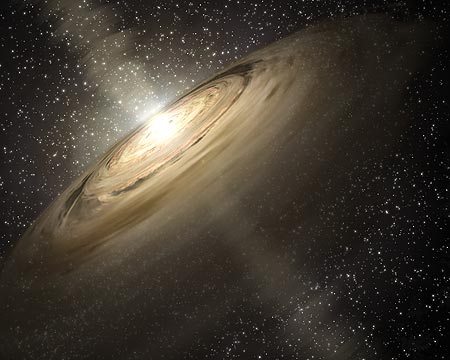
The spinning cloud flattened like a disk and spread.

The cloud of gas and dust grew hot and created the Sun.


1
2
3
4
5
6
7
What do scientists think stony-iron meteorites were once part of?
Thought to be part of the accretion of asteriods in the belt.
Thought to be left over material from the formation of the solar system.
Thought to have formed at the core/mantle boundary of their parent bodies.
Thought to have formed from organic material and ice in the Kuiper belt.
What are the first 6 stages (in order) of the solar nebula theory?
Nebula, disk flattening, accretion, condense and heat up, star forms, spins faster
Nebula, contracts and heats up, spins faster, flattening, disk shaped, star forms
Contracts and heats up, nebula, flattening, spins faster, disk shaped, star forms
Accretion, condense, spin faster, nebula, disk shaped, flattening, jovian
What process makes the star radiate energy?
Fusion
Fission
Accretion
Condensation
This theory of the formation of the moon describes how the moon and earth were formed together during the creation of the solar system.
Co-accretion
Fission
Capture
Giant Impact
This theory of the formation of the moon describes how the moon was once part of the Earth and separated during the creation of the solar system.
Co-accretion
Fission
Capture
Giant Impact
This theory of the formation of the moon describes how a large body known as "Theia" impacted the early Earth causing a parts to be absorbed and parts to be thrown into orbit creating the moon.
Co-accretion
Fission
Capture
Giant Impact