Log in
Sign up for FREE
arrow_back
Library
1.3 Aquatic Biomes
By Ryan Beeler
star
star
star
star
star
Share
share
Last updated 9 months ago
18 questions
Add this activity
1
1
Question 1
1.
Upload your notes here.
visibility
View drawing
zoom_in
1
Question 2
2.
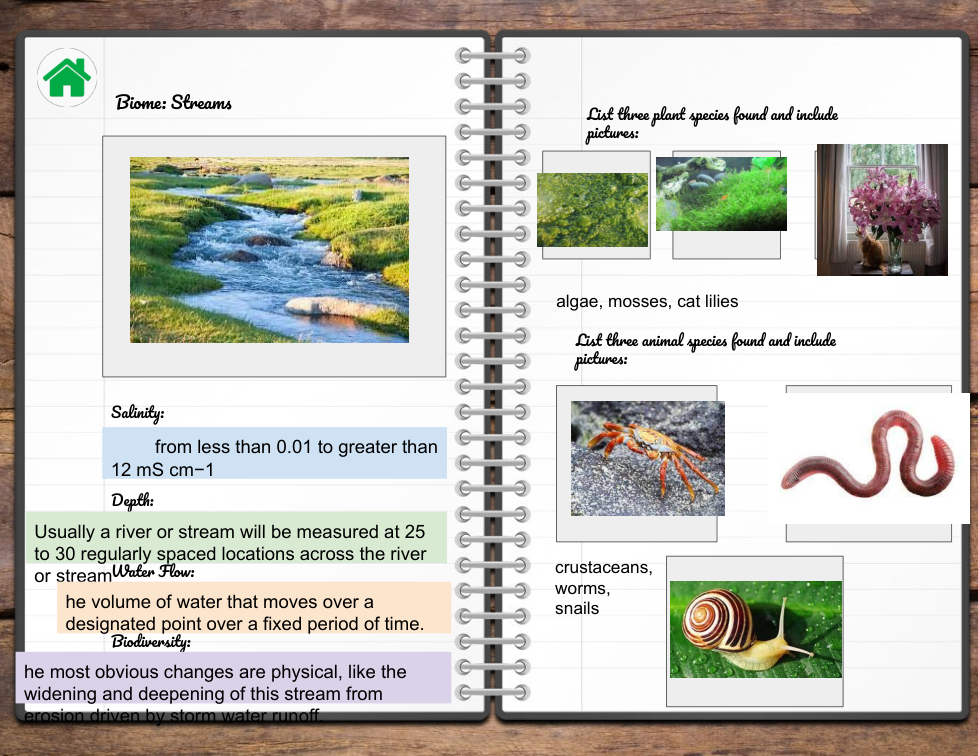
What type of organisms typically thrive in fast-flowing aquatic biomes such as streams?
Coral Reefs
Manta Rays
Benthic Macroinvertebrates
Seaweed
1
zoom_in
1
Question 4
4.
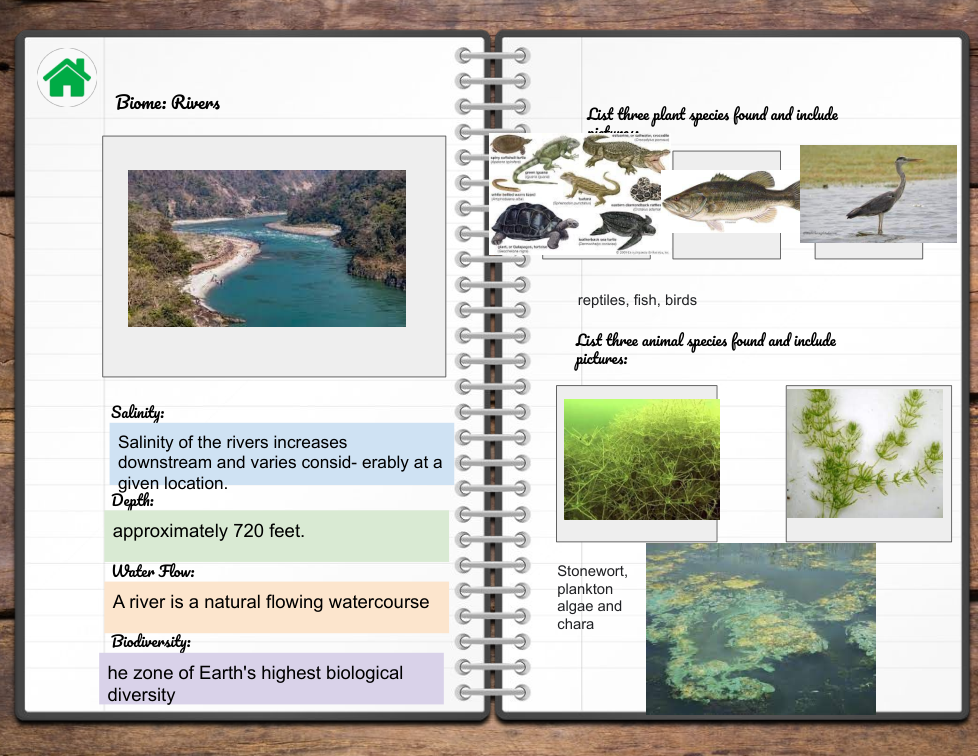
Which factor determines how much life a river can support?
Amount of Oxygen
River width
Water flow speed
Distance from the sea
1
zoom_in
1
Question 6
6.
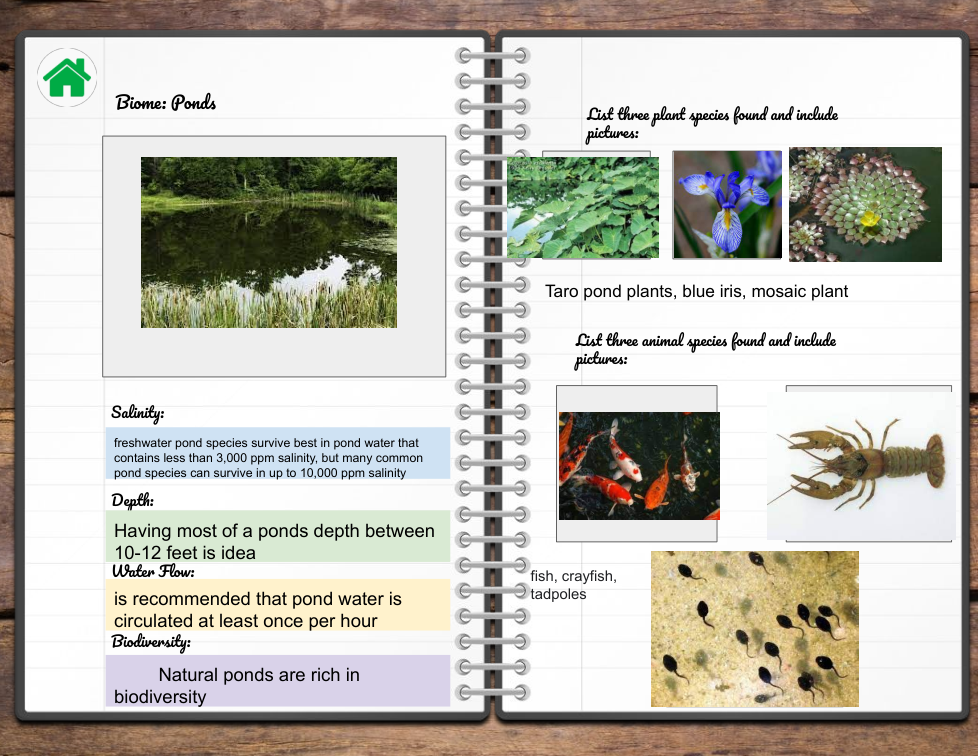
What is the most common flora association in a pond biome?
Pine and Oaks
Algae and Lily Pads
Cactuses and Succulents
Seaweed and Corals
1
zoom_in
1
Question 8
8.
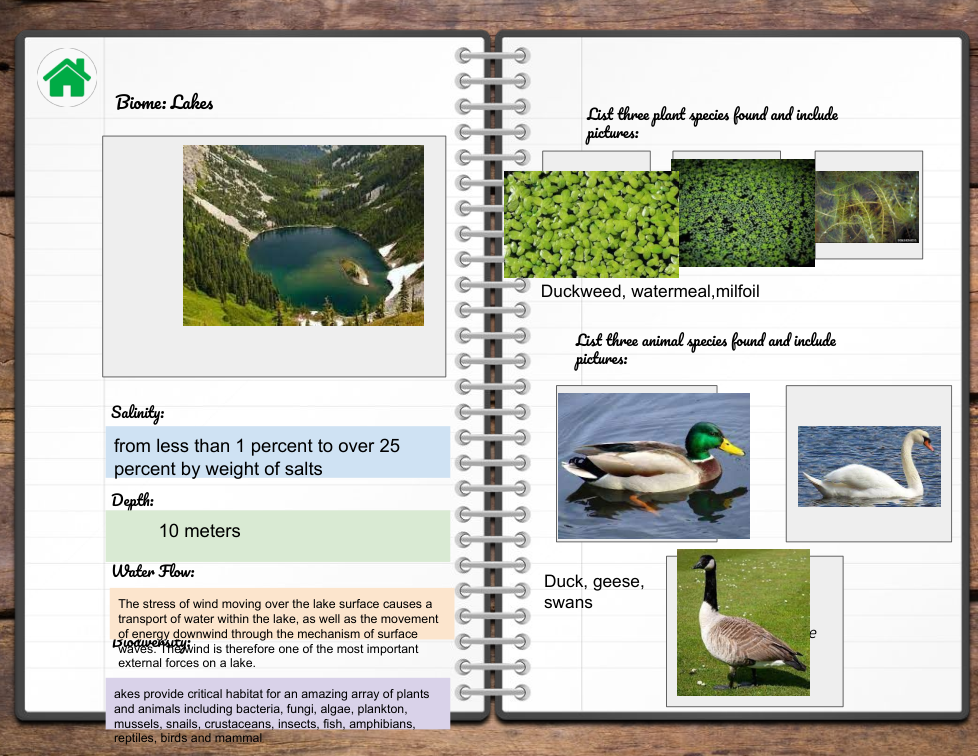
What distinguishes a lake from a pond?
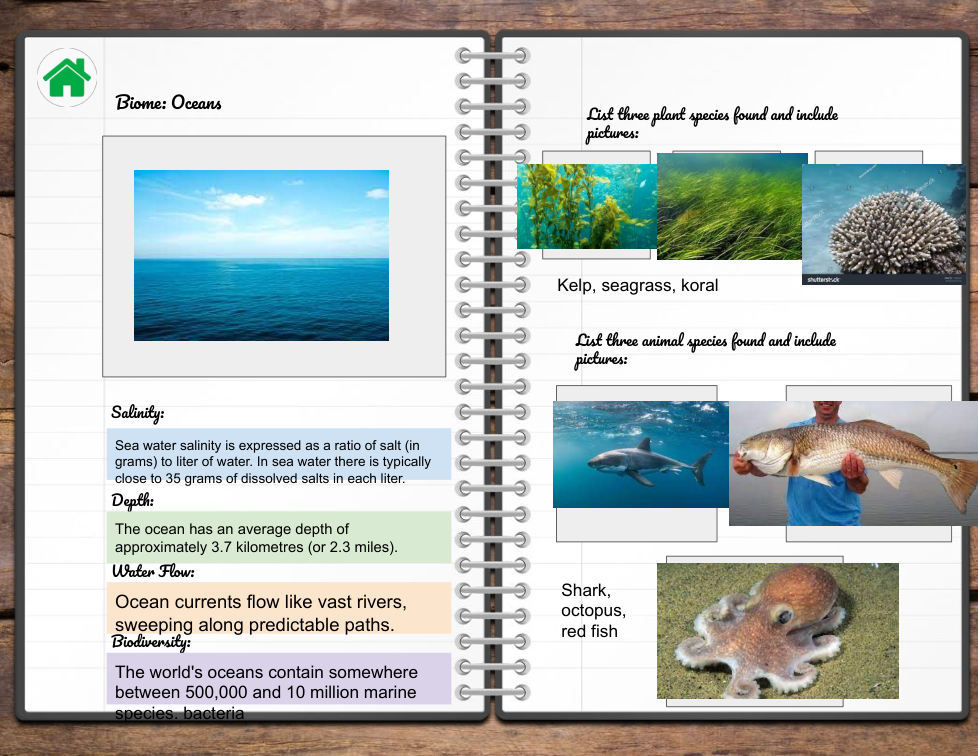
Lake has salt water
Pond is larger and deeper
Pond has more aquatic life
Lake is typically larger and deeper than a pond
1
zoom_in
1
Question 10
10.
What percentage of Earth's surface is covered by oceans?
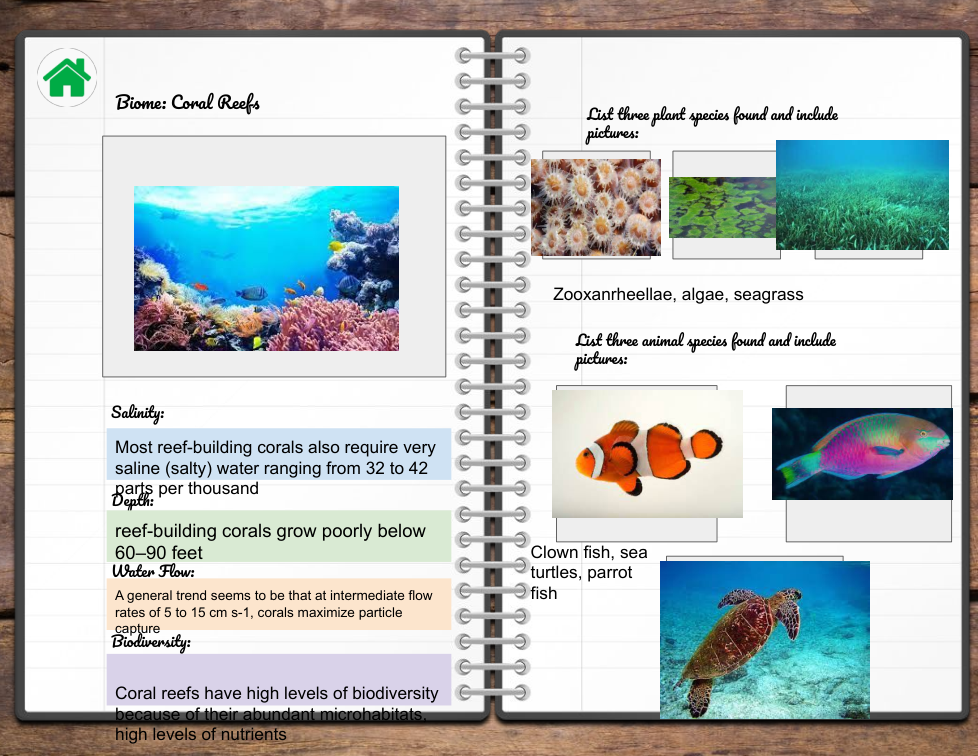
About 70%
About 80%
About 50%
About 60%
1
zoom_in
1
Question 12
12.
What is the main source of food for coral in a reef?
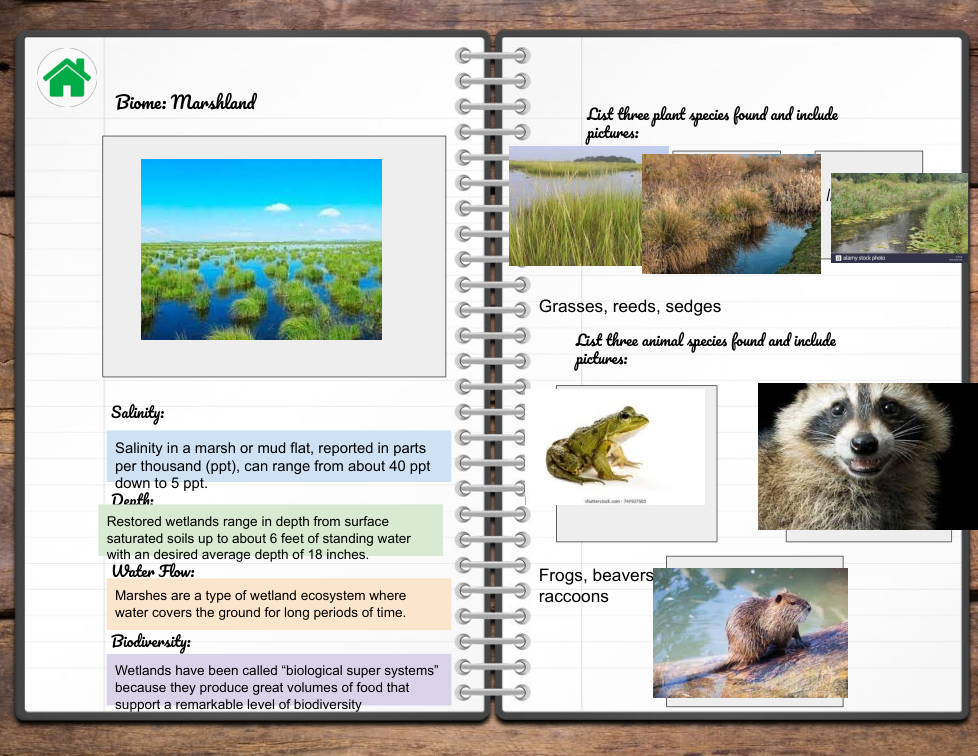
Photosynthetic algae
Plankton
Seaweed
Fish
1
zoom_in
1
Question 14
14.
What is a key characteristic of a marsh biome?
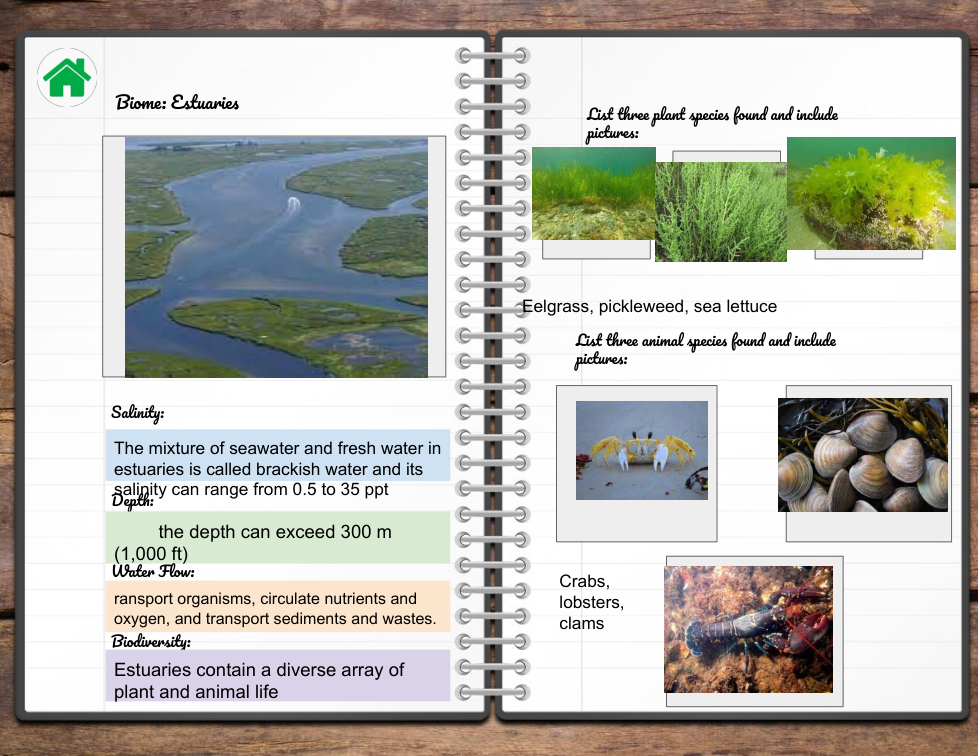
Wetlands with grassy vegetation
Hot and dry climate
High mountainous region
Dense forest canopy
1
zoom_in
1
Question 16
16.
What is an estuary?
A narrow inlet of the sea between cliffs
A body of water where freshwater meets the sea
An undersea mountain range
A large lake with salt water
1
Question 18
18.
Match the biome with the biome type.
Freshwater
Marine
Streams
Oceans
Ponds
Lakes
Coral Reef
Marshland
Rivers
Estuary
Question 3
3.
How does the water in streams typically become oxygenated?
Through photosynthesis
By flowing over rocks and plants
From rainfall
Via underground springs
Question 5
5.
Why is dissolved oxygen important for organisms in a river ecosystem?
Provides buoyancy
Helps in digestion
Necessary for respiration
Needed for photosynthesis
Question 7
7.
Which organisms are a vital part of the pond food chain?
Plankton, Insects and Fish
Lion, Zebra and Elephants
Whales, Coral and Seaweed
Shark, Turtle and Dolphin
Question 9
9.
How does depth affect temperature in a lake?
Depth has no impact on temperature
Deeper water is always warmer
There's no temperature difference
Deeper water is usually colder
Question 11
11.
What is the largest ocean on Earth?
Pacific Ocean
Atlantic Ocean
Indian Ocean
Arctic Ocean
Question 13
13.
How are coral reefs affected by climate change?
Decreased salinity
Coral darkening
Increased coral growth
Coral bleaching
Question 15
15.
Why do marshes play an important role in the ecosystem?
They produce large quantities of oxygen
They act as a natural water filter
They are the main source of freshwater
They prevent desertification
Question 17
17.
What type of organisms thrive in estuaries?
Deep-sea organisms
Freshwater organisms
Desert organisms
Brackish water organisms