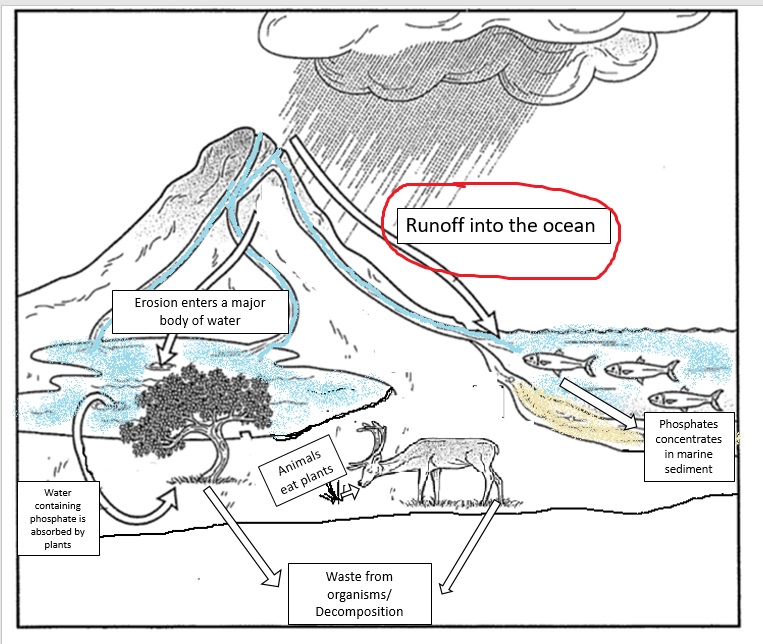
Although nitrogen and carbon exist as gases, other elements collect in rocks and soil and are not found as a gas – such as Phosphorus. Phosphorus is important to life because it is found in DNA (your genetic information) and ATP (which is what all living things get energy from!).Without Phosphorus life would not be possible! Today we will be following the steps of the Phosphorus cycle.
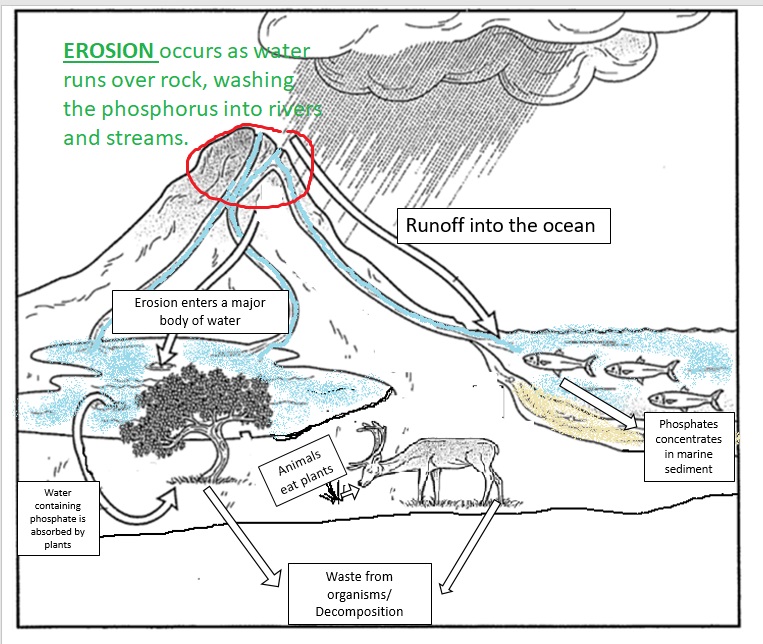
The main phosphorus reservoir (place where phosphorus collects) is rock and soil so this is where the cycle begins – in the picture the main reservoir is the volcano.
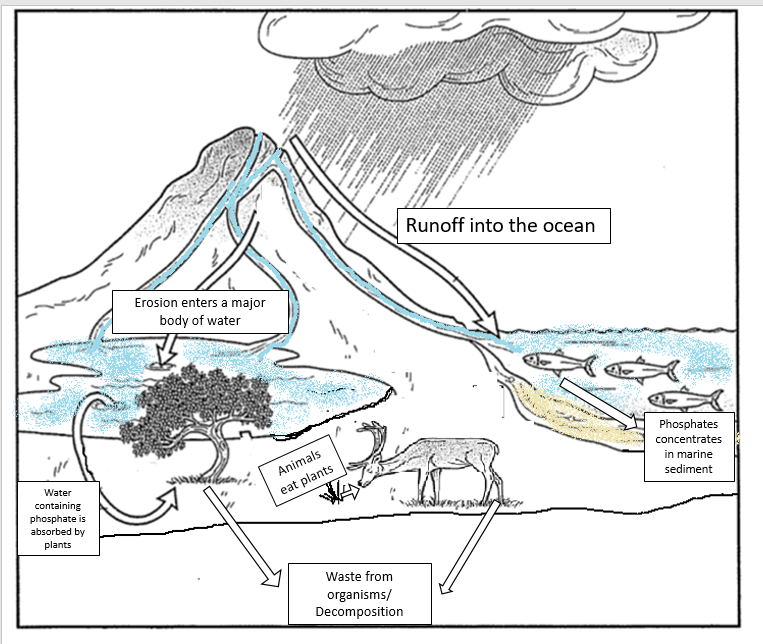
Erosionoccurs as water runs over rock, washing the phosphorus into rivers and streams.
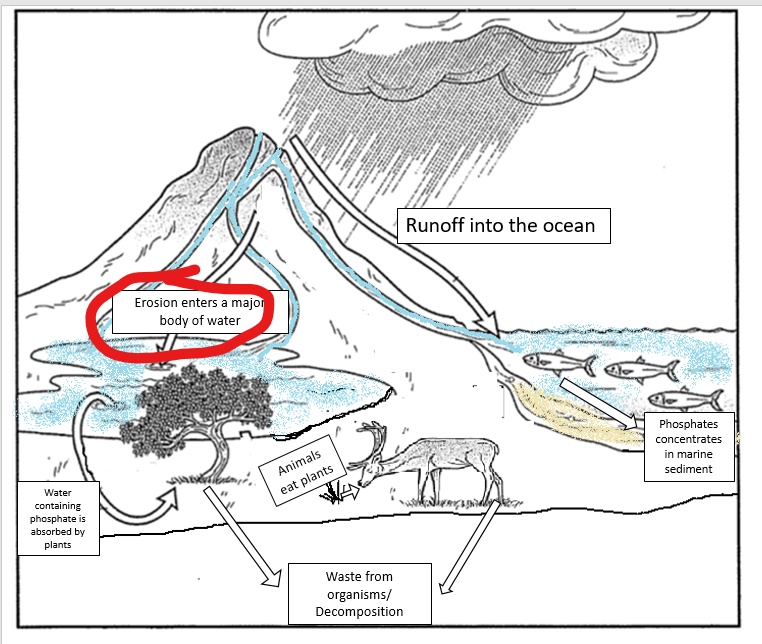
Then, phosphorus mixes with oxygen to form phosphate andenters a major body of water, depicted here as a lake.
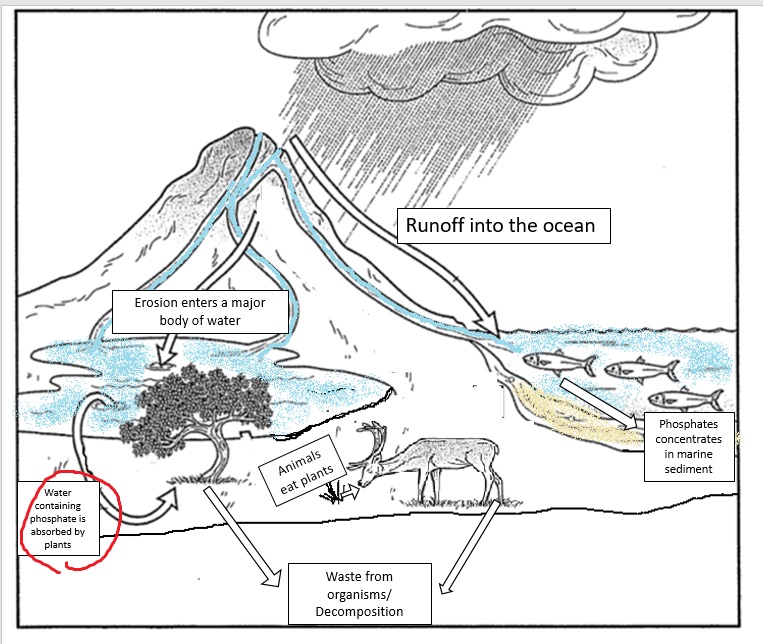
Next, the water containing phosphate is absorbed (taken in) by the plants and are used to make DNA & ATP.
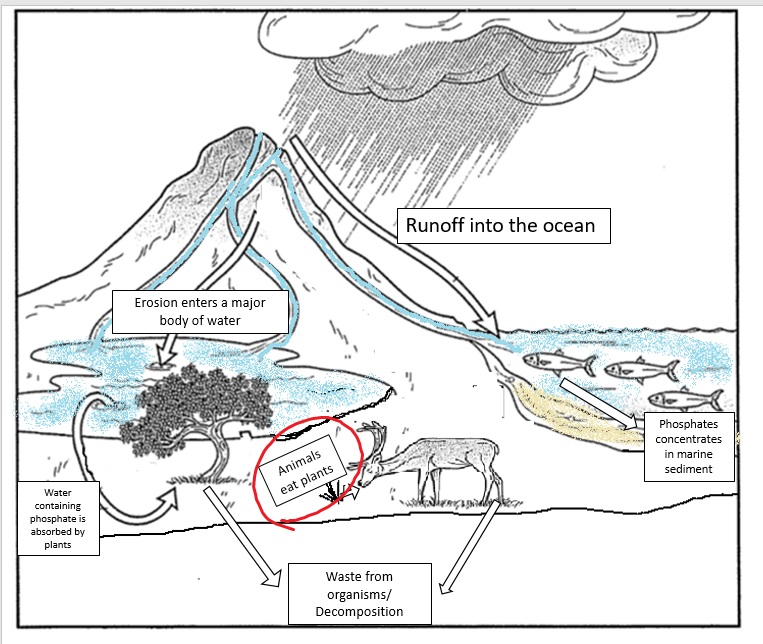
In order for animals to get the phosphate they need, they must consume (eat) plants.
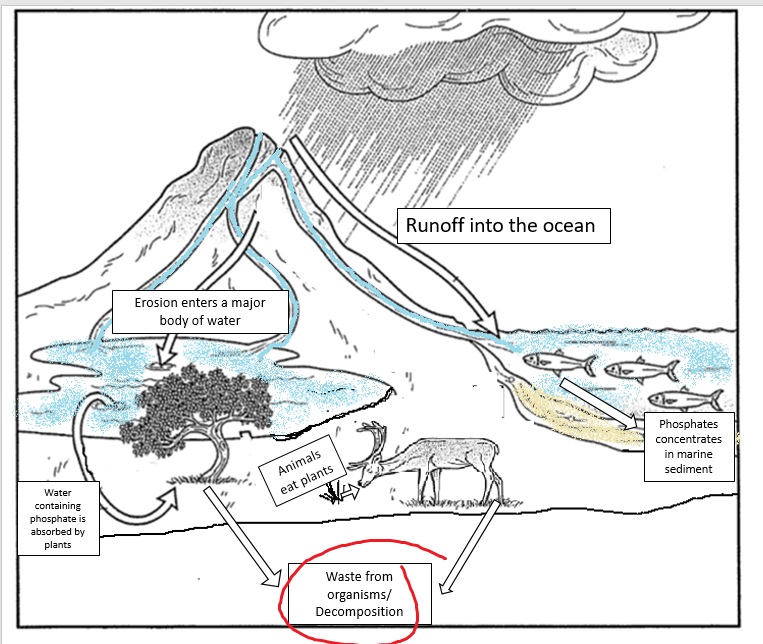
When plants and animals release waste or die, the phosphate in their bodies decompose and the phosphate is returned to the soil or water – at this point it can be reabsorbed by plants once again!
Large amounts of phosphate is carried by rivers and streams asrunoff to the ocean.
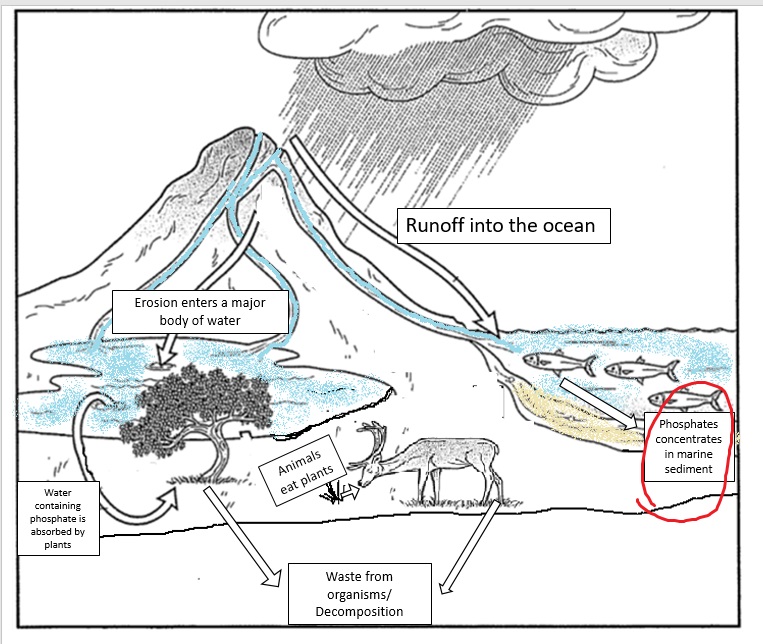
This phosphate then concentrated (settles) in marine sediment - creating "ocean rocks". Just like on land, aquatic plants then absorb the Phosphorus and the animals eat the plants to get the Phosphorus they need.
As we have seen, the atmosphere is not involved in the phosphorus cycle because it is not found in a gaseous form. This is very different from the carbon and water cycle were the atmosphere is a main part of each cycle.
Why is Phosphorus an important molecule for life?
It makes up chloroplasts
It makes up the digestive system
It makes up DNA & ATP
It makes up the cells
How do animals receive phosphorus?
They absorb it from soil
They breathe it in
They absorb it from water
They consume it from plants or animals
What is the major reservoir of the phosphorus cycle?
Rocks and soil
Atmosphere
Ocean
Plants and animals
What happens to Phosphorus that erodes from rock and soil?
The phosphorus becomes a part of the atmosphere
The phosphorus becomes a part of the plants
It mixes with oxygen to form phosphate and is a part of the water
The phosphorus becomes a part of the animals
What happens to the phosphates when plants and animals die?
It decomposes and returns to the soil or water
It vaporizes and returns to the atmosphere
It solidifies and becomes rock
What is different about the Phosphorus cycle when compared to the water and carbon cycles?
There is no plant component
There is no animal component
There is no water component
There is no atmospheric component
Put the statements in the order they would occur.
Farmers use artificial fertilizers containing nitrogen on their crops
Fertilizer is washed into lakes and oceans due to runoff
There is an increase on nitrogen/phosphorus in the water
Overgrowth of Algae
Plants and animals die due to blocked sunlight and a decrease of oxygen in water
A deadzone is created
How do plants receive phosphorus?
(Select 2 correct answers)
They absorb it from air
They absorb it from water
They consume it from plants or animals
They absorb it from soil
What happens to the phosphorus that is carried by runoff to the oceans?
It is evaporated into the atmosphere
It settles to the bottom of the ocean as marine sediment
Match the terms with their definitions
Fertilizer runoff
The main phosphorus reservoir
Decomposition
Water moving over rocks, washing phosphorus into rivers and streams
Plant/animal absorbtion/consumption
Where phosphorus mixes with oxygen to make phosphates
Erosion
Water containing phosphates is absorbed/Plants are eaten to get the phosphate they need
Phosphates in water
Excess nutrients runoff into streams and lakes causing toxic algal bloom
Rocks and soil
Phosphorus is broken down in waste and returned to water or soil