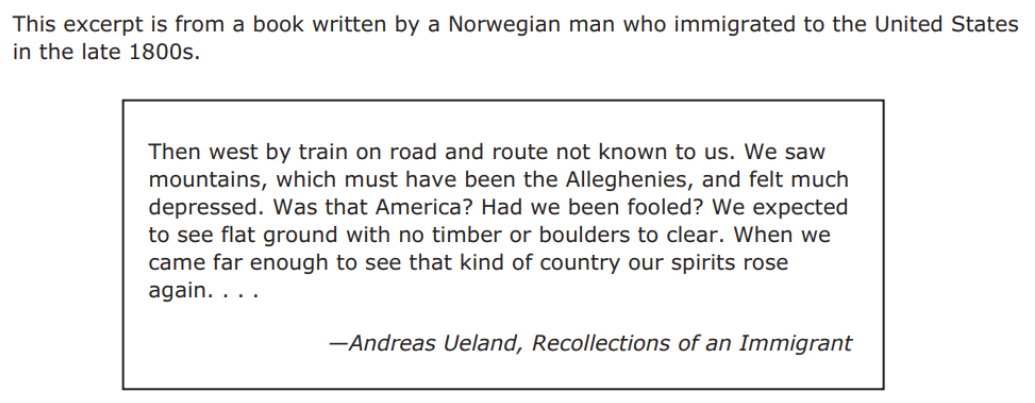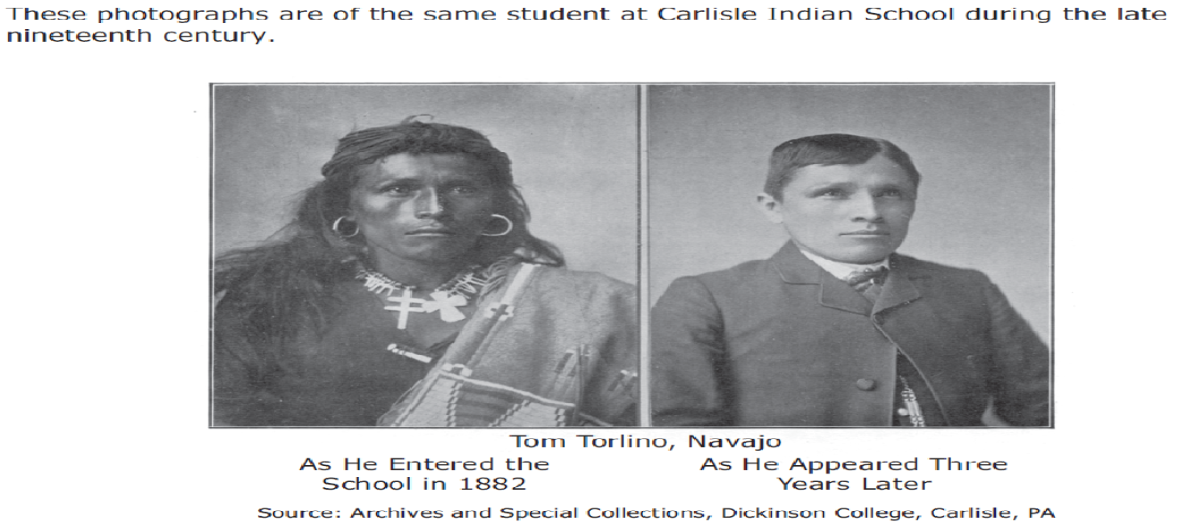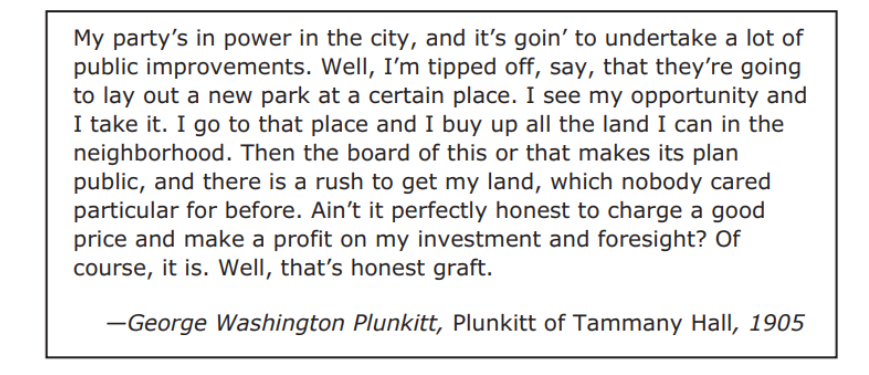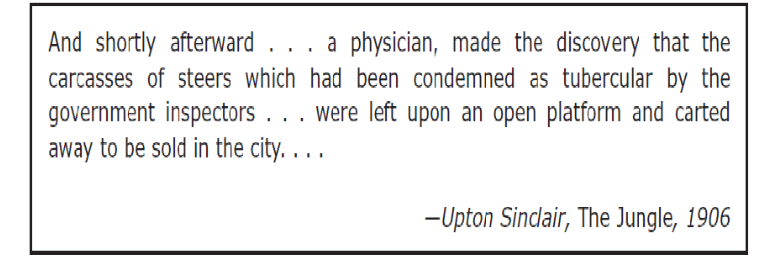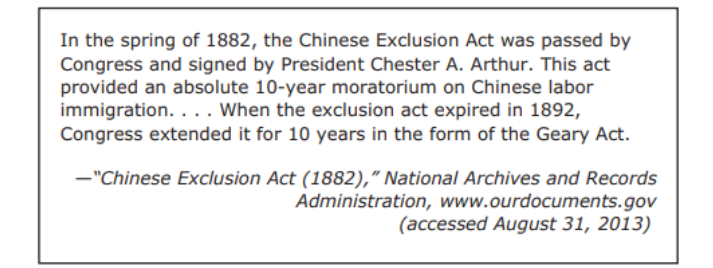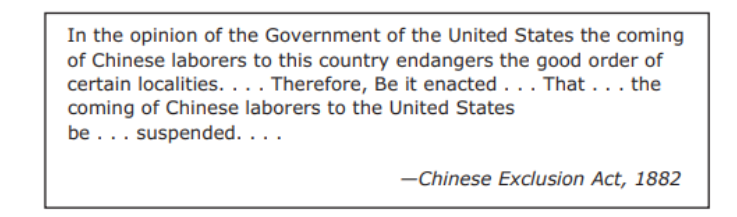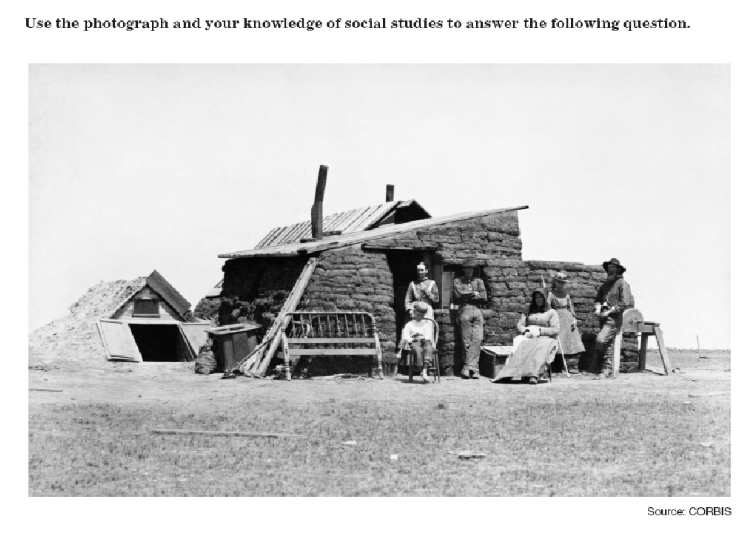
Which of the following responses describe the photograph above.
Choose all correct answers:
Which of the following responses describe the photograph above.
Choose all correct answers:
A had only to be the head of a household or at least 21 years of age to claim a 160-acre parcel of land. Settlers from all walks of life including newly arrived immigrants, farmers without land of their own from the East, single women and former slaves came to meet the challenge of “proving up” and keeping this . Each homesteader had to live on the land, build a home, make improvements and farm for 5 years before they were eligible to “prove up.” A total filing fee of $18 was the only money required. . . .
—National Park Service, www.nps.gov (accessed November 14, 2013)
Choose all correct answers. The legislation described above led to :
Which of the following responses describe the photograph above.
Choose all correct answers:
Choose all responses that apply to his excerpt:
Select all correct responses:
Choose all responses that that describe the photograph above:
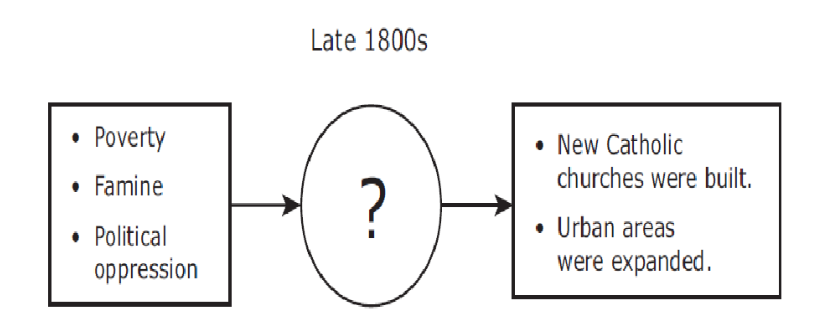
Select all responses that would complete diagram above:
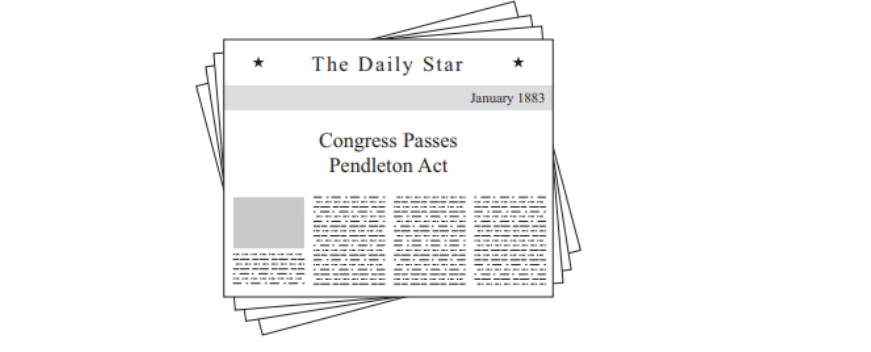
Choose all reponses that led to the passage of this legislation:
Choose all responses that apply to this excerpt:
What were the results of rapid growth and a large influx of immigration to U.S. cities in the early 20th century?
Select all responses that describe excerpt cited above.
Select all responses that describe the excerpts cited above:
Select all responses that are associated with voting
Identify and explain the three Reconstruction Amendments
Select all responses associated with the rights of the accused:
Select phrase that applies to the 14th Amendment to the U.S. Constitution:
Select the phrase that recognizes enfranchisement of citizens:
Select the phrase that list the rights you were born with:
That to secure these rights,
List all your rights protected by the first amendment
The most important amendment to a Political Boss during the "Gilded Age" was the because it defined and provide for under the law. Citizenship allowed recent immigrants to work, but more importantly for the political machine it allowed immigrants to .
Select all responses that facilitate trade.
The Meat inspection Act and the Pure Food act are examples of Laissez- Faire economics.
Place the Acts in the era that were ratified.
Homestead Act 1862
The Civil Rights Act of 1866
Dawes Act of 1887
Chinese exclusion Act of 1882
Pendleton Civil Service Act of 1883
Meat inspection Act of 1906
Acts passed during Manifest Destiny and The Gilded Age
Acts passed during Reconstruction
| Draggable item | arrow_right_alt | Corresponding Item |
|---|---|---|
establishes an income tax | arrow_right_alt | enfranchisement |
Assimilation | arrow_right_alt | 16th amendment |
Merit Exams | arrow_right_alt | Chinese Exclusion Act |
nativism | arrow_right_alt | civic responsibility |
Upton Sinclair | arrow_right_alt | Homestead Act |
Food Handlers card requirement | arrow_right_alt | Dawes Act |
Ghettos | arrow_right_alt | The Jungle |
investigative journalist during the Gilded Age who exposes corruption in Business and Government | arrow_right_alt | Meat Inspection Act |
jury duty | arrow_right_alt | Tenements |
Free Land | arrow_right_alt | Muckrakers |
voting | arrow_right_alt | Pendleton Civil Service Act |