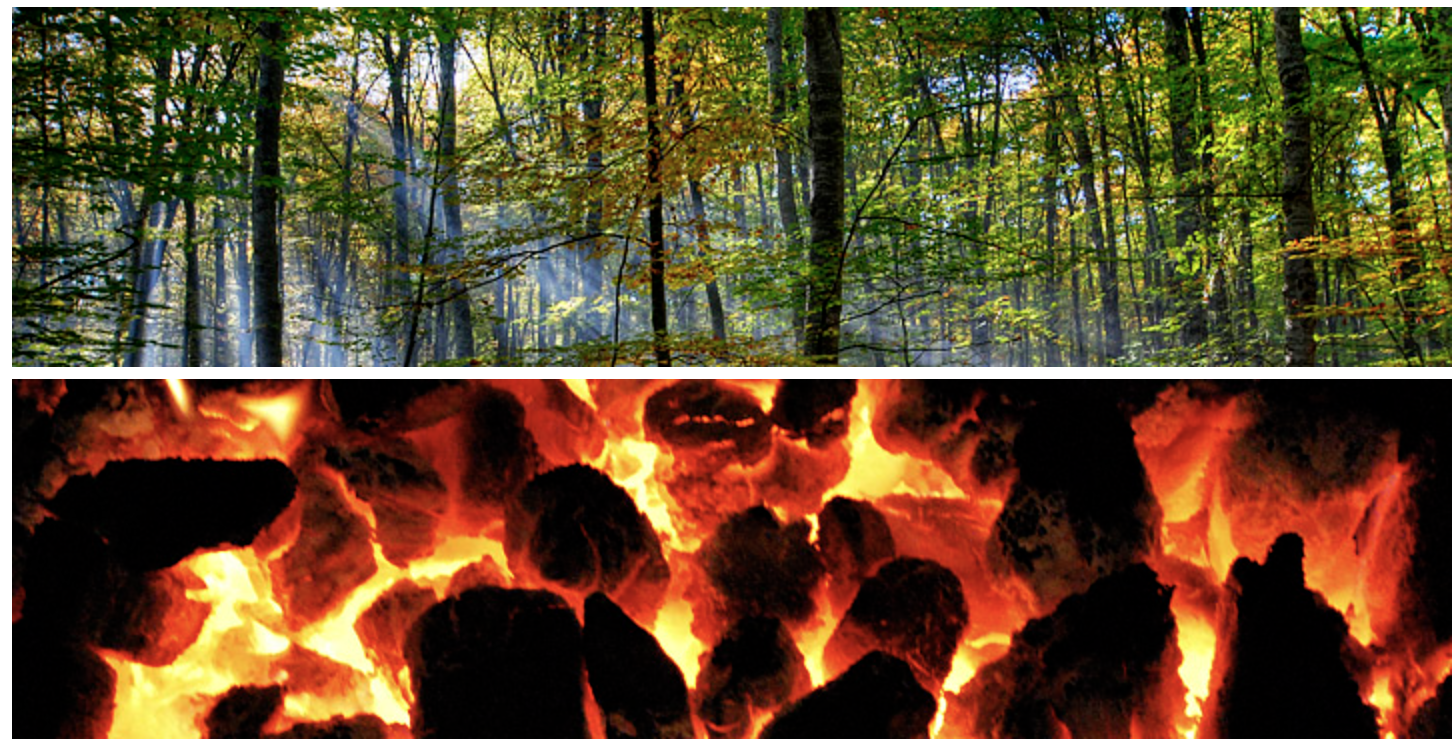
Carbon is the backbone of life on Earth. We are made of carbon, we eat carbon, and our civilizations—our economies, our homes, our means of transport—are built on carbon. We need carbon, but that need is also entwined with one of the most serious problems facing us today: global climate change.
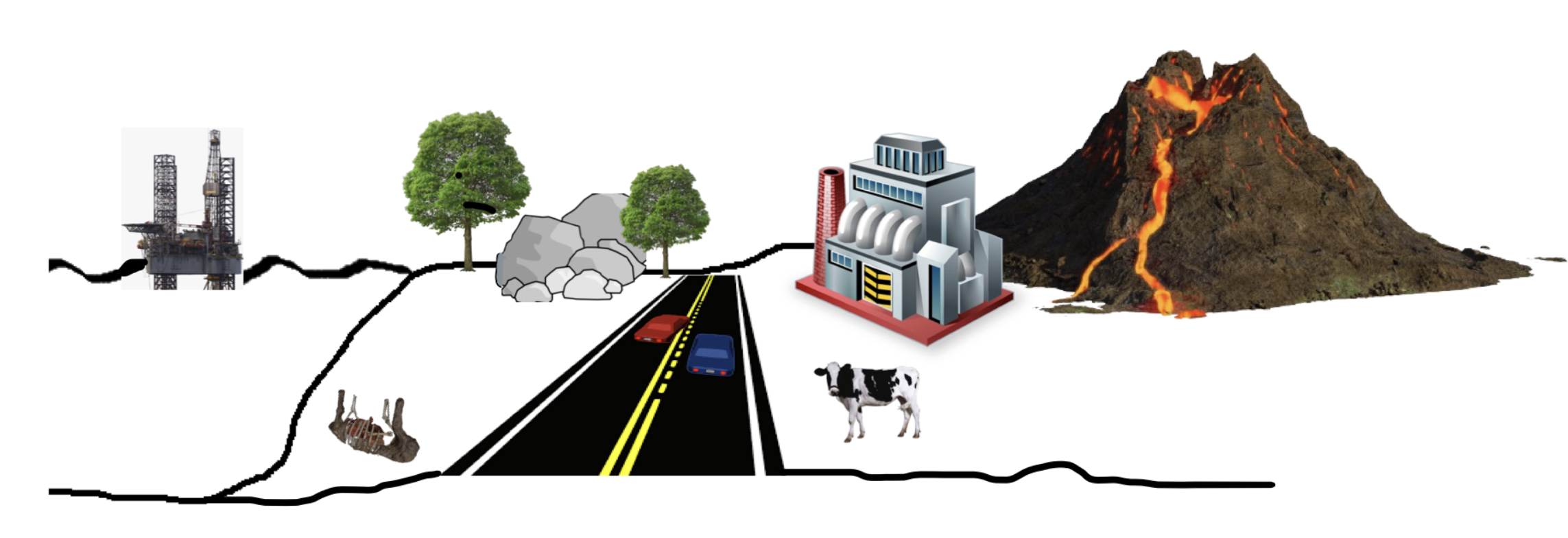
Now that you have read about the slow and fast carbon cycle. Create an infographic of the slow and fast carbon cycle.
Forged in the heart of aging stars, carbon is the fourth most abundant element in the Universe. Most of Earth’s carbon comes from the ocean. The rest is in stored in rocks, atmosphere, plants, soil, and fossil fuels.
Carbon flows between each reservoir in an exchange called the carbon cycle, which has slow and fast components. Any change in the cycle that shifts carbon out of one reservoir puts more carbon in the other reservoirs. Changes that put carbon gases into the atmosphere result in warmer temperatures on Earth.
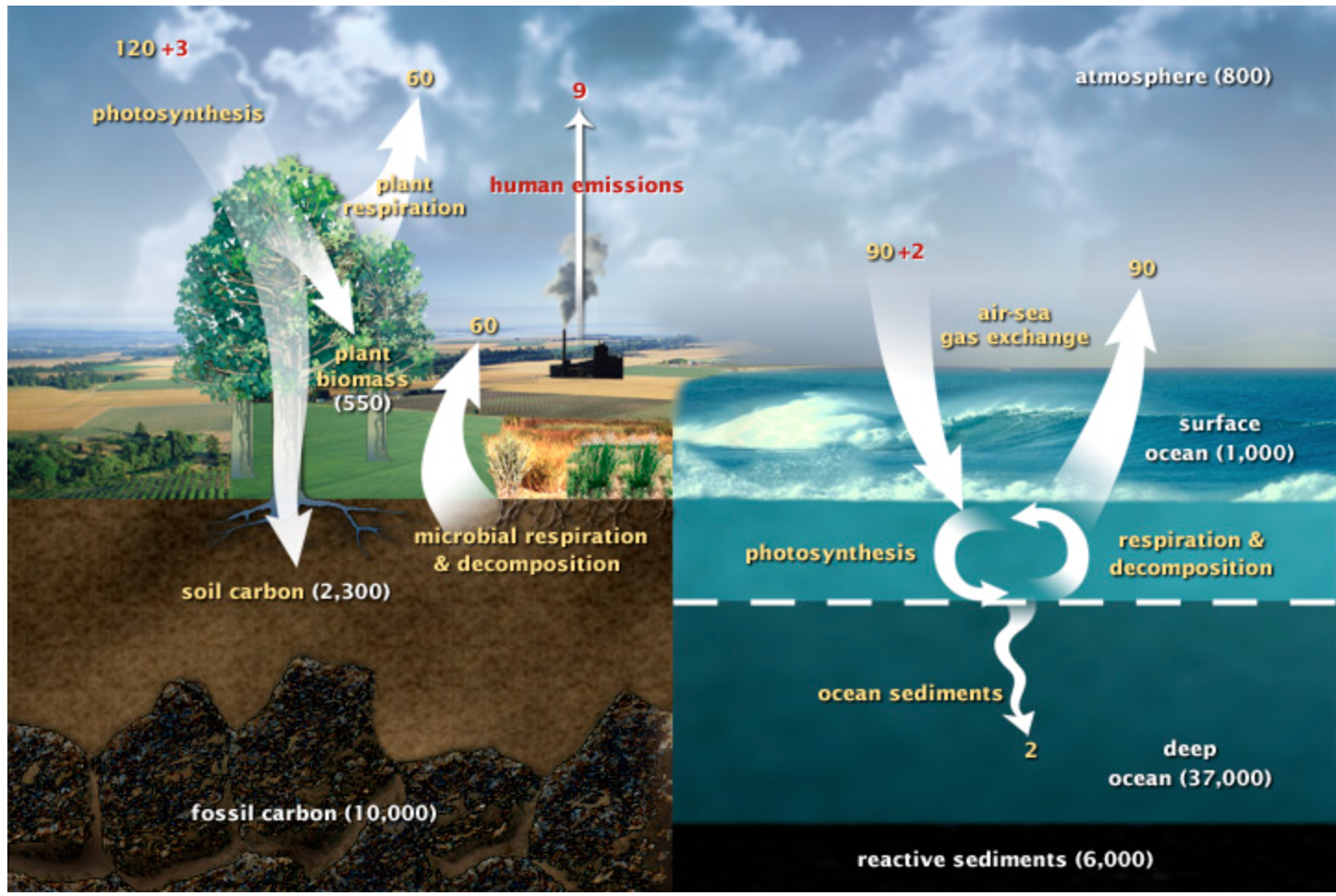
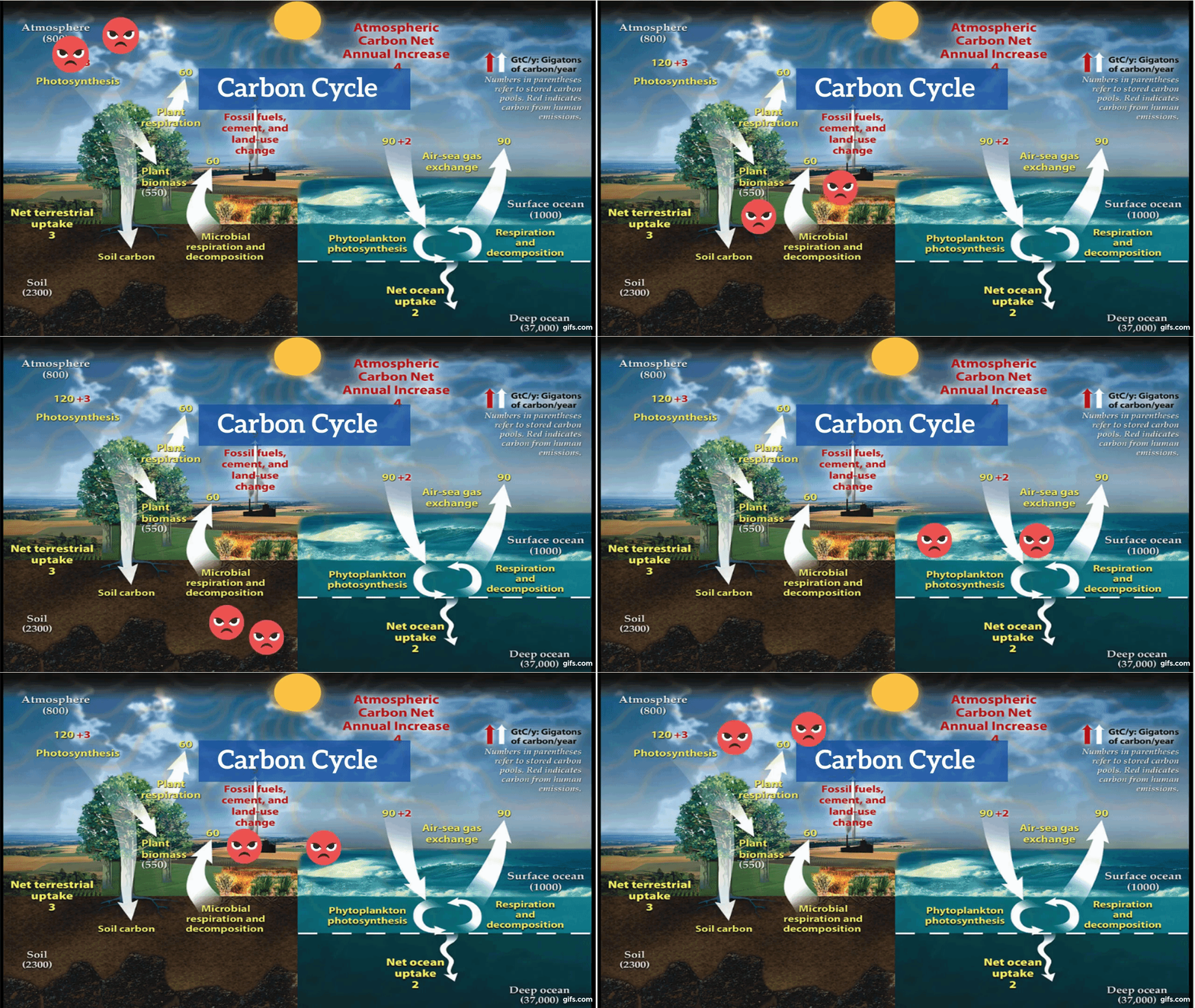
This diagram of the fast carbon cycle shows the movement of carbon between land, atmosphere, and oceans. Yellow numbers are natural fluxes, and red are human contributions in gigatons of carbon per year. White numbers indicate stored carbon. (Diagram adapted from U.S. DOE, Biological and Environmental Research Information System.)
1 point
1
1 point
1
Question 3
3.
The world's biggest reservoir of carbon is..
1 point
1
Question 4
4.
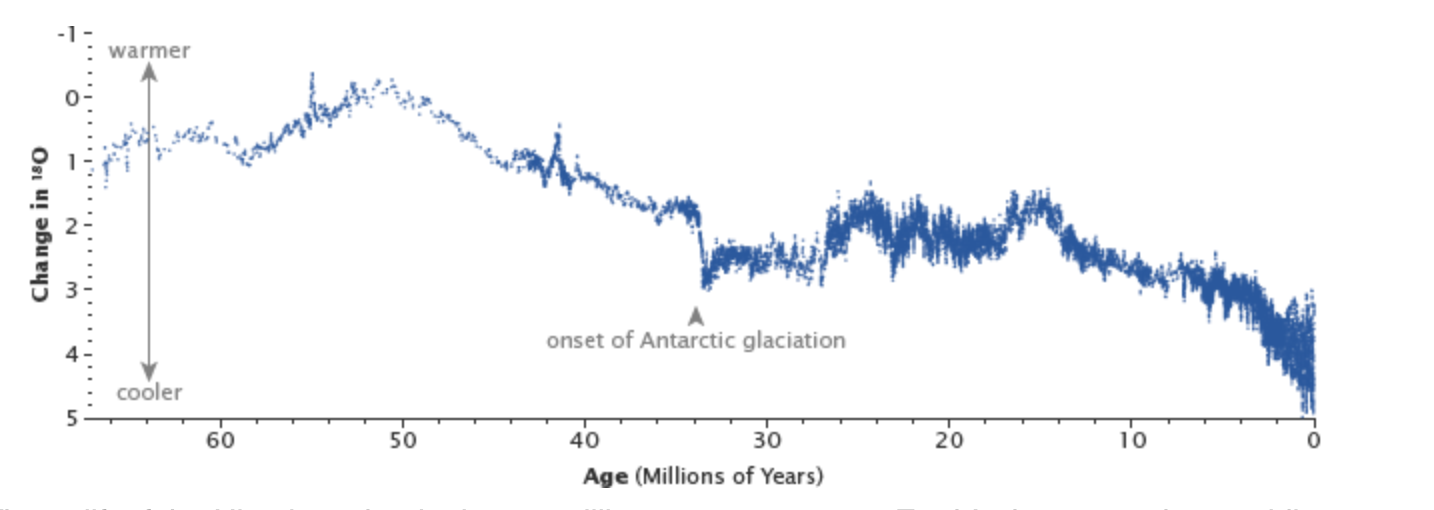
Create a bullet point list of 4 sentence observations from this graph
*
*
*
*
Over the long term, the carbon cycle seems to maintain a balance that prevents all of Earth’s carbon from entering the atmosphere (as is the case on Venus) or from being stored entirely in rocks. This balance helps keep Earth’s temperature relatively stable, like a thermostat.
This thermostat works over a few hundred thousand years, as part of the slow carbon cycle. This means that for shorter time periods—tens to a hundred thousand years—the temperature of Earth can vary. And, in fact, Earth swings between ice ages and warmer interglacial periods on these time scales. Parts of the carbon cycle may even amplify these short-term temperature changes.
The uplift of the Himalaya, beginning 50 million years ago, reset Earth’s thermostat by providing a large source of fresh rock to pull more carbon into the slow carbon cycle through chemical weathering. The resulting drop in temperatures and the formation of ice sheets changed the ratio between heavy and light oxygen in the deep ocean, as shown in this graph. (Graph based on data from Zachos at al., 2001.)
1 point
1
1 point
1
Question 6
6.
The carbon cycle seems to maintain a __________ that prevents all of Earth’s carbon from entering the __________ or from being stored entirely in __________. This balance helps keep Earth’s temperature relatively stable, like a __________.
1 point
1
Question 7
7.
This thermostat works over a few hundred thousand years, as part of the slow carbon cycle. This means that for...
1 point
1
Question 8
8.
Earth swings between __________ and __________ periods on these time scales. Parts of the carbon cycle may even amplify these short-term temperature changes.
1 point
1
Question 9
9.
How did the uplift of the Himalaya beginning 50 million years ago
A) Restore the Earth’s thermostat?
B) How was oxygen affected?
1 point
1
Question 10
10.
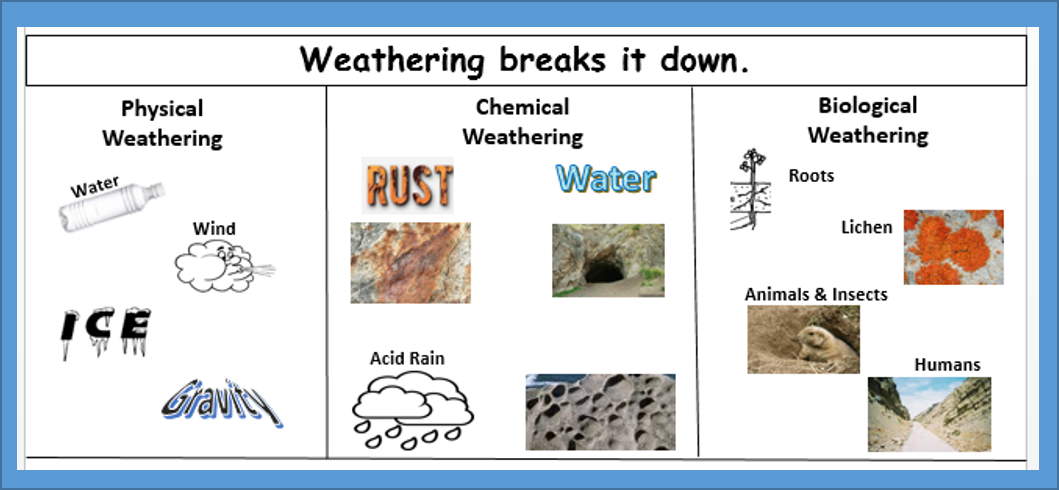
What is chemical weathering?
THE SLOW CARBON CYCLE
The Slow Carbon Cycle
Through a series of chemical reactions and tectonic activity, carbon takes between 100-200 million years to move between rocks, soil, ocean, and atmosphere in the slow carbon cycle. On average, 1013 to 1014 grams (10–100 million metric tons) of carbon move through the slow carbon cycle every year. In comparison, human emissions of carbon to the atmosphere are on the order of 1015 grams, whereas the fast carbon cycle moves 1016 to 1017 grams of carbon per year.
A) How long does carbon take in the slow carbon cycle to move between rocks, soil, ocean, and atmosphere?
B) Why do you think it is so slow?
1 point
1
Question 13
13.
On average, 1013 to 1014 grams (10–100 million metric tons) of carbon move through the slow carbon cycle every year. In comparison, human emissions of carbon to the atmosphere are on the order of 1015 grams.
By comparing the two we can see that...
1 point
1
Question 14
14.
Describe the movement of carbon from the lithosphere to the ocean floor in steps.
Step 1:
Step 2:
Step 3:
Step 4:
Step 5:
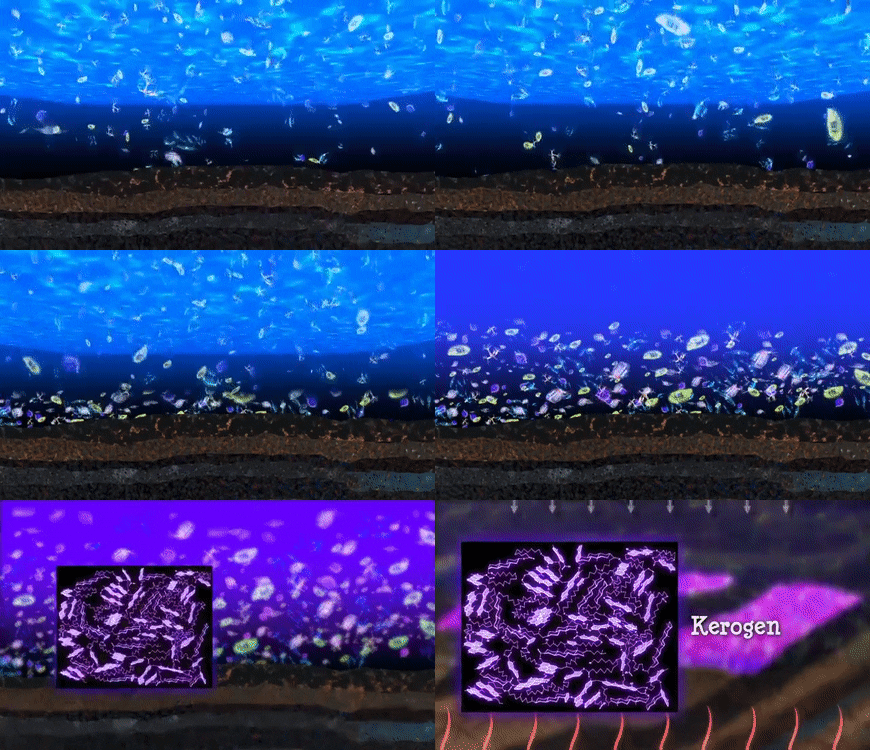
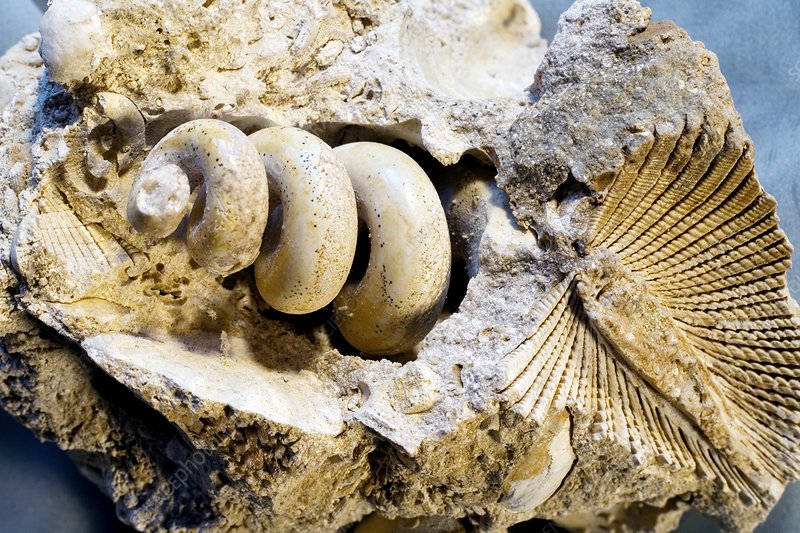
In the ocean, the calcium ions combine with bicarbonate ions to form calcium carbonate, the active ingredient in antacids and the chalky white substance that dries on your faucet if you live in an area with hard water. In the modern ocean, most of the calcium carbonate is made by shell-building (calcifying) organisms (such as corals) and plankton (like coccolithophores and foraminifera). After the organisms die, they sink to the seafloor. Over time, layers of shells and sediment are cemented together and turn to rock, storing the carbon in stone—limestone and its derivatives.
In the ocean, the calcium ions combine with bicarbonate ions to form...
1 point
1
Question 17
17.
In the modern ocean, most of the calcium carbonate is made by shell-building (calcifying) organisms such as
1 point
1
Question 18
18.
Organize the steps of the slow carbon cycle
Over time, layers of shells and sediment are cemented together and turn to rock
After the organisms die, they sink to the seafloor.
storing the carbon in stone—limestone and its derivatives.
Step 1
Step 2
Step 3
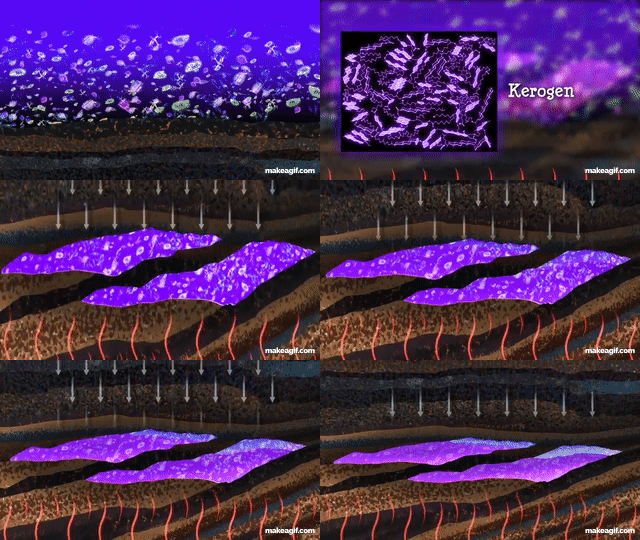
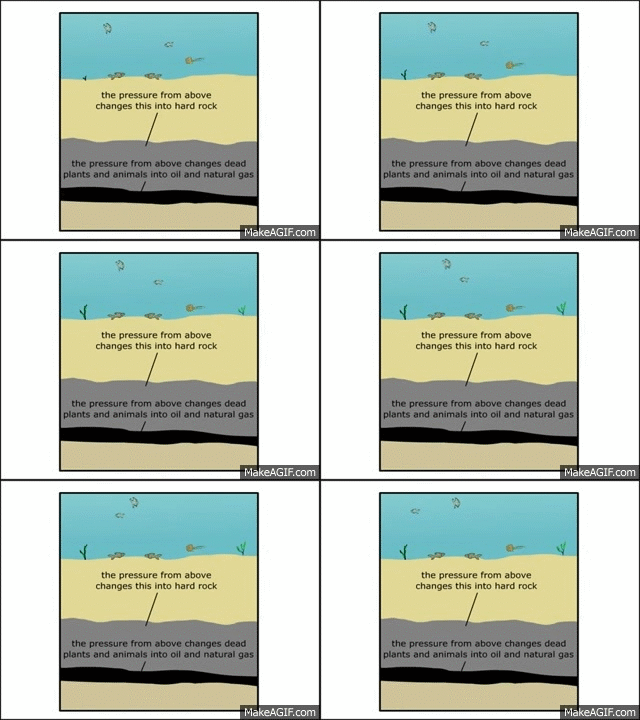
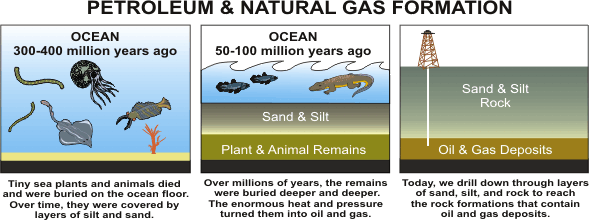
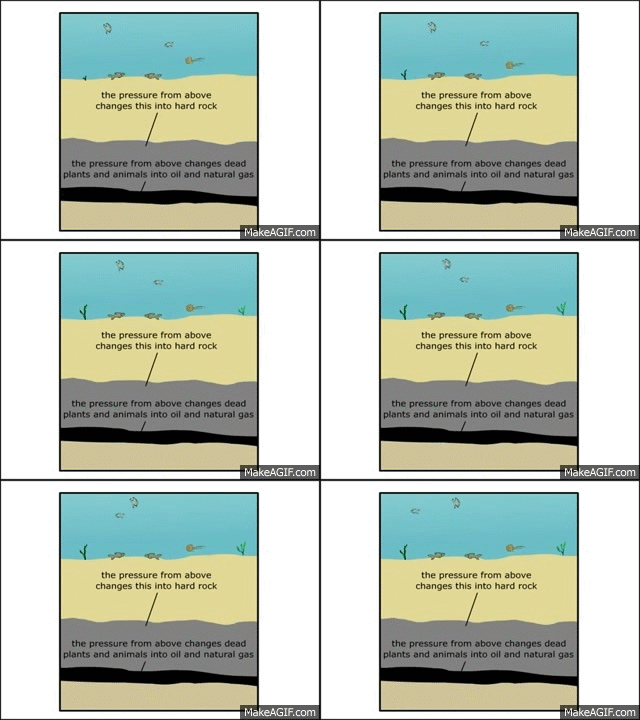
Only 80 percent of carbon-containing rock is currently made this way. The remaining 20 percent contain carbon from living things (organic carbon) that have been embedded in layers of mud. Heat and pressure compress the mud and carbon over millions of years, forming sedimentary rock such as shale. In special cases, when dead plant matter builds up faster than it can decay, layers of organic carbon become oil, coal, or natural gas instead of sedimentary rock like shale.
80 percent of carbon-containing rock is made by __________. 20 percent of the remaining carbon from living beings is __________.
1 point
1
Question 21
21.
Heat and pressure compress the mud and carbon over millions of years, forming...
1 point
1
Question 22
22.
In order to make fossil fuels..
1 point
1
Question 23
23.
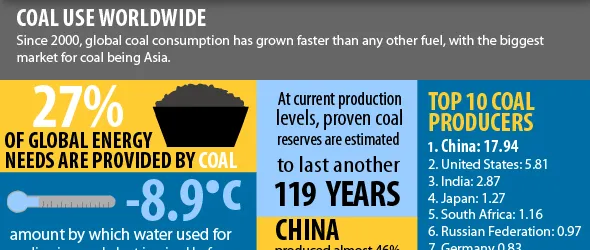
How is coal a sufficient source of energy?
1 point
1
The slow cycle returns carbon to the atmosphere through volcanoes. Earth’s land and ocean surfaces sit on several moving crustal plates. When the plates collide, one sinks beneath the other, and the rock it carries melts under the extreme heat and pressure. The heated rock recombines into silicate minerals, releasing carbon dioxide.
When volcanoes erupt, they vent the gas to the atmosphere and cover the land with fresh silicate rock to begin the cycle again. At present, volcanoes emit between 130 and 380 million metric tons of carbon dioxide per year. For comparison, humans emit about 30 billion tons of carbon dioxide per year—100–300 times more than volcanoes—by burning fossil fuels.
Chemistry regulates this dance between ocean, land, and atmosphere. If carbon dioxide rises in the atmosphere because of an increase in volcanic activity, for example, temperatures rise, leading to more rain, which dissolves more rock, creating more ions that will eventually deposit more carbon on the ocean floor. It takes a few hundred thousand years to rebalance the slow carbon cycle through chemical weathering.
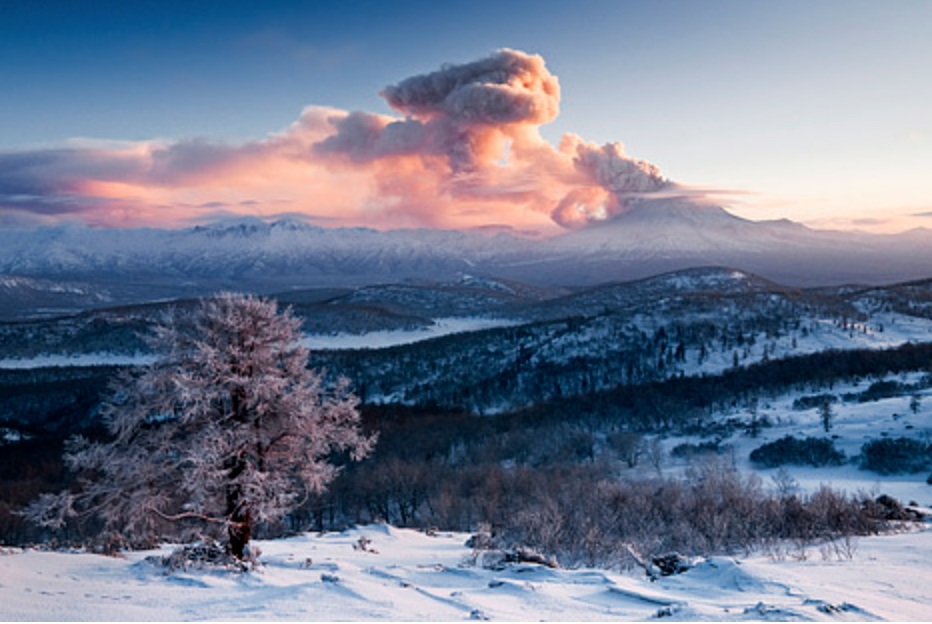
Crustal plates colliding, melting and recombining silicate minerals.
and
Volcanoes erupting and emitting 130 to 380 million metric tons of carbon dioxide per year
ARE EXAMPLES OF...
1 point
1
THE FAST CARBON CYCLE
The Fast Carbon Cycle
The time it takes carbon to move through the fast carbon cycle is measured in a lifespan. The fast carbon cycle is largely the movement of carbon through life forms on Earth, or the biosphere. Between 1015 and 1017 grams (1,000 to 100,000 million metric tons) of carbon move through the fast carbon cycle every year.
Carbon plays an essential role in biology because of its ability to form many bonds—up to four per atom—in a seemingly endless variety of complex organic molecules. Many organic molecules contain carbon atoms that have formed strong bonds to other carbon atoms, combining into long chains and rings. Such carbon chains and rings are the basis of living cells. For instance, DNA is made of two intertwined molecules built around a carbon chain.
The bonds in the long carbon chains contain a lot of energy. When the chains break apart, the stored energy is released. This energy makes carbon molecules an excellent source of fuel for all living things.
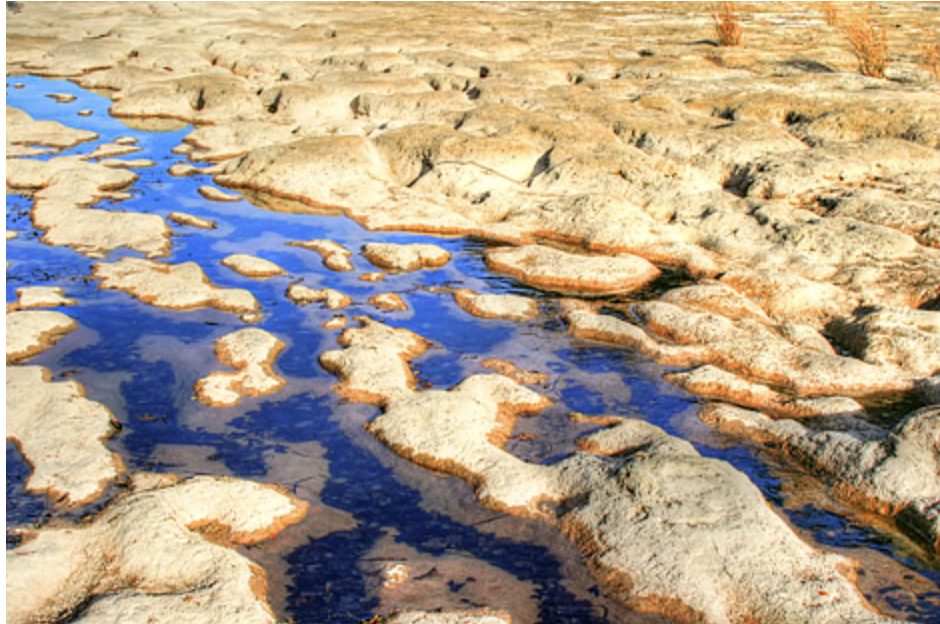
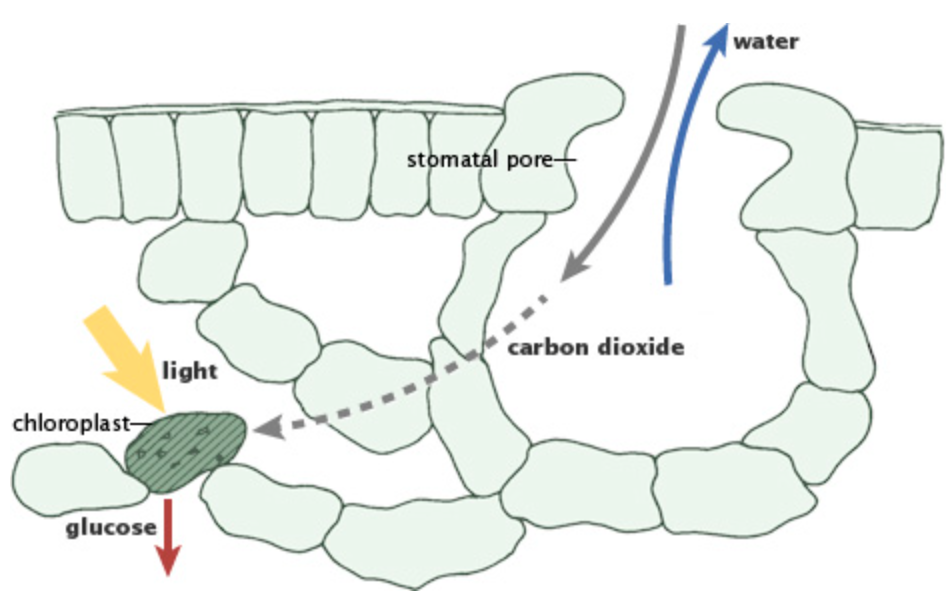
During photosynthesis, plants absorb carbon dioxide and sunlight to create fuel—glucose and other sugars—for building plant structures. This process forms the foundation of the fast (biological) carbon cycle. (Illustration adapted from P.J. Sellers et al., 1992.)
1 point
1
1 point
1
1 point
1
Question 30
30.
The element carbon is so important because...
1 point
1
Question 31
31.
During photosynthesis, plants absorb carbon dioxide and sunlight to create?
Plants and phytoplankton are the main components of the fast carbon cycle. Phytoplankton (microscopic organisms in the ocean) and plants take carbon dioxide from the atmosphere by absorbing it into their cells. Using energy from the Sun, both plants and plankton combine carbon dioxide (CO2) and water to form sugar (CH2O) and oxygen. The chemical reaction looks like this:
CO2 + H2O + energy = CH2O + O2
Four things can happen to move carbon from a plant and return it to the atmosphere, but all involve the same chemical reaction. Plants break down the sugar to get the energy they need to grow. Animals (including people) eat the plants or plankton, and break down the plant sugar to get energy. Plants and plankton die and decay (are eaten by bacteria) at the end of the growing season. Or fire consumes plants. In each case, oxygen combines with sugar to release water, carbon dioxide, and energy. The basic chemical reaction looks like this:
CH2O + O2 = CO2 + H2O + energy
In all four processes, the carbon dioxide released in the reaction usually ends up in the atmosphere. The fast carbon cycle is so tightly tied to plant life that the growing season can be seen by the way carbon dioxide fluctuates in the atmosphere. In the Northern Hemisphere winter, when few land plants are growing and many are decaying, atmospheric carbon dioxide concentrations climb. During the spring, when plants begin growing again, concentrations drop. It is as if the Earth is breathing.
1 point
1
1 point
1
1 point
1
Question 34
34.
What are the four things that can happen to move carbon from a plant and return it to the atmosphere?