Homework - Eutrophication & the Phosphorus Cycle (9-20-23)

Last updated 11 months ago
26 questions
1

Plants need water, sunlight, CO2, but also...

1
1
What makes fertilizer so fertile is that it has __________
1
1
To be safe farmers will usually farmers will apply __________ fertilizer to a given plot of land. "Better safe than sorry". Instead of staying for __________ most of the excess __________ in fertilizers will be __________ or other forms of irrigation.
1

Phosphorus and nitrogen from fertilizers after being washed off farmland will mix with water and find ways into bodies of water like...

1
Algae, __________, and even plants in the water do the same thing plants do, they __________, well actually they __________, this is called an __________.

1
1

Plants are always good for the environment.

1
The top layer of algae forms an __________. This prevents __________ from going into the bottom of the lake. Without the presence of sunlight all of the plants below the surface __________. Many plants can store enough energy to wait out these conditions. The real problem is when __________ and the water can no longer support so much life.
1

Decomposers consume...

1

When a bloom occurs far more organic matter is ready to decompose. So nearly all of the oxygen in the water is used up... why is that bad...

1

Plants and phytoplankton and fish that die in an algal bloom sink to the bottom and are decomposed by decomposers this...

1
1
1

Nutrient-rich run off can be causes by

1

Elements that cycle in the environment and that also have a gaseous phase at some point in their cycle include which of the following?
  1. Carbon
  2. Phosphorus
  3. Sulfur

1

The diagram shows the amount of phosphorus measured in teragrams (1 teragram = 1×10¹² grams), in the various reservoirs of the phosphorus cycle.
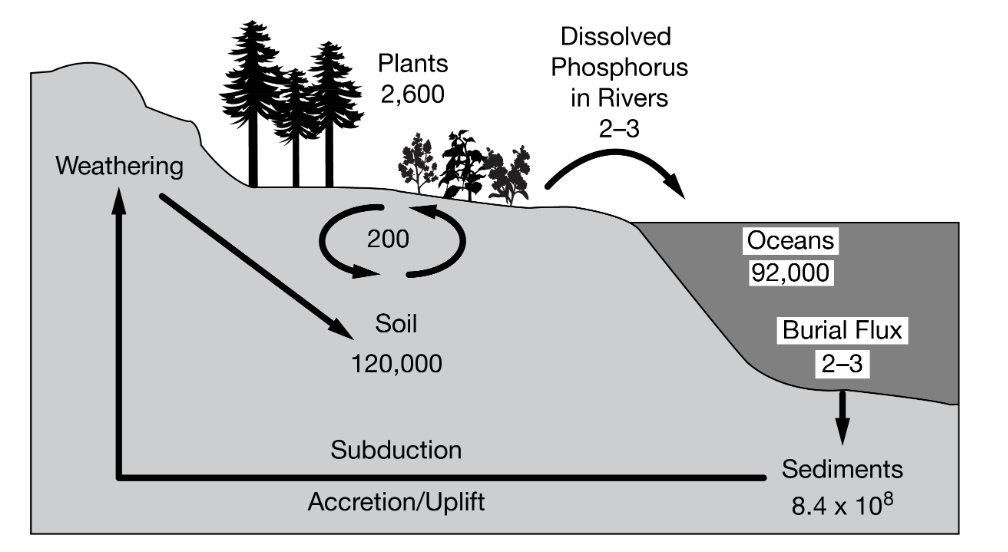
According to the diagram, the movement of phosphorus between biological organisms and soil is in a steady state in an undisturbed system. Which of the following best explains the reason for this steady movement?
1

The diagram shows the amount of phosphorus measured in teragrams (1 teragram = 1×10¹² grams), in the various reservoirs of the phosphorus cycle.
Which of the following is the best explanation for why there is such a small amount of phosphorus that moves into aquatic systems?

1

The diagram shows the amount of phosphorus measured in teragrams (1 teragram = 1×10¹² grams), in the various reservoirs of the phosphorus cycle.
Based on the diagram, which of the following reservoirs contains the most phosphorus?

1

Which of the following best helps to explain why phosphorus is often a limiting factor in many ecosystems?

1
Which of the following elements is most likely to limit primary production in freshwater lakes:
__________

Which of the following elements is most likely to limit primary production from terrestrial plants:
__________
Matter is continually recycled between the biotic and abiotic components of Earth’s ecosystems in biogeochemical cycles. The various cycles differ from one another in several key aspects of their storage, conversion, and modes of transport.
1

Describe the critical processes by which nitrogen is cycled through the biotic and abiotic components of Earth’s ecosystems and identify the primary storage sink for nitrogen.

1
1

Identify EITHER one nitrogen compound OR one phosphorus compound that is considered a pollutant when released by human activity into the environment. For the compound you identified, describe the human activity and a specific environmental problem that results.

1

Describe ONE way in which humans have disrupted the natural cycling of carbon and TWO major environmental consequences of that disruption.