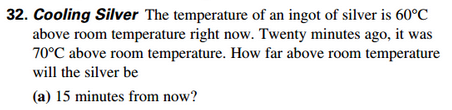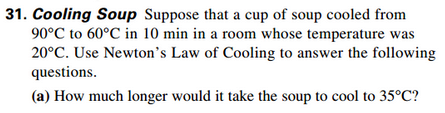
Round to the nearest minute.
Round to the nearest minute.
Round to the nearest minute.
The value of k depends on the object, so you can use the same k as from part a
Round to the nearest minute.
Note: The exact value of Room Temperature is not needed
Round to the nearest degree celcius
Round to the nearest degree celcius
Round to the nearest minute
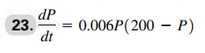
The following logistic equation describes the growth of a population P, where t is measured in years
a) What is the carrying capacity of the population?
How big is the population when it is growing the fastest?
How fast is the population growing when it is growing the fastest?
Answer in terms of individuals per year
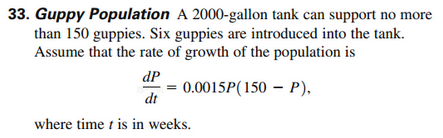
How long will it take the guppy population to be 100?
Round to the nearest week
How about 125?
Round to the nearest week
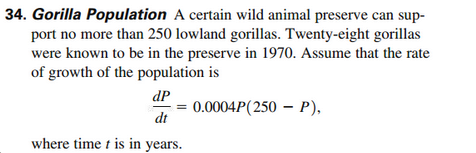
How long will it take for the gorilla population to reach the carrying capacity of the preserve?
Because population must be a whole number, you may assume that the population will round up/down appropriately to the nearest whole number. So really you are trying to figure out when the population reaches 249.5
Round to the nearest year