Mmuae Afoforo a Wobɛpaw:
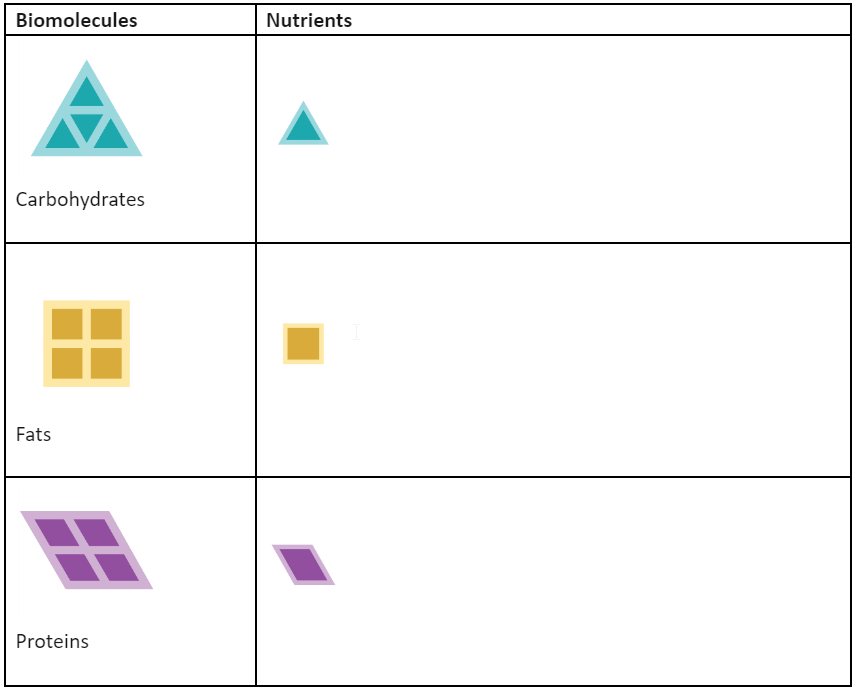
amino acids
fatty acids
monosaccharides
Go to https://media.hhmi.org/biointeractive/click/biomolecules
Answer the questions using the interactive
Go to https://media.hhmi.org/biointeractive/click/biomolecules
Answer the questions using the interactive
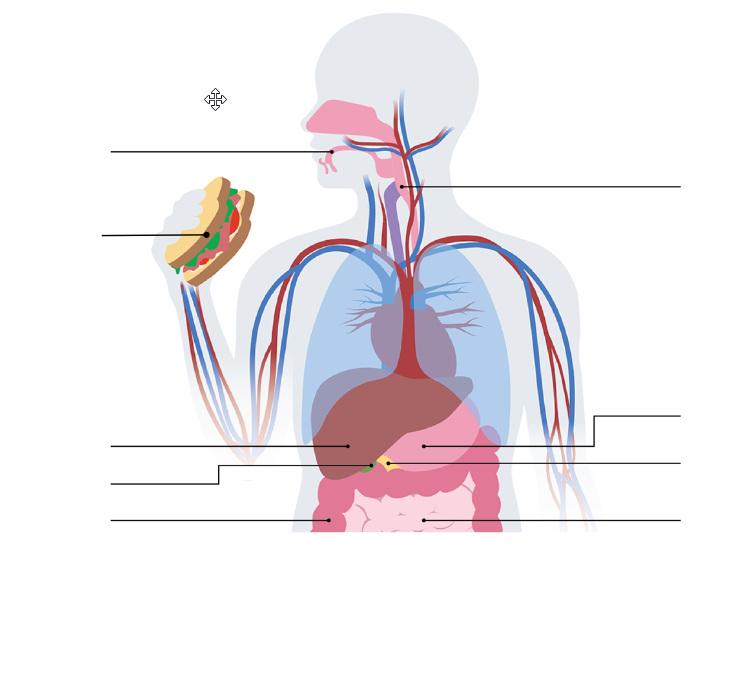
Where are most polymers broken down into monomers?
What reactions are used to break polymers into monomers?
What specialized proteins are needed to catalyze these reactions?
Where are most monomers absorbed into the bloodstream?
How are the nutrients (monomers) delivered to cells?
Which substances enter cells from the blood?
Which substances leave cells to the blood?
How are nutrients used for energy?
ATP is the molecule that cells use for energy.
What is the name of the (purple) organelle (small structure inside cells) that makes ATP?
Which of the monomers can be used by the mitochondrion to produce ATP?
Catabolic reactions are those that break down large molecules in to smaller molecules. Anabolic reactions build larger molecules from small molecules.
When the monomer are used to make ATP, is this catabolism or anabolism?
Click on "anabolism". Which of the monomers can be made using pyruvate, acetyl-CoA, and intermediates from the citric acid cycle?
Click on "Storage". Which of the molecules are used to store monosaccharides?