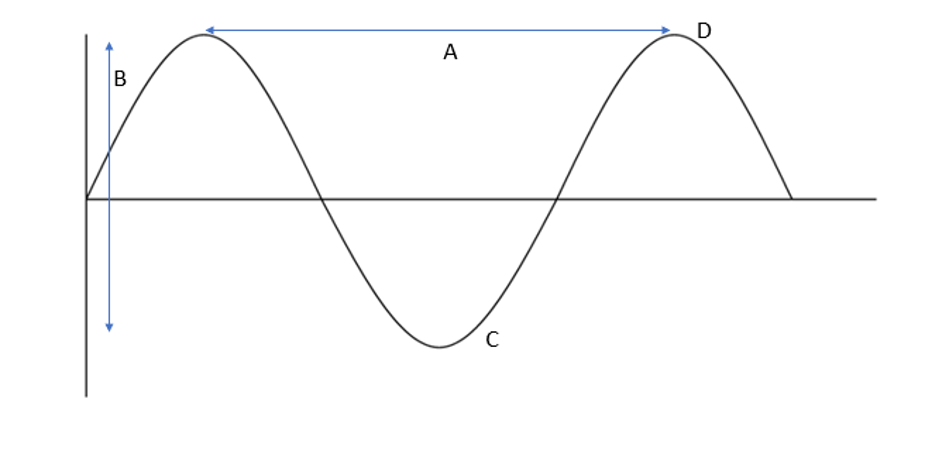
Click on the label that represents the wavelength
Click on the label that represents the wavelength
What distinguishes a transverse wave from other types of waves?
In a transverse wave, where is the maximum displacement known as?
What is not a common example of a transverse wave?
What is the role of the medium in the transmission of transverse waves?
What occurs in a longitudinal wave?
How does sound, a type of longitudinal wave, travel through air?
The speed of a wave is 300 m/s, and the frequency is 150 Hz. What is the wavelength of this wave?
A radio wave has a wavelength of 3 meters. Use the speed of light (3 x 10^8 m/s) to find the frequency.
A sound wave has frequency 500 Hz and travels with a velocity of 340 m/s. What is the wavelength of the sound wave?
A wave has a frequency of 1000 Hz and a wavelength of 2 meters. What is the speed of the wave?
Match the wave characteristic to its corresponding definition.
| Draggable item | arrow_right_alt | Corresponding Item |
|---|---|---|
Period | arrow_right_alt | The number of cycles of a wave that pass a point per second |
Frequency | arrow_right_alt | The time it takes for one complete cycle of a wave |
Match the following units with the wave characteristic they're associated with.
| Draggable item | arrow_right_alt | Corresponding Item |
|---|---|---|
Seconds | arrow_right_alt | Frequency |
Hz (Hertz) | arrow_right_alt | Period |
Click on the label that represents the wavelength
Click on the label that represents the trough
What does the amplitude of a wave measure?
What is the property of a sound wave that determines loudness?
How does frequency of sound wave relate to the pitch of the sound?
What happens to a sound wave as it moves through denser material?
What is the term used to describe the number of complete waves that pass a point in a given amount of time?
which value is closest to the general speed of sound in dry air at room temperature?
Which factor does not significantly affect the speed of sound?
In which medium does sound travel the fastest?
Click on the wave with the highest amplitude?
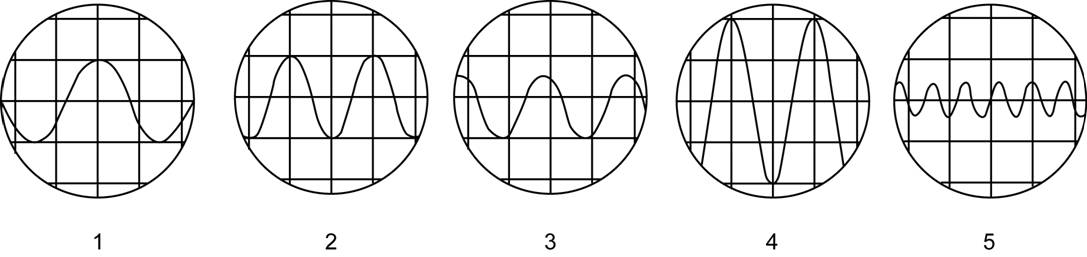
Click on the sound wave with the highest pitch?
Click on the sound wave with the lowest volume?