Log in
Sign up for FREE
arrow_back
Library

Do First: The Carbon Cycle

star
star
star
star
star
Last updated about 1 year ago
3 questions
1
1
1
Question 1
1.
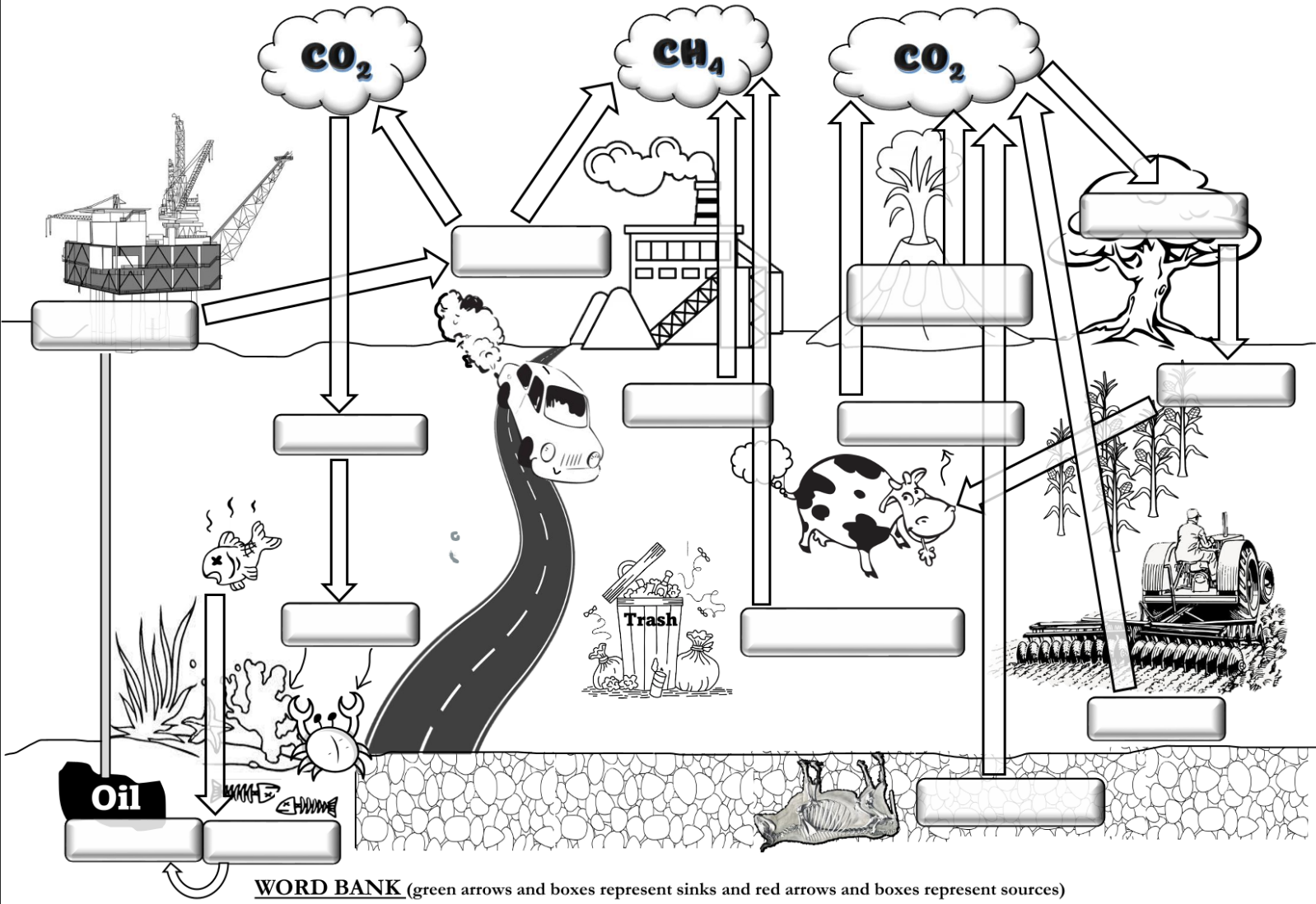
This is the carbon cycle as it moves from the atmosphere (air) to the hydrosphere (ocean) and then to the lithosphere (land)
Other Answer Choices:
Volcanic eruption
cell respiration
Photosynthesis
Anaerobic Respiration
Combustion
Decomposition
sedimentation
Fossil Fuel Extraction
Question 2
2.
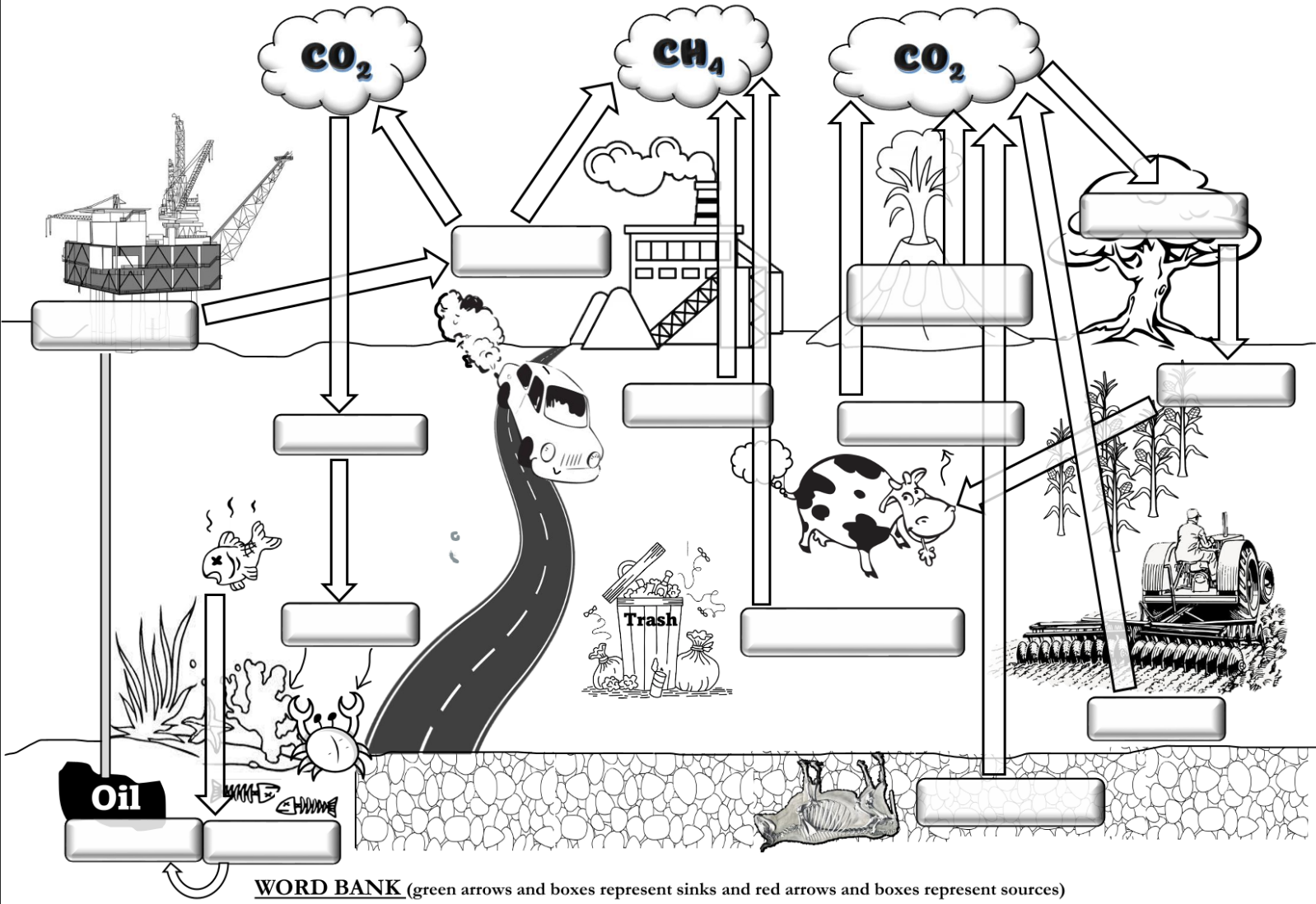
This is the carbon cycle as it moves from the atmosphere (air) to the hydrosphere (ocean) and then to the lithosphere (land)
Other Answer Choices:
limestone
Diffusion
FF Formation
tilling
Biomass production
Enteric digestion
Question 3
3.

Match the terms

Draggable itemarrow_right_altCorresponding Item
A process through which bacteria break down organic matter—such as animal manure, wastewater biosolids. The break down releases CO2 as a gas.
arrow_right_alt
Enteric digestion
After the organisms die, they sink to the seafloor. Over time, layers of shells and sediment are cemented together and turn to rock, storing the carbon in stone. Only 80 percent of carbon-containing rock is currently made this way.
arrow_right_alt
Anaerobic respiration
When you breathe, you take oxygen into your lungs as you inhale, and you release carbon dioxide and water vapor as you exhale. It is the process in which the cells of living things use oxygen to break down glucose for energy, releasing carbon dioxide and water as waste.
arrow_right_alt
Cellular respiration
Microbes in the digestive tract (or rumen of animals such as sheep, cattle, or buffalo) decompose and ferment food, producing methane (CH4) as a by-product.
arrow_right_alt
Limstone formation