Algebra I Chapter 3 Study Guide

Last updated over 1 year ago
22 questions
Lesson 3.1 Review: Functions
4
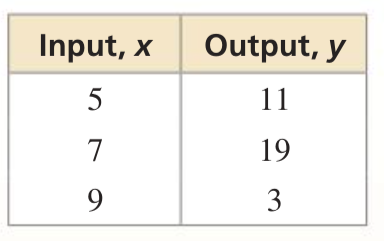
Determine whether the relation is a function. Type "yes" or "no" into the box.


_______


_______


_______


_______
4
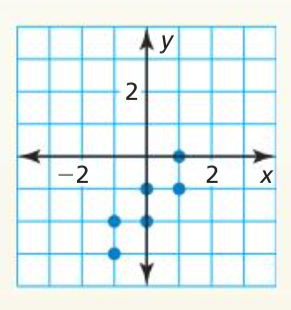
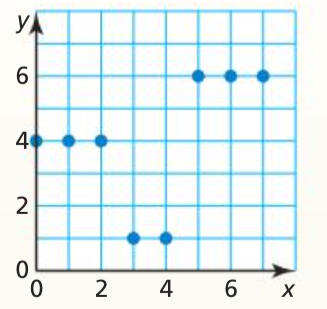
Determine if the relation is a function, then state the domain and range.


Function? _______

Continuous or Discrete? _______

Domain: _______

Range: _______
4
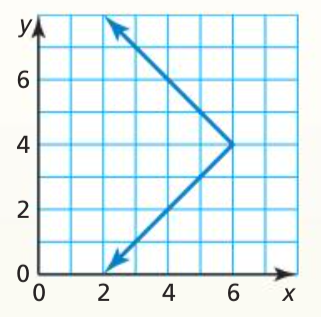
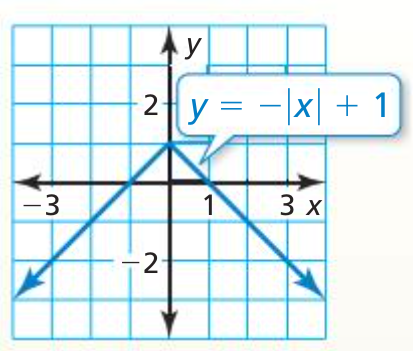
Determine if the relation is a function, then state the domain and range.


Function? _______

Continuous or Discrete? _______

Domain: _______

Range: _______
1
You have $170. You start a part-time job that pays $8.50 per hour.

a. Does the situation represent a function?
_______

b. You work no more than 4 hours. Find the domain and range.

Domain: _______
Range: _______
Lesson 3.2 Review
4
Approximate when the function is positive, negative, increasing, or decreasing.


Positive interval: _______
Negative Intervals: _______ _______

Increasing interval: _______
Decreasing interval: _______
7
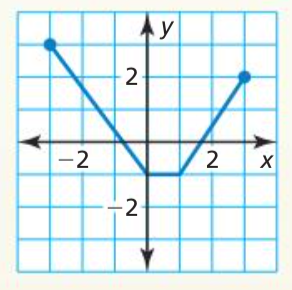
Approximate when the function is positive, negative, increasing, or decreasing.

Reminder: positive and negative intervals are ABOVE or BELOW the x-axis.
Positive intervals: _______ _______
Negative Intervals: _______ _______


Increasing intervals: _______ _______
Decreasing intervals: _______
Lesson 3.3 Review
1

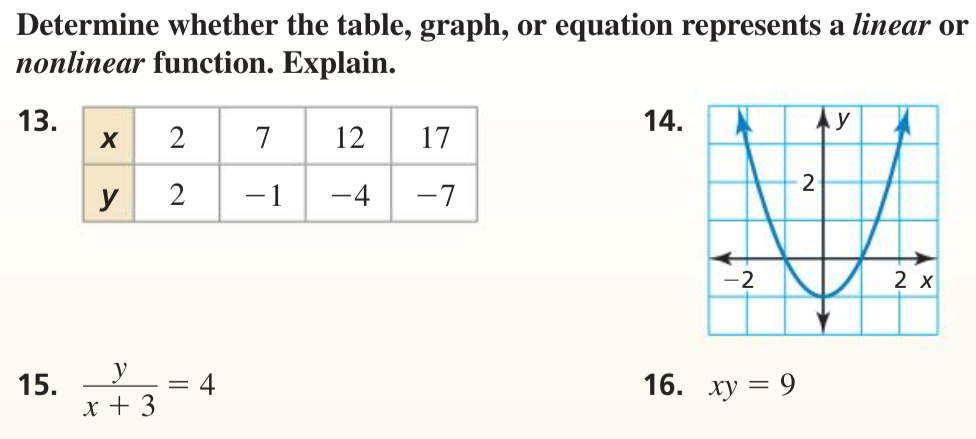
Determine whether the table, graph, or equation represents a linear or nonlinear function.

1

Determine whether the table, graph, or equation represents a linear or nonlinear function.

1

Determine whether the table, graph, or equation represents a linear or nonlinear function.

1

Graph the function using its domain. Discrete or Continuous?

Lesson 3.4 Review
3
Evaluate the function when x= -3, 0, and 5.

f(x) = x + 8

f(-3) = _______
f(0) =_______
f(5) = _______
3
Evaluate the function when x= -3, 0, and 5.

h(x) = 3x - 9

h(-3) = _______
h(0) =_______
h(5) = _______
1

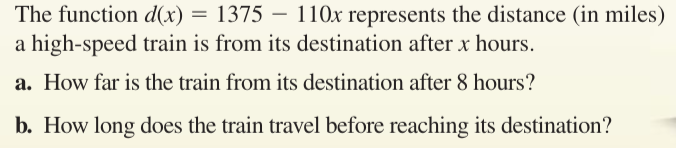
How far is the train from its destination after 8 hours?

1

How long does the train travel before reaching its destination?

Lesson 3.5 Review
3

Use intercepts to graph the linear equation. Label the points corresponding to the intercepts.

2x+3y=6

  • Click the graph tab.
  • Click on the graph background to add a point. Add two points to create a graph. Drag a point or type in x and y coordinates to edit its position. Click on a point to delete it.
  • After you have plotted all graphs, click on x or y intercept tab to graph the intercepts.
3

Use intercepts to graph the linear equation. Label the points corresponding to the intercepts.

8x-4y=16

  • Click the graph tab.
  • Click on the graph background to add a point. Add two points to create a graph. Drag a point or type in x and y coordinates to edit its position. Click on a point to delete it.
  • After you have plotted all graphs, click on x or y intercept tab to graph the intercepts.
3

Use intercepts to graph the linear equation. Label the points corresponding to the intercepts.

-12x-3y=24

  • Click the graph tab.
  • Click on the graph background to add a point. Add two points to create a graph. Drag a point or type in x and y coordinates to edit its position. Click on a point to delete it.
  • After you have plotted all graphs, click on x or y intercept tab to graph the intercepts.
Lesson 3.6 Review
1

Find the slope.

3

Graph the linear equation.

y = 2x + 4

  • Click the graph tab.
  • Click on the graph background to add a point. Add two points to create a graph. Drag a point or type in x and y coordinates to edit its position. Click on a point to delete it.
  • After you have plotted all graphs, click on x or y intercept tab to graph the intercepts.
3

Graph the linear equation.

  • Click the graph tab.
  • Click on the graph background to add a point. Add two points to create a graph. Drag a point or type in x and y coordinates to edit its position. Click on a point to delete it.
  • After you have plotted all graphs, click on x or y intercept tab to graph the intercepts.
1

What is the slope of y = 4x + 7?

1

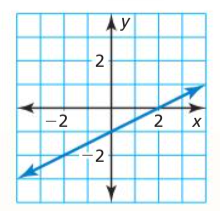
What is the y-intercept of the linear function below?