Asemmisa {{asɛmmisaAhyɛnsode}}
7.
In exploring the incredible world of science, one must become familiar with the fundamental concepts of mass, volume, and density. Mass refers to the measure of the quantity of matter in an object. Think of it as the amount of stuff in an object, especially when you can’t observe it directly. For instance, an elephant has more mass than an ant because it contains more matter. Volume, on the other hand, conveys the space an object occupies. Think about a swimming pool and a bathtub. Both can hold water, but because the swimming pool is larger, it has more volume - it takes up more space than a bathtub. Now, where volume and mass intersect is where we find density. Put simply, density is the mass of an object divided by its volume. It reveals how tightly matter is packed into a particular space. To illustrate, let's consider an ordinary ping-pong ball and a same-sized ball of lead. Both have the same volume because they occupy the same amount of space, yet the lead ball has a greater mass. Consequently, the lead ball is denser than the ping-pong ball. In summary, while mass tells us about the amount of matter in an object, volume indicates the space that the object occupies. Density, however, is the relationship between mass and volume. By understanding these foundational concepts, you've unlocked the door to deeper scientific exploration.
What is the formula for density?
What is the unit of measurement for mass?
What does the term 'mass' refer to in science?
How would you measure the mass of an object?
Which of the following is a unit of volume?
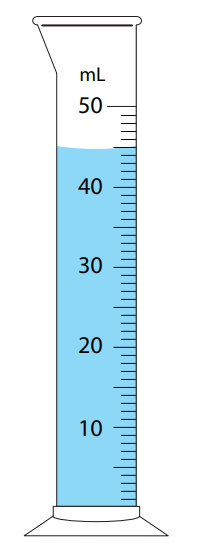
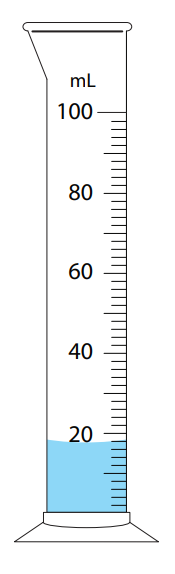
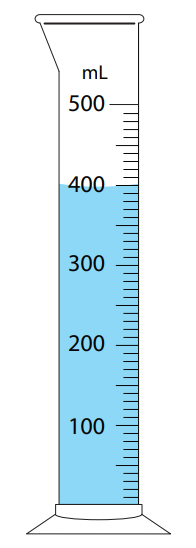
In order to accurately measure volume, take the measurement of the liquid in a _____________________________, then pour it into a ________________________________.
Which part of the triple beam balance do you move to determine the mass?
What is the purpose of a triple beam balance?
What does it mean if the beam on the triple beam balance drops below the horizontal mark?
How can you achieve an accurate reading on a triple beam balance?
A small gold object weighs 200 grams and its volume is 10 cubic centimeters. Can you calculate its density?
A cube of steel has a mass of 800 grams and a volume of 100 cubic cm. Calculate the density.
A piece of Aluminum has a mass of 27 grams and displaces 10 cubic cm of water when submerged. What's the density of Aluminum?
A metal block has a mass of 500 grams and its volume is 250 cubic cm. What is its density?
If the density of steel is 8 g/cm³ and the volume of a steel block is 5 cm³, what is the mass of the steel block?
Find the mass of a silver object with density 10.5 g/cm³ and a volume of 2 cm³.
A gold piece has a density of 19.3 g/cm³ and volume of 3 cm³. Calculate its mass.
A liquid has a density of 1.2 g/cm³. If the volume of the liquid is 10 cm³, what is its mass?
If the density of a material is 5 g/cm³ and its mass is 10 g, what is the volume?
A marble has a mass of 15 g and a density of 3 g/cm³. What is the volume?
Find the volume of an object having density 4 g/cm³ and mass 20 g.
A stone has a density of 2 g/cm³ and a mass of 6 g, what is its volume?