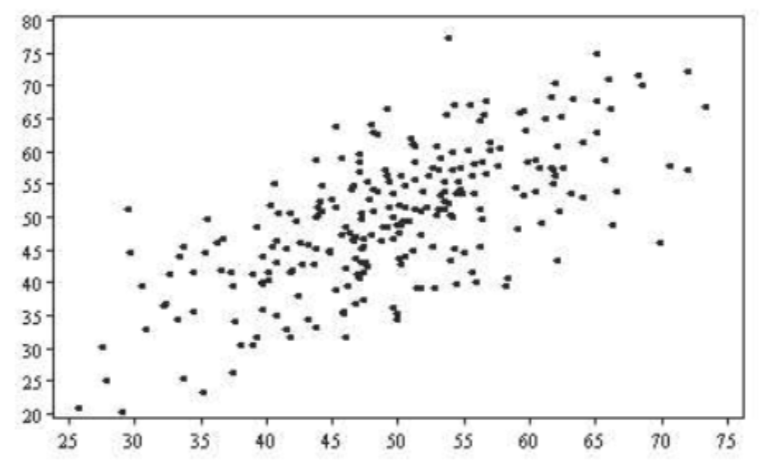
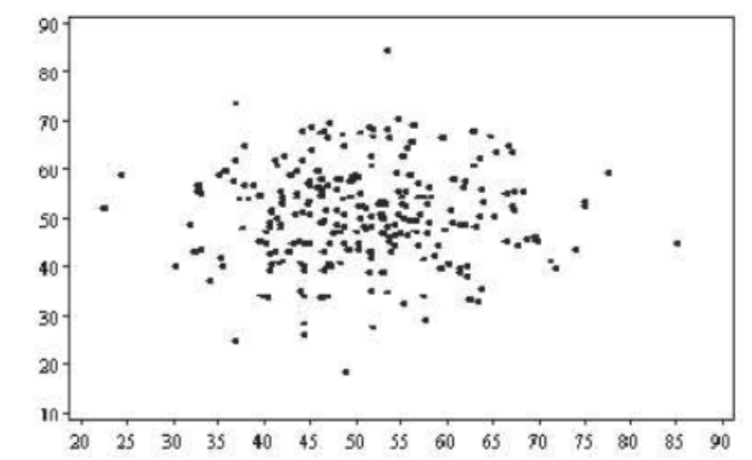
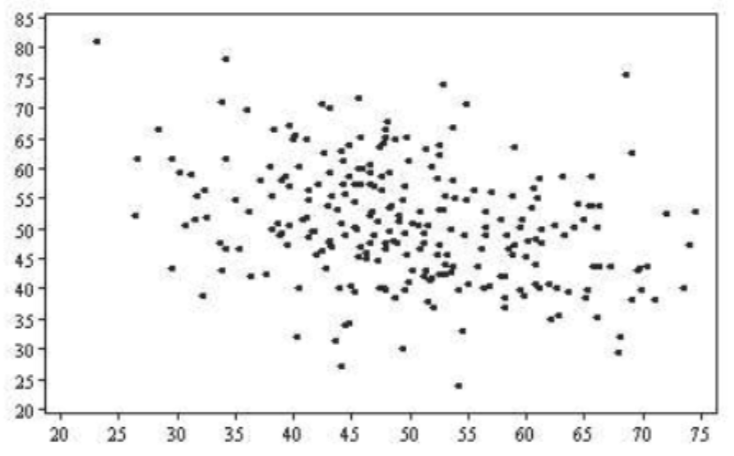
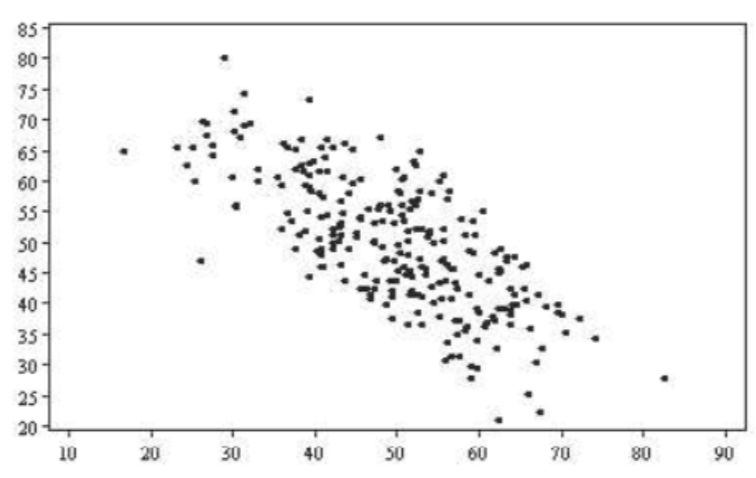
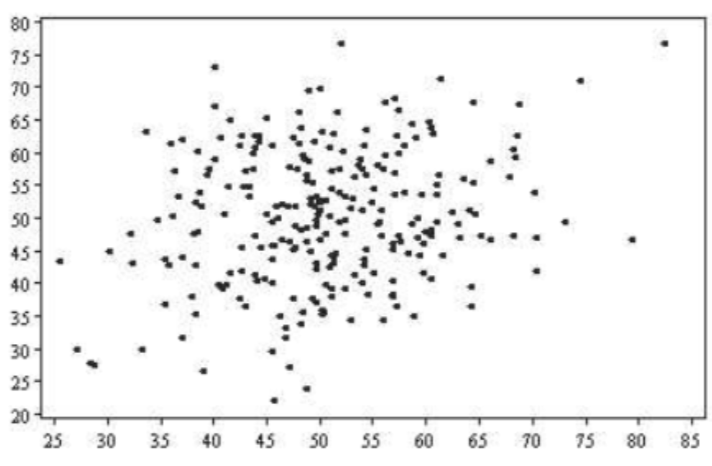
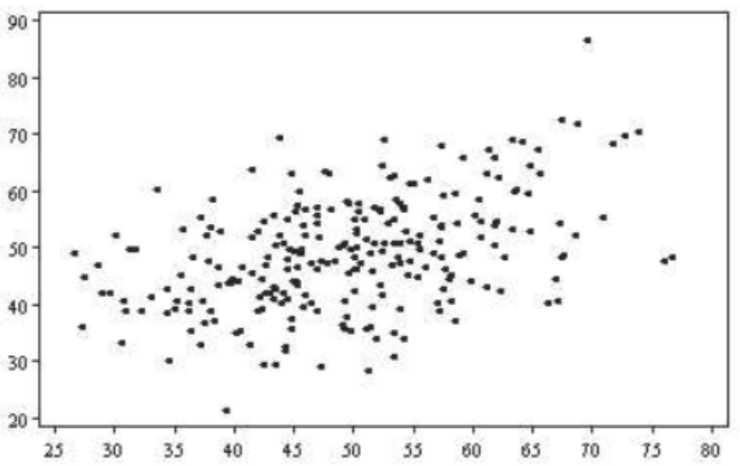
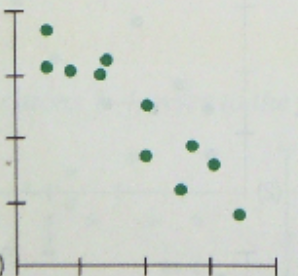
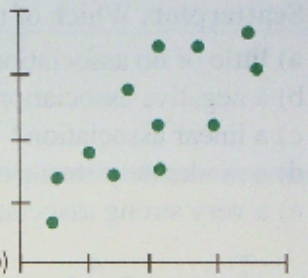
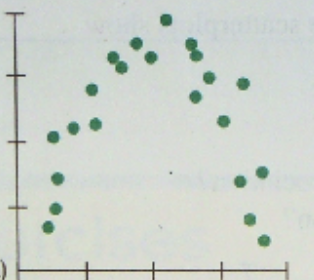
Match the correlation coefficients with the corresponding graphs:
Draggable item
arrow_right_alt
Corresponding Item
-0.67
arrow_right_alt
-0.73
arrow_right_alt
0.22
arrow_right_alt
0.67
arrow_right_alt
0.01
arrow_right_alt
0.45
arrow_right_alt
Required
1 point
1
Question 2
2.
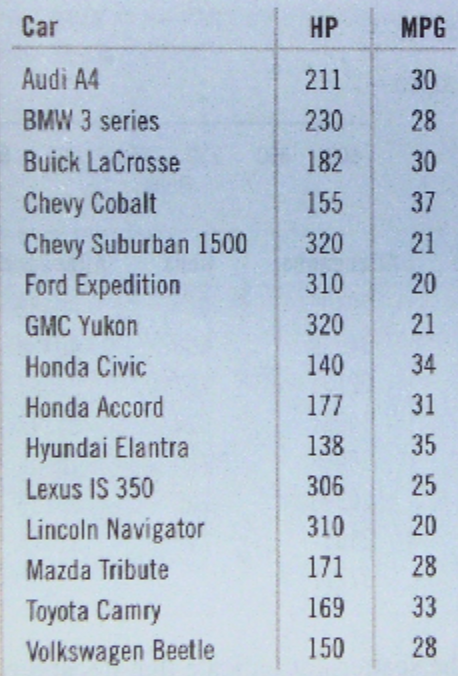
Here are advertised horsepower ratings and expected gas mileage for several 2010 vehicles.
In this situation, what is the Explanatory Variable?
And, what is the response variable?
Match the answers below.
Draggable item
arrow_right_alt
Corresponding Item
HP
arrow_right_alt
Explanatory Variable
MPG
arrow_right_alt
Response Variable
Car Model
arrow_right_alt
Individuals in the Sample
Required
1 point
1
Question 3
3.
Using the data from #2:
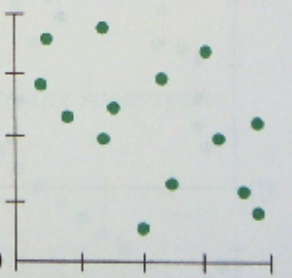
Make a scatterplot for these data, use statsmedic.com/applets, (2 quantitative variables)
take a snip and insert it in the 'show your work' area.
2. Describe the direction, form, and strength of the plot.
Required
4 points
4
Question 4
4.
Using the data and information from #3:
Does it make sense to calculate the correlation coefficient? Why?
Required
1 point
1
Question 5
5.
Use statsmedic.com/applets. Have statsmedic calculate the correlation coefficient.
Enter it below: r=
Required
1 point
1
Question 6
6.
Interpret the correlation between engine strength and fuel economy. Use our notes from 2.3.
I will grade this answer.
Required
4 points
4
Question 7
7.
Match the correlation coefficient values with the corresponding scatterplots.
Draggable item
arrow_right_alt
Corresponding Item
0.777
arrow_right_alt
-0.487
arrow_right_alt
-0.923
arrow_right_alt
0.006
arrow_right_alt
Required
2 points
2
Question 8
8.
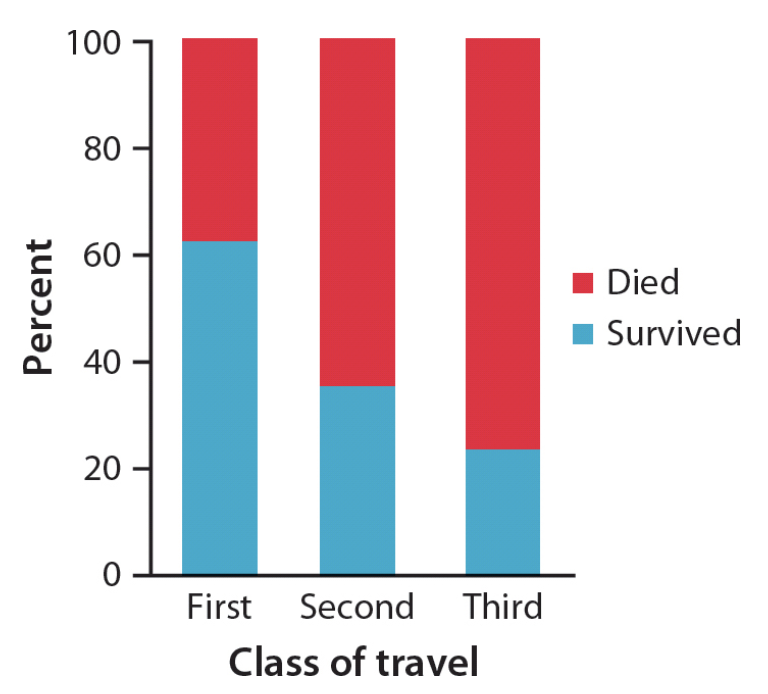
Data from the Titanic was used to look at survival of this terrible accident. The chart below shows a comparison of two variables:
What are the two variables that are being compared?
Required
3 points
3
Question 9
9.
Data from the Titanic was used to look at survival of this terrible accident. The chart below shows a comparison of two variables:
Is there an association between the variables?
How can you tell?
If so, explain the association. Find three answers.
Required
2 points
2
Question 10
10.
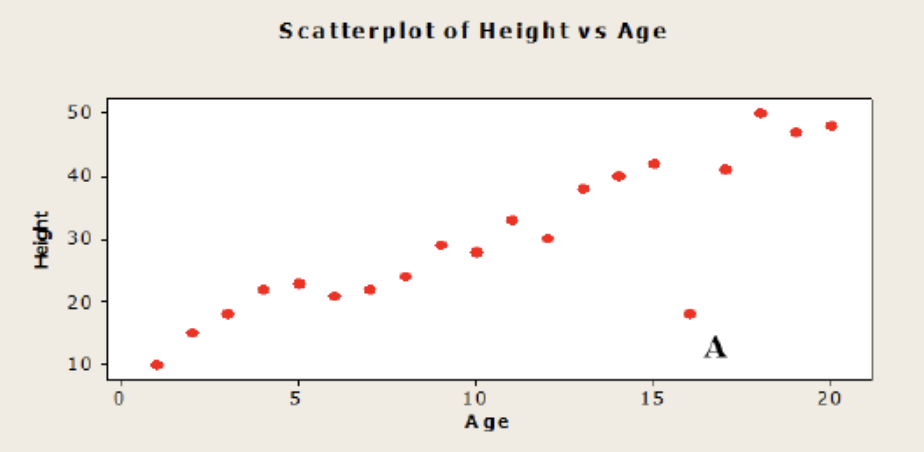
Biologists have collected data relating the age (in years) of one variety of oak tree to its height (in feet). A scatterplot for 20 of these trees is given below.
How does point A affect the correlation of the relationship? Explain.
Select both answers.
Required
2 points
2
Question 11
11.
Biologists have collected data relating the age (in years) of one variety of oak tree to its height (in feet). A scatterplot for 20 of these trees is given below.
Describe the relationship between Age and Height. Make sure to describe all four aspects from Lesson 2.2.
Required
1 point
1
Question 12
12.
Using the information from #10 & 11, interpret the correlation of r= 0.895 for the relationship between the age of trees and their height.
Required
1 point
1
Question 13
13.
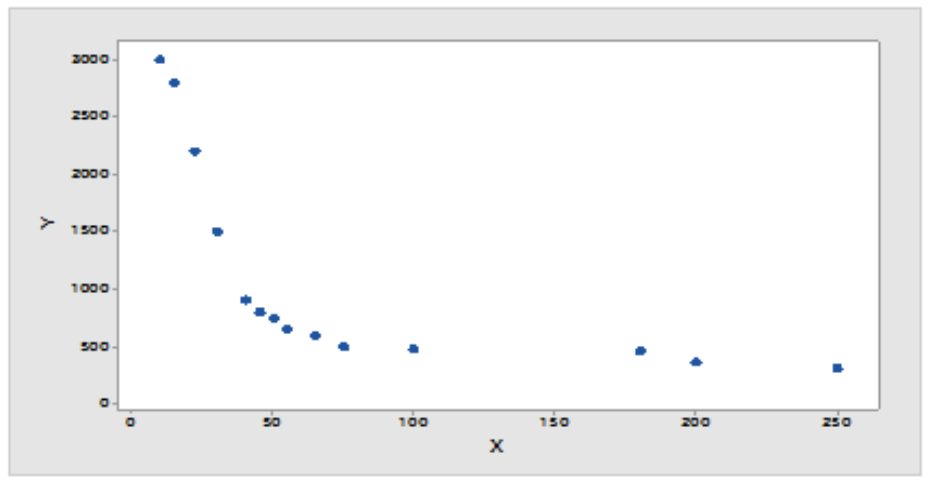
Describe the relationship shown in the scatterplot below.
Make sure to describe all four aspects from Lesson 2.2.
Required
1 point
1
Question 14
14.
The correlation between the number of dogs kept as pets in the U.S. and money spent on tennis balls is r = 0.93.
Does the strong correlation between these two variables suggest that having more dogs kept as pets causes people to spend more money on tennis balls?
Explain in complete sentences.
Required
1 point
1
Question 15
15.
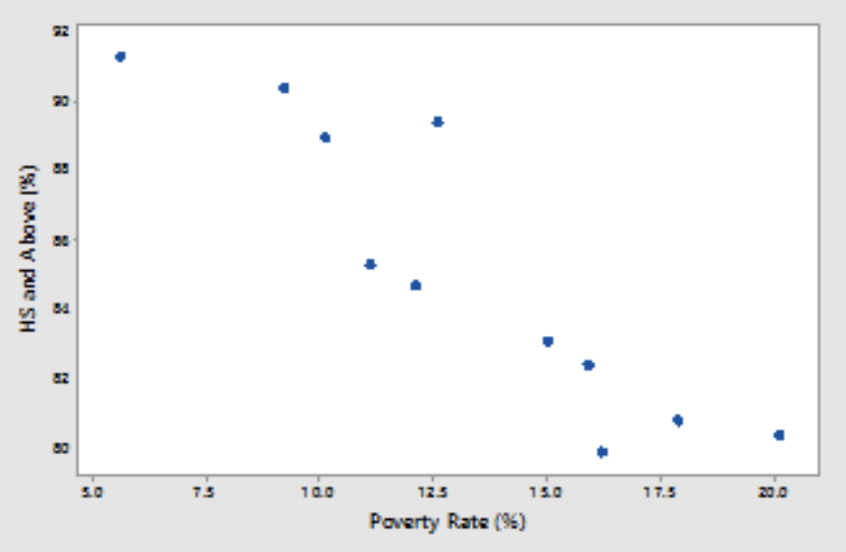
Eleven states were randomly selected from among the 50 United States.
The scatterplot below shows the relationship between the percentage of households in each state that are below the poverty level (Poverty Rate) based on household income and the percentage of adults in the state who had earned at least a high school degree (HS and Above).
What would happen to the correlation if the HS and Above (%) was plotted on the horizontal axis and the poverty rate (%) was plotted on the vertical axis?
Required
3 points
3
Question 16
16.
The gas mileage of an automobile first increases and then decreases as the speed increases. Suppose that this relationship is very regular, as shown by the following data on speed (miles per hour) and mileage (miles per gallon).
Use statsmedic.com/applets to create a scatterplot of the data.
Calculate the correlation coefficient (r)=
Explain why the correlation coefficient has this value even though there is a strong relationship between speed and mileage.