5
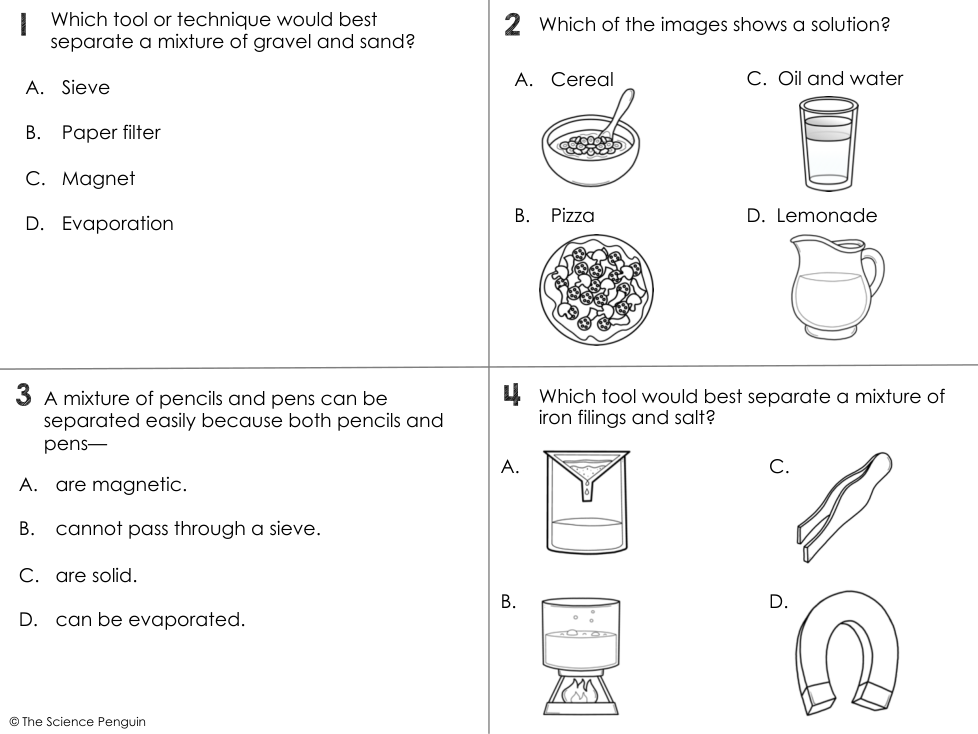
Which tool or technique would best separate a mixture of gravel and sand?
Which tool or technique would best separate a mixture of gravel and sand?
5
5
5
Which tool or technique would best separate a mixture of gravel and sand?
A student dissolved powdered drink mix in cold water to form a sweet, purple, grape-flavored solution. To make the solution's taste less strong, the student added more water to the solution.
How did the physical properties of the solution change when more water was added?
A student mixed together 10 grams of salt, 10 grams of sand, and 500 milliliters of water in a beaker. After stirring, the student allowed the mixture to sit for 20 minutes before recording observations. What did the student most likely observe?
(see image above)
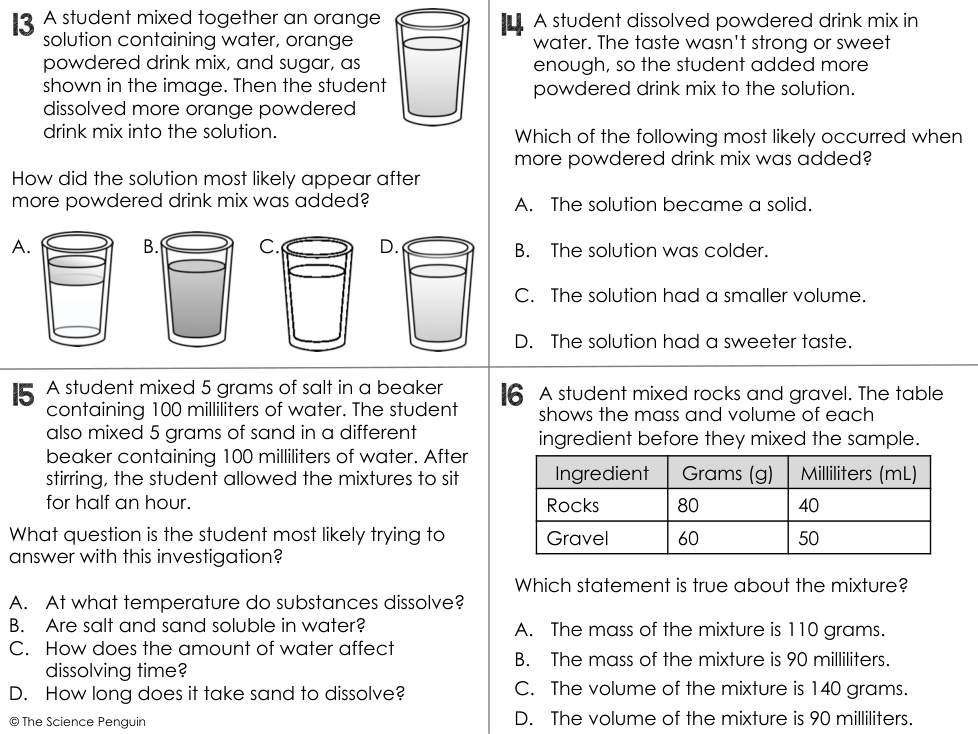
A student mixed together an orange solution containing water, orange powdered drink mix, and sugar, as shown in the image. Then the student dissolved more orange powdered drink mix into the solution.
How did the solution most likely appear after more powdered drink mix was added>
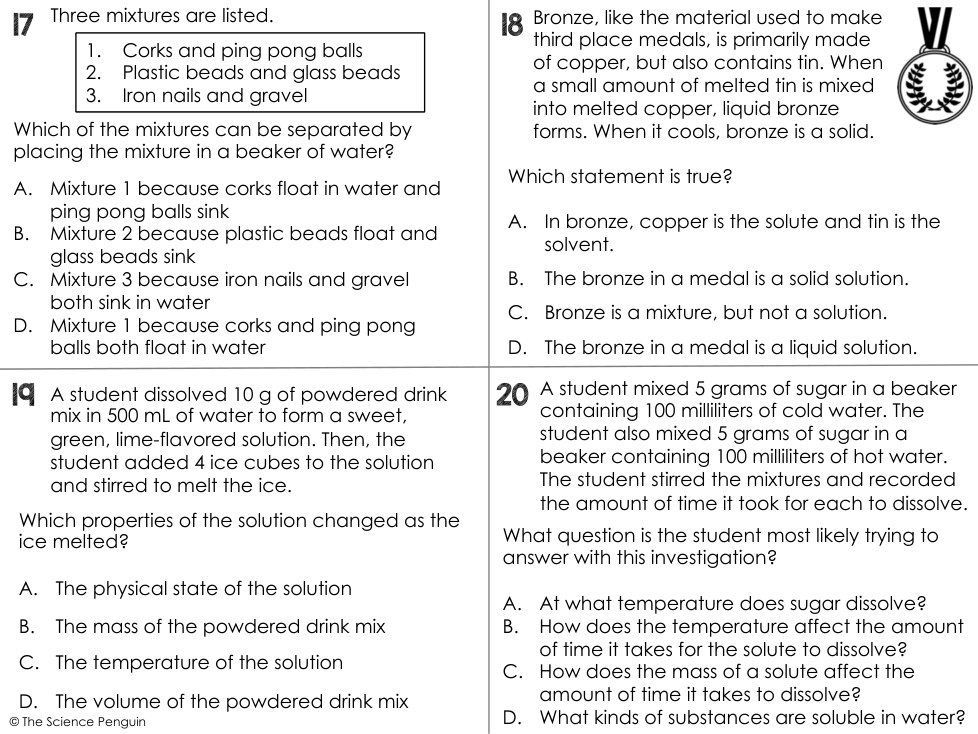
Three mixtures are listed.
1. Corks and ping pong balls
2. Plastic beads and glass beads
3. Iron nails and gravel
Which of the mixtures can be separated by placing the mixture in a beaker of water?
Which of the images shows a solution?
A mixture of pencils and pens can be separated easily because both pencils and pens —
Which tool would best separate a mixture of iron filings and salt?
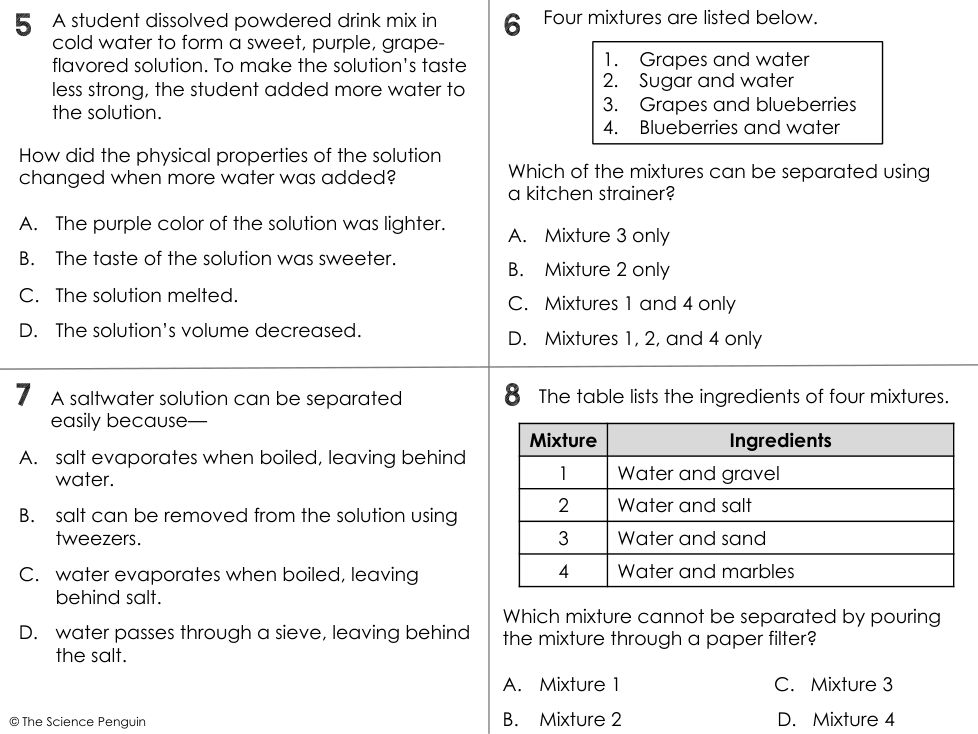
Four mixtures are listed below.
1. Grapes and water
2. Sugar and water
3. Grapes and blueberries
4. Blueberries and water
Which of the mixtures can be separated using a kitchen strainer?
A saltwater solution can be separated easily because —
See the table in question 8. Which mixture cannot be separated by pouring the mixture through a paper filter?
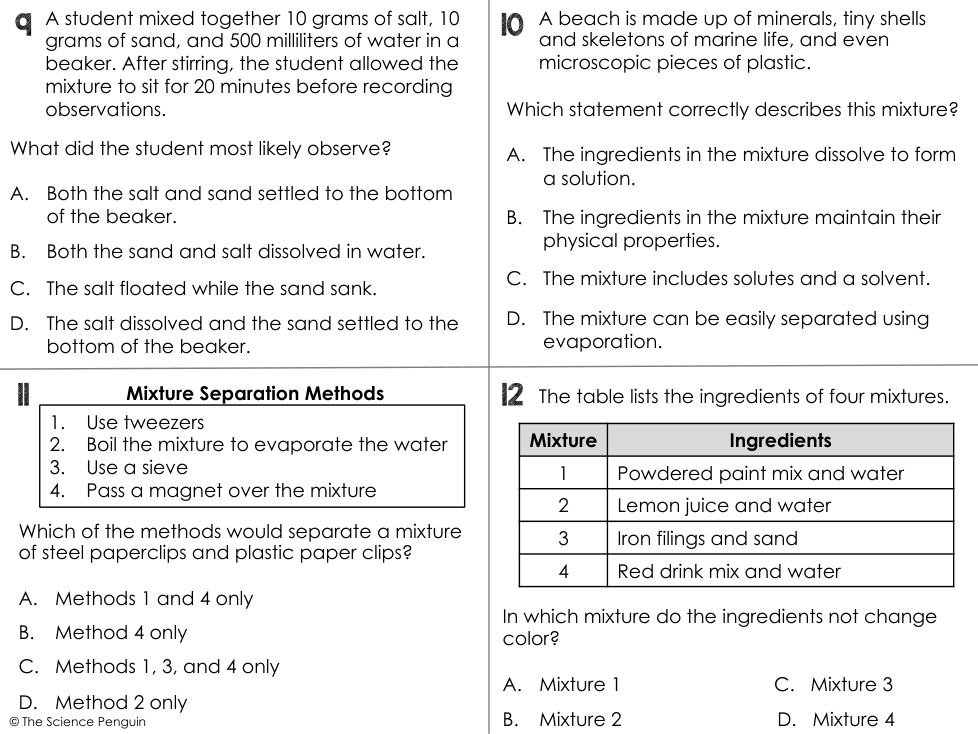
A beach is made up of minerals, tiny shells and skeletons of marine life, and even microscopic pieces of plastic. Which statement correctly describes this mixture?
Mixture Separation Methods
1. Use tweezers
2. Boil the mixture to evaporate the water
3. Use a sieve
4. Pass a magnet over the mixture
Which of the methods would separate a mixture of steel paperclips and plastic paper clips?
The table lists the ingredients of four mixtures.
1. Powdered paint mix and water
2. Lemon juice and water
3. Iron filings and sand
4. Red drink mix and water
In which mixture do the ingredients not change color?
A student dissolved powdered drink mix in water. The taste wasn't strong or sweet enough, so the student added more powdered drink mix to the solution.
Which of the following most likely occurred when more powdered drink mix was added?
A student mixed 5 grams of salt in a beaker containing 100 milliliters of water. The student also mixed 5 grams of sand in a different beaker containing 100 milliliters of water. After stirring, the student allowed the mixtures to sit for half an hour.
What question is the student most likely trying to answer with this investigation?
A student mixed rocks and gravel. The table shows the mass and volume of each ingredient before they mixed the sample.
Rocks 80g 40mL
Gravel 60g 50mL
Bronze, like the material used to make third place medals, is primarily made of copper, but also contains tin. When a small amount of melted tin is mixed into melted copper, liquid bronze forms. When it cools, bronze is a solid.
Which statement is true?
A student dissolved 10 g of powdered drink mix in 500 mL of water to form a sweet, green, lime-flavored solution. Then, the student added 4 ice cubes to the solution and stirred to melt the ice.
Which properties of the solution changed as the ice melted?
A student mixed 5 grams of sugar in a beaker containing 100 milliliters of cold water. The student also mixed 5 grams of sugar in a beaker containing 100 milliliters of hot water. The student stirred the mixtures and recorded the amount of time it took for each to dissolve. What question is the student most likely trying to answer with this investigation?