Log in
Sign up for FREE
arrow_back
Library

Five Ponds Chapter 6 Why Matter Matters

star
star
star
star
star
Last updated over 2 years ago
22 questions
Required
1
Required
1
Required
1
Required
1
Required
1
Required
1
Required
1
Required
1
Required
1
Required
1
Question 2
2.

Question 3
3.

Required
1
Question 5
5.

Required
1
Question 7
7.

Required
1
Required
1
Question 10
10.

Required
1
Required
1
Required
1
Question 14
14.

Required
1
Required
1
Required
1
Required
1
Question 18
18.

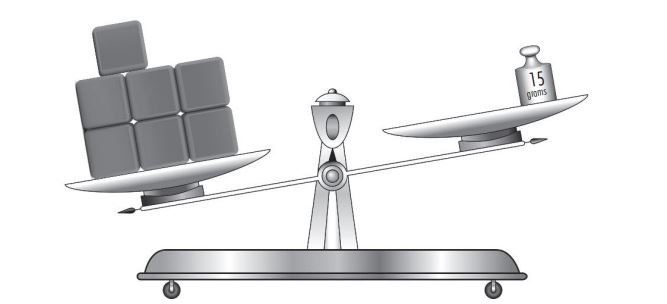
FILL IN THE BOX WITH THE CORRECT NUMBER.
If each block has a mass of 5 grams, how many more grams need to be added to balance this scale?

Question 19
19.

Question 20
20.

Question 21
21.

Required
1
Question 1
1.

How can radiant energy affect phases of matter?
It can cause matter to become a liquid or gas.
It can cause matter to freeze.
It can cause matter to become a solid.
It has no effect on matter.
Which of the following best defines matter?
All mixtures and solutions.
Everything except emotions.
Anything that has mass and volume.
Anything you can see with your eyes.
Question 4
4.

The amount of matter in an object is its...
length
mass
weight
volume
Question 6
6.

It is important for engineers to understand atoms so they can-
pick the right materials because matter consists of different atoms that have different properties.
know how to calculate the volume of a material.
explain how to build a solution to a problem, such as a bridge or a new road.
understand how to properly label a design plan.
Question 8
8.

Question 9
9.

When water freezes into ice, its volume increases. What happens to its mass?
A. It increases.
B. It stays the same
C. It decreases.
D. Water has no mass.
Question 11
11.

Question 12
12.

Question 13
13.

What can cause matter to change phases?
A change in mass.
A change in volume.
A change in temperature.
A change in color.
Question 15
15.

Question 16
16.

Question 17
17.

A scientist made a model to show that matter is composed of atoms. To learn more about atoms, the scientist could —
observe atoms with a magnifying glass
count the atoms in a beaker
look at atoms with a telescope
learn about atoms by blowing up a balloon
Which is NOT an example of a solution?
Jello packet mixed with water
Tea mixed with sugar
Oil mixed with water
Tap water mixed with salt
Which physical property can be measured in liters?
volume
mass
color
length
Question 22
22.

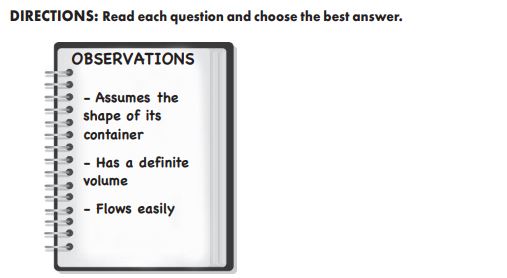
A student investigated a substance and recorded observations. Based on the observations shown, what can you conclude about the substance?

A. It could be a solid or a liquid.
B. It can only be a gas.
C. It can only be a liquid.
D. It could be a liquid or a gas.
A student is designing an investigation. Based on the question, which could be a constant in the investigation?
A. Amount of chocolate
B. Melting temperature
C. Brand of chocolate
D. Price of chocolate
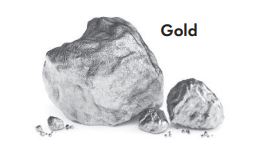
What could best change the solid gold chunks into liquid gold?
A. a sharp instrument
B. freezing weather
C. dropping them from a cliff
D. very high temperature
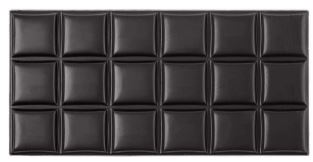
A solid candy bar has a mass of 18 grams. A student melted the candy bar until it became a liquid. What is the mass of the candy bar as a liquid?
A. 9 grams because the mass of a substance reduces by half during a phase change.
B. 18 grams because the total mass of matter remains the same during a phase change.
C. 20 grams because a liquid has a slightly higher mass than a solid.
D. 16 grams because a liquid has a slightly lower mass than a solid.
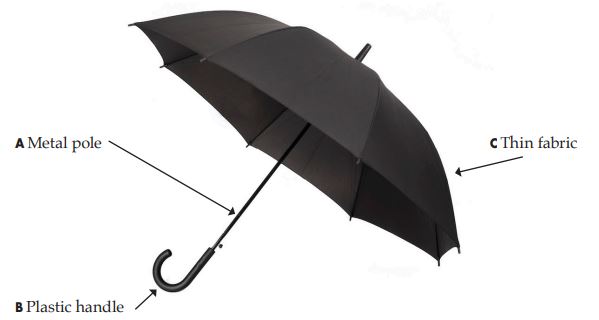
Which example of matter in the umbrella shown can be classified as a conductor of thermal energy?
A. Metal pole
B. Plastic handle
C. Thin fabric
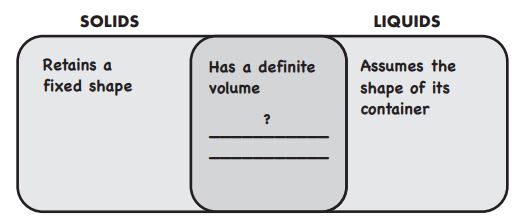
What best completes the Venn diagram?
A. Mass does not change.
B. Volume changes.
C. Mass changes.
D. Volume does not change.
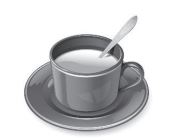
What makes a cup of hot chocolate a solution?
A. Water and cocoa power do not mix.
B. Cocoa powder and water atoms bond together.
C. The cocoa powder forms lumps in the water.
D. The cocoa powder uniformly dissolves in the water.
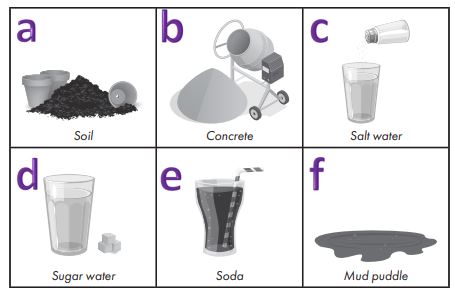
CHOOSE ALL THE CORRECT ANSWERS.
Which are examples of mixtures that are NOT solutions?
A
B
C
D
E
F
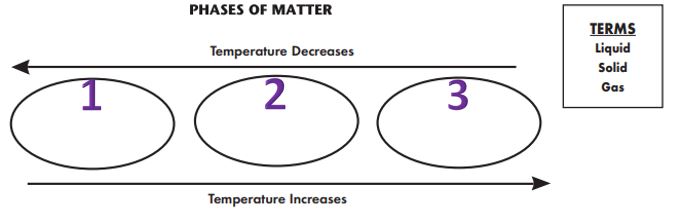
USE THE TERMS TO COMPLETE THE DIAGRAM.
What belongs in bubble 1?
A. liquid
B. solid
C. gas
USE THE TERMS TO COMPLETE THE DIAGRAM.
What belongs in bubble 2?
A. liquid
B. solid
C. gas
USE THE TERMS TO COMPLETE THE DIAGRAM.
What belongs in bubble 3?
A. liquid
B. solid
C. gas
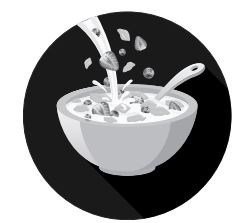
The cereal shown combines multiple substances that do not lose their identifying characteristics when they are together. The cereal is a —
A. solution
B. molecule
C. mixture
D. recipe