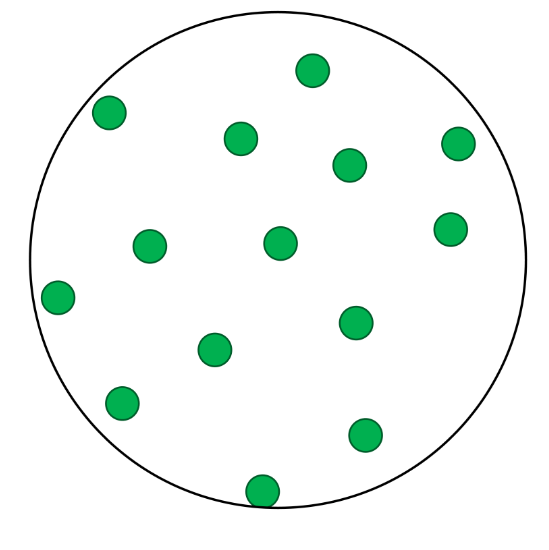
Ɛhia
1
Ɛhia
1
Is this sample classed as a pure substance, a homogenous mixture, or a heterogenous mixture?
Is this sample classed as a pure substance, a homogenous mixture, or a heterogenous mixture?
In this skill we will learn to classify particles as elements or compounds, and we will learn to classify substances as either pure substances or mixtures.
Elements contain only one type of atom.
Compounds contain atoms of more than one element that are chemically joined together.
A pure substance is made up of one type of particle only - either an element or a compound.
A mixture is made up of more than one type of particle - this could be a mixture of elements, a mixture of compounds, or a mixture of elements and compounds.
Homogenous mixtures are mixtures in which the different types of particles are evenly spread throughout.
Heterogenous mixtures are mixtures in which the different types of particles are not evenly spread throughout.
In these questions, different elements are shown by circles of different sizes and colors.
Elements can be monatomic (made up of just one atom) or diatomic (made up of two atoms chemically joined together).
In this skill we will learn to classify particles as elements or compounds, and we will learn to classify substances as either pure substances or mixtures.
Elements contain only one type of atom.
Compounds contain atoms of more than one element that are chemically joined together.
A pure substance is made up of one type of particle only - either an element or a compound.
A mixture is made up of more than one type of particle - this could be a mixture of elements, a mixture of compounds, or a mixture of elements and compounds.
Homogenous mixtures are mixtures in which the different types of particles are evenly spread throughout.
Heterogenous mixtures are mixtures in which the different types of particles are not evenly spread throughout.
In these questions, different elements are shown by circles of different sizes and colors.
Elements can be monatomic (made up of just one atom) or diatomic (made up of two atoms chemically joined together).
Is this sample classed as a pure substance, a homogenous mixture, or a heterogenous mixture?
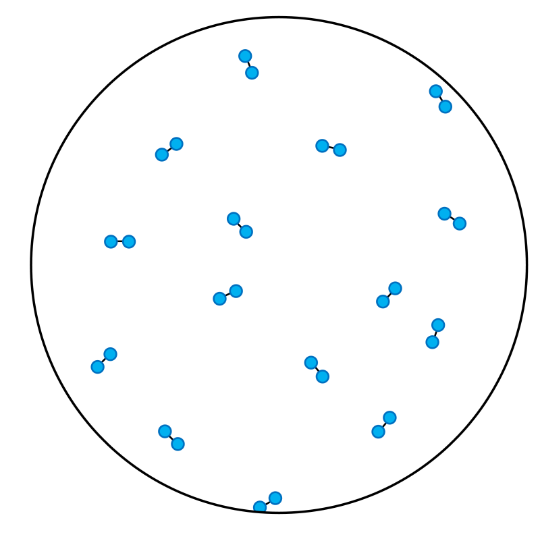
Is this sample classed as a pure substance, a homogenous mixture, or a heterogenous mixture?
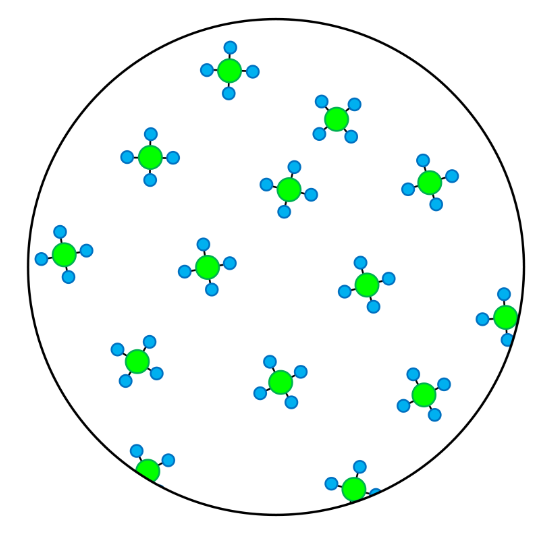
Is this sample classed as a pure substance, a homogenous mixture, or a heterogenous mixture?
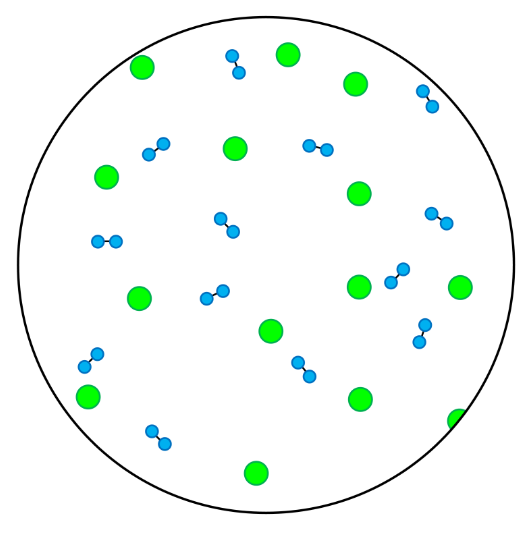
Is this sample classed as a pure substance, a homogenous mixture, or a heterogenous mixture?
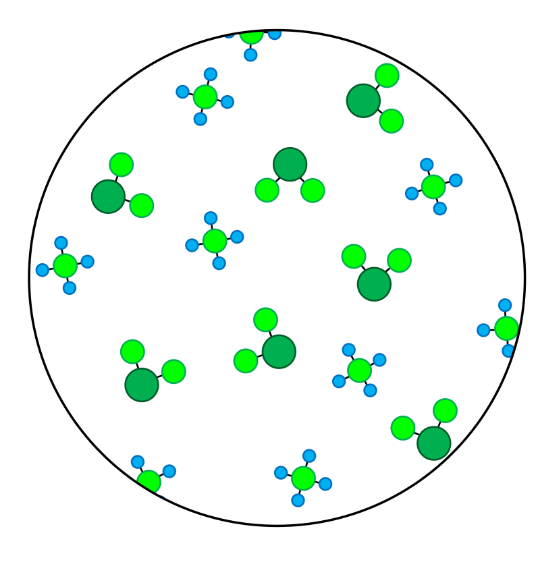
Is this sample classed as a pure substance, a homogenous mixture, or a heterogenous mixture?
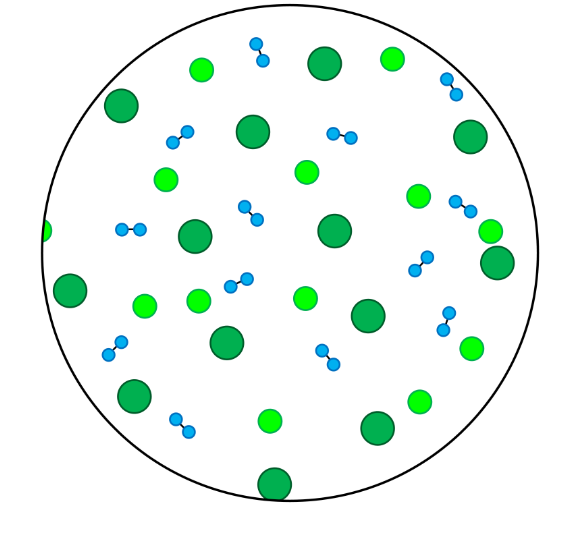
Is this sample classed as a pure substance, a homogenous mixture, or a heterogenous mixture?
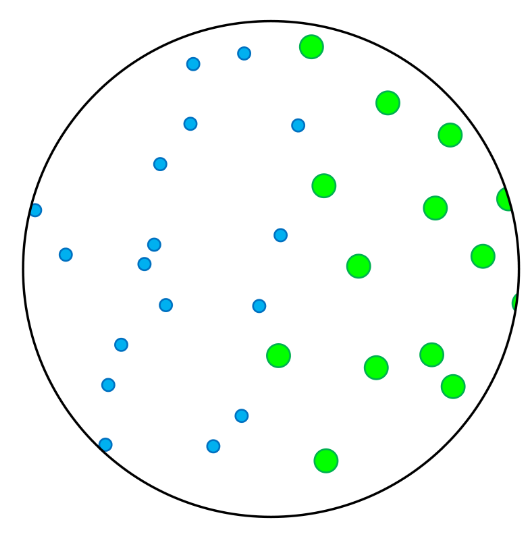
Is this sample classed as a pure substance, a homogenous mixture, or a heterogenous mixture?
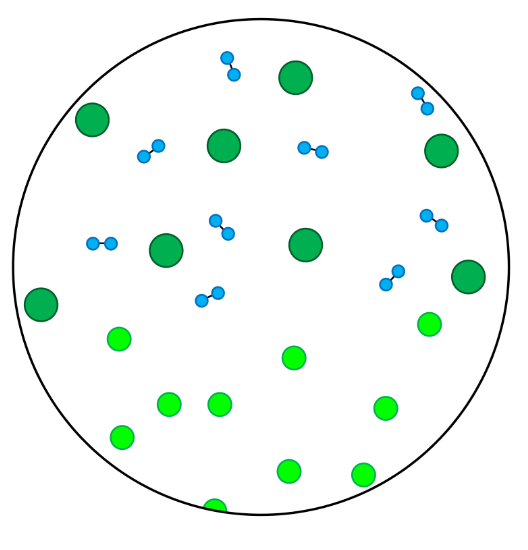
Is this sample classed as a pure substance, a homogenous mixture, or a heterogenous mixture?
The microscopic view of a sample of matter is represented in the image. What is this sample made up of?
The microscopic view of a sample of matter is represented in the image. What is this sample made up of?
The microscopic view of a sample of matter is represented in the image. What is this sample made up of?
The microscopic view of a sample of matter is represented in the image. What is this sample made up of?
The microscopic view of a sample of matter is represented in the image. What is this sample made up of?
The microscopic view of a sample of matter is represented in the image. What is this sample made up of?
The microscopic view of a sample of matter is represented in the image. What is this sample made up of?
The microscopic view of a sample of matter is represented in the image. What is this sample made up of?