We've learned that the wildebeest migration has something to do with food. We saw that, during the summer while wildebeests are starting to move north, their health deteriorates (%fat in marrow decreases) and many starve to death.
We do not fully understand HOW food could be causing the migration.
At the end of lesson 3, many of you hypothesized that their migration has something to do with food availability changing throughout the year in different places. The scientist that set to answer this question, Dr. Tony Sinclair, had the same hypothesis.
We've learned that the wildebeest migration has something to do with food. We saw that, during the summer while wildebeests are starting to move north, their health deteriorates (%fat in marrow decreases) and many starve to death.
We do not fully understand HOW food could be causing the migration.
At the end of lesson 3, many of you hypothesized that their migration has something to do with food availability changing throughout the year in different places. The scientist that set to answer this question, Dr. Tony Sinclair, had the same hypothesis.
Dr. Tony Sinclair thought that wildebeests migrated because of changing food availability throughout the year. In a single sentence, describe what data YOU THINK he and his team collected to test his hypothesis. Be specific!
Dr. Sinclair was interested in studying how food was driving the wildebeest migration. Through experimentation, he found out exactly how much the grass would grow with certain amounts of rain. This allowed him to measure rain instead of measuring the grass directly. Which of the following are advantages of measuring rain over directly measuring the growth of grass? (pick three)
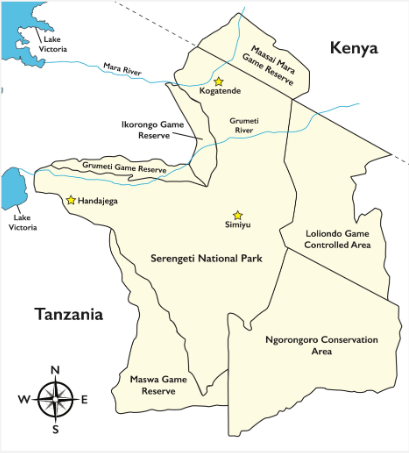
Since we have this idea that rain can help us figure out how much food there is, I found some data from the rain gauges around the Serengeti. Even with rainfall, we have to select a few carefully chosen locations to measure rainfall, because the scale of the Serengeti is so big. These locations were chosen because they look very different from one another but all have wildebeest at some times in the year. The three locations are:
Simiyu in the South
Handejega in the West
Kotentende in the North
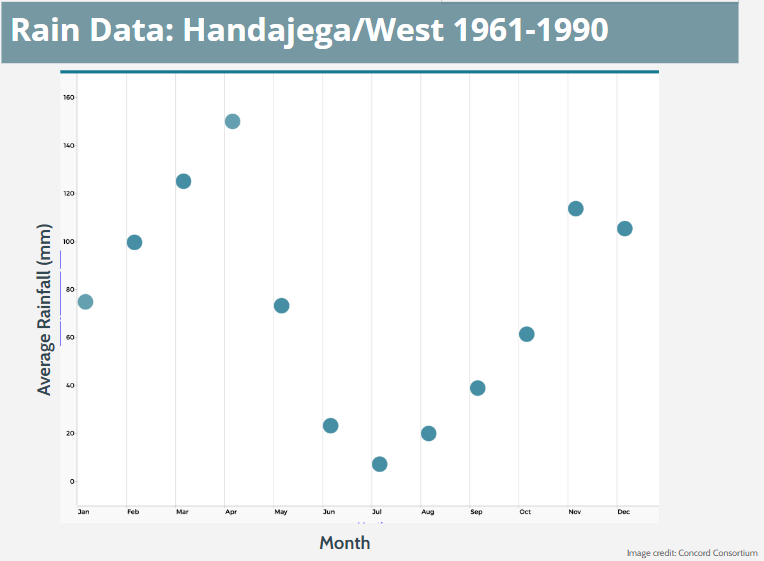
Which of the following describes the pattern?
Why would measuring food directly have been difficult? (select 3)
Through experiments, Dr. Sinclair was able to figure out the relationship between ________ and plant growth.