1. 25 minutes - With your group, complete transfer task #1 but do not submit (each person completes their own)
2. 10 minutes - Close your Chromebook and look through a key with explanations with your group
3. 10 minutes - Make corrections individually
1. 25 minutes - With your group, complete transfer task #1 but do not submit (each person completes their own)
2. 10 minutes - Close your Chromebook and look through a key with explanations with your group
3. 10 minutes - Make corrections individually
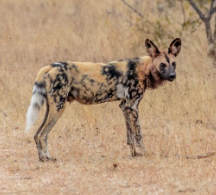
African wild dogs used to live across 39 African countries. Due to habitat loss and conflicts with humans, there are now only around 6,600 African wild dogs in 14 countries, and the population is listed as endangered internationally (Nicholson et al., 2020).
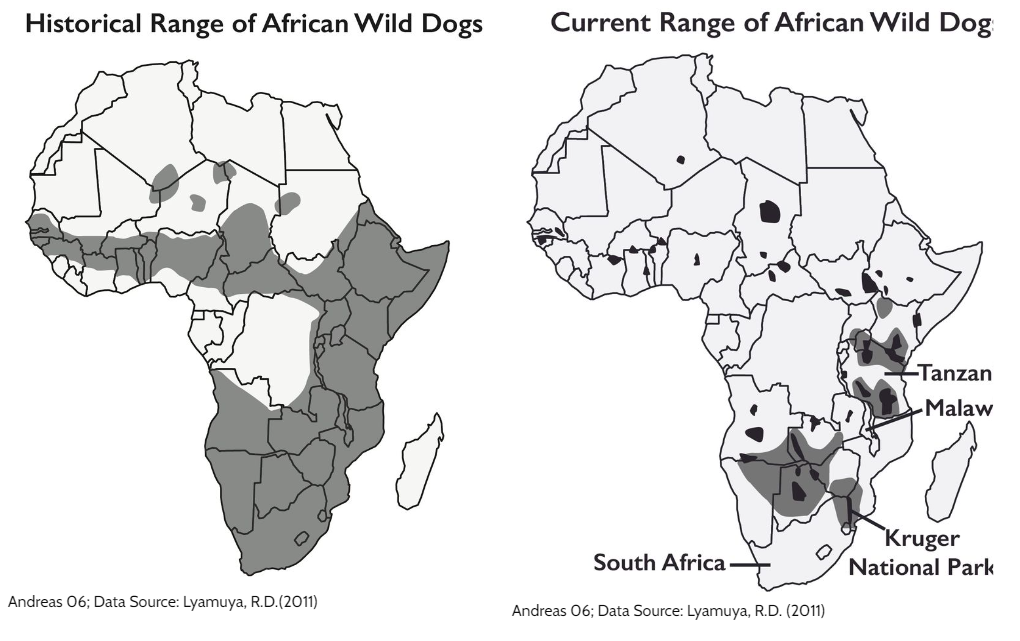
For over 20 years, one population of African wild dogs has been protected and monitored in South Africa.
Scientists wanted to bring some of the wild dogs from South Africa to a new national park in Malawi to establish a new pack, but they did not know how many dogs the park could support. They decided to study the dogs in South Africa to see if they could figure out what limiting factors affect the African wild dogs’ carrying capacity and could help them predict how many dogs they could bring to Malawi.
By the end of this task, you will be asked to explain:
Limiting factors that affect the size of African wild dog packs.
If a newly established park can support a pack of wild dogs.
Required
1 point
1
Question 1
1.
To understand more about African wild dogs, scientists need to know how often they reproduce to predict how populations might change over time. African wild dogs live in packs of 7-15. One female dog of the pack gives birth to one litter every year. A litter is the group of young animals born to an animal at one time. The average number of pups per litter is 8.
Which of the graphs best represents what you predict should happen to a single pack of wild dogs over 10 years if there were enough resources for all the dogs to survive and the death rate was very low.
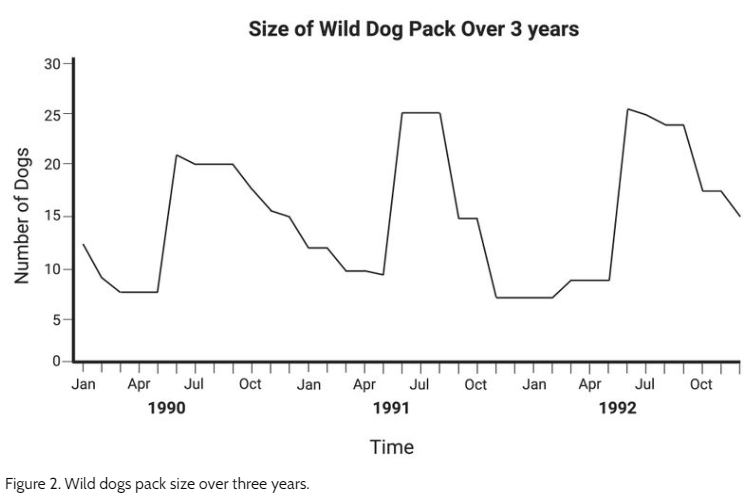
The graph below shows the population of one pack of wild dogs in Kruger National Park in South Africa, where the dogs have been protected and studied. (Figure 2)
Required
1 point
1
Question 2
2.
How does this graph compare to the graph you picked in your response to question 1?
Required
1 point
1
Question 3
3.
What are the likely reasons for the ups in the population at some times of the year?
Required
1 point
1
Question 4
4.
What are the likely reasons for the downs in the population at some times of the year?
Required
1 point
1
Question 5
5.
Although we cannot know for sure because the time period is so short, this population seems to be at its carrying capacity.
Required
3 points
3
Question 6
6.
An example of a limiting factor that scientists could investigate to understand the carrying capacity of African wild dogs is amount of available land. Wild dogs need space to hunt, find shelter, and provide the resources they need to survive.
Place check marks in the boxes that describe the type of limiting factor that amount of available land is. (3 check marks)
Required
1 point
1
Question 7
7.
Suggest another limiting factor (besides available land) that scientists might consider investigating in order to understand the carrying capacity of wild dogs.
Required
1 point
1
Question 8
8.
Suggest another limiting factor that scientists might consider investigating in order to understand the carrying capacity of wild dogs.
Required
1 point
1
Question 9
9.
Does the size of the dog’s territory determine how many African wild dogs can live there?
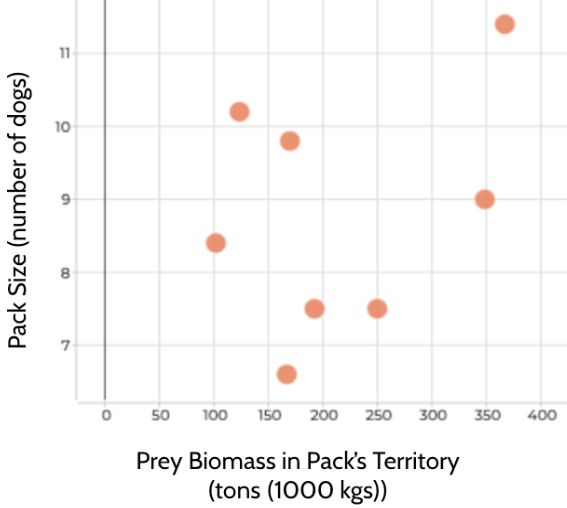
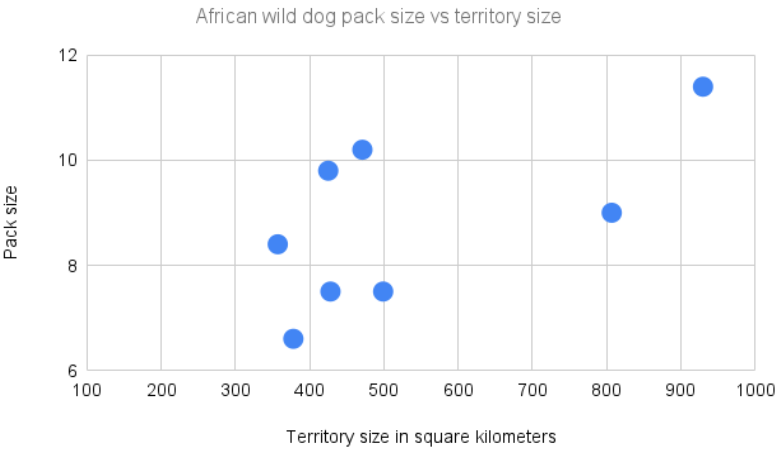
African wild dogs are known to hunt and roam over large areas of land called territories. Scientists wondered how territory size could limit pack size. They wanted to use this information to figure out how many dogs the new reserve in Malawi could support. The graph below shows the data they collected comparing pack size to territory size.
While scientists did not establish a clear relationship between territory size and pack size, they determined that there is a minimum territory size required to establish a new pack. Use evidence from the graph to propose a minimum territory size for the reserve in Malawi.
Does the amount of prey in the habitat determine how many African wild dogs can live there?
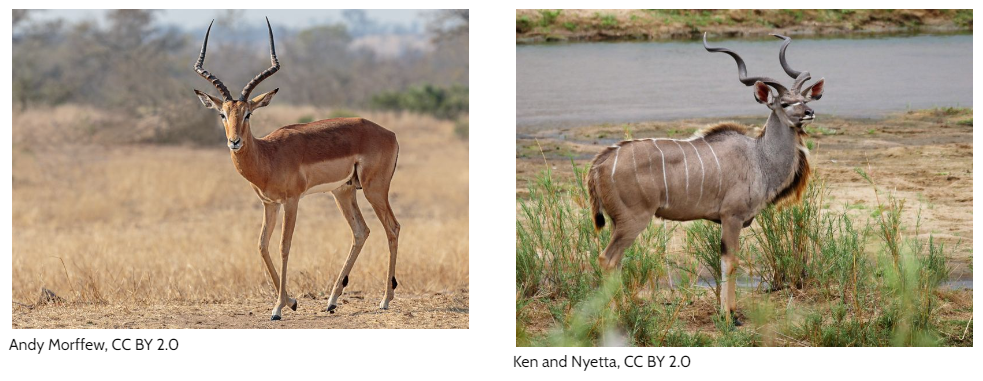
African wild dogs' main prey are impala (on the left)  and kudu (on the right).
Required
1 point
1
Question 10
10.
Scientists wondered If the amount of prey in the territory could limit the size of the pack. The graphs below show pack size and prey biomass (mass of ALL the prey in their territory), a measure of how much food is available. If prey biomass is a limiting factor for African wild dog pack size, which graph represents the relationship?
Required
2 points
2
Question 11
11.
Explain your thinking.
Required
1 point
1
Question 12
12.
How would you characterize the relationship between prey biomass and pack size that you chose?
In South Africa, scientists observed the following relationship between prey biomass and dog pack size.
Figure 4
Required
1 point
1
Question 13
13.
How would you characterize the relationship between prey biomass and pack size?
Required
1 point
1
Question 14
14.
In the reserve in Malawi, how much prey biomass should there be to establish a new pack? (don't forget units)
Does the presence of predators in the territory determine where African wild dogs live?
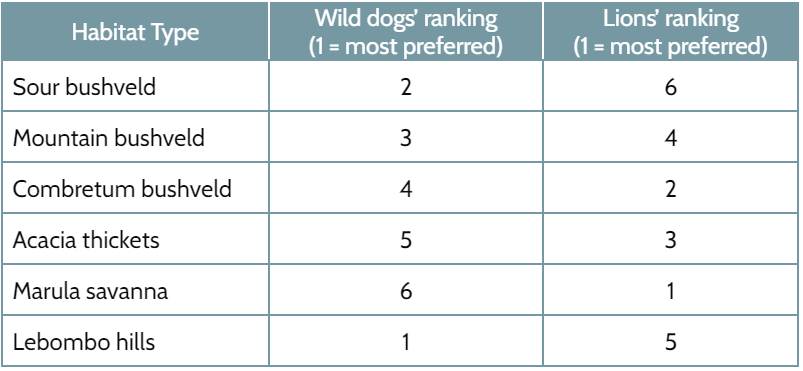
Like wild dogs, lions also prey on kudu and impala. Lions and wild dogs often live in the same habitats. However, lions will kill wild dogs they encounter. In South Africa, scientists investigated the relationship between lions and wild dogs by looking at habitat preferences (Table A). Scientists ranked each animal's preferred habitats from 1 to 6, with one being the more favored and six being the least.
Table A. Data adapted from Mills and Gorman, 1997.
Required
1 point
1
Question 15
15.
Which of the following claims explains the wild dogs' habitat preference?
Required
1 point
1
Question 16
16.
What is the evidence from Table A that led you to this claim?
Required
1 point
1
Question 17
17.
Explain your reasoning. (Put evidence together with what you already know about lions and wild dogs)
Required
1 point
1
Question 18
18.
In the new national park in Malawi, how could scientists use this habitat preference data as they planned to bring wild dogs there? (make sure your answer includes specific names of habitats AND reason(s) why you make your decision)