Intro to Ecology Assessment

Last updated over 1 year ago
29 questions
Required
2

Categorize each as biotic or abiotic

Biotic Factors
Abiotic Factors
Disease
Food availability
Mountain terrain
Climate
Required
1

Which of the following is the best definition of conservation?

Required
1

"all of the plants and animals in Serengeti National Park" is an example of a(n)

Required
2

Categorize each of the following

  • Deer
  • Bacteria that break down waste
  • Grass
  • Wolf (eats deer)
  • Producer
  • Primary consumer
  • Secondary consumer
  • Decomposers
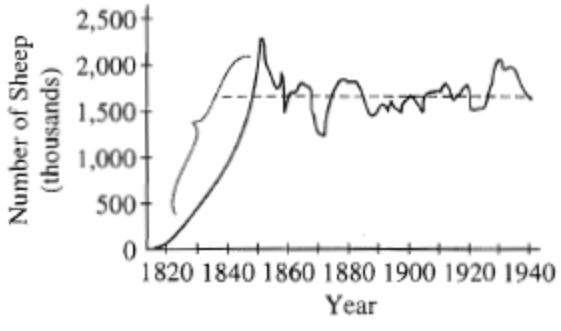
The graph below shows changes in a population of wild sheep that were introduced to the island of Tasmania in the early 1800's.
Required
1

In 1810, there 0 sheep in Tasmania. In 1850, there were 2,200,000 sheep. Calculate the average growth rate over that period.

Required
1

How would yo characterize the growth during this period?

Required
1

The population fell from 2,200,000 sheep down to 1,500,000 sheep between 1850 and 1860. Calculate the growth rate during that period (sheep/year)

Required
1

What does the dotted line on the graph stand for?

Required
1

The graph indicates that the sheep population most likely is

Required
1

Who produces all of the energy for the entire ecosystem using energy from the sun?

Required
1

In a given ecosystem, how does the biomass of the primary consumers compare to the biomass of the producers?

1

____________________is the first species to inhabit barren area.

Required
1

What is the most common criterion used to determine if two individuals belong to the same species?

Required
1

Why is having high biodiversity beneficial for a community? (2 answers)

Required
1

What are first species to come back in a community after a disturbance?

Required
1

When referring to competition, what does the "(-/-)" mean?

Required
1
Bees pollinating flowers is an example of __________.
Crocodiles competing with lions for food is an example of a __________ relationship.
Required
1
During a drought, hardly any plant grow so there is little food for the primary consumers. As a result, many of them starve leaving little food for the secondary consumers. This is an example of __________ regulation.
As a result of overhunting, the sea otter population collapses, causing a increase in sea urchin population (their food). Since urchins feed on kelp, the kelp forest disappear as a result. This is an example of __________ regulation.
Required
1

What is population ecology?

Required
1

Which are the three measurable population features?

Required
1

Which of the measurable population features has units of "population per unit area"?

Required
1
Exponential growth occurs when there is __________ and __________.
Required
3
Logistic growth occurs when there is some __________ and is characterized by a growth curve that __________ at the __________.
Required
1

Categorize the two limiting factors below.

  • Habitat area
  • Predation
  • Top-down regulation
  • Bottom-up regulation
Required
2

Categorize the limiting factors.

  • nesting sites
  • toxic chemical in the water
  • food availability
  • volcanic eruption
  • Density dependent limiting factor
  • Density independent limiting factor
Required
1

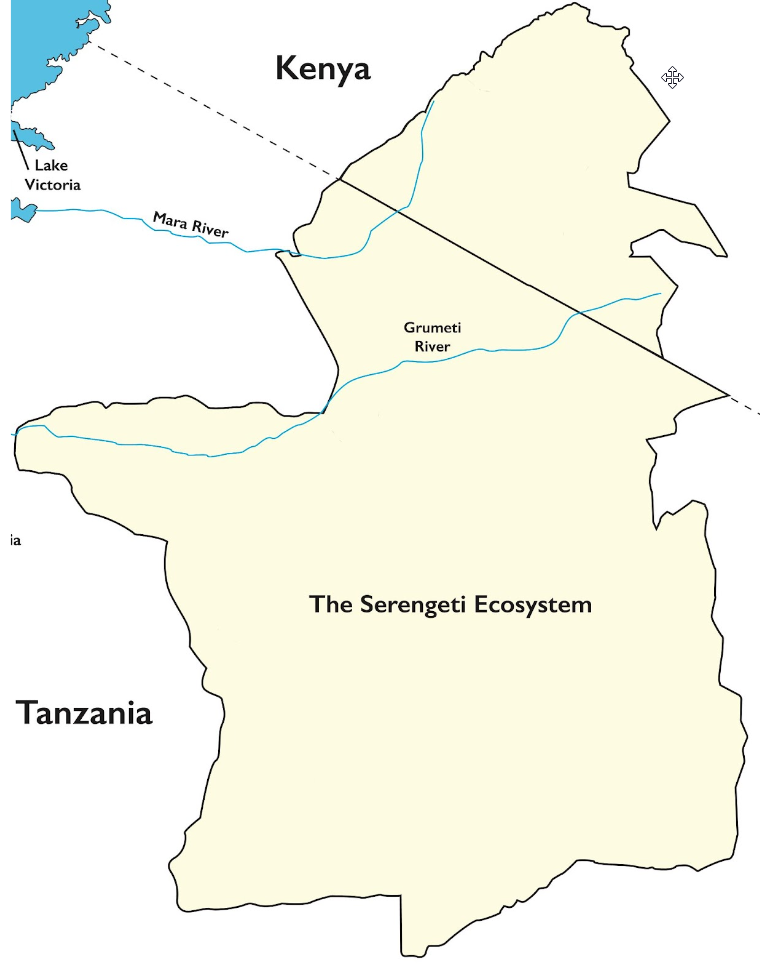
Which part of the Serengeti is the wildebeests' breeding ground?

Required
1

Which part of the Serengeti do wildebeests go to during the dry season?

Required
3
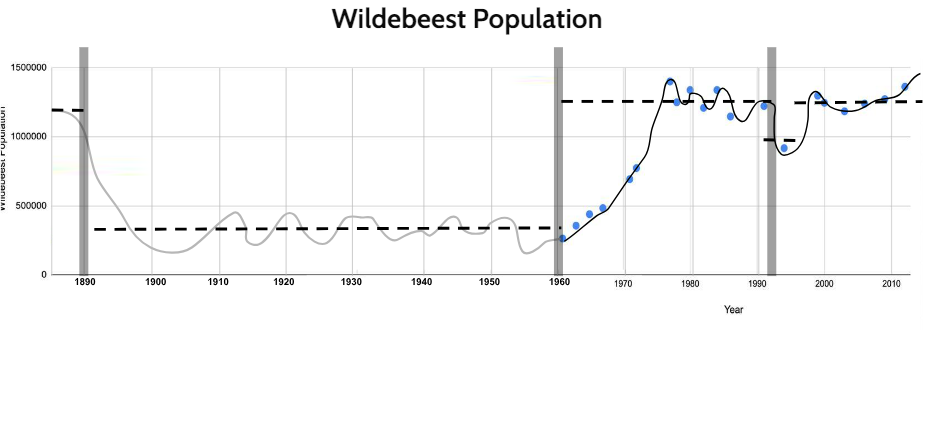
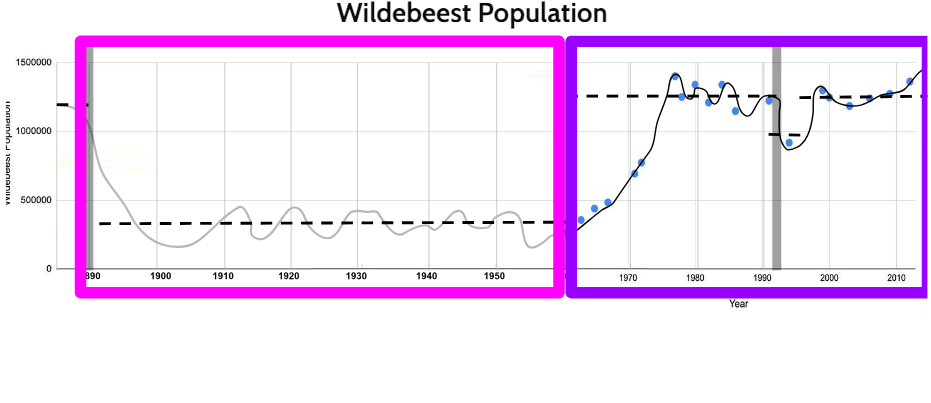
Label the important events in the history of the Serengeti wildebeest population.
Other Answer Choices:
Massive die-off due to poaching
Rinderpest first brought in
wildebeests are first brought in
Large drought ever
Lions first introduced
Vaccination program
Required
2
What was the main limiting factor that was regulating the wildebeest population in the two regions shown?
Other Answer Choices:
Poaching
Dry season food availability
Lion predation
Disease outbreaks
Civil war among the Masai
Invasive grass species
Amount of sunlight
Widespread storms
Competition with zebras
Wet season food availability
Habitat loss