0
💚 How is the earth moving? Select all that apply
💚 How is the earth moving? Select all that apply
0
0
💚 This movement causes what pattern?
💚 This movement causes what pattern?
💚 How is the earth moving? Select all that apply
💚 This movement causes what pattern?

💚 How is the earth moving? Select all that apply
💚 This movement causes what pattern?
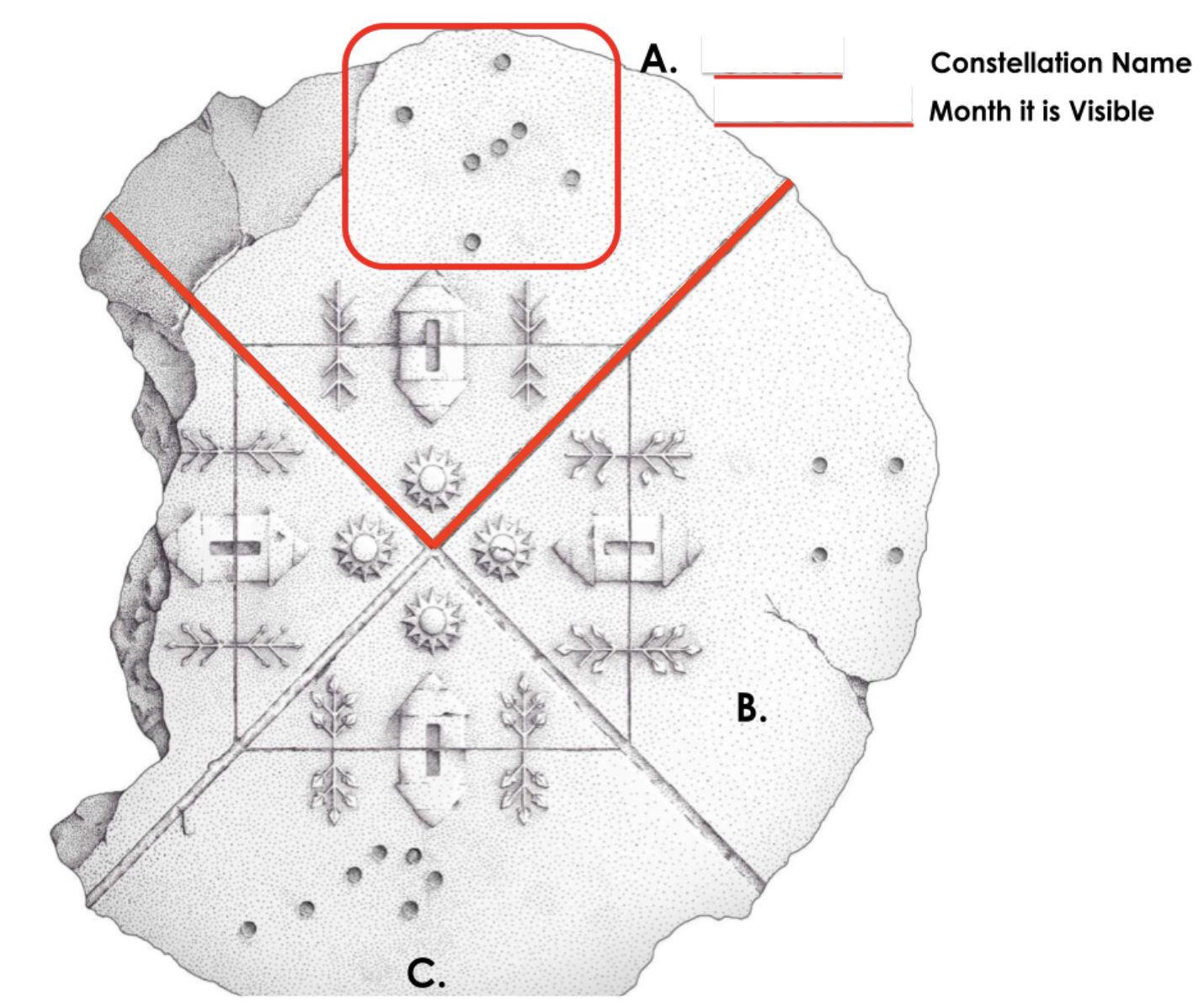
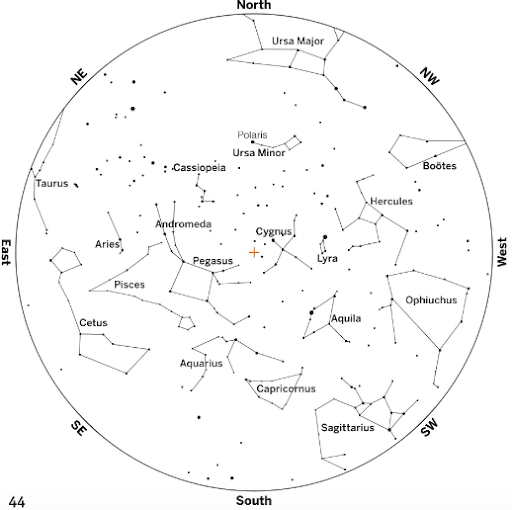
What constellation do you think is Section A ?
What do you notice about the trees in Section A of the artifact? What season do you think this represents?
What month can we see this directly above us?
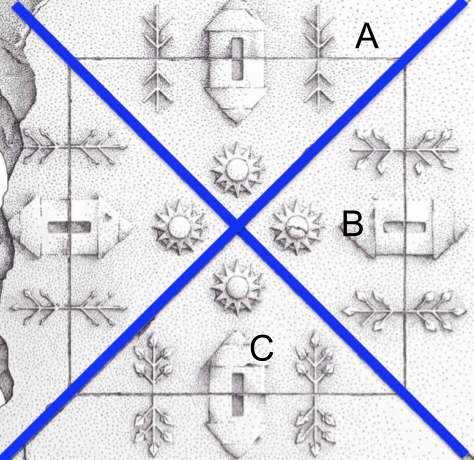
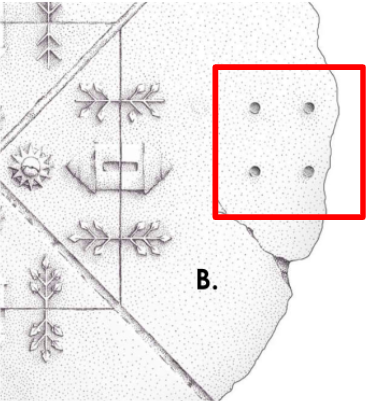
Using the trees as clues, what season could be shown in section B of the artifact?
This calendar shows the months of the year that are commonly associated with the seasons in North America. For example, we think of July as a summer month!

Using the calendar, what months could the constellation in section B be seen?
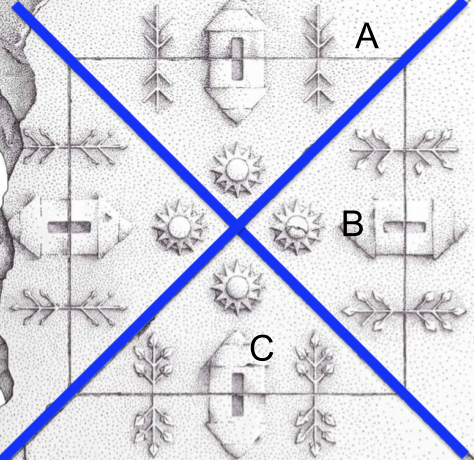
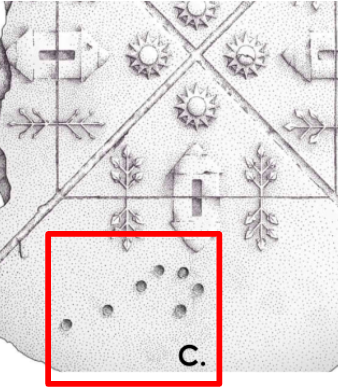
Using the trees as clues, what season could be shown in section C of the artifact?
This calendar shows the months of the year that are commonly associated with the seasons in North America.
Using the calendar, what months could the constellation in section C be seen?
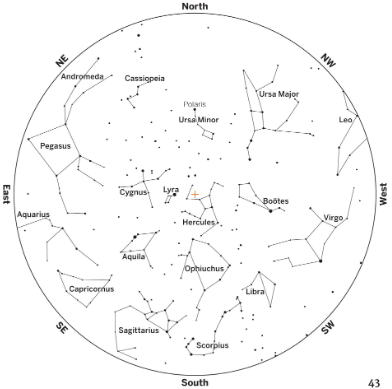
We learned in our last lesson that Earth’s position in its yearly orbit (around the sun) determines which stars we see in the night sky.
We also notice that there is a pattern with the trees on the artifact, which shows us the season and months of the year when each constellation is visible in the sky. We can use this pattern to figure out the constellations!
Now, let’s identify Constellation B - which we know is visible in the sky during the FALL months (September, October, November).
What is constellation B?
Let’s identify Constellation C - which we know is visible in the sky during the SUMMER months (June, July, August)
What is constellation C?

💚 Reading about the constellations we think are shown in the artifact, what months is Pegasus visible high in the night sky in North America?

💚 Reading about the constellations we think are shown in the artifact, what months is Scorpius visible high in the night sky in North America?
The chart below summarizes what we’ve learned so far about the constellations shown on the artifact and the month they are the MOST visible in the night sky:


💚 How much time passes in between each section of the artifact?
💚 Explain why we see these constellations at different times of year.
Criteria For Success
Claim: Short answer - Describe how the earth moves
Reasoning: Long answer with details -
Explain the movement AND how long it takes.
Explain what happens to the position of earth AND explain what stars we see.
Use all the sentence starters
We only see some constellations at certain times of the year because _________.
The earth ________ and it takes ________.
The position of earth __________ and we see ________.
💚 How long does this motion take to complete 1 time? Select all that apply
💚 How long does this motion take to complete 1 time? Select all that apply
💚 Following that pattern, what month is the missing section of the artifact?