Rock Cycle Stations

Last updated almost 2 years ago
35 questions
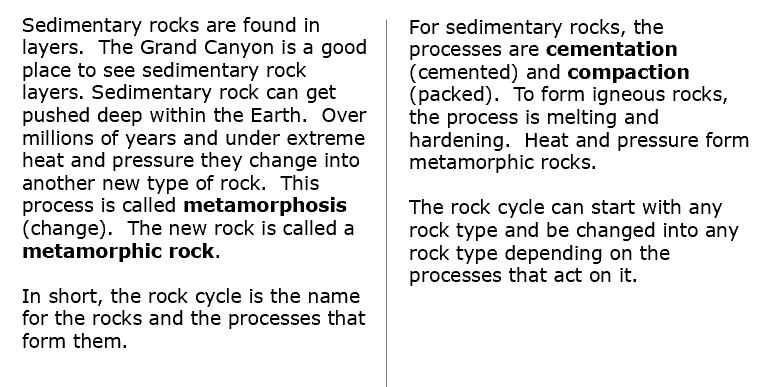
Watch
1

What did the jellybeans represent in the demonstration?

Required
1

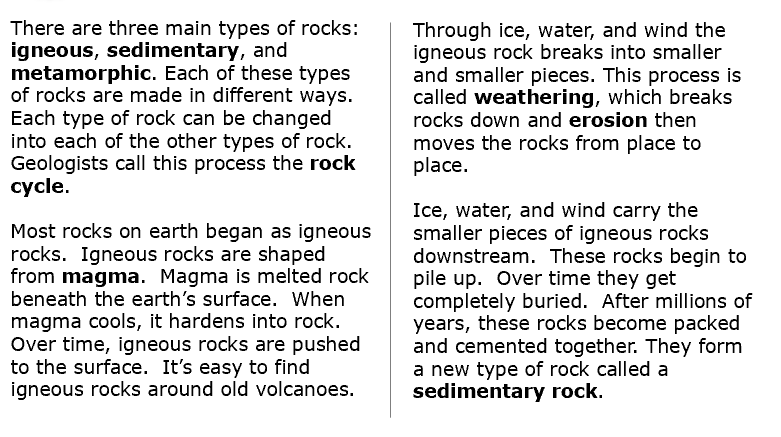
List the 3 main types of rocks

Required
1

What processes create igneous rocks?

Required
1

What processes create sedimentary rocks?

Required
1

What processes create metamorphic rocks?

Required
1

Explain why the rock cycle doesn't have to go in order.

Read
Required
1

According to the passage, what type of rock do most rocks start out as?

Required
1

What would be the best title of the passage?

Required
1

What are the processes that turn a sedimentary rock into a metamorphic rock?

Explore - Igneous Rocks

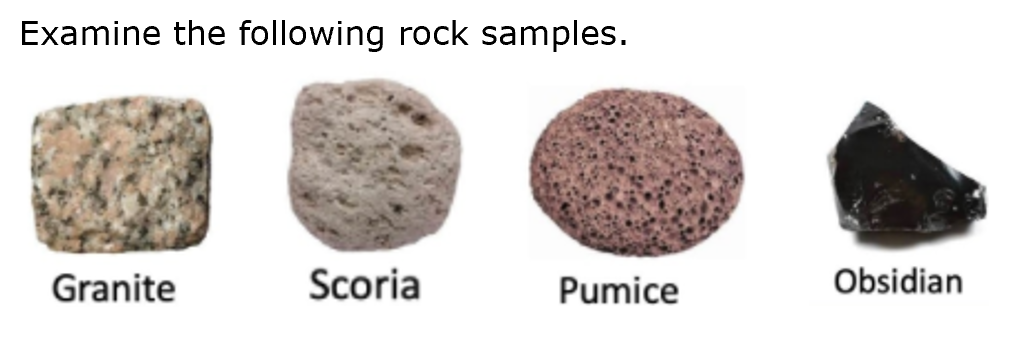
These rocks are igneous rocks. They are created when magma or lava cools and hardens. When the lava cools very quickly, the rocks appear glass-like and shiny. When the lava cools slowly, gas bubbles are trapped inside leaving tiny holes.

Make some observations about the rocks.
Required
1

Granite

Required
1

Scoria

Required
1

Pumice

Required
1

Obsidian

Explore - Sedimentary Rocks

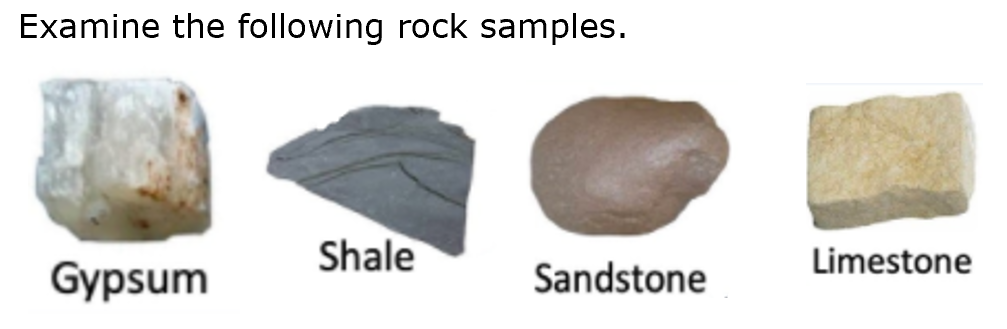
The following rocks are called sedimentary rocks. After sediment is eroded away through weathering and erosion, it ends up on the ground or bottom of the ocean. The sediment is then compacted and cemented together to form sedimentary rock. Fossils are often found in this type of rock.

Make some observations about the rocks.
Required
1

Gypsum

Required
1

Shale

Required
1

Sandstone

Required
1

Limestone

Explore - Metamorphic Rocks

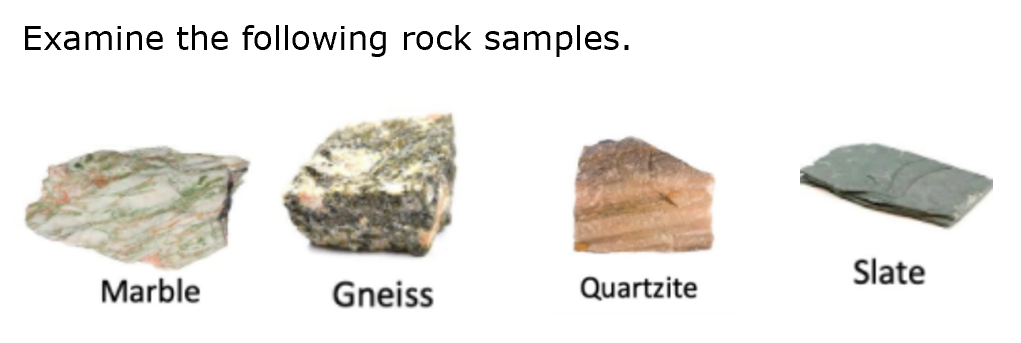
These are metamorphic rocks. They are created deep within the Earth by lots of heat and pressure over a long period of time. They can have ribbon-like layers with straight or wavy lines. Crystals are sometimes present.

Make some observations about the rocks.
Required
1

Marble

Required
1

Gneiss

Required
1

Quartzite

Required
1

Slate

Organize
Required
1

Match the description with the type of rock.

  • Created when magma or lava is cooled and hardens
  • Fossils are present
  • Glassy surface, or lots of small holes in the rock
  • Ribbon-like layers, straight or wavy stripes
  • Crystals are present
  • Created when sediment is compacted and cemented together
  • Created when rocks have heat and pressure added to them over a long period of time
  • Conglomerate of many other types of rocks or minerals
  • Sedimentary (3 choices)
  • Igneous (3 choices)
  • Metamorphic (2 choices)
Assess
Required
1
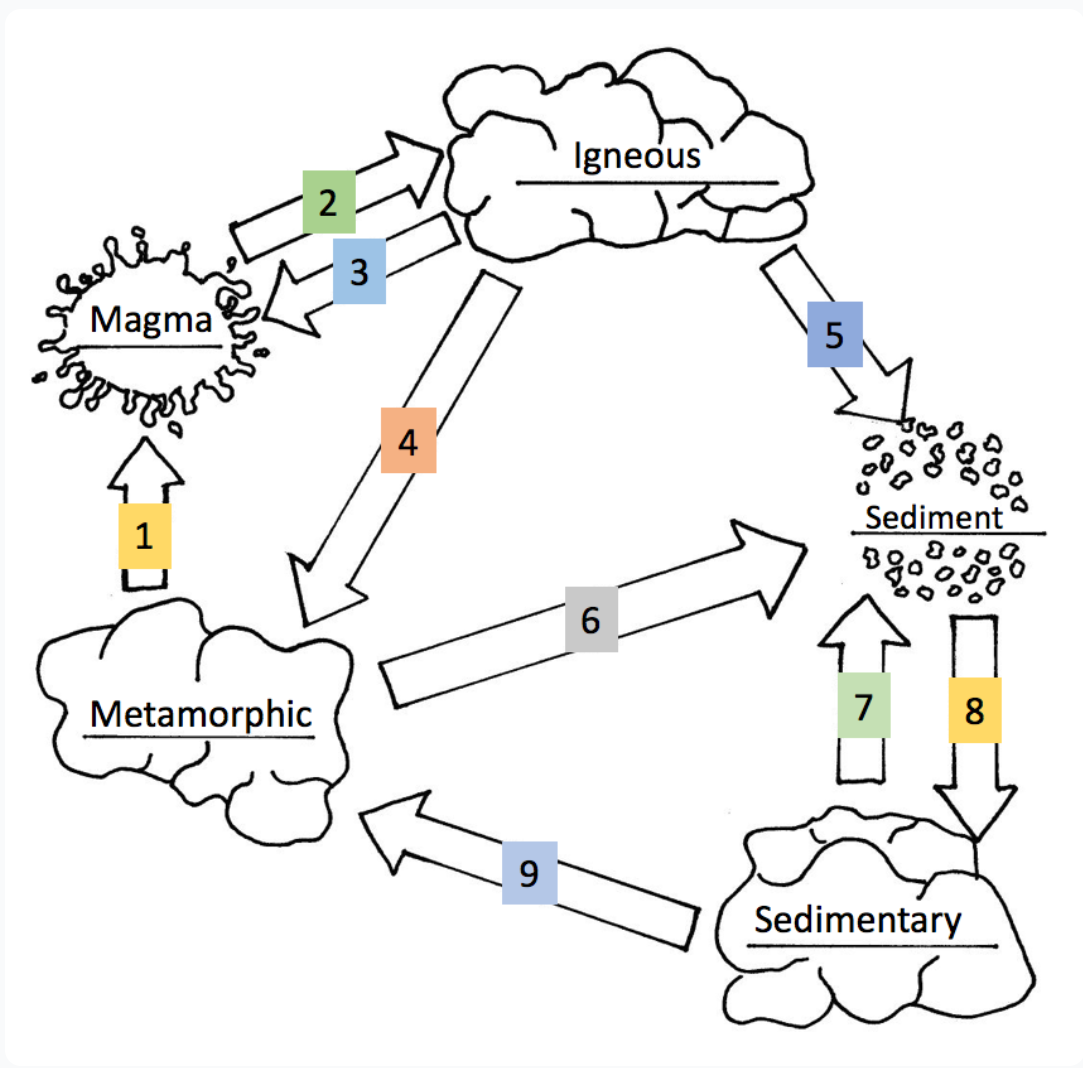
Fill in the rock cycle processes.
Other Answer Choices:
melting
weathering and erosion
compaction and cementation
cooling
heat and pressure
Required
1

What type of rock is formed when hot lava is cooled and hardened?

Required
1

Which process transforms metamorphic rocks into magma?

Required
1

What happens during the weathering phase of the rock cycle?

Required
1

What type of rock is formed by the cooling of magma inside the Earth's crust?

Required
1

What is a key characteristic of sedimentary rocks?

Required
1

What are the three main types of rocks?

Required
1

Match the type of rock with its predominant formation process.

Draggable itemCorresponding Item
Igneous Rock
Alteration under heat and pressure
Metamorphic Rock
Compaction and cementation
Sedimentary Rock
Crystallization from magma or lava
Required
1

Pair the rock types with one major example for each.

Draggable itemCorresponding Item
Igneous Rock
Granite
Metamorphic Rock
Marble
Sedimentary Rock
Sandstone
Required
1

Pair these processes with the type of rock they typically produce.

Draggable itemCorresponding Item
Heat and pressure
Metamorphic Rock
Compaction and cementation
Sedimentary Rock
Melting then crystallizing
Igneous Rock
Comparing Rocks and Minerals
Required
1

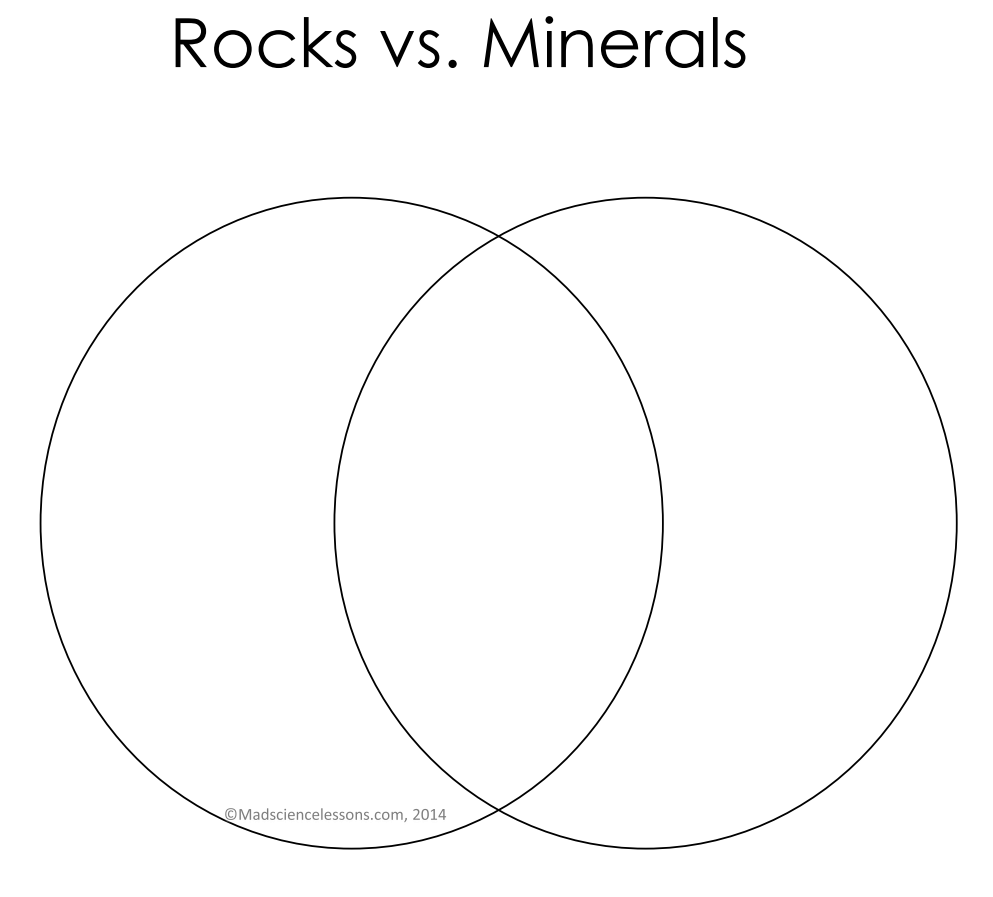
Compare Rocks and Minerals

  • Solid
  • Can contain fossils
  • Made of minerals and other materials
  • Crystal Structure
  • Inorganic
  • Naturally Occurring
  • Can be made from lava or magma cooling
  • Rocks (2)
  • Minerals (2)
  • Both (3)
Required
1

Summarize what makes rocks and minerals different.

Required
1

Summarize what makes rocks and minerals similar.

Grab your lab notebook and update page 23. Use your results from above to fill in the venn-diagram!