Log in
Sign up for FREE
arrow_back
Library
Light Vocabulary Task Cards
By NICHOLAS GLAESER
star
star
star
star
star
Share
share
Last updated almost 2 years ago
20 questions
Add this activity
1
5.6.C
1
5.6.C
1
5.6.C
1
5.6.C
1
5.6.C
1
5.6.C
1
5.6.C
1
5.6.C
1
5.6.C
1
5.6.C
1
5.6.C
1
5.6.C
1
5.6.C
1
5.6.C
1
5.6.C
1
5.6.C
1
5.6.C
1
5.6.C
1
5.6.C
1
5.6.C
Question 1
1.
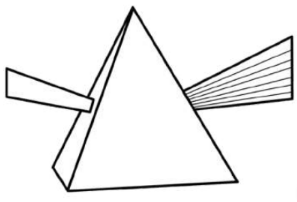
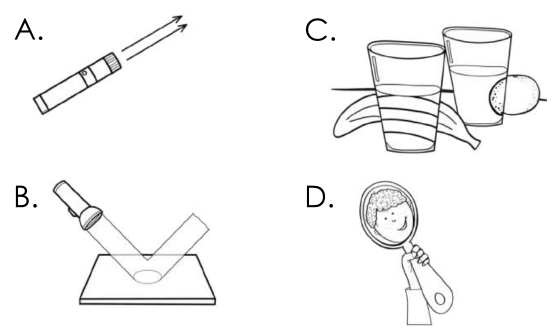
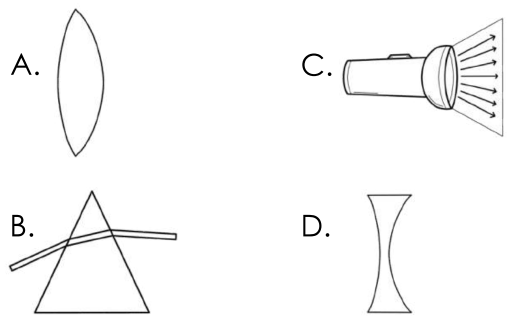
Which of the images best represents refraction?
Question 2
2.
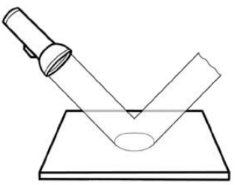
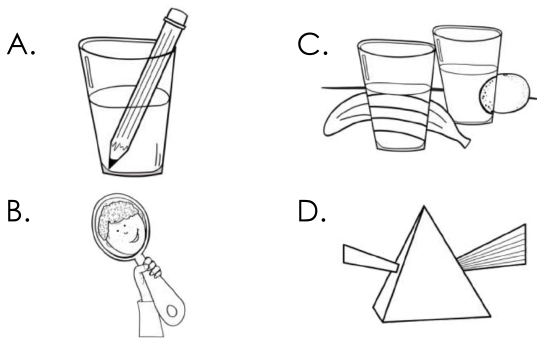
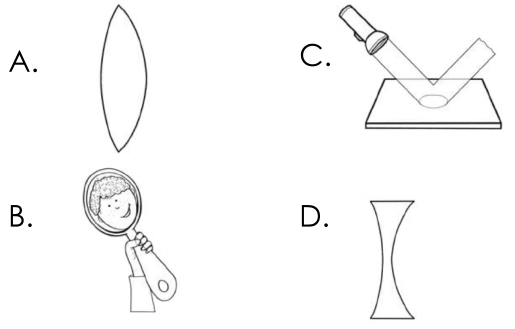
Which of the images best represents reflection?
Question 3
3.
Which of the images best represents a convex lens?
Question 4
4.
Which of the images best represents a concave lens?
Question 5
5.
Which of the following is an example of a translucent material?
Cardboard
Eyeglasses
Olive oil
Styrofoam
Question 6
6.
Which of the following is an example of a transparent material?
Cardboard
Eyeglasses
Olive oil
Stained glass window
Question 7
7.
Which of the following is an example of an opaque material?
Cardboard
Eyeglasses
Olive oil
Stained glass window
Question 8
8.
Which of the following best represents reflection?
A fishing line in water
Headlights bouncing off snow in a storm
Seeing your face in a dark window
A straw in water
Question 9
9.
What does it mean to transmit?
To move through
A three-dimensional piece of glass that separates white light into a spectrum
A solid, liquid or gas material
To take in
Question 10
10.
What does it mean to absorb?
To move through
A three-dimensional piece of glass that separates white light into a spectrum
A solid, liquid or gas material
To take in
Question 11
11.
What is a medium?
To move through
A three-dimensional piece of glass that separates white light into a spectrum
A solid, liquid or gas material
To take in
Question 12
12.
What is a prism?
To move through
A three-dimensional piece of glass that separates white light into a spectrum
A solid, liquid or gas material
To take in
Question 13
13.
How are reflection and refraction similar?
They both involve a change in direction of light.
They both describe the absorption of light.
They both involve a bending of the path of the light.
They both involve light bouncing off an object.
Question 14
14.
How are transparent and translucent materials similar?
They both allow at least some light through.
Neither allow any light to come through.
They both bend light as it passes through.
They both reflect light as it passes through.
Question 15
15.
Which of the following is the opposite of a convex lens?
A vex lens
An opaque lens
A prism
A concave lens
Question 16
16.
What is a synonym for transparent?
See-through
Opaque
Medium
Absorbed
Question 17
17.
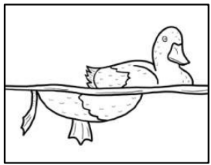
Which describes the reason this duck appears the way it does in the image?
Reflection
Refraction
Translucent
Transparent
Question 18
18.
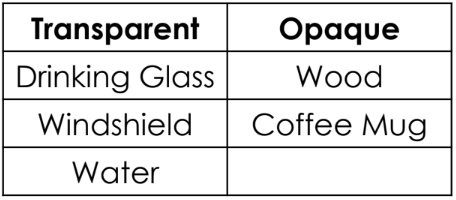
Which term best fits in the empty spot in the table?
Fog
Sunglasses
Bubbles
Quilt
Question 19
19.
Which of the following best describes this image?
Reflection
Refraction
Translucent
Transparent
Question 20
20.
Which of the following best describes this image?
Convex
Concave
Prism
Mirror