Lesson 3: Obtaining and removing materials (Pages: 31)
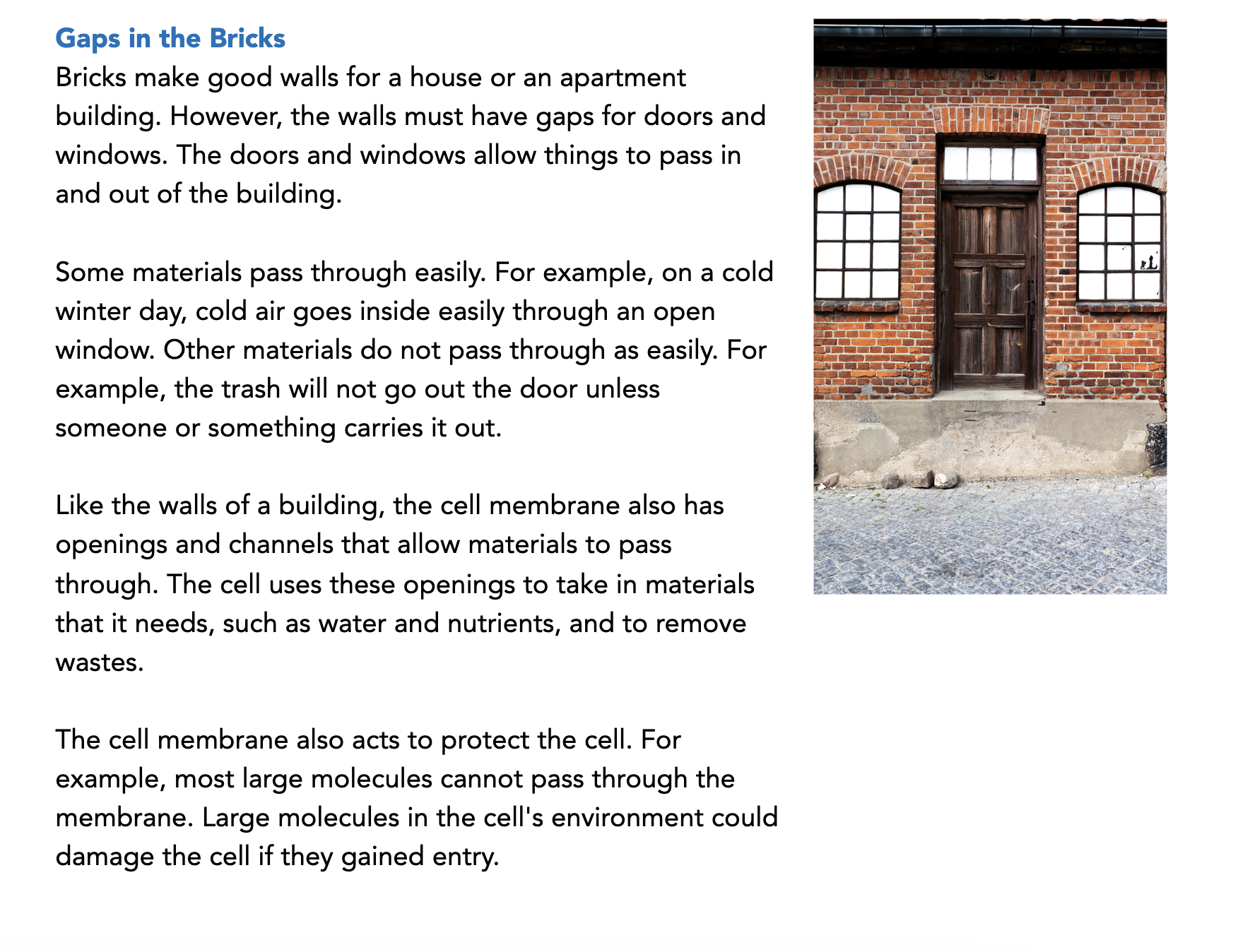
A building has different types of openings, such as windows and doors. Do you think a cell also has different types of openings?
A cell membrane is more flexible than a brick wall. Why might many cells benefit from a flexible cell membrane?
Facilitated Diffusion
Oxygen, carbon dioxide, and water
freely diffuse across the cell membrane. Some molecules,
such as sugar, cannot easily cross the cell membrane. In
a process called facilitated diffusion, proteins in the cell
membrane form channels through which the sugars can
pass. The word facilitate means “to make easier.”
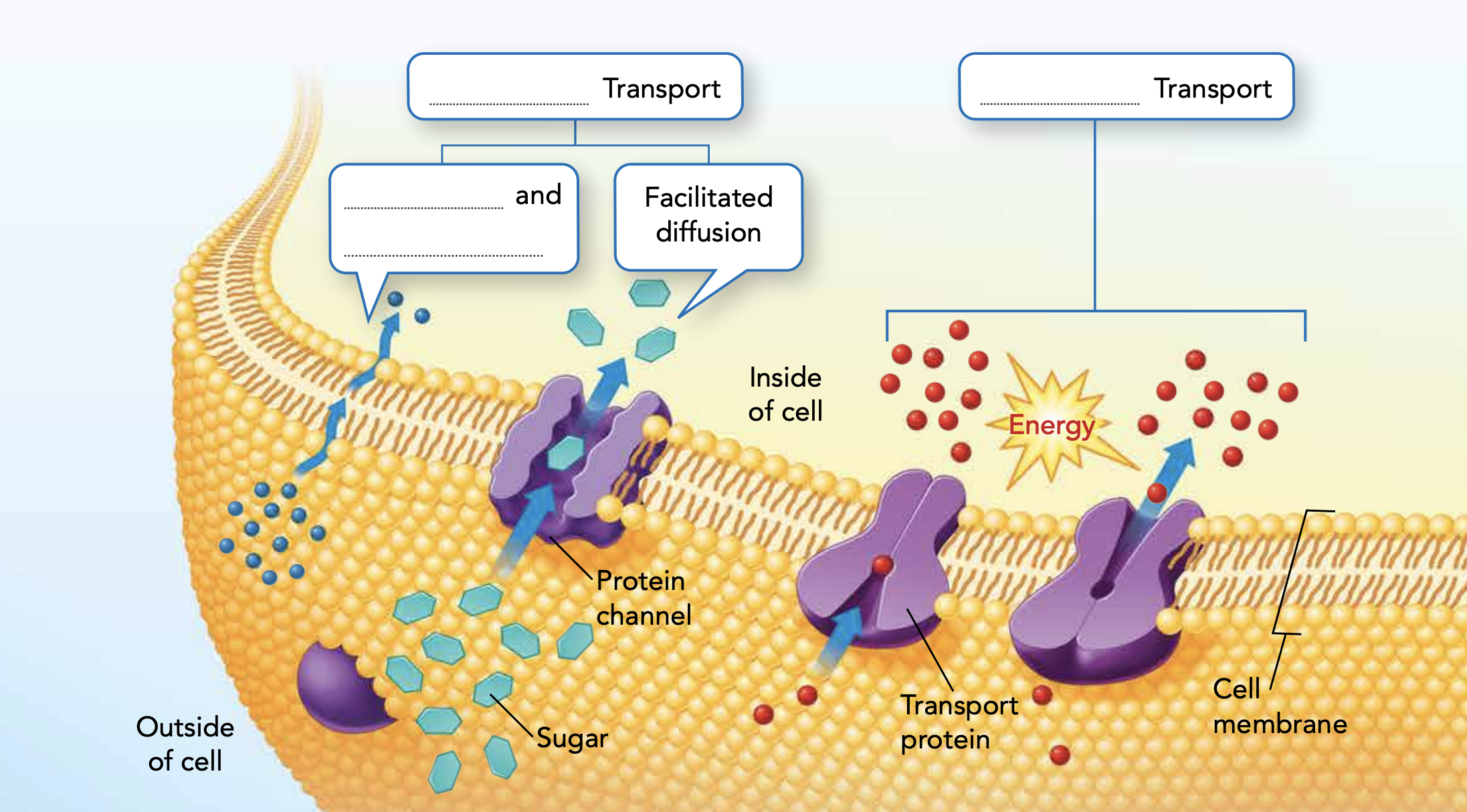
As shown in Figure 5, these proteins provide a pathway for the sugars to
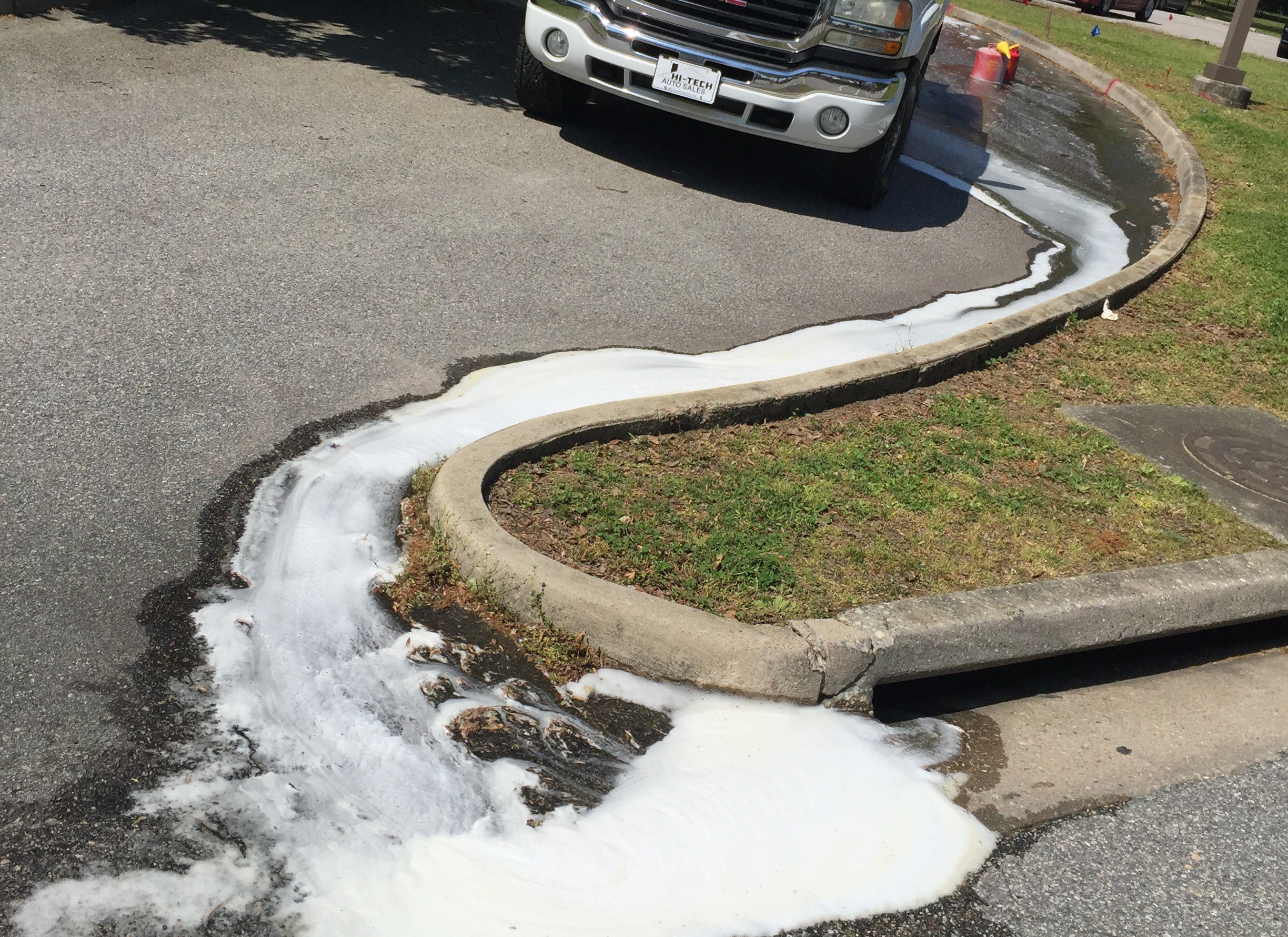
diffuse. The proteins function much the way downspouts
guide water that flows from the roof of a house to the ground.
Facilitated diffusion uses no cell energy and is a form of
passive transport.
Facilitated diffusion is a form of __________ transport.
What is the function of proteins in facilitated diffusion?
Which of the following molecules can freely diffuse across the cell membrane?
What does the word facilitate mean in the context of facilitated diffusion?
Complete the gaps in the following diagram.
Active Transport
During diffusion, molecules move randomly in all directions. A few molecules move by chance from areas of low concentration to areas of high concentration, but most molecules move toward areas of lower concentration.
In many cases, cells need the concentration of a molecule inside the cell to be higher than the concentration outside the cell. In order to maintain this difference in the concentration of molecules, cells use active transport.
Active transport is needed to maintain the concentration difference of molecules
During diffusion, molecules move from areas of low concentration to areas of high concentration
Most molecules move toward areas of lower concentration during diffusion
What does it mean to maintain something?
Cells supply the energy to do this work—just as you would supply the energy to pedal your bike uphill.
Active transport is the movement of materials across a cell membrane using cellular energy. As in facilitated diffusion, proteins within the cell membrane play a key role in active transport. Using the cell’s energy, transport proteins “pick up” specific molecules passing by the cell and carry them across the membrane.
Calcium, potassium, and sodium are some substances that are carried into and out of cells by active transport.
What is active transport?
What role do transport proteins play in active transport?
Which substances are carried by active transport?
How is active transport similar to facilitated diffusion?