Inpatient Treatment
In some cases, a person’s mental illness requires care in a , or inpatient treatment. is necessary when people are at serious risk of harming themselves or others. People who are depressed and have thoughts of may need to be hospitalized for a period of time to make sure they do not attempt suicide. In the hospital, people receive around-the-clock supervision, medication, and therapy.
Overcome Barriers
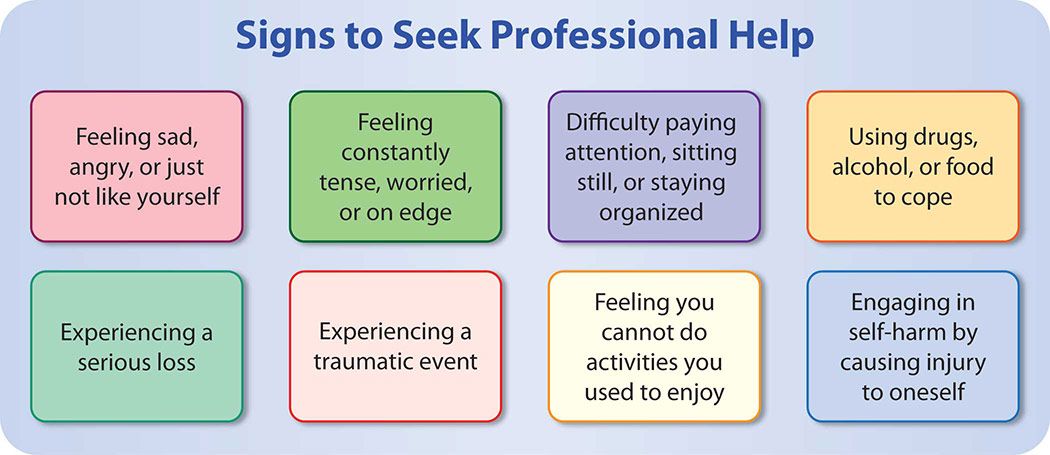
Unfortunately, people with mental illnesses do not always get the help they need. Only of adults and less than of adolescents with mental illnesses get the help they need. Some people may assume their negative feelings will go away on their own. Most mental illnesses, however, do not improve without treatment. Untreated mental illnesses may even get worse and lead to more severe conditions. Some people may face external barriers that prevent them from getting help for their condition. Examples of these external barriers are attached to mental illnesses and the cost of mental health treatment.
Mental illnesses often carry a social stigma (Figure 6.10). Stigma is a mark of shame or embarrassment that is usually unfair. may cause people with mental illnesses to avoid seeking help, deny they have a condition, or feel shame and . People may also fear they will lose an opportunity because of their condition, such as losing a or leadership position.
If you feel stigma about having a , do not let that stop you from getting help. Stigmas may result from a lack of understanding about a mental illness. Learning more about a mental illness will help you understand your feelings and other people. Talking to friends and family or joining a support group can help provide support, show that you are not alone, and teach you strategies for feeling better.
Another barrier to mental health treatment is cost. People may worry about being unable to . Although mental health professionals do charge for their services, a person's may cover a portion of the expenses. Some mental health clinics may also provide therapy services at no cost or at a reduced rate.