
Tell me a story about a guy called Billy.
Billy used to spend all of his time watching TV and playing video games, but he discovered a sport (your choice). He got really in to that sport and worked harder and harder until he was doing so much that it wasn't good for his health any more. Use the following words but not necessarily in this order:
Training
Overtraining
Overreaching
Functional
Non-functional
Symptoms
Effects
You can write or speak and record, but speaking will be quicker and better for your learning. Remember, I don't want to hear a perfect recording, "Emm"s, "umm"s and "wait, no"s are always great to hear!
It's no problem when doing these tasks to say "actually, scratch what I just said" or "I'll start over" etc...
Description:
| Draggable item | arrow_right_alt | Corresponding Item |
|---|---|---|
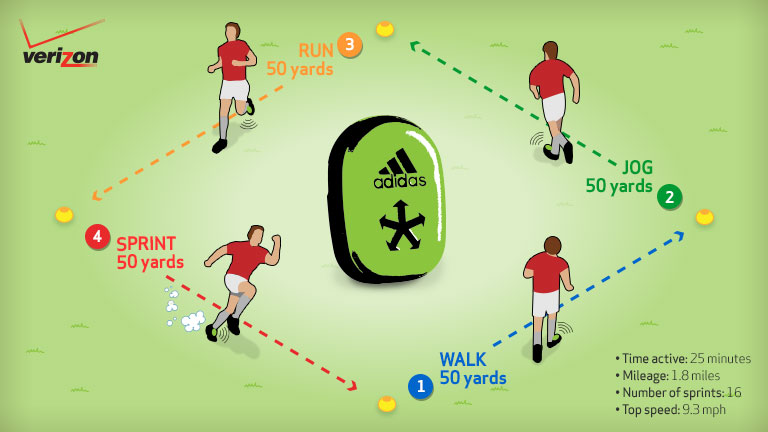
Fartlek training:
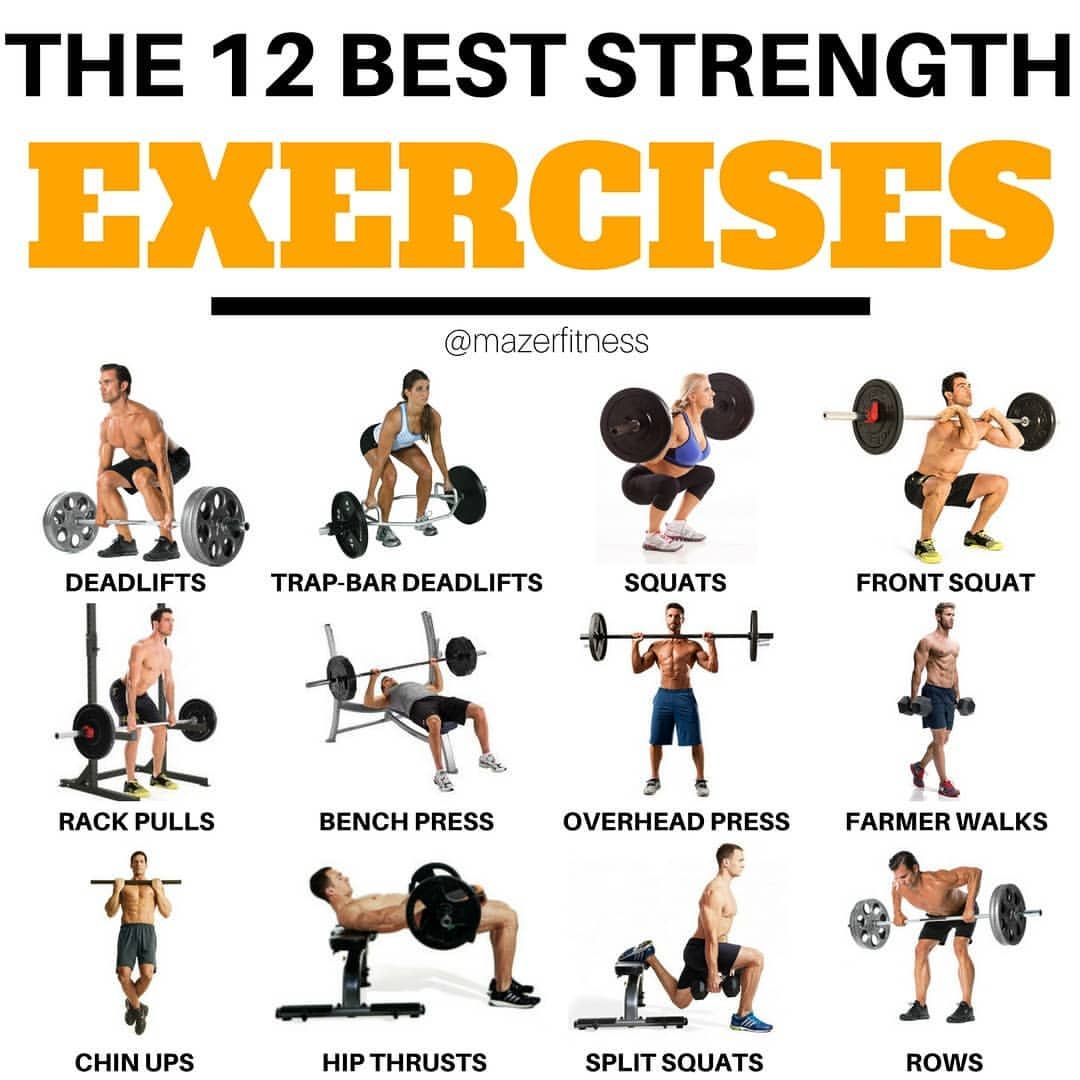
| arrow_right_alt | Making use of the gym equipment and using external resistance to improve muscular strength and endurance. |
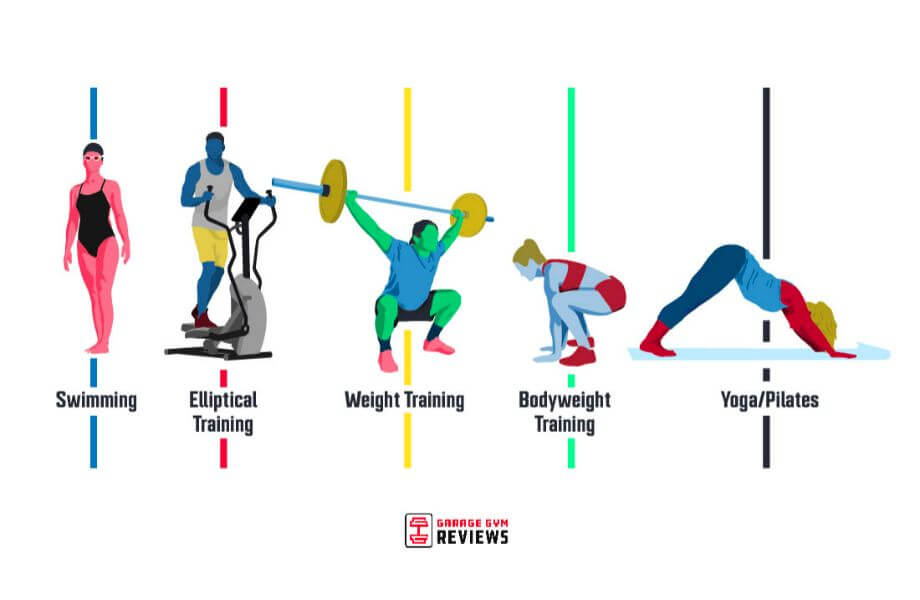
Cross-training:
| arrow_right_alt | Short time spent at many different types of exercises. High intensity. |
Strength and resistance training:
| arrow_right_alt | Aerobic training for long periods of time. Could be an hour long jog or an extensive cycle. |
Flexibility training:
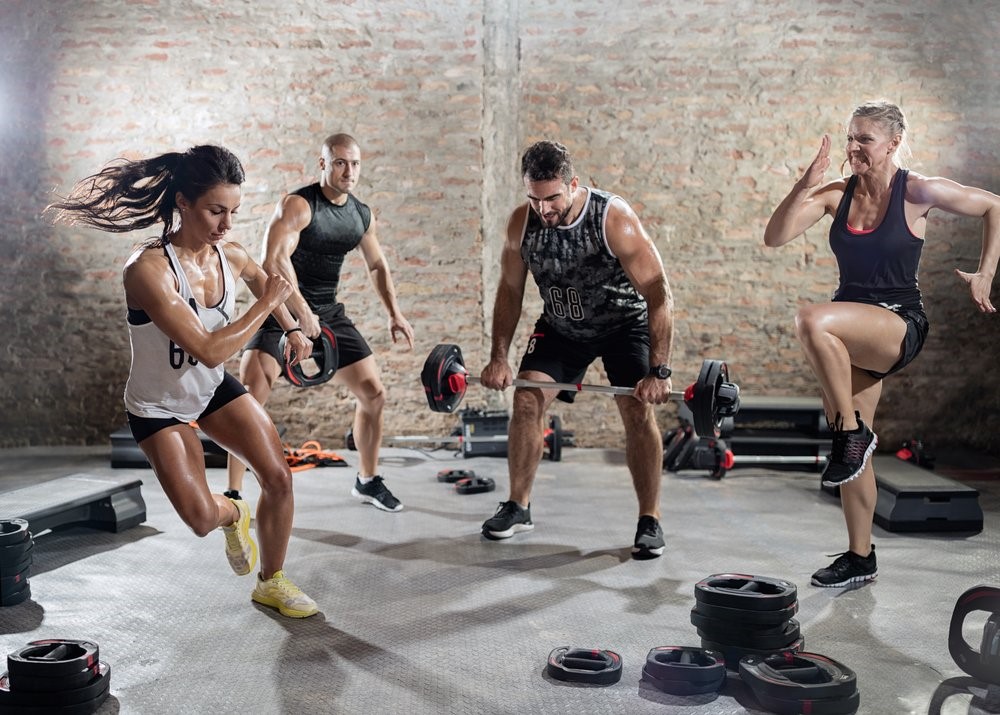
| arrow_right_alt | Using various methods of training in a single session |
Circuit training:
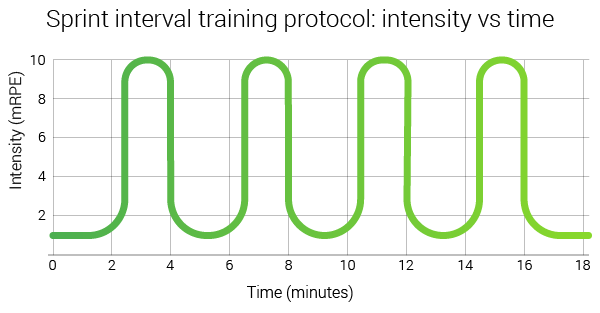
| arrow_right_alt | Training which uses alternating short, high intensity bursts of speed with slower, recovery phases throughout a workout. |
Interval training:
| arrow_right_alt | Aims to combine continuous training with interval training. A continuous training session of running will involve quick bursts of speed, with slower running as the recovery period. |
Plyometric training:
| arrow_right_alt | Includes stretching exercises for the purpose of increasing one's range of motion. Prior to this training, a warm up should be performed at a low intensity for 5-10 minutes. This increases the temperature of the muscles and decreases the risk of injury. 4 types of this training:
|
Continuous training:
| arrow_right_alt | Exercises in which muscles exert maximum force in short intervals of time, with the goal of increasing power (speed-strength). This training focuses on learning to move from a muscle extension to a contraction in a rapid or "explosive" manner, such as in specialized repeated jumping. |
Benefits:
| Draggable item | arrow_right_alt | Corresponding Item |
|---|---|---|
Circuit training: | arrow_right_alt | Can isolate particular muscle groups to focus on. In a controlled setting, easy to manipulate the weight desired. |
Continuous training: | arrow_right_alt | Can be general training or be made to suit specific components of fitness. Can be made to use no equipment, interesting as there is a wide ranger of activities. Higher motivation. |
Flexibility training: | arrow_right_alt | Improves stamina which is important for many sport situation. No equipment needed and can be done anywhere. |
Plyometric training: | arrow_right_alt | Can train more than one type of fitness at once. Avoids tedium. |
Fartlek training: | arrow_right_alt |
|
Strength and resistance training: | arrow_right_alt | A very appropriate training method for individuals who want to improve their aerobic capacity and cardiovascular endurance, because instead of doing a continuous run at a continuous pace, one uses the slow-pace period to recover. A high intensity sprint or run will raise your heart rate and make you become tired quicker; by teaching your body to recover with normal jogging, your body will become more able to cope with fatigue. |
Cross-training: | arrow_right_alt |
|
Interval training: | arrow_right_alt |
|
Safety:
| Draggable item | arrow_right_alt | Corresponding Item |
|---|---|---|
Continuous training: | arrow_right_alt | Focus on form, not weight |
Plyometric training | arrow_right_alt | Needs a large area for stations to be set up. If done in close confines it is more likely for an accident to occur. |
Cross-training: | arrow_right_alt | Need to make sure that it doesn't surpass what the body can handle |
Circuit training: | arrow_right_alt | Need to make sure the proper technique is used in the equipment. |
Strength and resistance training: | arrow_right_alt | Important for athletes to check with a doctor before undergoing intense training. Beginners should start slowly by performing less intense, short intervals (less than 30 seconds) with fewer repetitions and more rest between workouts. Elite athletes can increase the intensity, time and frequency of training. |
Interval training: | arrow_right_alt | Takes time to improve May not stretch specific sporting muscles Sometimes requires the help of a partner |
Flexibility training: | arrow_right_alt | Injury is often a risk with missed jumps or with faulty/unstable equipment. Care must also be taken to stretch before beginning a session as stress will be placed on muscles and tendons alike when jumping and landing. It is targeted for those without physical or health-related limitations wishing to increase physical strength. |
Here are some hints to indications of over-training. Can you tell what they are?






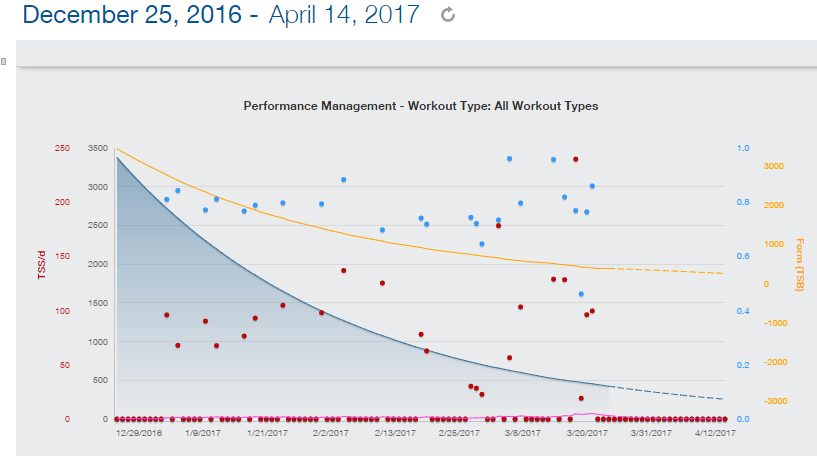
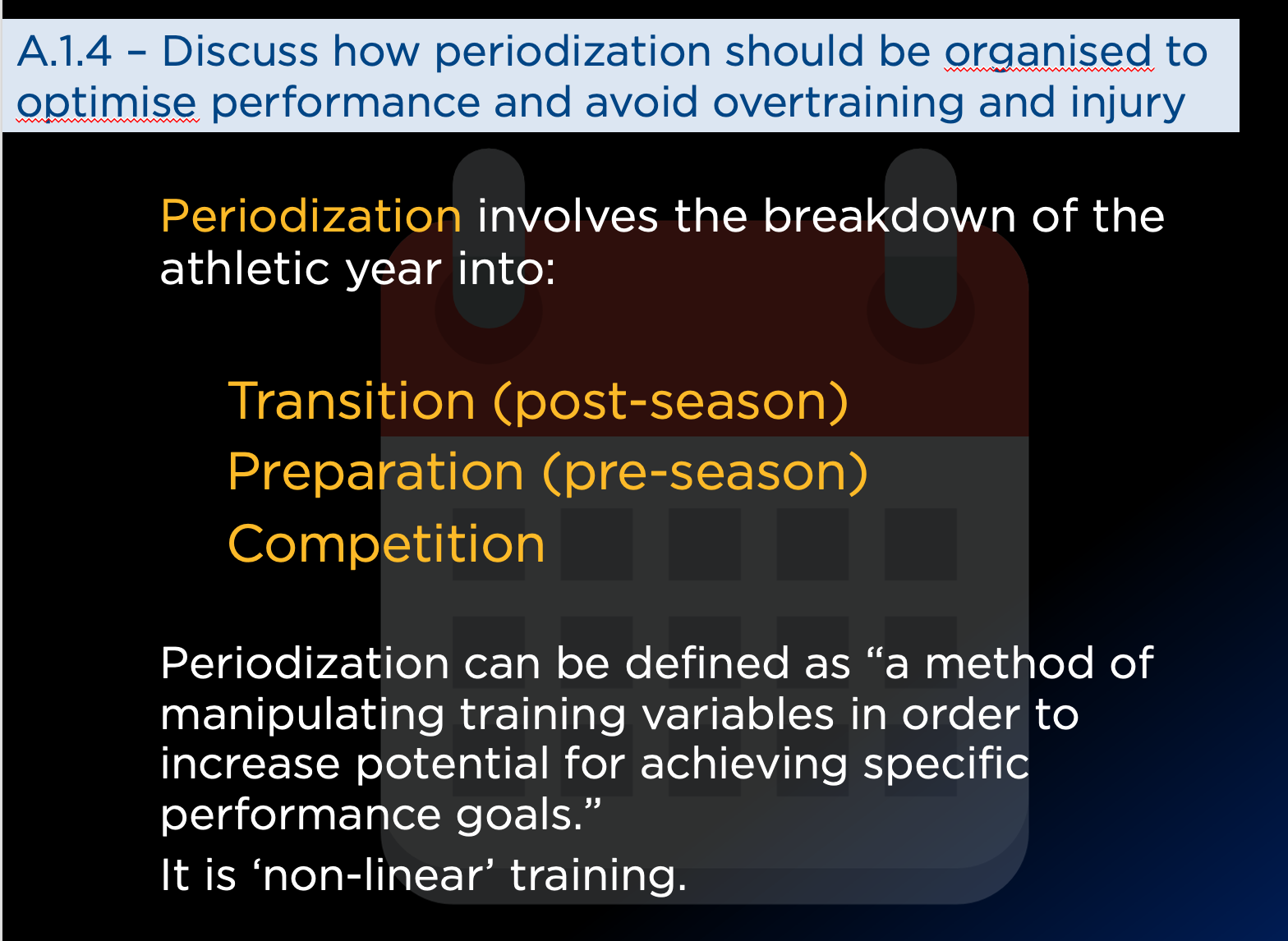
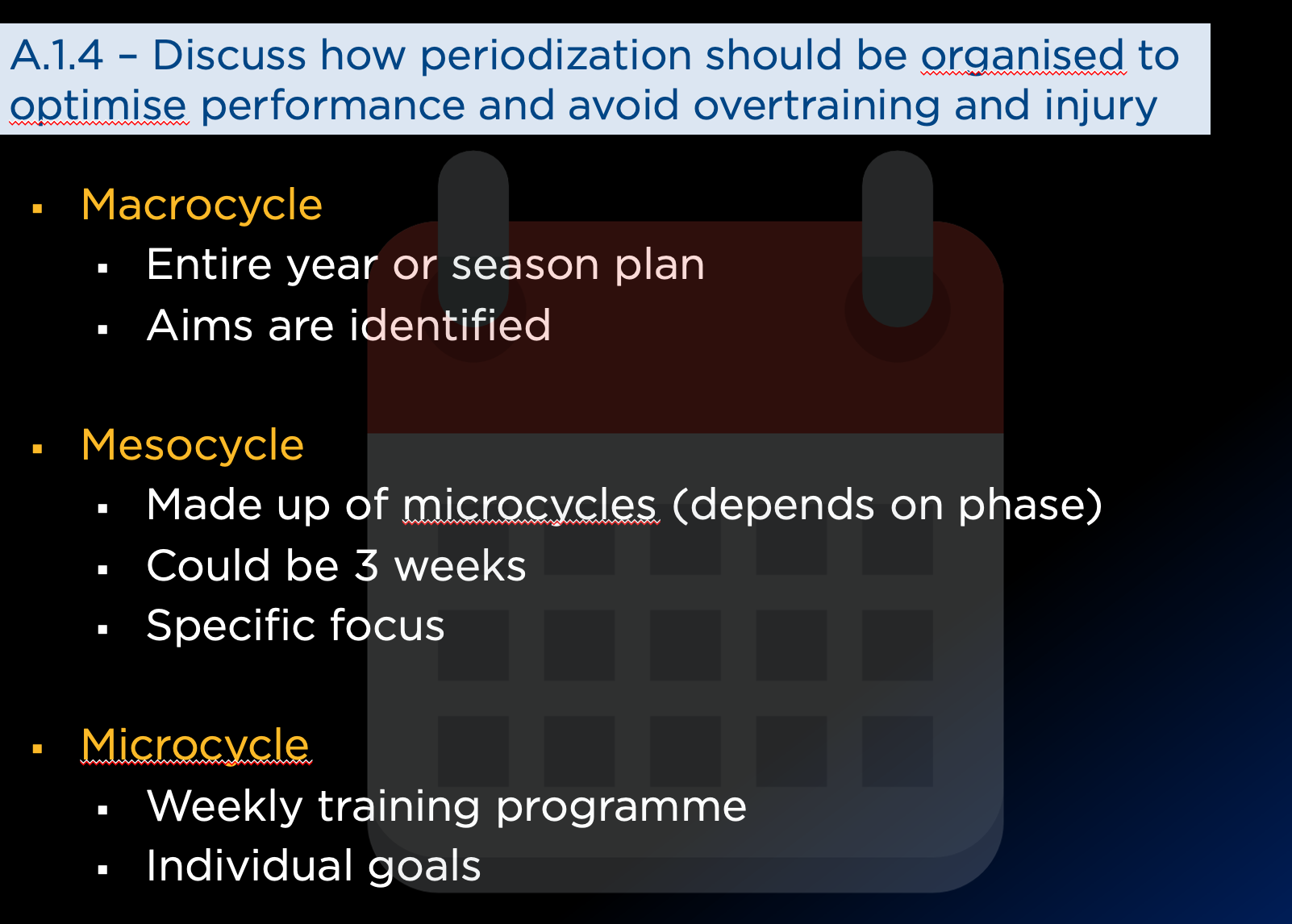
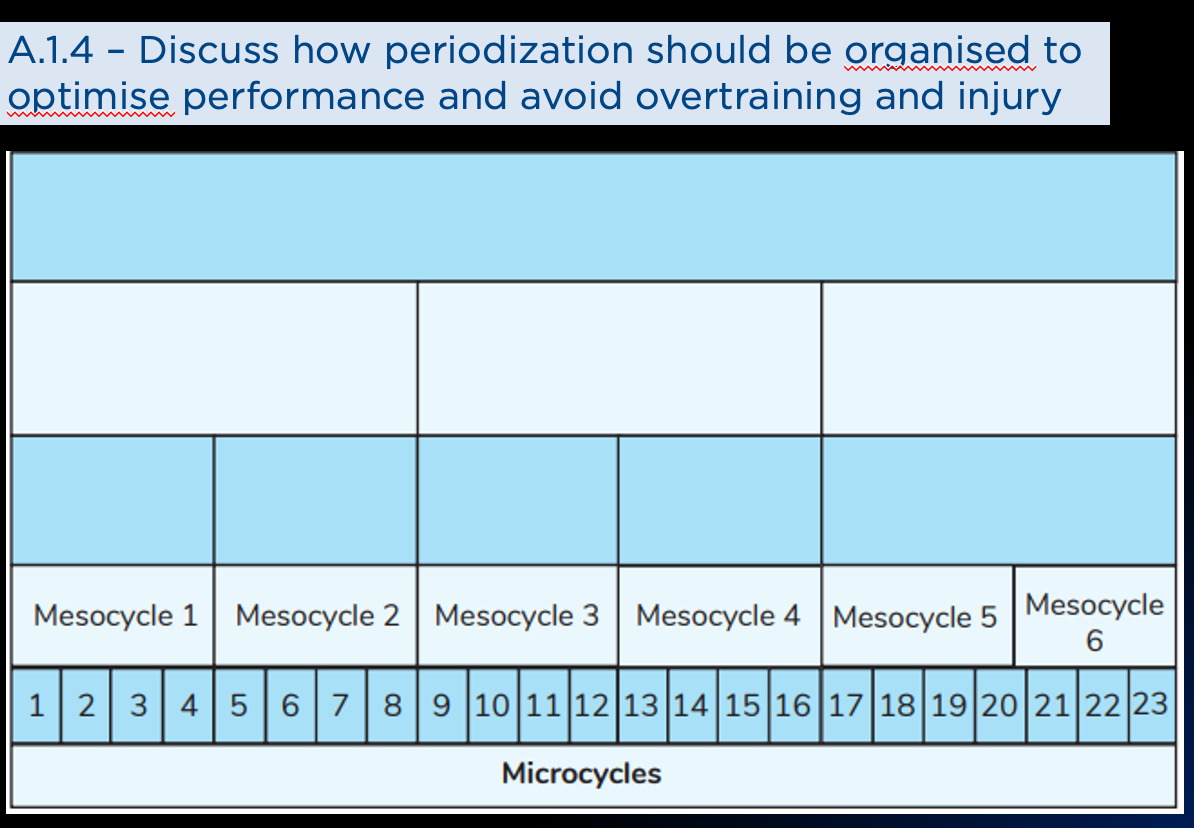
Drag and drop to plan the year. The competitive period will be in the middle of this block.
These questions are directly from past papers. I have included the mark scheme as a "hint".
Here's the thing, to get best value from this, try to answer it as best you can before you open the hint then see what you missed once you open it.
That approach will tell you not only what you know, but more importantly, what you don't know! That's valuable information and it will really help you to plan your study.
Distinguish between overtraining and overreaching. [1]
(b) Describe fartlek training. [2]
(c) Analyse a mesocycle unit of training. [2]
Now that you have looked at the mark schemes, what would you say were the gaps in your knowledge?