Land and Sea Breezes (2023-24)
star
star
star
star
star
Last updated almost 3 years ago
20 Nsɛmmisa
1
1
10
3
10
3
1
1
1
1
1
1
1
1
1
1
1
1
1
1
Task:
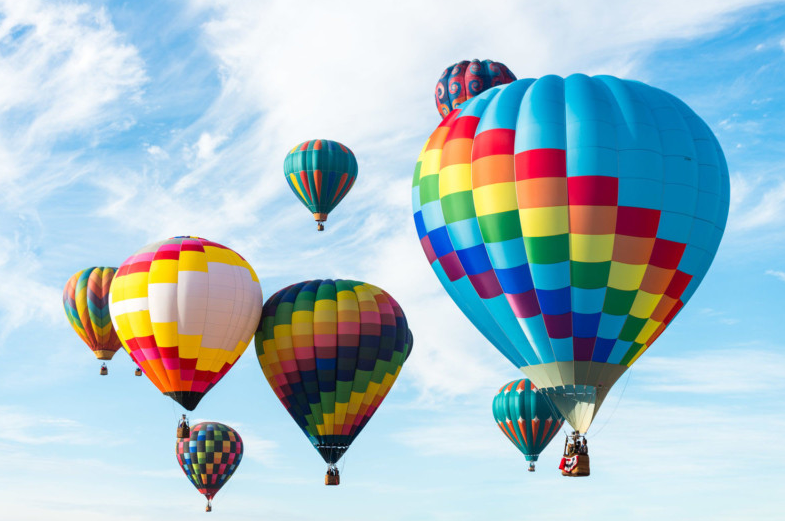
You want to take a ride in a hot air balloon when you go to the beach. You don’t want to end up in the ocean, so you need to figure out when the air will be moving between the ocean and the land.
During the day, the air will be moving one way, and during the night the air moves the opposite way.
Use what you know about the difference in heating of surfaces, and convection currents to figure when you want to go up in the balloon.
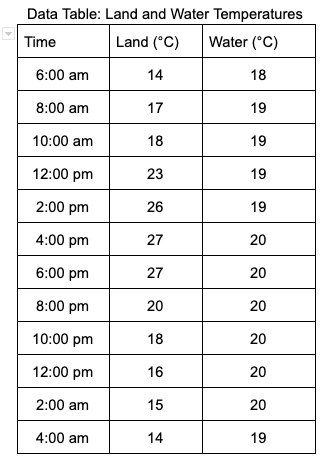
During the day (6 am to 6 pm) which surface heats up more?
During the night (6 pm - 4 am) which surface cools down more?
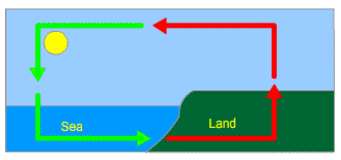
Create a model that shows: How does air move over land and sea during the day.
Here is a model checklist to help you when you are creating your model:
land temperature (warm or cool)
water temperature (warm or cool)
air rising
air sinking
arrows that show the movement of air
high and low pressure
Write an explanation of what kind of wind and how the wind was created in the model you drew in number 3.
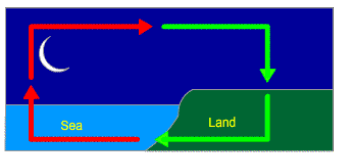
Create a model that shows: How does air move over land and sea during the night?
Here is a model checklist to help you when you are creating your model:
land temperature (warm or cool)
water temperature (warm or cool)
air rising
air sinking
arrows that show the movement of air
high and low pressure
Write an explanation of what kind of wind and how the wind was created in the model you drew in number 5.
Warm air rises and expands over the water. This is a low pressure area.
Happens during the daytime.
A wind blows from the ocean to the land
Land: 78°F Water: 74°F
Happens during the nighttime.
Tommy's frisbee blew away from the land towards the ocean.
Warm air rises and expands over the land. This is a low pressure area.
Cool, high pressure air sinks along the ocean.
Land: 60°F Water: 56°F
Cool, high pressure air sinks over the land.
A wind blows from the land to the ocean.
Land: 66°F Water: 70°F