S3w5 ALG 2 review: Simultaneous equations and intro to matrices

Last updated 3 months ago
27 questions
1

categorize what you do and don't remember

  • solving systems of 2 equations with 2 variables by graphing
  • solving systems of 3 equations with 3 variables by graphing
  • solving systems of 2 equations with 2 variables by substitution
  • solving systems of 3 equations with 3 variables by substitution
  • solving systems of 2 equations with 2 variables by elimination
  • solving systems of 3 equations with 3 variables by elimination
  • solving systems of 3 equations with 3 variables by matrices
  • I remember
  • its fuzzy, but there. sortof
  • no memory of this
1

This is mostly review, but I suggest seeking out info from yaymath.com or youtube looking for "systems of linear equations" in 2d and 3d. https://www.youtube.com/watch?v=XQ7aNAxZ0s0 is one, https://www.youtube.com/watch?v=tnFeym_JXKw is another.
do you have any questions?

1

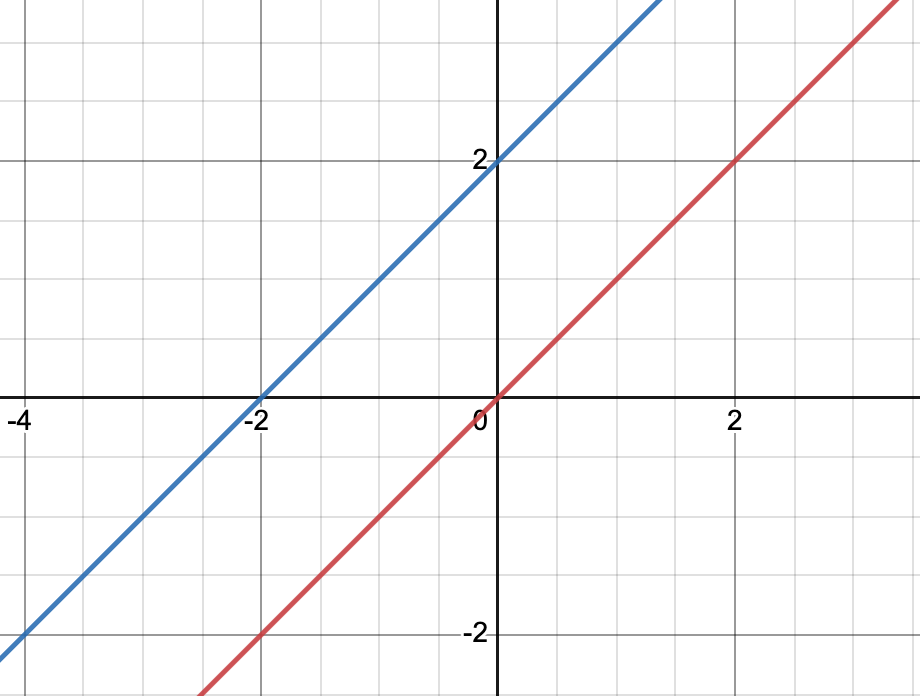
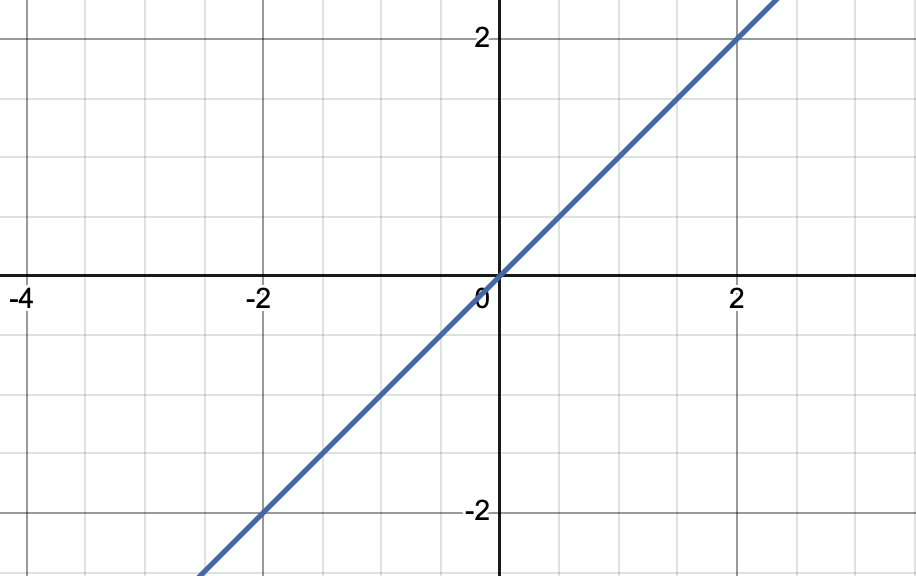
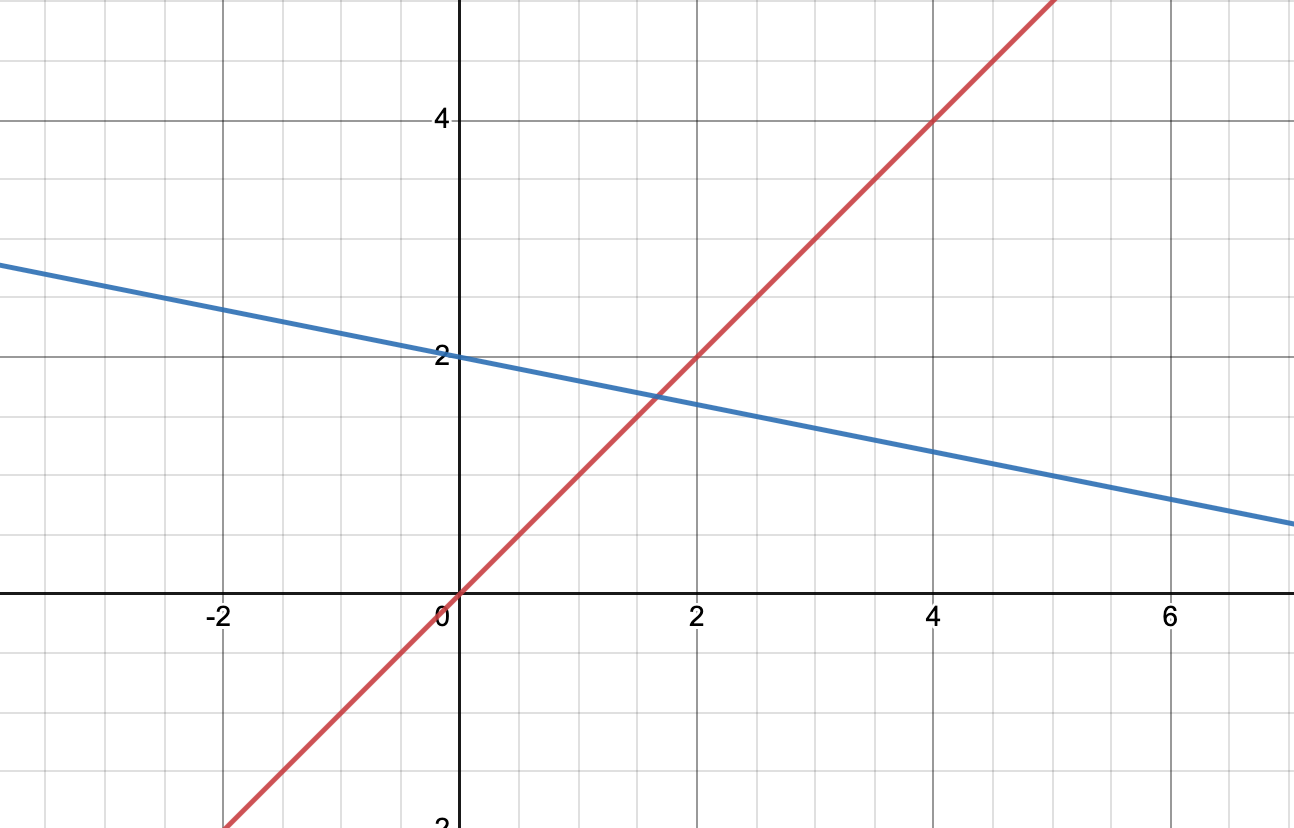
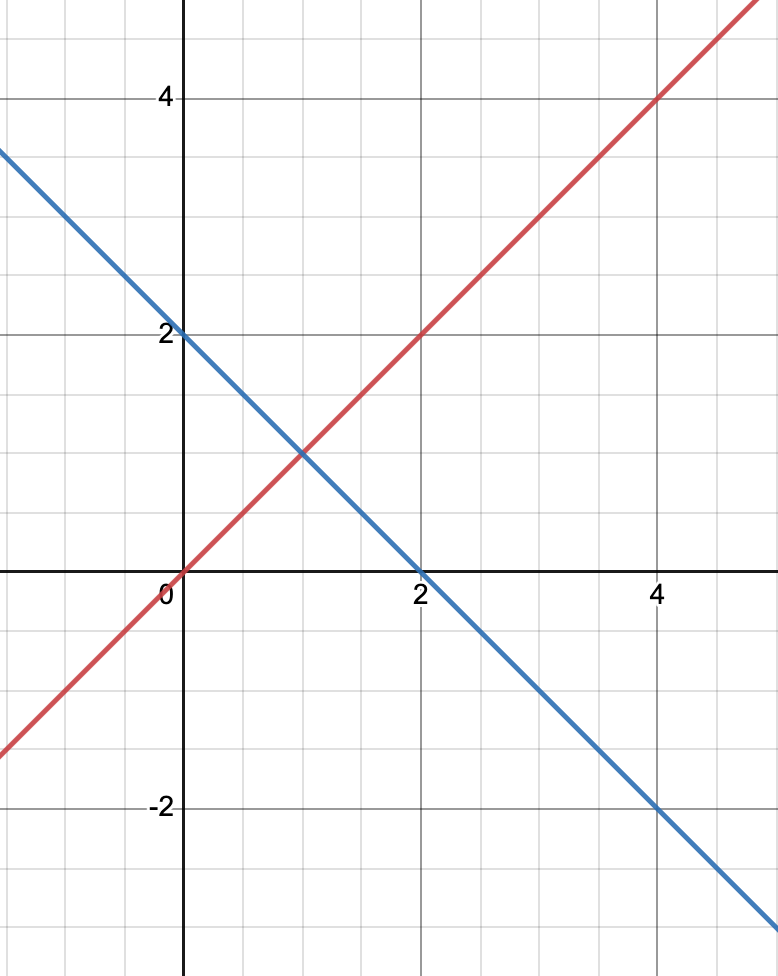
If you remember dealing with systems of linear equations with two variables in 2d, there were three different solution sets you might have - 1, infinite and none.

  • The slopes are different
  • The slopes of the line and the y-intercept are the same,
  • lines are co-linear
  • The slopes of the lines are the same, but the y-intercepts are different
  • lines are parallel, not co-linear
  • lines intersect
  • The slope of one is the opposite reciprocal of the other
  • Consistent independent - 1 solution
  • Consistent dependent - infinite solutions
  • inconsistent - no solution
1

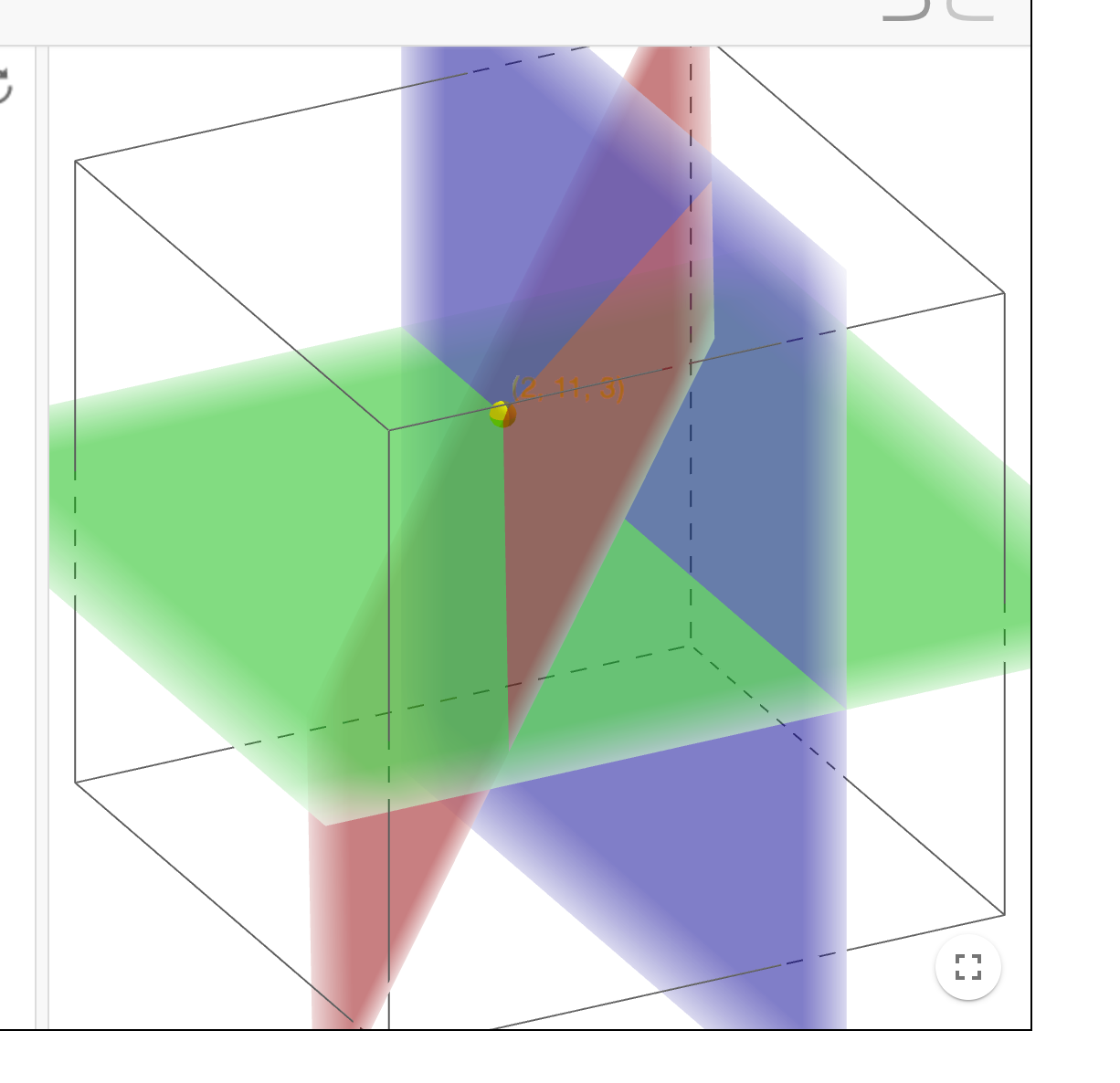
The difference between systems of linear equations with two variables in 2d and systems of linear equations with three variables in 3d is what?

1

What do you think the solution set for the following set of 3 linear equations would be?

1

What do you think the solution set for the following set of linear equations would be?

10

Vocabulary Review: Select the correct word(s) to complete the sentence.

The partial solution of the system of equations at the left uses __?__.

1

This partial solution of this system of two equations is a

1

The original question asked for the solution for the following system of equations:


What is your next step?

1

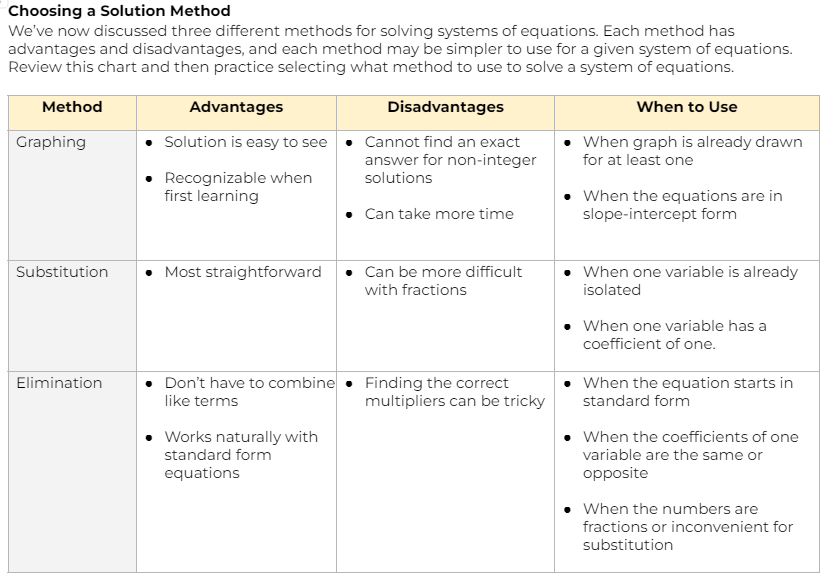
For the following problems, choose the solving method that you think is most appropriate. There may be more than one method that works. You do NOT need to solve the problem.
y = 2x + 1
y = 6 - 3x

1

why did you choose that option?

1

For the following problems, choose the solving method that you think is most appropriate and state the reasons why you made that choice.There may be more than one method that works. You do NOT need to solve the problem.
x + 3y = 7
2x + 3y = 11

1

why did you choose that option?

1

For the following problems, choose the solving method that you think is most appropriate and state the reasons why you made that choice.There may be more than one method that works. You do NOT need to solve the problem.
3x - 2y = -7
2x + 5y = 8

1

Why did you choose that option?

1

For the following problems, choose the solving method that you think is most appropriate and state the reasons why you made that choice.There may be more than one method that works. You do NOT need to solve the problem.
3x - 2y = -7
2x + 5y = 8

1

Why did you choose that option?

1

If you have played at all with geogebra, you can go to this website here that walks you through solving systems of equations. remember the procedure for solving a system of three is
1) take two equations, eliminate one variable (pick one that will be easy).
2) take the third equation and use elimination technique with one of the other two to eliminate the same variable.
3)This should leave you with two equations and two unknowns, which you can solve.

does the geogebra simulation help you visualize what 3d systems look like?

1

The other review stuff i would like you to start in on is for matrices: which of the following do you remember, need to brush up on, can't remember for the life of you. Oh, and it is possible that I am asking about stuff you may not have seen before, because different alg 2 classes are different.

  • what is a matrix
  • scalar multiplication of a matrix
  • addition of matrix
  • how to size a matrix
  • what is an identity matrix
  • what is an inverse matrix
  • dot product of matrices
  • Kramers rule
  • how to find the determinant
  • how to use the determinant
  • I remember this
  • vaugely recall
  • nope, no memory of this
1

which of the following is a 4x7 matrix?

1

just a quick tutorial on how to input a matrix into formative:

if you write the following into the math editor, m=\begin{bmatrix}3&2\\1&5\end{bmatrix} you will get this


a couple notes: there are no spaces, just write it all out like that. you can have as many rows or columns as you wish, but be careful, formative doesn't like letting you fix things when you write them out this way. separate cells in a row with an & and separate rows with \\. you need to say {bmatrix}, not just matrix, that gives you the brackets. pmatrix gives you parentheses, and vmatrix gives you this:
which is the notation for the determinant of a matrix.

for this question, try to input a 3x2 matrix with a column of 4s and a column of 7s

1

Lets practice: remember the rule - to add matrices, they have to be the same size. add


if you don't remember how, this video might help. https://www.youtube.com/watch?v=HKnTgMlWs30

1

Do you notice any similarities between adding vectors and adding matrices?

1

scalar multiplication is very similar for vectors as it is for matrices, explain how they are similar, and how they are different?

1

The dot product of vectors is very similar to the dot product of matrices too. Find the dot product of \vec{r}\cdot\vec{v} if \vec{r}=<3,2> and \vec{v}=<6,8>

1

how would you find the dot product of
if
if you can't remember how to take the dot product of two matrices, this might help: https://www.youtube.com/watch?v=g7XP1Y_cnCc

1

Consider the last two questions: how are the similar, how are they different?