Given the following graph of a piecewise function, for what x does the limit not exist?
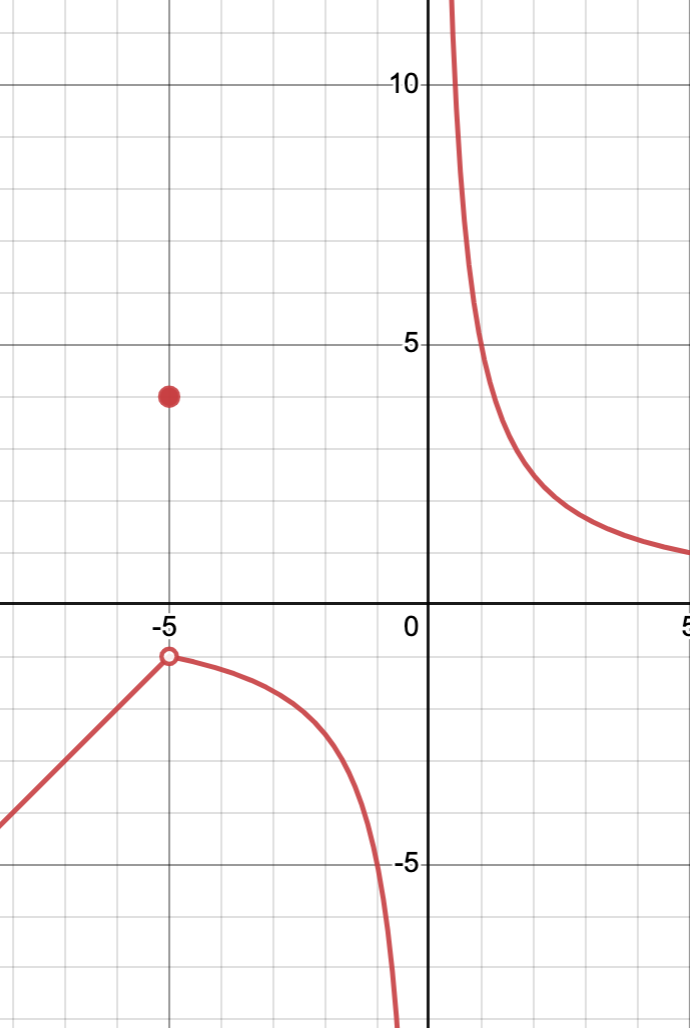
Given the following graph of a piecewise function, for what x does the limit not exist?
Given the following graph of a piecewise function, for what x does the limit not exist?
For the above piecewise function, what kinds of discontinuities are on the graph, from left to right
Watch the following video link about composition of functions. Do you have any questions?
If f(x) =3x+log x, and asked you to find f(2), what would you do?
If f(x) = x+2, which of the following would be a vertical shift for g(x)
If f(x) = x+3 and g(x) = x-2, then f(g(x))=g(f(x))
if f(x)=x+3 and g(x)=x^2, then f(g(x))=g(f(x))
f(g(x))=x it is said to be an inverse. you put x as an input into g() and the output from g(x) into f(x) which undid whatever g(x) did. Ok, i wrote that last year, and reading it now makes me realize how hard that is to parse. Maybe a drawing will make it better.
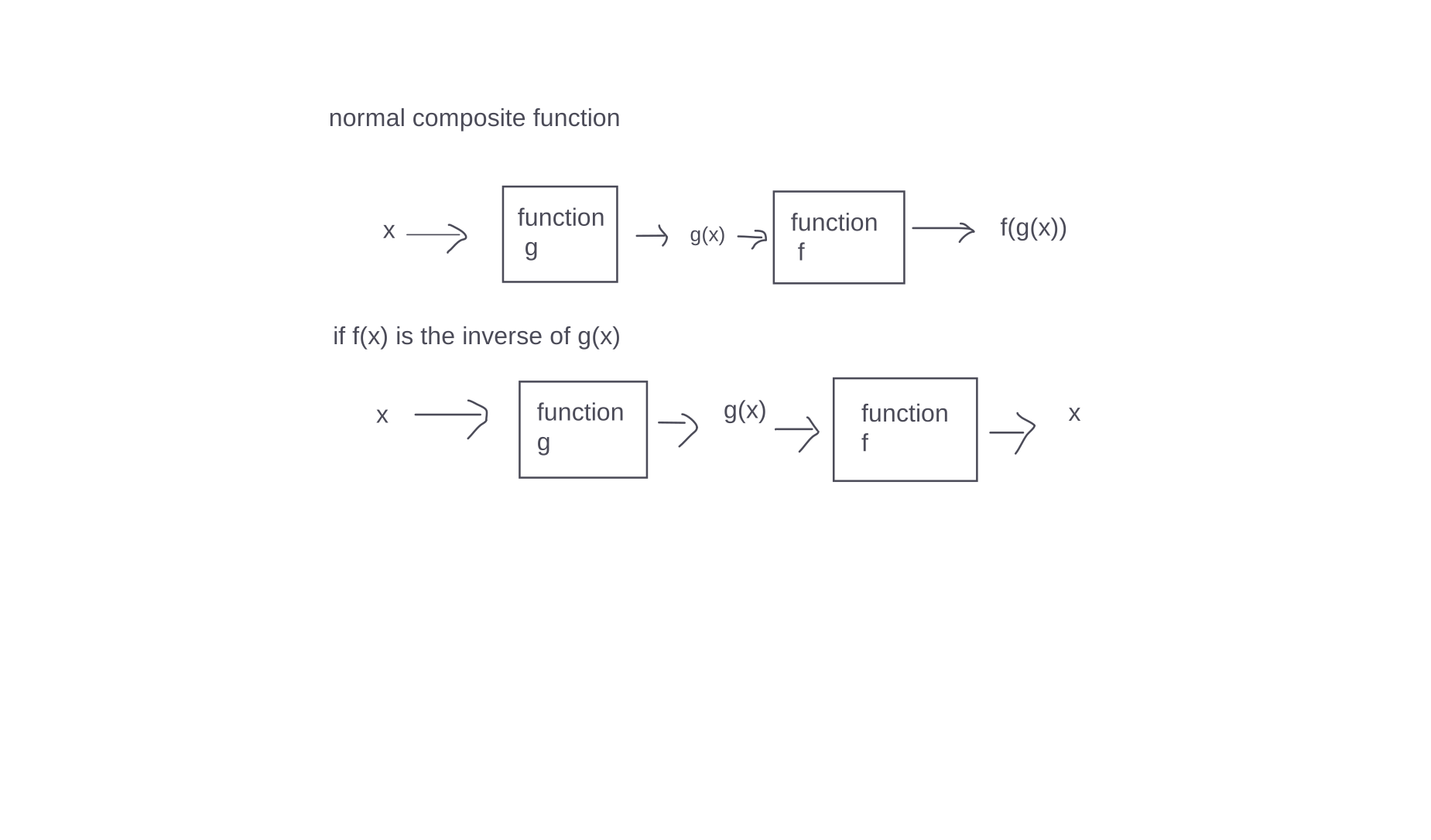
or maybe a pop culture reference.
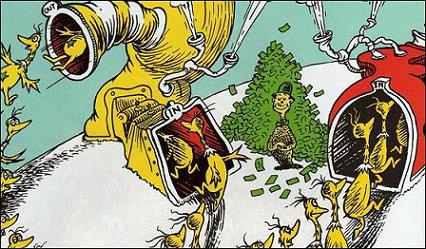
an inverse of a function undoes what that function does. So if a sneech goes through a machine that puts a star on its belly, and then goes into a machine that takes the star off its belly, the second machine is the inverse of the first.
so. if f(x)=3x-2, and g(f(x))=x, can you find g(x)?
watch this video on calculating inverses. Do you have any questions?
Find the inverse of
He says he can only find the inverse for a one-to-one function. What does that mean?
Watch the following video on Asymptotes for Radical functions . Do you have any questions?
We discussed in class that you have to find numbers that must be excluded from the domain before you simplify a function. So the following function has a domain where x can't equal 1, even though (x-1) on top cancels with the one on bottom. what is this kind of scenario called
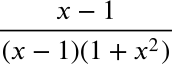
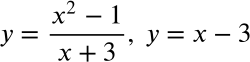
The video said if the degree of the numerator was greater than the degree of the denominator there is no horizontal asymptote. Which is true. Go to desmos and plug in the following two equations. The linear equation is not a horizontal line, but it does look like an asymptote, why do you think that is?
can you create an algorithm or function to describe the act of decomposing a function ( ie: turning h(x) into f(g(x))) as a function? why or why not?
a square root function is sortof an inverse of the quadratic function. Why is this only sortof, and how does that work?
What is the relationship of the domain and range of a function and the domain and range of its inverse?
What is an asymptote?
Rational functions are not the only parent function that deliver a vertical asymptote. What is the other function that we have to be aware of?
If finding the inverse of a function is switching x and y and then solving for y, what does that tell you about the relationship between the domain and range of a function is to the domain and range of that function's inverse?
How are you feeling?
how to composite functions
what is the purpose of compositing functions
how to find an inverse
what an inverse does
what is an asymptote
how to find vertical asymptotes
how to find horizontal asymptotes
what are the different types of discontinuities
I've got this
I'm fuzzy
so confused