Twa kɔ nsɛm atitiriw so
Log in
Sign up for FREE
arrow_back
Laabri

Precalculus FC S1W6 - Solving exponential and logarithmic equations

star
star
star
star
star
Last updated 10 months ago
22 Nsɛmmisa
Ɛhia
1
Ɛhia
1
Ɛhia
1
Ɛhia
1
Ɛhia
1
Ɛhia
1
Ɛhia
1
Ɛhia
1
Ɛhia
1
1
Ɛhia
7
Ɛhia
1
1
1
1
Ɛhia
1
1
Ɛhia
1
Ɛhia
1
1
Ɛhia
1
1
Asemmisa {{asɛmmisaAhyɛnsode}}
1.

Which of the following is the same as log 4+log 2?

Asemmisa {{asɛmmisaAhyɛnsode}}
2.

Which of the following is the same as 3log 4

Asemmisa {{asɛmmisaAhyɛnsode}}
3.

Watch the following video link about Solving exponential word problems (20 minute video) Do you have any questions?

Asemmisa {{asɛmmisaAhyɛnsode}}
4.

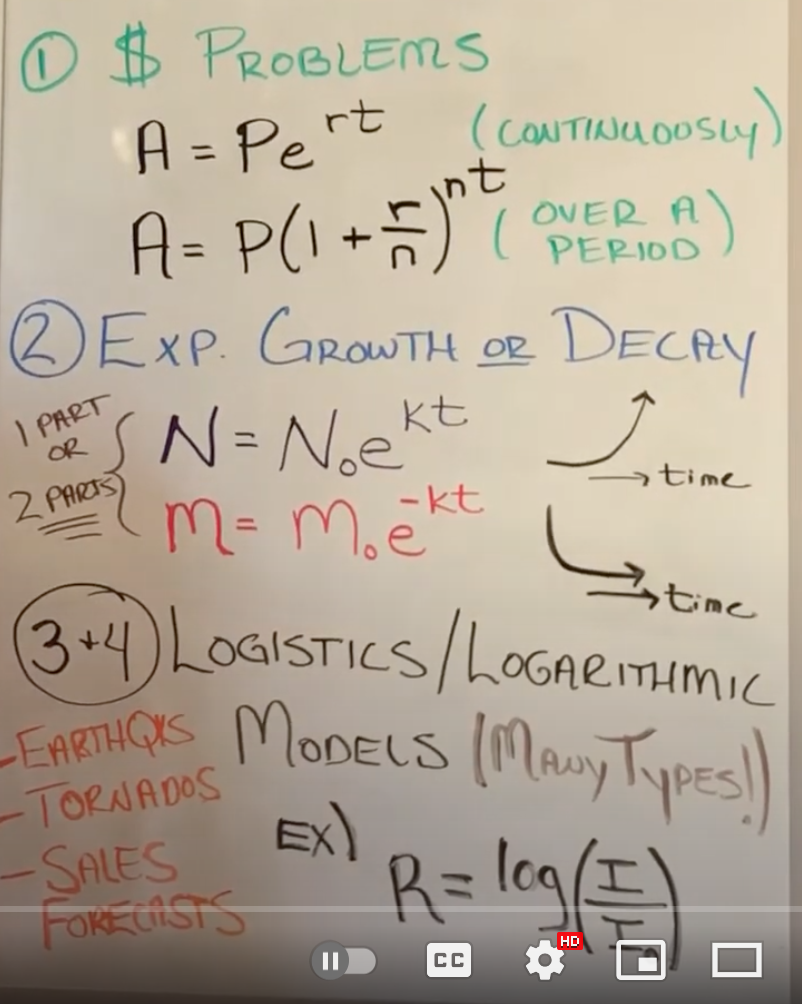
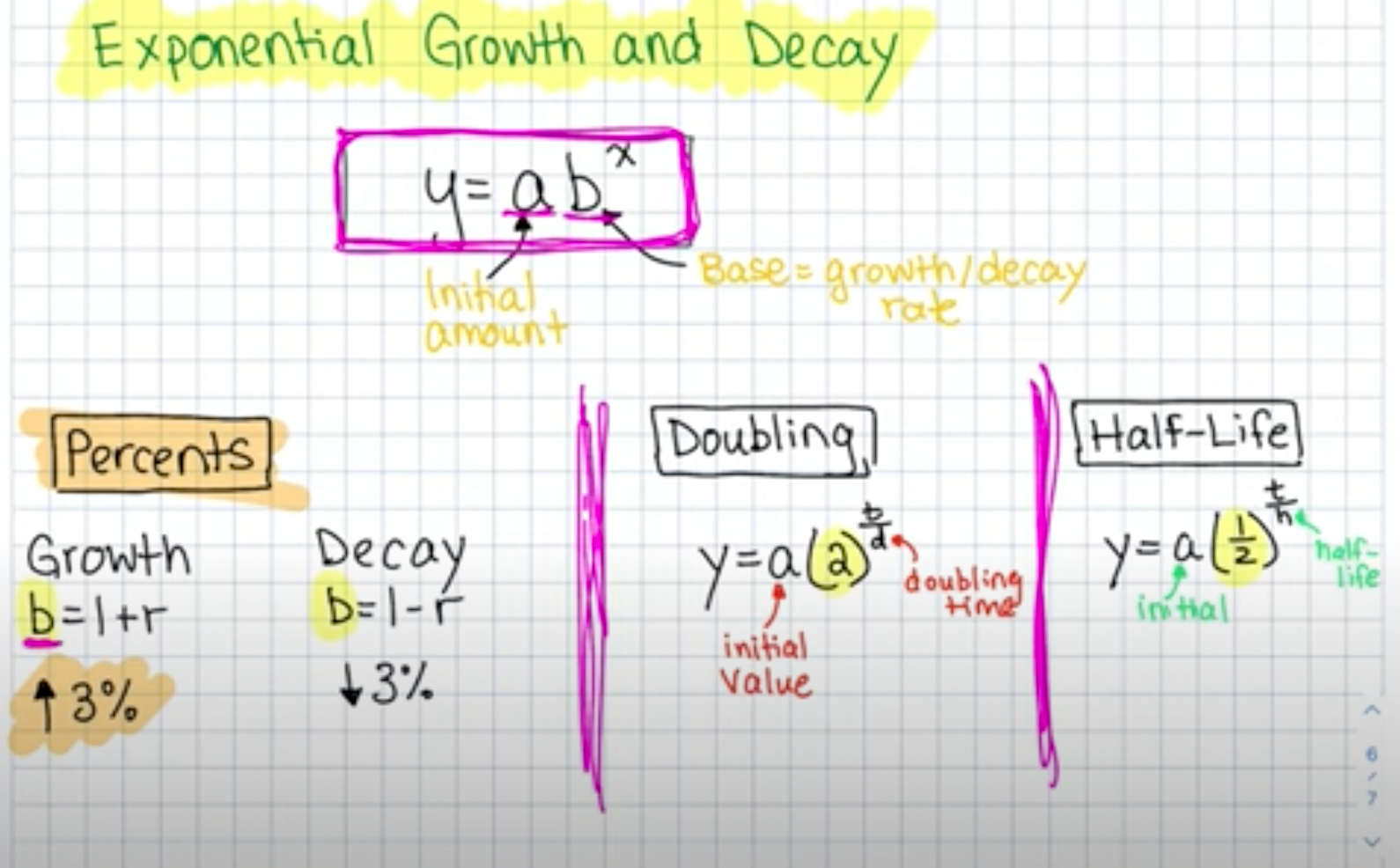
Wait ! Her chart was totally different from the lady last week! her word problem chart looked like this! What are some similarities you see, what are some differences?
Asemmisa {{asɛmmisaAhyɛnsode}}
5.

When analyzing exponential functions, what were the basics of choosing the domain and range. (she went over this part very quickly, but think through the function and what you know about it.)

Asemmisa {{asɛmmisaAhyɛnsode}}
6.

What was the key determinant of whether a function showed a growth or decay function?

Asemmisa {{asɛmmisaAhyɛnsode}}
7.

What was the base for a half-life problem?

Asemmisa {{asɛmmisaAhyɛnsode}}
8.

what was the base for a percent decay problem of 3%

Asemmisa {{asɛmmisaAhyɛnsode}}
9.

you are given a equation like this to solve for x.

ln(3𝑥+5)−ln(𝑥−5)=ln8.

Describe your first step

Asemmisa {{asɛmmisaAhyɛnsode}}
10.

What is the domain and range of this equation?

Domain is

Asemmisa {{asɛmmisaAhyɛnsode}}
11.

What is the y -intercept of the following equation? give your answer as an ordered pair.

Asemmisa {{asɛmmisaAhyɛnsode}}
12.

what is the x-intercept of the following equation?

Asemmisa {{asɛmmisaAhyɛnsode}}
13.

A bacteria culture exhibits uninhibited growth.

Honors: write a formula if 600 bacteria are present initially and there are 790 after one hour. use 2 significant figures

On-level: use hint.

Asemmisa {{asɛmmisaAhyɛnsode}}
14.

Another batch of bacteria starts with 600 and doubles after two hours. which of the following equations would work (there are two correct answers)

Asemmisa {{asɛmmisaAhyɛnsode}}
15.

look through the two equations you chose as correct. Can you convince yourself easily that they are actually the same?

Asemmisa {{asɛmmisaAhyɛnsode}}
16.

Honors: How many bacteria will there be after 12 hours according to the equation you wrote? still use two sig figs. On level - use hint.

Asemmisa {{asɛmmisaAhyɛnsode}}
17.

state the domain of

Asemmisa {{asɛmmisaAhyɛnsode}}
18.

A person invests $500 in an account that earns a yearly interest rate of 4%. How much would this investment be worth in 10 years if the compounding frequency was once per year?

Asemmisa {{asɛmmisaAhyɛnsode}}
19.

How much would this investment be worth in 10 years if the compounding frequency four times per year (quarterly)?

Asemmisa {{asɛmmisaAhyɛnsode}}
20.

A person invests $350 in a bank account that promises a rate of 2% compounded continuously. Write an equation for the amount this investment would be worth after t-years.

Asemmisa {{asɛmmisaAhyɛnsode}}
21.

How much would the investment be worth after 20 years?

Asemmisa {{asɛmmisaAhyɛnsode}}
22.
  • the difference between growth and decay formulas

  • When to use e and when to use a rational number as a base

  • domain and range of exponential functions

  • domain and range of log functions

  • how to create an equation for a half-life problem

  • how to create an equation for an interest bearing problem

  • what the difference is between continuous growth problems and interval compounding problems

  • how to make

    for halflife problems

  • how to solve these problems once I set them up.

  • I've got this

  • I'm fuzzy

  • so confused



